Stage 4 Cancer Treatment in China: Coordination for Advanced Cases
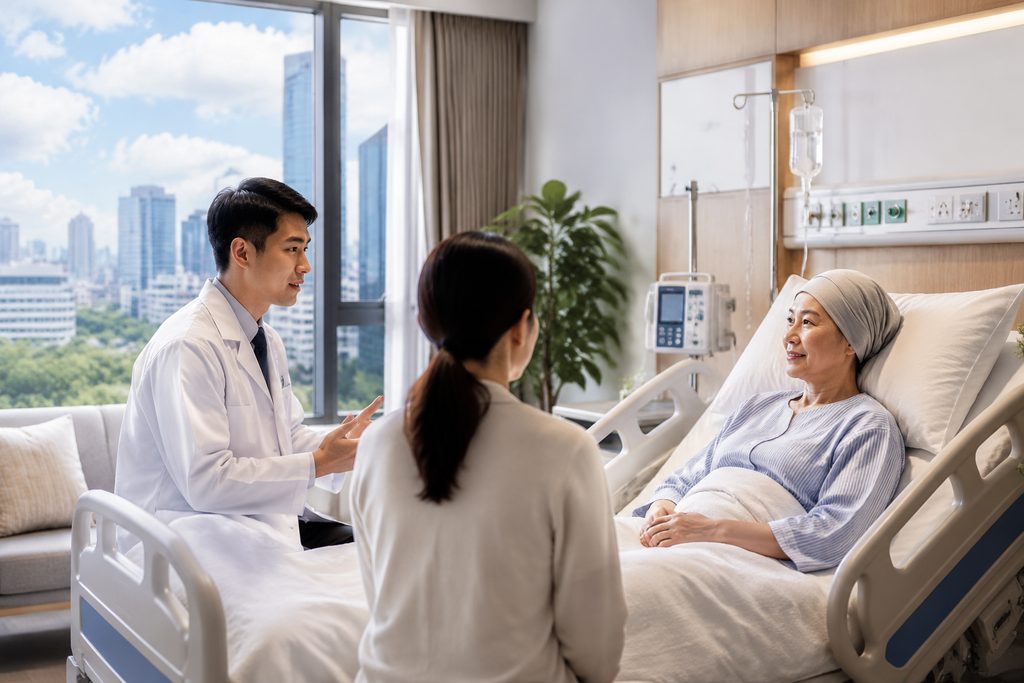
Stage 4 Cancer Treatment in China: Our Coordination for Advanced Cases
Have you been told that treatment options are running out? A stage 4 diagnosis changes everything. The question shifts from “will I beat this” to “how do I buy more time, and what will it cost me?” For many international patients, the stage 4 cancer treatment cost China offers a path forward when domestic options feel financially or clinically exhausted.
We coordinate care for patients with advanced malignancies at 340+ top-ranked Chinese hospitals across 37 cities. Not as a hospital. Not as doctors. As the operational layer between you and a system that treats cancer at a scale most Western institutions never see.
Key Takeaways
- China’s top oncology centers treat volumes that dwarf Western benchmarks — some departments manage over 10,000 new cancer cases annually.
- Stage 4 cancer treatment cost in China typically runs 60-80% below comparable US protocols, with immunotherapy pricing often 50-70% lower.
- Language, visa logistics, and hospital navigation are the real barriers — not clinical capability.
- Remote evaluation must happen before any travel decision. Flying to China without a written second opinion or video consultation first is the single most common mistake we see.
The Problem: Advanced Cancer Care Is Priced Like a Luxury Good
In the United States, the average cost of cancer care in the final year of life exceeds $100,000 for many patients. Immunotherapy regimens like pembrolizumab or nivolumab can run $150,000 to $200,000 annually before insurance. Even with coverage, out-of-pocket exposure routinely hits five figures.
Now imagine facing those numbers with a stage 4 diagnosis. You are not planning a one-time surgery. You are looking at a continuous cycle of imaging, infusions, hospitalizations, and adjustments. Every month costs money. Every delay costs momentum.
That is the reality for roughly 600,000 Americans who die from cancer each year, many after exhausting savings or rationing care. The financial toxicity is not a side effect — it is a primary outcome of the US system.
Why China Delivers Results for Advanced Cancer
Clinical Volume That Creates Pattern Recognition
Chinese oncology departments see patient volumes that would overwhelm most Western centers. Fudan University’s Shanghai Cancer Center and the Cancer Hospital of the Chinese Academy of Medical Sciences in Beijing each register tens of thousands of new cancer cases annually. A single thoracic oncology ward may manage more stage 4 lung cancer patients in a month than a regional US hospital sees in a year.
Why does volume matter for stage 4 disease? Because advanced cancer management is iterative. It requires rapid adjustment when a regimen stops working. Physicians who see 50 cases of metastatic gastric cancer monthly develop an intuition for drug sequencing that a doctor seeing 5 cases monthly cannot replicate. That pattern recognition is what you are buying.
Treatment Modalities That Are Standard, Not Experimental
China has approved and routinely uses therapies that remain restricted or delayed elsewhere. CAR-T cell therapy for hematologic malignancies is available at multiple Chinese centers at prices 40-60% below US list prices. Proton therapy centers operate in Shanghai, Beijing, and Guangzhou. TCM-integrated oncology — combining conventional chemotherapy with evidence-informed herbal protocols for symptom management — is standard practice, not alternative medicine.
For stage 4 patients, local ablation techniques like microwave ablation, irreversible electroporation, and hepatic arterial infusion chemotherapy are deployed more aggressively than in many Western settings. These are not cures. They are tools for extending progression-free survival and preserving quality of life.
Stage 4 Cancer Treatment Cost China: The Structural Advantage
Let us address the obvious question: does lower cost mean lower quality? No. The cost differential is structural, not clinical.
| Treatment Component | US Average Cost (USD) | China Top Hospital Range (USD) | Savings |
|---|---|---|---|
| Immunotherapy (PD-1/PD-L1, annual) | $150,000 – $200,000 | $35,000 – $70,000 | 60-75% |
| PET-CT scan | $3,000 – $6,000 | $500 – $1,200 | 75-85% |
| Radiation therapy (full course) | $30,000 – $60,000 | $8,000 – $20,000 | 65-75% |
| Major oncologic surgery | $50,000 – $150,000 | $12,000 – $35,000 | 70-80% |
| Inpatient hospital day (oncology ward) | $3,000 – $8,000 | $150 – $500 | 90%+ |
Labor costs, hospital construction debt, and administrative overhead drive US pricing. Chinese public hospitals operate on thin margins with massive patient throughput. The physicians are equally trained — many completed fellowships at MD Anderson, Memorial Sloan Kettering, or European centers. The difference is the system around them.
How much is immunotherapy for cancer in Shanghai? At top public hospital international departments, expect $3,000 to $6,000 per infusion cycle depending on the agent and dose. The same infusion in the US bills $12,000 to $20,000. That gap compounds across 12 to 18 cycles of treatment.
What “Can China Treat Stage 4 Cancer” Actually Means
Can China treat stage 4 cancer? The honest answer: China treats stage 4 cancer every day, at enormous scale, with internationally validated protocols. The question is not whether Chinese oncologists can manage advanced disease. They do. The question is whether the specific treatment pathway you need is available, appropriate, and worth the logistical burden of traveling.
Stage 4 cancer is not one disease. It is dozens of diseases with different trajectories. A stage 4 EGFR-mutated lung cancer patient on osimertinib has a very different outlook than a stage 4 pancreatic cancer patient with liver metastases. Any credible evaluation starts with your specific histology, molecular profile, treatment history, and performance status.
That is why we never advise patients to book a flight and show up. We start with remote evaluation.
Best Hospitals in China for Advanced Cancer: What the Rankings Actually Show
The Fudan University Hospital Rankings — China’s most authoritative hospital evaluation — publishes specialty reputation rankings across 45 clinical departments. For oncology, several institutions consistently place in the top tier. The best hospitals in China for advanced cancer are concentrated in Beijing, Shanghai, and Guangzhou, with additional strength in Chengdu and Hangzhou.
What should you look for when evaluating a center for stage 4 disease?
- Department-level specialization: A hospital ranked for “oncology” generally is not enough. Look for subspecialty strength — thoracic oncology, hepatobiliary oncology, gynecologic oncology. The department rankings break this down by organ system.
- Clinical trial access: China runs one of the world’s largest oncology clinical trial programs. For patients who have exhausted standard therapies, a phase 1 or 2 trial in China may offer access to agents unavailable elsewhere.
- International department infrastructure: Top public hospitals operate dedicated international wards with English-speaking coordinators, private rooms, and streamlined billing. This is the channel international patients use — not the general outpatient system.
- Multidisciplinary team (MDT) structure: The strongest centers run formal MDT reviews where medical oncologists, radiation oncologists, surgeons, and interventional radiologists evaluate each complex case together.
Our top-ranked hospital database organizes Fudan-ranked institutions by city and specialty, so you can see which centers carry the strongest reputation for your specific cancer type.
How the Coordination Process Works for International Patients
Booking cancer treatment in China as an international patient follows a sequence. Skipping steps is how patients end up stranded in a hospital lobby with no appointment and no interpreter.
Step 1: Medical records review. We collect your pathology reports, imaging (DICOM files preferred), treatment history, and current medications. A Chinese oncology team reviews these documents. This is the written second opinion — priced from $300 to $500 depending on the hospital tier. The output is an analysis of your case, treatment options available in China, and a recommendation on whether travel is warranted.
Step 2: Video consultation. If the written review suggests a viable pathway, we arrange a video consultation with the treating department. You speak directly with the physicians who would manage your care. Cost ranges from $100 to $800 depending on whether you see a general international department physician or a top-ranked specialist. Any consultation fee is credited in full toward on-the-ground coordination if you proceed within 90 days.
Step 3: Treatment plan and cost estimate. The hospital issues a preliminary treatment plan with a cost range. This is an estimate, not a guarantee — final costs depend on how you respond to therapy and what complications arise.
Step 4: Visa and travel. Medical treatment in China falls under the S2 visa category, which covers short-term private affairs including medical treatment. Accompanying family members apply for S2 visas as well. Processing typically takes 1 to 4 weeks depending on your home country’s Chinese embassy or consulate. Hospital invitation letters and treatment confirmation documents support the application.
Step 5: Arrival and hospital admission. Our bilingual companion meets you at the airport, handles hospital registration, and stays with you through initial consultations, admission, and the first treatment cycle. This is where the system gets navigable.
Stage 4 Cancer Medical Tourism Package China: What Realistic Expectations Look Like
A stage 4 cancer medical tourism package in China is not a resort stay with treatment attached. It is a structured medical journey with defined phases. Patients who understand this do better — medically and psychologically.
A typical first visit runs 2 to 4 weeks. That window covers initial evaluation, baseline imaging, treatment planning, and the first cycle of therapy (if the plan is straightforward). Some patients stay longer for surgery or radiation. Many return home between cycles and travel back every 3 to 4 weeks for infusion-based regimens.
Accommodation near major cancer centers in Shanghai or Beijing runs $50 to $150 per night for serviced apartments. Daily living costs are modest by Western standards. The dominant expense is treatment itself, and even that is dramatically lower than Western equivalents.
Realistic expectation: Stage 4 cancer in China is treated with the same evidence-based protocols used globally. Chinese oncologists do not offer secret cures. What they offer is high-volume clinical expertise, broader access to certain therapies, and pricing that makes extended treatment financially survivable. Anyone promising miraculous outcomes is selling something other than medicine.
Practical Considerations: Documentation, Payment, and Follow-Up
Before you commit to anything, understand the operational realities.
Medical records. Chinese hospitals require translated, organized medical documentation. Pathology slides may need to be re-read by Chinese pathologists. Imaging should be provided in DICOM format, not printed films. Budget 1 to 2 weeks for records preparation before any consultation.
Visa. The S2 visa is the correct category for medical treatment and private affairs. It is not a “medical visa” — no such category exists. Approval is never guaranteed. Strong documentation from the receiving hospital strengthens your application. S2 visas typically allow stays up to 180 days; longer treatment plans may require an S1 visa or extensions processed in-country.
Payment. Chinese public hospitals require prepayment. International departments accept wire transfers and major credit cards. Private international hospitals like those in the JCI-accredited network may bill insurers directly. US insurance rarely covers treatment in China, though some international policies and medical tourism riders do. Confirm coverage before committing.
Language. Outside international departments, English is scarce. Even within them, radiology, pharmacy, and nursing staff may not speak English. A bilingual companion is not a luxury — it is the difference between knowing what is happening and guessing.
Follow-up after returning home. Chinese oncologists routinely provide treatment summaries and recommendations for your home physician. Ongoing communication via secure messaging or periodic video consultations is common. Most patients maintain a hybrid model: treatment cycles in China, monitoring and supportive care at home.
Frequently Asked Questions
Yes, when delivered through accredited public hospitals or JCI-certified private institutions. China’s top oncology centers follow NCCN and ESMO guidelines, participate in international clinical trials, and publish in peer-reviewed journals. The risk is not clinical quality — it is navigating the system without local expertise. That is the gap we fill.
For a 6-month immunotherapy-based treatment course at a top public hospital international department, a realistic budget is $40,000 to $80,000 including hospital fees, imaging, medications, and accommodation. Comparable US treatment would run $150,000 to $300,000. Final costs vary by hospital, cancer type, drug regimen, and complications. Always request a written cost estimate before traveling.
Chinese tertiary hospitals are equipped for acute deterioration — ICU capacity, emergency intervention, and palliative care are all available. International departments have protocols for emergency escalation. You should also carry medical evacuation insurance that covers repatriation if you become too ill to continue treatment abroad. We discuss this with every patient before travel.
Possibly, but not automatically. China has approved multiple PD-1/PD-L1 inhibitors, including domestically developed agents like toripalimab and sintilimab that are not available in Western markets. Whether a specific agent is appropriate for your cancer type and molecular profile requires evaluation by a Chinese oncologist. A written second opinion is the fastest way to get a definitive answer.
No. Most patients travel for evaluation and initial treatment, return home, and come back for subsequent cycles. Some therapies require longer stays — CAR-T cell therapy, for example, involves a 4 to 6 week in-country commitment. Your treatment plan will specify the required on-site time for each phase.
Your Next Step
Stage 4 cancer forces hard decisions under pressure. The stage 4 cancer treatment cost China offers a meaningful option for patients who need world-class oncology care without the financial devastation that often accompanies it in Western systems. We are China Medical Services — a coordination team, not a hospital, not physicians. We connect you with ranked oncology departments, manage records and appointments, and provide bilingual support on the ground. If you are weighing your options, start with a conversation. Our free consultation walks through your diagnosis, your budget, and whether China makes sense for your specific case. No pressure. No obligation. Just clarity on what is possible.
For more medical information and treatment options in China, visit chinamedservices.com (China Medical Services).
