Adolescent Sports Injury Surgery Service China: ACL and Orthopedic Care for Young Athletes
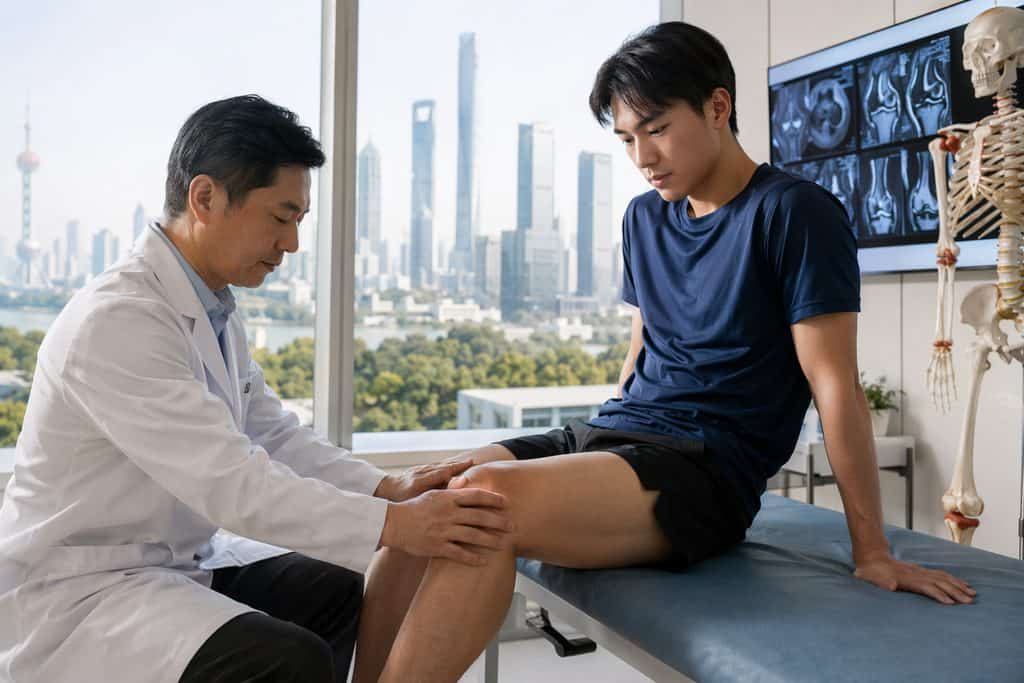
What happens when your teenage athlete tears their ACL and the local waitlist for surgery stretches to eight months? That is half a season gone. Maybe an entire year of development. For a young athlete, time is not just money—it is their future. Every week spent waiting is a week of muscle atrophy, lost scholarships, and mounting frustration. This is the reality for thousands of families across North America and Europe. But there is an alternative path that a growing number of parents are taking seriously: flying their child to China for specialized adolescent sports injury surgery.
Key Takeaways
- ACL reconstruction for a teenager in a top-tier Chinese hospital ranges from $8,000 to $15,000, a fraction of the $40,000+ cost common in the U.S. market.
- China’s top orthopedic surgeons perform a high volume of arthroscopic procedures—often 300 to 500 ACL reconstructions annually—driving precision that directly correlates with faster recovery times.
- Navigating a foreign medical system alone is the single biggest barrier. Language gaps, the S2 visa process, and hospital registration protocols can easily derail an independent trip.
- You cannot simply book a surgery online from overseas. A physical consultation is mandatory in Chinese public hospitals, but the right coordination transforms this from a roadblock into a streamlined process.
The Problem: When the Waitlist Costs a Career
The anterior cruciate ligament does not heal itself. A complete tear in a 16-year-old requires surgical reconstruction, and delaying that surgery is not a neutral choice. A 2023 study in the *American Journal of Sports Medicine* tracked adolescent athletes who waited longer than six months for ACL reconstruction. The data was stark: they showed significantly higher rates of secondary meniscal tears and early-onset cartilage degeneration compared to those who underwent surgery within two months. The clock is ticking from the moment the knee swells.
Now layer on the financial reality. In the United States, the all-in cost for an ACL reconstruction—surgeon fees, anesthesia, the graft, the hospital facility, and the anesthesiologist—frequently lands between $35,000 and $50,000. Even with solid insurance, high deductibles and out-of-network surprises can leave a family with a $10,000 bill. For uninsured or underinsured young athletes, the surgery is simply out of reach. They are left with an unstable knee and a future defined by limitation, not competition.
This is not a small problem. Approximately 200,000 ACL injuries occur annually in the U.S., and a disproportionate number happen in the 15-to-19 age group. These are soccer players, basketball guards, and skiers. Their parents are searching for a solution that is fast, excellent, and financially viable. That search is leading them to look east.
Who We Are
We are not a hospital. We do not perform surgeries or provide medical diagnoses. Our team at China Medical Services acts as your logistical architects and bilingual coordinators on the ground. We built a network connecting international patients to over 340 top-ranked hospitals across 37 cities in China—institutions that represent the top 5% of the country’s 35,000-plus hospitals, ranked by Fudan University’s prestigious hospital rankings and JCI accreditation standards. We handle the heavy lifting: translating medical records, scheduling the crucial in-person consultation, securing the right visa documentation, and putting a bilingual medical companion by your side so you never face a crowded Chinese hospital corridor alone.
Why China Delivers Results for Young Athletes
Parents considering medical tourism for their child are not just asking about cost. Their first question is almost always about safety and quality. The answer rests on three structural advantages that define elite Chinese orthopedic departments.
Surgical Volume Creates Unmatched Repetition
There is a hard truth in orthopedic surgery: outcomes improve with repetition. A surgeon who performs 400 ACL reconstructions a year simply sees patterns—and complications—that a surgeon doing 50 a year cannot. In a major Chinese sports medicine center, a senior orthopedic surgeon often operates on a volume scale that is hard to match in the West. It is not unusual for a department to run multiple arthroscopy theaters simultaneously, each handling four to five ligament reconstructions per day. This is not assembly-line medicine. It is focused expertise. The result is a refined surgical technique, shorter tourniquet times, and precise tunnel placement that reduces the risk of re-rupture—a critical factor for a 17-year-old who intends to return to competitive pivoting sports.
And the graft choices. For adolescent athletes with open growth plates, the surgical approach must protect the physis. Chinese sports medicine surgeons frequently employ all-inside, physeal-sparing techniques using autografts, a protocol that aligns with the latest International Olympic Committee consensus on youth ACL injury management.
Technology at Scale, Not as a Gimmick
Walk into the sports medicine department at a top-ranked Chinese hospital, and you will see the same technology you would find at the Mayo Clinic or the Schön Klinik. We are talking about intraoperative 3D CT navigation for tunnel positioning, robotic-assisted arm systems for graft tensioning, and dedicated post-operative MRI protocols to assess graft integration at the three-month mark. The difference is the scale of deployment. These tools are not reserved for professional athletes with seven-figure contracts. They are integrated into the standard care pathway for a 15-year-old from a middle-class family because the hospital’s patient volume justifies the capital investment.
What does this mean for your teenager? It means a surgery informed by real-time imaging, not just tactile feedback. It reduces the margin of error in tunnel angle—a variable that, if miscalculated by even a few degrees, can lead to graft impingement and a stiff knee.
The Cost Advantage Is Structural, Not a Compromise
Let’s address the elephant in the room directly. ACL surgery cost China for teenager patients is dramatically lower than in the U.S. or UK. Is that because the care is inferior? No. It is because the cost structure is fundamentally different. The labor cost for a top-tier surgical team, the hospital facility fees, and the implant costs (many high-quality fixation devices are manufactured domestically) are all lower. You are not paying for a broken insurance reimbursement system. A complete package—including the pre-operative 3T MRI, the all-inside reconstruction, two nights in a private international ward, and the implant itself—typically ranges from $8,000 to $15,000. That is a 70% reduction from the U.S. cash price. The quality of the fixation device, the sterility of the theater, and the training of the surgeon are held to the same international standard you would demand at home.
What You Need to Know Before Going Alone
We need to be blunt here. The Chinese public hospital system is not designed for the convenience of an international walk-in. It is a high-throughput system that serves millions. Attempting to navigate this alone for your child’s knee surgery carries real risks of failure. Here are the barriers you will hit.
- Visa Requirements Are Specific: You cannot come on a standard tourist (L) visa or a business (M) visa. Medical treatment requires an S2 visa, which is a short-term private visit visa specifically annotated for medical purposes. The hospital must provide an official invitation letter and a confirmed treatment schedule for the visa application. If the paperwork is off by a single detail, the visa is denied, and your surgery date evaporates.
- The Mandatory In-Person Consultation: You will see websites offering to “book your surgery online.” That is not how Chinese public hospitals work. A surgeon must physically examine your teenager’s knee, review the MRI, and conduct a Lachman and pivot-shift test before agreeing to operate. The surgery is scheduled only after this consultation. Flying in blind without a guaranteed consultation slot is a gamble you do not want to take with a minor’s health.
- Language and Navigation: A top public hospital can see 10,000 outpatient visits in a single day. The registration kiosks, the payment counters, the pharmacy queues, the radiology floor—all signage and verbal instructions are in Mandarin. Explaining your child’s allergy to a specific antibiotic or understanding the post-operative rehabilitation protocol requires more than a translation app. A misunderstanding here is not an inconvenience; it is a safety issue.
How We Help You Navigate This
These barriers exist for structural reasons. They are not designed to exclude you, but they are not designed to accommodate you either. That is where our team steps in. We transform a chaotic, high-friction process into a clear, predictable path.
Before you travel, we translate and format your child’s medical records and MRI files for review by the orthopedic department. We secure the official invitation letter required for the S2 visa. We do not just send you a list of hospitals. We match your specific case—a 16-year-old soccer player with a isolated ACL rupture and open physes—to the department that has the most experience with that exact profile. This includes connecting you with surgeons at institutions consistently ranked among the best for orthopedics, such as those found in our specialist department rankings.
On the ground, a bilingual medical companion meets you at the hospital entrance. They handle registration, guide you to the consultation, and translate the surgeon’s findings and surgical plan in real time. They are there on the day of surgery, translating the anesthesiologist’s pre-op check and the post-op instructions. They ensure the discharge summary and rehabilitation protocol are translated accurately into English so your physical therapist back home knows exactly which protocol to follow. We also coordinate the follow-up appointment before you fly out. The goal is simple: you focus on your child’s recovery, and we handle the system.
Frequently Asked Questions
Safety in adolescent sports surgery hinges on two factors: the surgeon’s experience with physeal-sparing techniques and the hospital’s infection control protocols. The top-tier hospitals we work with maintain JCI accreditation standards, which mandate strict surgical safety checklists and infection rates that are publicly benchmarked. The surgeons are fellowship-trained in sports medicine and handle a high volume of adolescent ACL cases annually. No surgery is without risk, but the clinical infrastructure at these centers is on par with major Western teaching hospitals.
The standard of care for a skeletally immature athlete is an all-inside, physeal-sparing ACL reconstruction using an autograft—typically a quadrupled hamstring tendon. The technique uses independent femoral and tibial sockets rather than full tunnels, preserving the growth plates. Intraoperative fluoroscopy or 3D navigation is commonly used to confirm guide pin placement before drilling. The procedure is performed arthroscopically, with two to three small incisions, and patients are typically mobilized within hours of surgery. The protocol is nearly identical to what you would find at a leading European sports medicine center.
You cannot purchase a surgery online like a hotel room. The surgeon must physically examine the knee first—this is a non-negotiable medical and legal requirement. What we coordinate is a comprehensive care package: the confirmed specialist consultation, the surgery slot immediately following that consultation, the hospital admission, and all ground logistics. We arrange it so that within 48 hours of landing, your child has been examined, cleared, and is in the operating room. The package is a coordination service, not a product. You can learn more about how this works on our patient coordination page.
The all-inclusive cost for the hospital portion—surgeon’s fee, anesthesiologist, the ACL graft and fixation implant, operating theater, and a two-night stay in a private room within the international medical center—ranges from $8,000 to $15,000. This varies by hospital tier and the specific implant used. It does not include flights, accommodation outside the hospital, or the cost of a bilingual medical companion, which starts from $200 per day. This is a transparent price, not a bill inflated by insurance coding games.
Shanghai is home to several hospitals with dedicated pediatric orthopedic departments that are deeply experienced in youth sports injuries. When families ask us for the best pediatric orthopedic hospital Shanghai has available, we typically guide them toward the city’s major university-affiliated medical centers, which run high-volume sports medicine services. These hospitals combine pediatric orthopedic specialists who understand growth plate management with sports medicine surgeons who understand the demands of a returning athlete. We help you select the specific team based on your child’s age, skeletal maturity, and sport.
Your Next Step
Watching your teenager face a season-ending injury is gut-wrenching. The decision to seek care thousands of miles from home is not a small one. But when the local option means months of waiting and a bill that rivals a year of college tuition, the math—and the medicine—starts to point in a different direction. The surgeons are ready. The technology is in place. The only missing piece is a guide to get you through the door.
If you want to understand the specific options for your child’s injury, let’s talk. We can review the MRI, match you with the right surgical team, and map out a timeline. Visit our consultation page to start that conversation. No pressure. Just clarity.
For more medical information and treatment options in China, visit chinamedservices.com (China Medical Services).
