Adrenal Tumor Treatment in China Worth It: Ruijin Hospital
An adrenal tumor is an abnormal growth on one of your two adrenal glands, which sit on top of your kidneys. Most are benign, but some produce excess hormones that wreak havoc on blood pressure, heart rate, and metabolism. Others are silent and found by accident on a CT scan. When surgery is needed, the procedure is called an adrenalectomy — removing the gland, usually laparoscopically through a few small incisions. The question you typed into Google is fair: is traveling to Shanghai for this worth it? The short answer is that adrenal tumor removal cost China typically runs between $8,000 and $18,000 at a top-tier public hospital like Ruijin, compared to $30,000 to $60,000 in the United States for the same laparoscopic procedure. That is a meaningful gap. But cost is only one part of the decision.
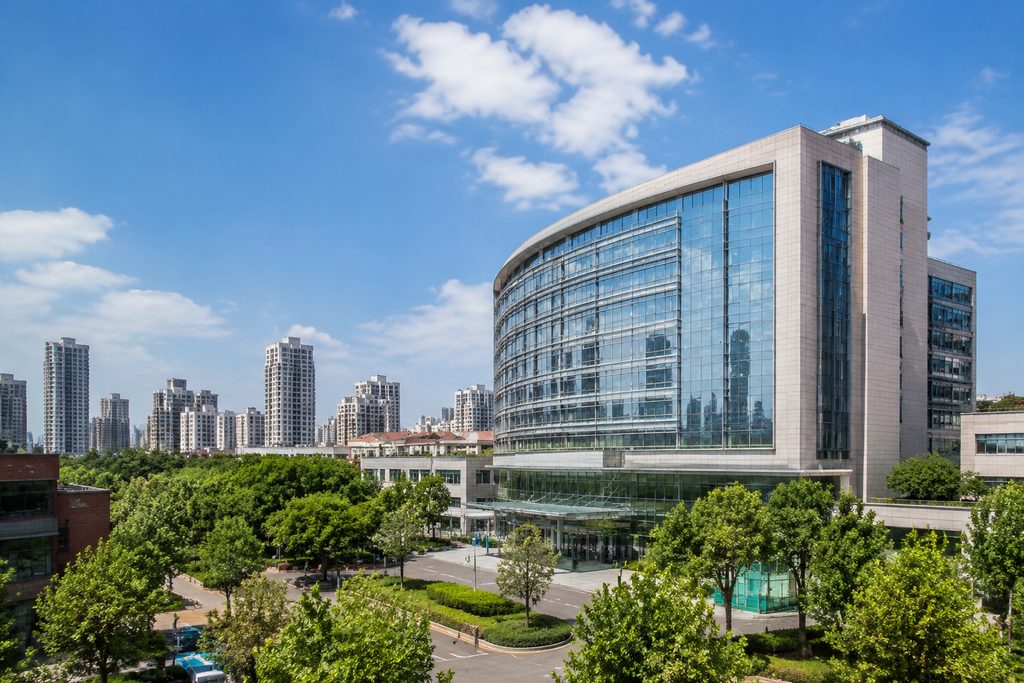
Ruijin Hospital, affiliated with Shanghai Jiao Tong University School of Medicine, sits on the Fudan University hospital ranking list among China’s elite institutions. Its endocrinology and urology departments consistently appear in the Fudan specialty reputation rankings. For international patients, the hospital operates an international medical center. That is the channel you would use. But before we get into the specifics of booking and pricing, let us walk through how this actually works from your living room.
How This Actually Works, Step by Step
The process of pursuing adrenal surgery in China is not like booking a hotel. It is sequential, and each step depends on the one before it. Here is the real sequence.
Step 1: You gather your records. This means every CT or MRI scan you have had of the abdomen, all blood and urine hormone test results (catecholamines, metanephrines, cortisol, aldosterone, renin), any biopsy reports, and a summary letter from your endocrinologist or primary care doctor. If your tumor is functional — meaning it secretes hormones — you will also need cardiac evaluations and blood pressure records. These documents must be translated into Chinese for the hospital review. Translation typically takes 3 to 5 business days.
Step 2: A remote review happens. You can send these records to Ruijin’s international department for a written second opinion. A specialist reviews your case and tells you whether surgery is indicated, what approach they recommend, and whether they can take your case. This written opinion costs between $300 and $500. It is not a prescription. It is an expert reading of your situation.
Step 3: You decide whether to proceed. If the Chinese team confirms surgery is appropriate and you want to move forward, you then coordinate a date. This is where the public hospital rule matters: you cannot book surgery without an in-person outpatient consultation. The hospital must see you first. So you will need to travel to Shanghai for that initial visit, or arrange a video consultation first to reduce uncertainty.
Step 4: You apply for your visa. For medical treatment in China, foreign nationals use the S2 visa with a note indicating medical treatment purposes. Your accompanying family member also applies for an S2 visa. Processing time varies by embassy, but 1 to 3 weeks is realistic. You will need an invitation letter and supporting documents from the hospital.
Step 5: You arrive, you consult, you schedule surgery. The in-person consultation happens at Ruijin’s international outpatient clinic. If the surgeon agrees to proceed, pre-operative testing begins. For a functional adrenal tumor, you may need 1 to 2 weeks of medical preparation — alpha blockade and sometimes beta blockade — before surgery is safe. That is not a delay. That is standard endocrine surgery protocol.
Step 6: Surgery and recovery. A laparoscopic adrenalectomy typically means 2 to 4 days in the hospital. Full recovery at home takes 2 to 4 weeks. You will need a follow-up appointment before leaving Shanghai, usually 7 to 10 days after discharge.
Ruijin Hospital Adrenal Surgery Price: What the Numbers Actually Mean
Let us talk about the Ruijin Hospital adrenal surgery price in concrete terms. Chinese public hospitals publish price schedules for surgical procedures, but the final bill depends on tumor type, surgical approach, length of stay, and whether complications occur. Here is a realistic breakdown for international patients going through the international department, where prices run 1.5 to 2 times higher than the standard public channel.
| Cost Item | Typical Range (USD) | Notes |
|---|---|---|
| Written second opinion (remote) | $300–$500 | Records review by specialist |
| Video consultation with specialist | $500–$800 | Top-specialist level, optional |
| In-person consultation coordination | $800–$1,200 | Includes registration and medical card setup |
| Pre-operative testing | $1,500–$3,000 | Labs, imaging, cardiac clearance |
| Laparoscopic adrenalectomy (surgery fee) | $5,000–$10,000 | Varies by complexity and tumor size |
| Hospital stay (2–4 days) | $1,000–$2,500 | International ward rates |
| Medications and consumables | $500–$1,500 | Includes anesthesia drugs |
| Total estimated range | $8,000–$18,000 | Excluding flights and lodging |
Compare that to the United States, where a laparoscopic adrenalectomy without complications averages $35,000 to $55,000 for the hospital and surgeon fees alone. In the UK, private adrenalectomy runs £12,000 to £20,000. In Australia, AUD $15,000 to $25,000. The gap is real. But it comes with trade-offs: you are traveling to a foreign healthcare system, you need translation support, and your follow-up care at home requires coordination with your local doctor.
So is adrenal tumor surgery safe in China? The honest answer requires looking at volume and systems, not slogans. Ruijin Hospital performs a high volume of adrenal procedures annually because it is a national referral center for endocrine diseases. High-volume centers tend to have lower complication rates for adrenalectomy — that is a well-documented pattern in surgical literature, not a Chinese-specific claim. The laparoscopic approach is standard. The hospital is JCI-accredited in several departments and operates an international wing with English-speaking coordinators. That does not eliminate risk. It reduces avoidable risk.
A Realistic Timeline
People consistently underestimate how long this takes. Here is a stage-by-stage view with honest ranges.
| Stage | Duration | What Happens |
|---|---|---|
| Document gathering and translation | 1–2 weeks | Collect scans, hormone panels, summaries; translate to Chinese |
| Remote review / second opinion | 1–2 weeks | Specialist reviews records and responds |
| Video consultation (optional) | 1 week | Live discussion with the surgical team |
| Visa application (S2) | 1–3 weeks | Embassy processing; hospital invitation letter required |
| Travel to Shanghai and first consultation | Week 1 on arrival | In-person evaluation, surgical decision |
| Pre-operative preparation | 1–2 weeks | Alpha blockade for functional tumors; cardiac clearance |
| Surgery and hospital stay | 3–5 days | Laparoscopic adrenalectomy, observation |
| Post-operative follow-up in Shanghai | 7–10 days | Wound check, hormone re-testing, discharge clearance |
| Total realistic timeline | 6–10 weeks | From first contact to flying home |
The waiting steps people forget are document translation and the alpha blockade period. If your tumor secretes catecholamines, skipping the blockade can cause a hypertensive crisis during surgery. No reputable surgeon will operate without it. That adds real days to your stay.
What Can Go Wrong — and What Happens Then
Let us be direct about failure modes. They exist, and you should know the recourse for each.
The hospital declines your case. This happens. If your tumor is too large, too invasive, or your comorbidities are too severe, the surgical team may say no. Recourse: you get a written explanation, and you can seek a second opinion elsewhere — perhaps at another top-ranked urology or endocrinology department in our database. A decline is information, not a dead end.
You arrive and the surgeon recommends against surgery. Rare, but possible if the in-person imaging shows something the remote review missed. Recourse: you follow the medical advice. You may need monitoring instead of surgery. That is a frustrating outcome after a long trip, but it is the correct medical decision. This is why the remote review and video consultation matter — they reduce, but do not eliminate, this risk.
Complications during or after surgery. Bleeding, infection, damage to surrounding organs — these are real risks in any adrenalectomy anywhere in the world. The published complication rate for laparoscopic adrenalectomy is roughly 5% to 10%, mostly minor. Recourse: you are already in a hospital equipped to manage these. The international department coordinates your extended stay. Your travel insurance or medical coverage needs to handle the additional cost.
Follow-up care at home is inadequate. After adrenalectomy, you need hormone monitoring — especially if both glands are affected or if you had a cortisol-producing tumor. Your local endocrinologist must take over. Recourse: request a detailed discharge summary in English from Ruijin’s international department. Bring copies of all operative notes and pathology reports. Schedule your local follow-up before you leave China.
Best Hospital for Adrenalectomy Shanghai: How to Evaluate Your Options
If you are asking about the best hospital for adrenalectomy Shanghai, you are asking the right question but perhaps in the wrong way. There is no single correct answer. What matters is fit: tumor type, your medical history, and the channel you use to access care.
Ruijin Hospital stands out for endocrine surgery because its endocrinology department is among the strongest in China. For functional adrenal tumors — pheochromocytoma, Cushing’s syndrome, Conn’s syndrome — the endocrine expertise matters as much as the surgical skill. You need a team that understands hormone management before, during, and after surgery. That is Ruijin’s core strength.
Other Shanghai institutions also perform adrenalectomies at high volume. Our Shanghai hospital directory lists the Fudan-ranked institutions in the city. When evaluating any hospital, ask three questions. First: how many adrenalectomies does the department perform per year? High volume correlates with better outcomes. Second: what is the laparoscopic conversion rate — meaning how often do they have to switch to open surgery mid-procedure? Lower is better. Third: does the international department assign a dedicated case coordinator? That single factor determines whether your experience is smooth or chaotic.
A common mistake is choosing a hospital based on general reputation rather than department-specific expertise. A hospital can be famous for cardiac surgery and mediocre for adrenal work. The Fudan specialty rankings break this down by department, which is why we built our department-level hospital database the way we did.
Practical Considerations: Records, Visa, Payment, and Follow-Up
You cannot book surgery directly from abroad. The process starts with a remote records review, then a video or in-person consultation. Only after the in-person evaluation can surgery be scheduled. The international department handles this sequence, and a coordination service can manage the registration, translation, and appointment logistics. Expect the full process to take 6 to 10 weeks.
At a top-tier public hospital international department, total costs typically range from $8,000 to $18,000 for a laparoscopic adrenalectomy including hospital stay and pre-operative testing. The same procedure in the US averages $35,000 to $55,000. Prices vary by hospital, tumor complexity, and length of stay.
Most Western insurers operate on a reimbursement model for overseas treatment. You pay the hospital upfront, then submit claims. Some international insurance plans have direct billing arrangements with specific Chinese hospitals, but Ruijin’s public international department generally requires pre-payment. Check with your insurer before committing, and get pre-authorization in writing if possible.
You will need ongoing hormone monitoring, especially after removal of a functional tumor. Request a complete English discharge summary, operative notes, and pathology report before leaving Shanghai. Schedule your local endocrinology follow-up before you travel so there is no gap in care.
Your Next Step
The decision to travel to Shanghai for adrenal surgery is not one to make lightly. The cost savings are real, and Ruijin Hospital’s endocrine surgery expertise is genuinely world-class. But the logistics — records translation, visa processing, appointment coordination, language support — are where international patients struggle most. That is what we do at China Medical Services: we are case managers, not doctors. We coordinate records review, hospital communication, and bilingual companionship so you can focus on the medical decision itself. If you want to explore whether Ruijin is the right fit for your case, start with a conversation. No commitment, just clarity on your options.
Frequently Asked Questions
Yes. The hospitals used for international patients are JCI-accredited and follow the same international safety standards as top hospitals in the US and Europe. Surgical teams perform high volumes of procedures — often more than their Western counterparts — which studies show leads to better outcomes.
Costs vary by procedure and hospital, but international patients typically save 40-80% compared to US prices — even when factoring in travel and accommodation. A consultation with our team will give you an exact, all-inclusive quote with no hidden fees.
Send us your existing medical reports to get started. We handle everything from hospital selection and appointment scheduling to visa assistance and post-operative recovery planning. Your medical records are reviewed by the specialist before you even book a flight.
For more medical information and treatment options in China, visit chinamedservices.com (China Medical Services).
