Is Airport Transfer a Good Value? Real Costs for Medical Travelers
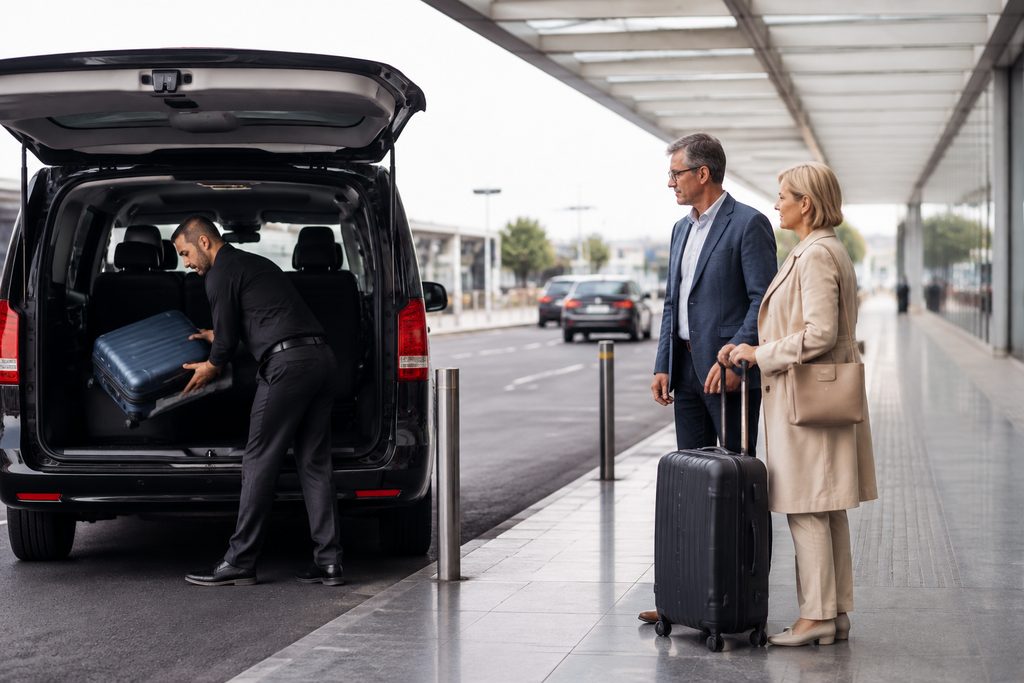
Is Airport Transfer a Good Value for Medical Travelers to China?
Have you ever landed in a foreign country after a 12-hour flight, exhausted and disoriented, only to face a taxi queue that snakes around the terminal? Now imagine doing that while managing pain, anxiety about a pending surgery, or carrying a folder of medical records. The question of whether an airport transfer service cost China medical tourism is justified starts there — with the moment your plane touches down. A round-trip private transfer in Beijing or Shanghai typically runs about $200, while a taxi might cost $30-50. The real question is not the sticker price. It is what that $150 difference buys you when everything else feels uncertain.
Our team has coordinated transfers for hundreds of patients arriving at Pudong, Capital, and Baiyun airports. We have seen the full spectrum: the relieved patient who steps into a waiting car with a bilingual driver, and the exhausted traveler who spends 45 minutes fumbling with a translation app while a taxi driver circles the arrivals level. This article breaks down exactly where the value lies, where it does not, and how the economics work for different types of medical travelers.
Key Takeaways
- A private airport transfer in major Chinese cities costs approximately $200 round-trip, compared to $30-50 for a standard taxi or $5-10 for the metro.
- For post-surgical arrivals or patients with limited mobility, a pre-booked transfer eliminates a 30-60 minute navigation burden at a busy international terminal.
- Language barriers at Chinese airports are real: fewer than 1 in 10 taxi drivers at Pudong International speak functional English, according to a 2023 Shanghai Airport Authority survey of ground transport staff.
- Airport transfer is rarely bundled into medical packages at public hospitals — patients should expect to arrange it separately or through a coordination service.
The Problem: Landing in China Is Harder Than You Expect
China’s major international airports are enormous. Beijing Capital International Airport handled over 100 million passengers in 2019, making it one of the busiest aviation hubs on earth. Shanghai Pudong is comparable. For a patient arriving for treatment, the journey from gate to hospital involves multiple friction points: immigration queues, baggage claim, currency exchange, finding the correct ground transport level, and communicating a hospital address to a driver who may not read English.
A 2024 survey by the China Outbound Tourism Research Institute found that 68% of first-time foreign visitors to China cited ground transportation as their single biggest source of arrival anxiety, ahead of immigration and language. That number rises for medical travelers. One reason: unlike tourists, patients are often traveling with physical limitations. A person arriving for knee replacement surgery cannot easily haul luggage onto a crowded metro train. A cardiac patient should not be sprinting between terminal levels to find a ride-share pickup point.
The status quo — figuring it out on arrival — carries real costs. Missed consultation windows. Added stress before a procedure. The risk of being overcharged by an unlicensed driver. So the question is not whether airport transfer has value. The question is what kind of transfer, at what price, and for which traveler.
Why a Pre-Booked Airport Transfer Delivers Results
The case for a private transfer rests on three pillars: predictability, physical ease, and time efficiency. Each matters differently depending on your medical situation.
Predictability: You Know the Price Before You Land
A metered taxi from Pudong Airport to a central Shanghai hospital costs roughly ¥200-300 ($28-42), depending on traffic and route. A ride-hailing app like Didi costs about the same. But those prices assume you can navigate the app, get verified, and find your driver. For a foreigner with a new Chinese SIM card and no local payment setup, that assumption often fails. A pre-booked transfer at $200 round-trip locks the price, the vehicle type, and the pickup time before you board your flight. No surge pricing. No negotiation. No meter anxiety.
Physical Ease: The Driver Meets You at Arrivals
This is the underrated value. A private transfer driver waits at the arrivals gate with a name sign. You do not search for a taxi stand. You do not drag luggage across a parking garage. For post-operative patients returning for follow-up, or elderly travelers, or anyone managing chronic pain, that single detail can be worth the entire fee. The driver helps with bags. The vehicle is a standard sedan or a larger van if requested. You sit, you recover from the flight, and the city moves past the window.
Time Efficiency: 30 Minutes Saved, Every Trip
From gate to car, a first-time visitor using public transport needs 45-90 minutes at a major Chinese airport. With a pre-booked transfer, that window shrinks to 15-25 minutes. For a patient with a same-day consultation, that difference can mean making the appointment or missing it. And time is not free. A missed specialist slot at a top hospital like Fuwai Hospital or Peking Union Medical College Hospital means rescheduling, sometimes days later.
How Airport Transfer Works for Medical Tourists in China
The mechanics are straightforward, but the details matter. Here is the step-by-step flow we use when coordinating transfers for patients.
Step 1: Flight details confirmed. The patient sends the flight number and arrival date. The transfer provider tracks the flight in real time, so a delay does not strand the driver at the wrong time.
Step 2: Pickup point agreed. For international arrivals at Pudong, Capital, or Baiyun, the standard meeting point is the international arrivals exit, usually Gate 2 or a designated “Meeting Point” sign. The driver holds a sign with the patient’s name. For patients who prefer extra discretion, a code word can be used instead.
Step 3: Vehicle assigned. A standard transfer uses a clean, late-model sedan — typically a Volkswagen Passat, Toyota Camry, or similar. For patients with mobility aids, a larger vehicle can be arranged. Child seats are available on request in most cities.
Step 4: Direct hospital drop-off. The driver takes the patient to the hospital’s international department entrance or the hotel, whichever is first on the itinerary. No detours. No stops unless requested.
Step 5: Return transfer confirmed. The return pickup is scheduled for the discharge date or the flight home. The same driver or a colleague handles it. The round-trip price covers both legs.
Practical tip: Always confirm whether your transfer includes highway tolls and airport parking fees. In Shanghai, Pudong pickup involves a short parking window — some providers pass that ¥20-30 fee to the passenger. Ask before booking.
Is Airport Pickup Included in Medical Packages Shanghai?
The short answer: rarely. Public hospitals in China — including the top-tier institutions in Shanghai like Zhongshan Hospital and Ruijin Hospital — do not bundle airport transfers into their international patient packages. Their international departments focus on clinical coordination: appointment scheduling, interpreter services inside the hospital, and billing. Ground transportation is outside their scope.
Private international hospitals in Shanghai, such as Jiahui and United Family, sometimes include transfer coordination for premium health check packages. But this is the exception, not the rule. Most patients arrange transfers independently or through a coordination service like ours. The same applies in Beijing. A patient asking “is airport pickup included in medical packages Shanghai” should assume the answer is no and budget accordingly.
Private Airport Transfer Price for Patients Beijing: What You Actually Pay
Beijing follows the same pricing logic as Shanghai. A private airport transfer price for patients Beijing typically runs $100 one-way or $200 round-trip. That covers a driver, a sedan, tolls, and a 40-60 minute ride from Capital Airport to the central medical district around Dongdan or Chaoyang. For comparison, a taxi costs ¥150-250 ($21-35), and the Airport Express train plus subway costs about ¥30 ($4).
The premium buys three things: a waiting driver, help with luggage, and a bilingual coordinator on call if the driver and patient cannot communicate. For a patient arriving for a major procedure at a hospital like Peking Union Medical College Hospital, that buffer matters. The alternative — navigating the Beijing subway with a suitcase and a surgical referral letter — is not a serious option for most.
| Transfer Option | Cost (USD) | Time from Gate to Hospital | Bilingual Support | Best For |
|---|---|---|---|---|
| Metro / Train | $4-10 | 60-90 min | No | Budget travelers, no mobility issues |
| Taxi (metered) | $25-40 | 40-70 min | Rarely | Confident travelers, light luggage |
| Ride-hailing (Didi) | $20-35 | 40-70 min | No | Travelers with local SIM and payment |
| Private pre-booked transfer | $100 one-way / $200 round-trip | 25-40 min | Yes | Patients, elderly, post-op, first-timers |
One nuance: Beijing Capital Airport has three terminals. Terminal 3 handles most international flights. If a patient lands at Terminal 2, the pickup logistics differ slightly. A pre-booked transfer handles this automatically. A taxi does not care which terminal you land at — but you still have to find the taxi stand.
How to Book a Hospital Airport Shuttle China Without Getting Burned
If you want to book a hospital airport shuttle China, you have three realistic channels. Each has trade-offs.
Option 1: Book directly with a local transfer company. You can find providers on platforms like Klook or Viator. Prices are competitive, often $80-120 one-way. The catch: customer support is typically in Chinese, and if your flight is delayed or you cannot find the driver, you may struggle to resolve the issue in real time.
Option 2: Ask your hospital’s international department. Some hospitals in Shanghai and Beijing maintain a list of recommended drivers or a contracted transport vendor. This is a good middle ground. The hospital has vetted the provider, but the transfer is still billed separately. Availability varies by hospital.
Option 3: Use a medical coordination service. This is what we do. The transfer is one component of a broader coordination package that includes appointment scheduling, bilingual accompaniment, and hospital navigation. The transfer itself costs the same $200 round-trip, but it comes with a coordinator who is reachable on WeChat or WhatsApp throughout the journey.
Caution: Avoid unlicensed drivers who approach passengers inside the arrivals hall. These “black taxis” are common at Chinese airports and frequently charge 3-5 times the metered rate. A pre-booked transfer eliminates this risk entirely.
When Airport Transfer Is Not Worth the Money
Honesty matters here. A $200 round-trip transfer is not a good value for every traveler. If you are a healthy companion flying in to support a family member, you can take the metro or a taxi. If you have traveled to China before and speak basic Mandarin, the Airport Express in Beijing or the Maglev in Shanghai are efficient and cheap. If you are staying at a five-star hotel, the hotel concierge can arrange a reliable taxi for a fraction of the private transfer price.
The value proposition flips when you are the patient. Post-operative travel, heavy medication schedules, mobility restrictions, or simply the exhaustion of a long-haul flight — these are the conditions where a guaranteed, waiting vehicle earns its fee. The question is not whether airport transfer is a good value in the abstract. It is whether it is a good value for you, on this trip, in this condition.
Practical Considerations: Documentation, Payment, and Timing
If you decide to book a transfer, a few logistics will smooth the process. First, have your flight number and arrival terminal ready. The driver needs both. Second, confirm the payment method. Most transfer providers accept WeChat Pay, Alipay, or international credit cards through a payment link. Cash in RMB is also accepted by many drivers, but carrying large amounts of cash on arrival is not ideal.
Third, think about timing. International arrivals at Pudong or Capital take 30-60 minutes from gate to curb, depending on immigration queues. A good transfer provider tracks the flight and adjusts the pickup time automatically. If you are booking independently, tell the driver your flight number and let them monitor it.
Finally, consider the visa. Patients traveling to China for medical treatment use an S2 visa, which requires supporting documents from the receiving hospital. The transfer itself does not affect visa processing, but arriving with a clear itinerary — including ground transportation — can make the immigration interview smoother. For more on the medical visa process, see our guide on planning your medical trip to China.
Frequently Asked Questions
Compared to a $30 taxi, yes. Compared to the cost of missing a specialist consultation or spending an hour lost at a foreign airport, no. The price is standard for a pre-booked private transfer in Beijing or Shanghai. It is roughly equivalent to what you would pay for a premium airport transfer in New York, London, or Singapore.
With a reputable transfer provider, this is a non-issue. The driver tracks your flight in real time and adjusts the pickup time. If the delay is extreme — say, more than three hours — the provider will reassign a driver. You will not pay extra for a delay that is not your fault.
Yes. The transfer can be arranged under the family member’s name. The driver holds a sign with that name. If the family member speaks a language other than English or Chinese, let the provider know in advance. Some providers can match a driver with basic proficiency in Arabic, Russian, or Spanish, though this is not guaranteed and may cost extra.
Cancellation policies vary. Most providers offer a full refund for cancellations made 24 hours or more before the scheduled pickup. Within 24 hours, a partial refund or a credit toward a future transfer is common. Always confirm the cancellation policy before paying.
Standard sedans are not. If you use a wheelchair, you must request an accessible vehicle in advance. In Beijing and Shanghai, wheelchair-accessible vans are available but limited in number. Book at least 72 hours ahead to secure one.
Your Next Step
The airport transfer question is really a question about how much uncertainty you want to carry on arrival day. For a patient landing in a foreign country for surgery or treatment, removing even one variable has value. Our team at China Medical Services coordinates transfers alongside hospital appointments and bilingual accompaniment. We are not a hospital, and we do not provide medical advice — we handle the logistics so you can focus on your health. If you are planning a medical trip to China, start with a conversation about your itinerary, and we will tell you honestly whether a private transfer makes sense for your case.
For more medical information and treatment options in China, visit chinamedservices.com (China Medical Services).
