Airport Transfer for Medical Patients in China: How We Arrange Every Step
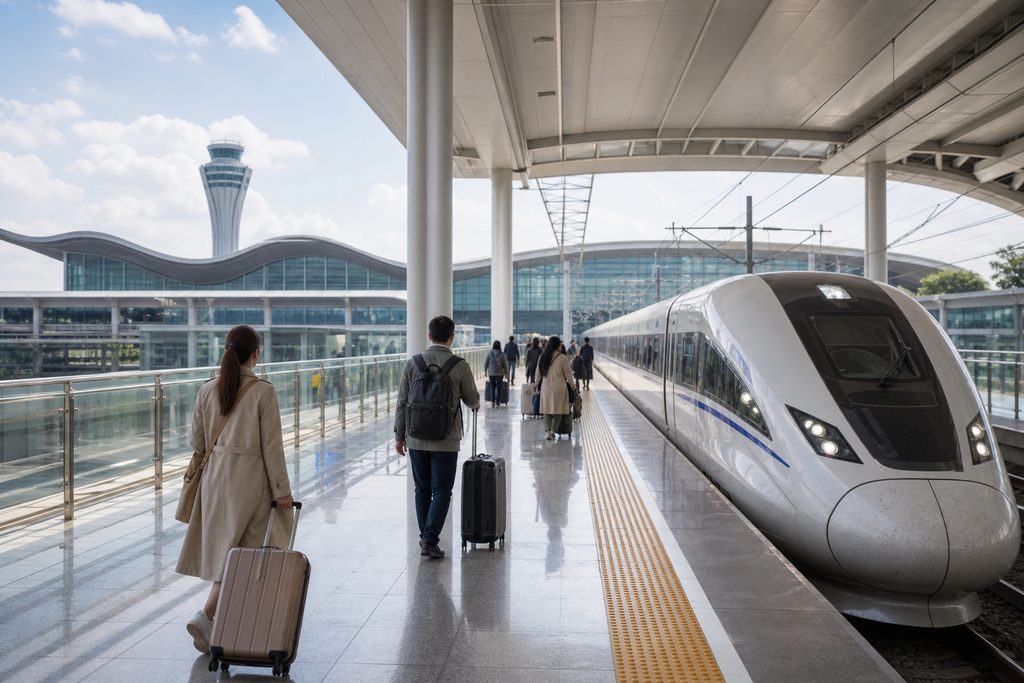
An airport transfer for medical patients China is exactly what it sounds like: a pre-arranged vehicle that meets you at the arrival gate, handles your luggage, and drives you directly to your hospital or hotel. You do not queue for a taxi. You do not negotiate with a driver. You do not navigate a metro system in a foreign language while jet-lagged and possibly in pain. The cost starts at $200 round-trip, and the service can be arranged before you ever board your flight.
But here is the part most patients overlook. The transfer itself is straightforward. What makes it complicated is everything attached to it: flight delays, wheelchair requirements, post-operative travel restrictions, and the fact that Chinese hospitals do not send ambulances to the airport for routine international arrivals. If you are expecting a hospital-branded vehicle with a nurse on board, you will be disappointed unless you specifically arrange and pay for that level of care.
Airport Transfer for Medical Patients China: The Short Answer
You can arrange a private airport transfer for medical patients in China from $200 round-trip. The vehicle meets you at the arrivals hall, the driver holds a name sign, and you are taken directly to your hospital or accommodation. Booking takes 24 to 48 hours and requires your flight number, arrival time, and destination address. That is the core answer.
The caveat: “Airport transfer” covers different things depending on who you book through. A medical concierge service coordinates the logistics and can add a bilingual escort. A ride-hailing app gives you a car and nothing else. A hospital international department may offer pickup, but many do not. The price, the vehicle type, and the level of support vary enormously. Knowing which one you need is the actual question.
Who This Is Right For — and Who It Isn’t
An arranged airport transfer makes sense for a specific profile of traveler. If you fit this description, the service removes genuine friction.
Good candidates include:
- Patients arriving for surgery or major treatment who should not be standing in taxi queues
- Elderly travelers or anyone with mobility limitations
- First-time visitors to China who do not speak Mandarin
- Patients landing late at night or during peak congestion hours
- Families traveling with a patient plus luggage, medical documents, and possibly mobility aids
Who should skip it? If you are a healthy companion arriving alone for a consultation, a standard taxi or Didi ride will work fine and cost less. If you are on a strict budget and your hospital is reachable by metro, the airport express train in Shanghai or Beijing is genuinely efficient. And if you are arriving for a minor outpatient visit with no physical impairment, the premium for a private transfer may not be worth it.
Being honest about this matters. We tell patients not to book services they do not need. That is the only way the recommendation means anything when you do need it.
The Options, Compared
There are four realistic ways to get from a Chinese airport to your hospital. Here is how they actually compare.
| Option | Typical Cost | Wait Time | Language Support | Best For |
|---|---|---|---|---|
| Standard taxi (official queue) | $15–40 | 10–30 min | None | Solo travelers, light luggage |
| Didi / ride-hailing app | $10–35 | 5–15 min | App-based, driver speaks Chinese | Comfortable with apps, no mobility issues |
| Private pre-arranged transfer | $100–150 one-way; $200 round-trip | 0 min — driver waits | Optional bilingual escort | Post-surgery, elderly, first-time patients |
| Medical transport with nurse | $300–600+ | 0 min — driver waits | Medical staff on board | Non-emergency stretcher or monitored transfer |
The private pre-arranged transfer is the sweet spot for most international patients. It costs more than a taxi but removes the three biggest stressors: finding the pickup point, communicating the destination, and handling luggage while unwell. Medical transport with a nurse is a different category entirely — that is for patients who cannot sit upright or need monitoring during the drive.
If your question is “how do I get from airport to hospital in Shanghai,” the honest answer depends on whether you are well enough to manage a standard car. Most patients are. Some are not.
What “We Arrange” Actually Means: The Coordination Layer
This is the section that separates a real service from a booking app. When we arrange an airport transfer for a medical patient, the vehicle is only half the job. The other half is coordination.
Here is what happens before you land. We confirm your flight number and monitor it for delays. If your flight lands two hours late, the driver adjusts — you do not need to contact anyone from the plane. We collect your destination: hospital name, department, building if you know it, or hotel address. We confirm whether you need wheelchair assistance at the airport, which is a separate service booked through the airline or airport, not the transfer company.
On arrival day, the driver tracks your flight and positions at the arrivals exit. If you booked a bilingual escort, that person stands with the driver, holds a sign with your name, and helps you communicate from the first minute. For patients arriving for surgery, the escort can also confirm the hospital admission time and coordinate with the international department so you are not sitting in a lobby with no idea where to go.
That last point is the one patients rarely anticipate. The drive is easy. Finding the right building in a hospital complex that spans multiple city blocks is not. Some of China’s top hospitals see over 10,000 outpatient visits per day. The campus is not a single building with a clear front door. Having someone who knows which gate, which tower, and which floor to walk into is worth more than the vehicle itself.
What It Costs: Airport Transfer Pricing in China
Let us talk numbers, because “medical tourism airport pickup China price” is one of the most common searches we see. The base rate for a private airport transfer is $200 round-trip. That covers a standard sedan or minivan, meet-and-greet at arrivals, luggage assistance, and direct transport to one destination.
What drives the price up:
- Distance — Beijing Capital International Airport to a hospital in the city center is roughly 30–60 minutes depending on traffic. Shanghai Pudong International Airport to central Shanghai is 45–70 minutes. Longer routes cost more.
- Vehicle type — a standard sedan fits two passengers and two large suitcases. A minivan or wheelchair-accessible vehicle costs more. If you are traveling with family plus a patient, you need the larger option.
- Bilingual escort — adding a person who speaks English and Mandarin to the pickup adds roughly $150–200 per day, which includes the transfer plus hospital navigation support.
- Time of day — late-night arrivals between 11 PM and 5 AM typically carry a surcharge of 20–30%.
- Medical equipment — if you need oxygen, a stretcher, or a nurse on board, you are no longer booking a transfer. You are booking medical transport, which starts around $300 and goes up based on the clinical requirements.
One question we get constantly: “is airport pickup included in medical package China?” The answer is usually no. Most hospital international departments do not include airport pickup in their treatment packages. Some private international hospitals like United Family or Jiahui may offer it as an add-on, but it is not standard. If a package advertises “full service,” verify what the transfer actually covers — vehicle only, or vehicle plus escort plus hospital check-in support. The difference matters.
Practical Considerations: Booking, Payment, and What to Prepare
You can book a transfer with as little as 24 hours’ notice, but 48 hours is safer. We need your flight number, arrival terminal, destination address, number of passengers, and luggage count. If you need a wheelchair-accessible vehicle, tell us at booking — these are not available on demand in most cities.
Payment is typically made in advance by credit card or bank transfer. Chinese drivers do not expect tips. The price you are quoted is the price you pay, unless you add stops or change the destination on the day.
Prepare a printed copy of your hospital address in Chinese characters. Even with a bilingual escort, having the address written down helps if you split up or if the escort is helping with luggage. Also carry your passport and any hospital admission documents in your hand luggage, not in checked bags.
Visa note: you are traveling on an S2 visa for medical treatment, not an M visa. The M visa is for commercial and trade activities and is not appropriate for medical travel. Your hospital invitation letter and treatment plan are the supporting documents for the S2 application. The transfer service does not affect your visa, but arriving with the correct visa does affect everything else.
And one more thing. If you are arriving for surgery and plan to return to the airport afterwards, book the round-trip transfer before you leave home. Post-operative travel is harder to arrange from a hospital bed. You will want the return pickup locked in with a driver who knows your discharge time may shift by several hours.
Frequently Asked Questions
For a standard private transfer, yes — same-day booking is possible if you book at least a few hours before landing. But availability tightens during peak travel seasons and late-night hours. For medical transport with a nurse or stretcher, same-day is rarely possible. Those vehicles and staff are scheduled in advance, sometimes days ahead. If you know you need medical transport, book it before you fly.
Flight delays are not a problem — the driver tracks your flight and adjusts automatically. There is no extra charge for waiting caused by delays. If your flight is cancelled and you do not travel at all, most transfer services refund the full amount with proof of cancellation. If you cancel for personal reasons, the refund policy varies. We typically offer a full refund for cancellations made 48 hours or more before the scheduled pickup.
Airport wheelchair assistance is separate from the transfer service. You request it through your airline when you book your flight, or at the check-in counter on departure day. The airport staff will meet you at the aircraft door with a wheelchair and take you through immigration and baggage claim. Your transfer driver meets you at the arrivals exit. The two services connect, but they are booked independently. Tell us if you need a wheelchair-accessible vehicle for the road portion — that is a different vehicle type and must be reserved in advance.
A private transfer costs roughly 5 to 10 times what a taxi costs. That is the honest math. The value is not in the ride itself — it is in the meet-and-greet, the language support, the luggage handling, and the hospital navigation. If you are healthy, mobile, and traveling light, take a taxi. If you are post-operative, elderly, or arriving for major treatment, the transfer is not a luxury. It is risk reduction.
Your Next Step
Arriving in a foreign country for medical treatment is disorienting enough without adding transportation stress. The transfer is one small piece of a larger coordination effort — but it sets the tone for everything that follows. Get it right, and the rest of the journey starts calmly.
We are China Medical Services, a coordination team that connects international patients with top-ranked hospitals across China. We are not a hospital, and we do not provide medical advice or diagnoses. What we do is handle the logistics — hospital matching, appointment coordination, bilingual accompaniment, and yes, airport transfers — so you can focus on your treatment, not the navigation. If you are planning a trip, tell us your arrival city and we will walk you through the options. Start with a free consultation and we will map out the practical details together.
One last thought. The drive from the airport to the hospital is the first hour of your medical journey in China. It should be the easiest part. With the right preparation, it is.
For more medical information and treatment options in China, visit chinamedservices.com (China Medical Services).
