Airport Transfer vs a Taxi: What’s Different for Medical Travelers
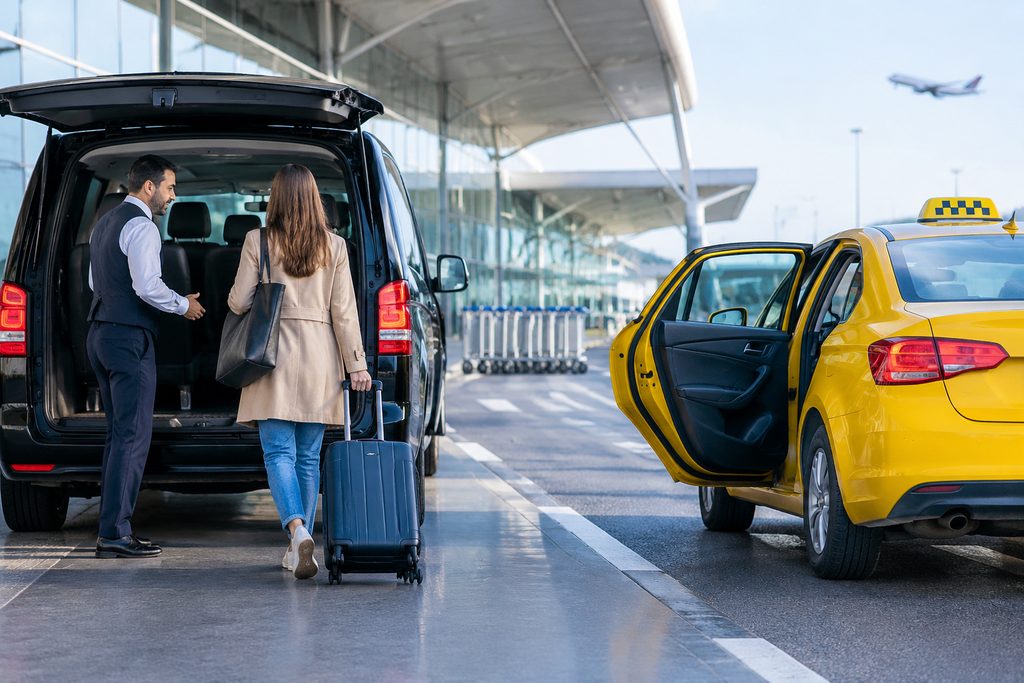
Landing at Shanghai Pudong International Airport after a 14-hour flight is disorienting enough. Throw in post-surgical pain, medication schedules, or the anxiety of an unfamiliar medical system, and the question of how you’ll actually reach the hospital becomes urgent. The search phrase airport transfer vs taxi China hospital reflects a decision every international patient faces: do you grab a cab from the rank, or arrange a pre-booked pickup? The short answer is that a dedicated airport transfer offers fixed pricing, a waiting driver with your name on a sign, and a vehicle chosen for your specific medical needs. A taxi is cheaper upfront but introduces variables that can compound quickly when you’re traveling for treatment. This article explains exactly what separates the two — and how to decide which fits your situation.
How This Actually Works, Step by Step
You’re not just choosing a car. You’re choosing how much uncertainty you can tolerate on arrival day. Here’s the real sequence for each option.
With a taxi, you follow signs to the official taxi stand. At Pudong, that can mean a 20- to 40-minute queue during peak hours. You show the driver your hospital address — ideally written in Chinese characters, because many drivers don’t read English. The meter starts. Traffic on the Yan’an Elevated Road toward downtown Shanghai can stretch a 45-minute drive into 90 minutes. You pay whatever the meter says, plus a possible airport surcharge. If the driver gets lost near the hospital’s east gate instead of the international wing, you figure it out together.
With a pre-arranged airport transfer, the sequence shifts. Before you fly, you send your flight number, arrival terminal, and destination hospital — say, Huashan Hospital or Zhongshan Hospital. Your driver tracks the flight. If it lands early, they’re there. If it’s delayed three hours, they adjust. You exit baggage claim, spot a sign with your name, and follow someone who already knows the route. The price was agreed before you boarded. No meter. No negotiation. For patients arriving for surgery or chemotherapy, that predictability is the entire point.
Airport Transfer vs Taxi China Hospital: The Core Differences
Let’s get specific about what actually differs between these two options when the destination is a Chinese hospital.
Pricing structure. A taxi from Shanghai Pudong to a downtown hospital like Ruijin or Fudan-affiliated facilities typically runs $25–$45 depending on traffic and time of day. A pre-booked airport transfer through a medical coordination service costs from $200 round-trip. That’s a significant gap. But the taxi fare is a variable cost — it can spike with traffic, detours, or a driver unfamiliar with the hospital’s international department entrance. The transfer fee is fixed. For patients budgeting a multi-week treatment stay, knowing the exact transport cost upfront has real value.
Language barrier. This is where the gap widens fastest. Taxi drivers in Beijing and Shanghai are professional, but English proficiency among them is rare. You’ll need the hospital address in Chinese, and even then, hospital campuses are sprawling — Beijing’s Peking Union Medical College Hospital has multiple gates across several city blocks. A wrong gate can mean a 15-minute walk with luggage. Transfer drivers serving international medical travelers are briefed on the exact drop-off point. Some services include a bilingual coordinator who stays on the phone until you’re checked in.
Vehicle suitability. Standard taxis are sedans. If you’re arriving after knee replacement, spinal surgery, or with mobility restrictions, a standard back seat is workable but not comfortable. Transfer services can arrange larger vehicles, wheelchair-accessible vans, or vehicles with extra trunk space for medical equipment. This matters more than most patients expect.
Payment and documentation. Taxis take cash, WeChat Pay, Alipay, and sometimes foreign cards — though foreign card acceptance is inconsistent. Transfers booked through a medical service are typically paid in advance or invoiced, which simplifies insurance claims and expense tracking for medical travel.
| Factor | Taxi | Pre-Booked Airport Transfer |
|---|---|---|
| Cost (Shanghai Pudong to downtown hospital) | $25–$45 one-way, variable | From $200 round-trip, fixed |
| Driver English proficiency | Rare | Bilingual or briefed by coordinator |
| Wait time at airport | 20–40 min queue typical | Driver waiting at arrivals |
| Vehicle options | Standard sedan | Sedan, van, wheelchair-accessible on request |
| Payment | Meter, cash or Chinese apps | Pre-paid or invoiced |
| Address confusion risk | Moderate to high | Low — route pre-confirmed |
A Realistic Timeline
How long does each step actually take? Here’s a grounded view, assuming you’re arriving at Shanghai Pudong for treatment at a major public hospital.
| Stage | Taxi | Pre-Booked Transfer |
|---|---|---|
| Booking before travel | None needed | 2–3 days before departure (minimum) |
| Immigration and baggage claim | 45–90 min (same for both) | 45–90 min (same for both) |
| Locating your ride | Follow signs to taxi stand, queue 20–40 min | Driver at arrivals with name sign, 0–5 min |
| Drive to downtown hospital | 45–90 min depending on traffic | 45–75 min, route pre-planned |
| Total from landing to hospital door | 1.5–3 hours | 1–2 hours |
Notice what’s missing from most planning advice: the time between landing and actually starting your journey. That’s the window where fatigue, confusion, and language barriers compound. Patients who’ve just flown 12 hours don’t make their best decisions at a taxi stand.
What Can Go Wrong — and What Happens Then
Let’s be honest about failure modes, because they’re not rare.
Taxi breakdowns. They happen. Chinese taxis are generally well-maintained, but a breakdown on the airport expressway means waiting for a replacement vehicle. You’ll need to flag another taxi or wait for the driver to call dispatch. If you have a scheduled appointment — say, a 9:00 AM registration at a hospital that only accepts morning check-ins — this can cost you a full day.
Address mismatch. You hand the driver a printed address. He nods. Forty minutes later, you’re at the wrong campus. Many Chinese hospitals have multiple locations. Zhongshan Hospital Fudan University, for example, has a main campus on Fenglin Road and satellite facilities elsewhere. Fixing this means a new fare, more time, and rising stress.
Transfer no-shows. A reputable transfer service tracks your flight and adjusts. A less reputable one might not. Before booking, ask: “What happens if my flight is delayed more than two hours?” and “Do you monitor flight status automatically?” The answer tells you everything. Services that say “we’ll figure it out when you land” are not services — they’re dispatchers.
Payment disputes. Taxi meters are regulated, but disputes over “airport surcharge” or “night rate” still occur. With a transfer, the price is locked. Get it in writing before you depart.
Is a Taxi Safe for Patients in Beijing? What the Numbers Say
The question is taxi safe for patients in Beijing deserves a direct answer. Yes — Beijing taxis are generally safe. The city’s taxi fleet is regulated, drivers are licensed, and violent crime against passengers is extremely rare. The safety concern for medical travelers isn’t criminal; it’s operational.
Beijing Capital International Airport and the newer Daxing International Airport both have well-organized taxi queues. Drivers use meters. The risk profile changes when you consider what “safe” means for someone arriving with a fresh surgical wound, a compromised immune system, or severe fatigue. A long queue in an unheated arrivals hall in January is a different kind of risk. A driver who can’t understand which hospital entrance you need is a different kind of risk. So the honest answer: taxis are physically safe. They are less operationally safe for patients with specific medical needs.
How to Get from Shanghai Airport to Hospital: Decision Criteria
So how do you choose? Here’s a practical framework based on what our coordination team has observed with hundreds of arriving patients.
Book a transfer if: you’re arriving after a long-haul flight for surgery or a procedure within 48 hours; you have mobility restrictions or medical equipment; you don’t speak Chinese; your hospital appointment is time-sensitive; or you’re traveling alone.
A taxi is fine if: you’re arriving days before your first appointment; you’re mobile and traveling light; you speak conversational Mandarin or have the address written in Chinese; and you’re comfortable navigating a queue after a long flight.
There’s a middle path too. Some patients take a taxi on arrival because they’re healthy and have buffer time, then book a transfer for the return trip after surgery — when comfort and reliability matter most. That’s a rational split.
The question how to get from Shanghai airport to hospital also depends on which airport and which hospital. Pudong is 40–50 km from most downtown hospitals. Hongqiao Airport is closer, roughly 15–20 km from the city center. A transfer from Hongqiao to Huashan Hospital might take 30 minutes; from Pudong to the same hospital, over an hour. Geography changes the calculus.
China Medical Treatment Airport Shuttle Cost: What You’re Actually Paying For
When patients ask about China medical treatment airport shuttle cost, they’re usually comparing it against the taxi fare they see online. That comparison misses the point. You’re not paying for the ride alone. You’re paying for someone to absorb the variables.
A $200 round-trip transfer might break down like this: the driver’s time, vehicle costs, flight monitoring, English-language coordination, and the operational overhead of a service that guarantees a specific outcome — you get from the airport to the correct hospital entrance without making decisions. A $35 taxi fare buys you transportation. A $200 transfer buys you transportation plus certainty. For some patients, certainty is worth $165. For others, it isn’t. Both are valid.
If you’re researching medical tourism airport pickup China price online, you’ll see a wide range. Some hotels offer “free airport pickup” that’s actually bundled into the room rate. Some independent drivers advertise on forums for $60–$80 one-way. Some medical coordination services charge $200–$300 round-trip with full flight tracking and hospital coordination. The price differences reflect how much responsibility the provider takes if something goes wrong.
Book Hospital Transfer from Shanghai Pudong Airport: What to Confirm First
If you decide to book hospital transfer from Shanghai Pudong airport, here’s what to verify before paying anything.
Flight tracking. Does the service monitor your flight automatically, or do you need to notify them of delays? Automatic tracking is the standard you want.
Meeting point specificity. “Arrivals hall” is not specific enough. Pudong has Terminal 1 and Terminal 2, each with multiple exits. Confirm the exact meeting point — for example, “T2, Exit 3, near the Starbucks.” A good service will send this to you before departure.
Vehicle type. Confirm the actual vehicle, not just “a car.” If you need space for a wheelchair or large luggage, say so explicitly. Ask for photos if it matters.
Cancellation policy. If your visa is delayed or your surgery is rescheduled, can you cancel the transfer without penalty? A reasonable service allows cancellation 24–48 hours before arrival.
Who you can call. You want a phone number or WeChat contact that someone answers in English. Test it before you fly.
Practical Considerations: Visas, Records, and Arrival Logistics
Transport is one piece of a larger arrival puzzle. Here’s what else to have in order.
Visa category. For medical treatment in China, you’ll typically apply for an S2 visa with supporting documents from the hospital — an invitation letter, treatment plan, or appointment confirmation. Family members accompanying you also apply for S2. The S1 visa applies for stays exceeding 180 days. Processing times vary by embassy, so start at least 4–6 weeks before your planned travel date. Our team can guide you through the document requirements, but the embassy makes the final decision.
Medical records. Carry physical copies of your imaging, pathology reports, and medication list. Also keep digital copies accessible offline — airport Wi-Fi is unreliable, and you may need to show records at immigration if asked about your treatment purpose.
Payment. Chinese hospitals generally require pre-payment for treatment. International credit cards are accepted at major hospital international departments and private facilities, but cash or Chinese payment apps are more universally accepted. Confirm with your hospital before arrival.
Insurance. Most international insurance plans reimburse after treatment rather than paying directly. Chinese public hospitals rarely bill foreign insurers directly. Private international hospitals in China — like United Family or Jiahui — often do. If direct billing matters, that’s a factor in hospital selection. You can compare options on our private international hospitals page.
Frequently Asked Questions
Yes, physically safe. Licensed taxi drivers in major Chinese cities are regulated and crime against passengers is rare. The bigger challenges are language, hospital campus navigation, and queue times at peak hours. For patients with mobility issues or tight appointment schedules, those operational risks can outweigh the savings.
A taxi from Pudong Airport to a downtown hospital typically costs $25–$45 one-way. A pre-booked airport transfer through a medical coordination service starts around $200 round-trip. The transfer includes flight tracking, an English-speaking contact, and a driver briefed on your exact hospital entrance.
A reputable transfer service monitors your flight status automatically and adjusts the pickup time. Confirm this before booking. If the service requires you to notify them manually and you forget, you may be charged a waiting fee or lose the booking entirely.
Some international hospital departments offer pickup coordination, but most don’t operate their own transport. You’ll typically book through a medical coordination service, a hotel concierge, or a private driver. Hospital websites rarely list transport options clearly.
No. Tipping is not customary in China for taxi or transfer drivers. If you’re using a medical coordination service, the fee you paid covers the driver. Extra cash is never expected.
Your Next Step
The choice between an airport transfer and a taxi comes down to how much uncertainty you can absorb on arrival day. If you’re healthy, mobile, and arriving with buffer time, a taxi works. If you’re arriving for treatment and every hour matters, a pre-arranged transfer removes the variables that taxis can’t control.
We’re China Medical Services, and we help international patients coordinate the practical side of treatment in China — hospital matching, appointment scheduling, bilingual accompaniment, and arrival logistics. We don’t provide medical care, and we don’t promise outcomes. What we do is make the journey smoother, starting with your first step off the plane. If you’re planning treatment at one of China’s top-ranked hospitals, our team can walk you through the arrival process and help you decide what’s worth arranging in advance. Start with a free consultation — we’ll listen first, then suggest what fits.
Arriving for medical treatment is hard enough. Getting from the airport to the hospital shouldn’t be the hardest part.
For more medical information and treatment options in China, visit chinamedservices.com (China Medical Services).
