Medical Tourism in Beijing for Mongolian Patients: Costs, Top Hospitals, and How to Start
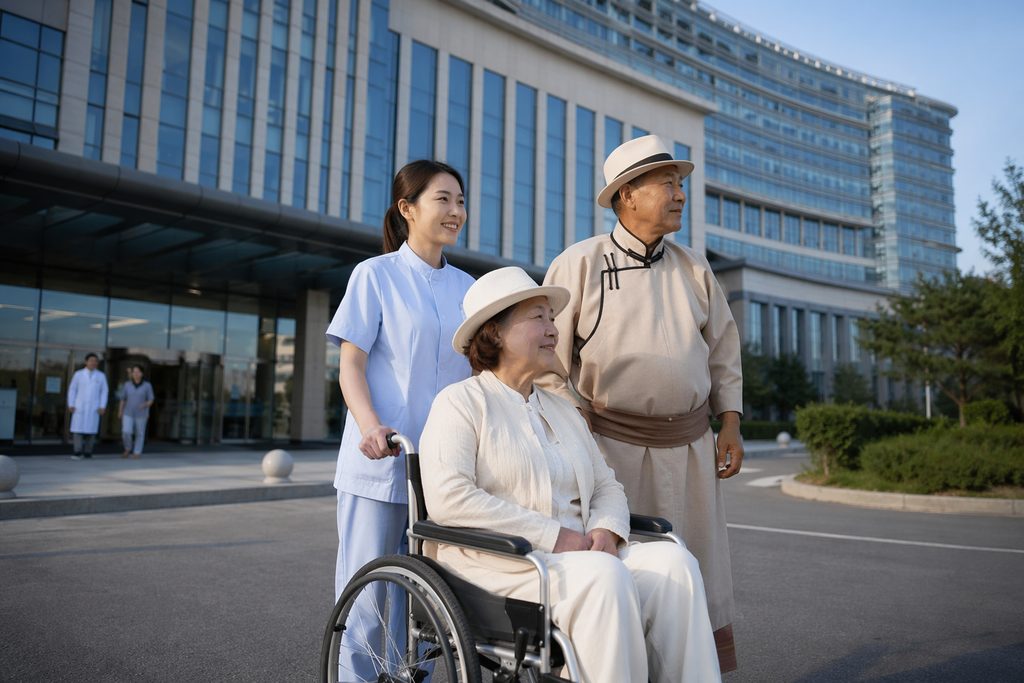
What if the specialist you need is a two-hour flight away, not a fourteen-hour one? For patients in Ulaanbaatar, that is the reality of medical tourism in Beijing for Mongolian patients — a short hop across the border to some of the highest-ranked hospitals on earth.
Beijing holds more hospitals on the Fudan Top 100 list than any other Chinese city — 21 of them. The city sits within a network of 340+ top-ranked hospitals across 37 cities, all ranked by Fudan and JCI standards. That density matters. It means choice, shorter travel, and a healthcare system that already sees Mongolian patients every week.
But distance is not the same as access. This guide covers what treatment actually costs, how to book an appointment as a Mongolian citizen, the visa category that applies, and the honest limits of what any coordinator can promise you.
How This Actually Works, Step by Step
Here is the real sequence. Not the brochure version. The version that avoids a wasted trip.
Step one: gather your records. You send us your existing examination reports — imaging, lab work, biopsy results, discharge summaries, current medication list. If they are in Mongolian or Russian, they need translation into Chinese for the hospital to review properly. We handle that.
Step two: a written second opinion. The relevant Chinese specialty — cardiology, oncology, orthopedics, whatever your case requires — reviews those records and returns a written analysis with treatment suggestions and direction. This costs $300–500 depending on the specialty and complexity. It is for reference only, not a prescription.
Step three: a video consultation if you want one. You speak online with the Chinese specialty team, explain your symptoms and goals, and hear their recommendations directly. Video consultation runs $100–300 with a standard international department, or $500–800 with a top specialist. Multidisciplinary team reviews where several departments weigh in together run $1,500–2,000.
Step four: decide whether to travel. This is the point of the whole exercise. Many patients learn that their case can be managed locally, or that the timing is not right. Others get a clear plan and move forward.
Step five: appointment coordination and arrival. If you proceed, we assist with registration, hospital medical card creation, and available green-channel logistics. Appointment coordination starts from $300, with a full refund if we cannot secure the appointment shown in your order.
Which Are the Best Hospitals in Beijing for Mongolian Patients?
Beijing’s public hospitals are enormous. A single top-tier facility can see over 10,000 outpatients in a day. That scale is why the specialty rankings matter more than the hospital’s overall reputation.
China’s Fudan ranking publishes two things. The general Top 100 uses letter tiers — A++++ down to A — with no individual numeric position. The specialty reputation rankings are different: 45 specialties each get a numbered Top 10. So you can legitimately say a hospital “ranks among China’s top 10 for oncology” without inventing a national ranking.
For most Mongolian patients traveling to Beijing, three categories come into play:
- Public tertiary hospitals (Grade 3A). The academic heavyweights. Peking Union Medical College Hospital, Fuwai Hospital for cardiac surgery, and the major teaching hospitals affiliated with Peking University. Highest expertise, lowest cost, longest queues.
- International departments and VIP channels. Same hospitals, separate entrance. Senior specialists, English-speaking staff, and appointments that can be locked in before you fly. Expect roughly 1.5 to 2 times the standard-channel price.
- Private international hospitals. United Family, Jiahui, Parkway and similar. JCI-accredited, direct insurance billing, Western-style service. Higher fees, far less waiting.
If your case is oncology, cardiac, orthopedic, or reproductive medicine, start with the specialty Top 10 listings rather than the general tier list. The Beijing city page groups every ranked hospital in the capital by tier.
A Realistic Timeline
Patients consistently underestimate two things: document translation and appointment lead time. Both add days you cannot compress.
| Stage | Realistic Duration | What Slows It Down |
|---|---|---|
| Record collection and translation | 3–10 days | Missing pathology slides, illegible scans, needing new imaging |
| Written second opinion returned | 3–7 business days | Specialty backlog; cases needing multi-department review |
| Video consultation scheduling | 5–14 days | Time zone coordination; senior specialist availability |
| S2 visa application | 4–10 business days | Incomplete hospital invitation documents; embassy processing volume |
| Appointment confirmation | 1–4 weeks | Standard channel has no advance booking; international department does |
| Arrival, first in-person consult | Day 1–2 after landing | Jet lag is minimal from Ulaanbaatar; paperwork is not |
| Tests before surgery decision | 2–7 days | Some tests must be repeated in China regardless of home results |
| Surgery or treatment start | 1–3 weeks after arrival | Pre-operative clearance; bed availability in the ward |
Total from first contact to treatment start: roughly four to ten weeks for a straightforward surgical case. Complex oncology workups run longer. Anyone promising you a fixed surgery date before your records have been reviewed is guessing.
What Can Go Wrong — and What Happens Then
This section is the reason to read the whole article.
You cannot book a standard public outpatient slot from abroad. This is a real rule, not a service limitation. Standard registration happens on the day, in person, by queue. If you need a confirmed appointment before you fly, you go through the hospital’s international department or VIP channel. That costs more. It is also the only way to lock in a date.
Surgery cannot be scheduled before an in-person consultation. Chinese public hospitals require a face-to-face exam before booking an operating room. So the honest sequence is: travel, consult, test, then schedule. Budget for that gap.
Your home test results may not be accepted. Some hospitals require repeat imaging or labs done on-site. It is not distrust — it is protocol and liability. Factor in the cost and the days.
The ward may be full. Top hospitals run at capacity. A confirmed surgical plan does not guarantee a bed on your preferred date. Waiting a few extra days is common.
Your visa application may need more documents than you expect. Consulates can request additional supporting paperwork. Apply with buffer time, not the week before your flight.
What Treatment Costs in Beijing — and Why Mongolians Compare
Cost is usually the first question, and it deserves a straight answer with ranges, not single numbers.
| Procedure | Beijing Top Public Hospital | Typical U.S. Cost |
|---|---|---|
| Coronary artery bypass grafting | $12,000–20,000 | $120,000+ |
| Cancer treatment (per cycle, varies widely) | Varies by regimen and stage | Often 5–10x higher |
| Knee or hip replacement | Ranges by implant and hospital | Substantially higher |
| Comprehensive health screening | Modest, package-dependent | Higher |
Across comparable surgical procedures, Chinese top-tier public hospitals generally run one-fifth to one-tenth of U.S. prices. Cancer treatment cost in Beijing for international patients depends heavily on the regimen, the stage at diagnosis, and whether you are in a standard or international department. There is no honest single figure.
Public hospitals require prepayment. Insurance reimbursement happens afterward, in your home country, according to your policy. Private international hospitals often bill insurers directly, which is a genuine advantage if you carry international coverage. For a fuller breakdown of medical tourism China cost for Mongolians, the pattern holds: the procedure fee is lower, the travel and accommodation add-on is small because you are close, and the coordination layer is where you choose your comfort level.
Is Treatment in China Safe for Foreigners?
Fair question, and it deserves specifics rather than reassurance.
China’s top hospitals perform procedure volumes that most Western centers do not approach. Fuwai Hospital alone performs over 14,000 cardiac surgeries a year — the highest volume in the world. High volume correlates with experienced teams and refined protocols. Many of these hospitals hold JCI accreditation, the same international standard applied in the U.S. and Europe.
The friction is not clinical quality. It is navigation. A hospital with 10,000 daily outpatients has signage, queues, payment windows, and registration systems designed for Chinese-speaking patients. Without language support, a competent foreign patient can lose two days just finding the right building.
That is the actual risk: not bad medicine, but missed appointments, misunderstood instructions, and wasted days. A bilingual medical companion costs from $300 per day — four hours half-day or eight hours full-day — and covers registration, queuing, payment, wayfinding, translation, and accompaniment. They do not promise to secure a specific specialist. They make sure you are standing in the right place at the right time with the right paperwork.
Practical Considerations: Visa, Payment, and Follow-Up
Visa category. Foreigners coming to China for medical treatment use the S2 visa, annotated for diagnosis and treatment purposes. Stays exceeding 180 days use S1. Accompanying family members also apply for S2. The M visa is for commercial and trade activities only — it has nothing to do with medical treatment. Requirements vary by consulate and change over time, so confirm current rules with the Chinese embassy or consulate serving Mongolia and apply with supporting hospital documents.
Payment. Public hospitals: prepay, then claim reimbursement at home. Private international hospitals: often direct billing. Bring a payment method that works internationally, and confirm the hospital’s accepted cards before arrival.
Language. Assume you will need support. Even patients with some Mandarin find medical terminology a different language entirely.
Follow-up at home. Ask before you leave what post-operative monitoring is required, what records you need to carry back, and whether the Chinese team can review follow-up imaging remotely. Get it in writing.
Accommodation. Stay within walking distance of the hospital if you can. Recovery is easier when transport is not a daily negotiation. Airport transfer runs $200 round-trip if you want it arranged.
Frequently Asked Questions
You apply for the S2 visa, annotated for medical treatment, at the Chinese embassy or consulate serving Mongolia. You will need supporting documents from the treating hospital, and accompanying family members apply under the same S2 category. Processing typically takes 4–10 business days, but requirements vary and can change — always confirm with the consulate directly before submitting.
Not through the standard public outpatient channel, which registers patients on the day by queue. Confirmed advance appointments are available through hospital international departments and VIP channels, at roughly 1.5–2 times the standard price. Our appointment coordination service starts from $300 and is fully refunded if we cannot secure the appointment shown in your order.
China’s top-ranked hospitals meet international accreditation standards, and several hold JCI certification. Procedure volumes at leading centers are among the highest globally. The practical risk for foreign patients is navigation and communication, not clinical capability. Bilingual support closes most of that gap.
It varies substantially by cancer type, stage, regimen, and whether you are treated in a standard or international department. There is no responsible single figure. A written second opinion ($300–500) based on your actual records is the fastest way to get a meaningful estimate before committing to travel.
No. Some patients manage independently, particularly those with Mandarin and prior experience in Chinese hospitals. But if you are arriving for the first time with a serious diagnosis, the coordination layer — records, appointment, visa documents, accompaniment — is usually the difference between one trip and three.
Your Next Step
The core message is simple: Beijing is close, its top hospitals are genuinely world-class, and the barrier is navigation rather than medicine. Getting a written opinion before you book a flight is the single highest-value move you can make.
We are China Medical Services. We connect international patients with Chinese hospitals, coordinate appointments through official international departments, and provide bilingual accompaniment on the ground. We are not doctors, and we do not diagnose, prescribe, or promise outcomes.
If you want to start, send your existing reports for a free initial consultation. No commitment, no pressure — just a clearer picture of whether Beijing is the right next step for your case.
For more medical information and treatment options in China, visit chinamedservices.com (China Medical Services).
