Can a Biopsy Make My Cancer Spread? The Real Risk and Data
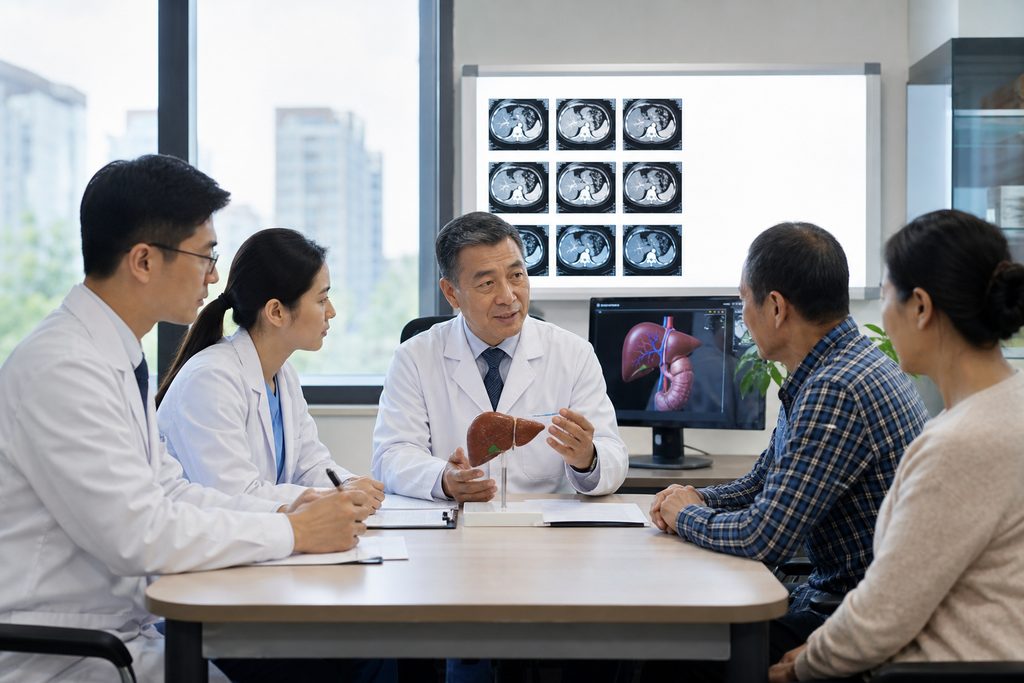
When 42-year-old Michael first heard the word “tumor” from his radiologist in Manchester, his mind locked onto one terrifying question: if they stick a needle in it, won’t the cancer cells leak out and spread? He had read a forum post about someone whose cancer “exploded” after a biopsy. He nearly refused the procedure. His oncologist spent forty minutes walking him through the actual numbers, the technique, the safeguards. Michael got the biopsy. It gave his team the molecular profile they needed to match him to a targeted therapy. Three years later, he is in remission.
That fear Michael felt is real, and it deserves an honest answer. The short version: the risk of a biopsy causing cancer to spread is extremely low. The risk of *not* getting a biopsy — and treating the wrong disease, or missing a treatable mutation — is far higher. But the fear persists because the mechanism is real. It has a name: needle tract seeding. Let’s look at what the data actually says about biopsy cancer spread risk, how modern protocols in top oncology centers minimize it, and what this means if you are considering a biopsy in China.
How This Actually Works, Step by Step
You have a suspicious mass. It showed up on CT or MRI. The next step is almost always a biopsy, because imaging alone cannot tell a benign tumor from a malignant one, or one cancer subtype from another. Here is the real sequence.
First, you send your existing imaging and reports to the oncology team that will handle the biopsy. This includes the CT or MRI images themselves, not just the written report. The team reviews the size, location, and vascularity of the mass. This determines which biopsy method is safest: fine-needle aspiration, core needle biopsy, or for some deep locations, an endoscopic or surgical approach.
Second, the team plans the needle path. In modern practice, this is done under real-time imaging guidance — ultrasound, CT, or sometimes MRI. The interventional radiologist charts a route that avoids major blood vessels, bowel loops, and other structures that could complicate the procedure or increase seeding risk.
Third, the biopsy itself. A core needle biopsy typically takes 15 to 40 minutes. The needle is inserted along the planned path, a tissue sample is captured, and the needle is withdrawn. Many centers now use a coaxial technique: a thin outer cannula stays in place while the inner sampling needle moves in and out. This means the sampling needle never touches the surrounding tissue on its way out. That is one of the key technical advances that has driven seeding rates down.
Fourth, the sample goes to pathology. This is where the real value emerges. Immunohistochemistry, genetic sequencing, PD-L1 testing — these require tissue. Without them, treatment is guesswork. The pathology report typically takes 5 to 10 working days, depending on the complexity of the molecular panel.
Finally, the team reviews the results with you and builds a treatment plan. If the biopsy shows a specific mutation — EGFR, ALK, HER2, KRAS — that changes everything. It opens the door to targeted therapies that did not exist fifteen years ago. None of that happens without a biopsy.
Needle Tract Seeding: The Actual Numbers Behind Biopsy Cancer Spread Risk
The medical term for what Michael feared is “needle tract seeding.” It means tumor cells are displaced along the path of the biopsy needle and later grow there. It is a real phenomenon. It is also rare.
How rare? The most commonly cited figures come from large retrospective studies. For core needle biopsy of breast cancer, a 2019 systematic review published in *Annals of Surgical Oncology* found a needle tract seeding rate of approximately 0.1% to 0.3%. That is between one and three cases per thousand. For hepatocellular carcinoma (liver cancer), the rate has historically been reported higher — some older studies from the 1990s cited rates up to 2.7% for certain biopsy techniques. But modern coaxial techniques with image guidance have brought that down dramatically. A 2020 meta-analysis in *Liver Cancer* reported a pooled seeding rate of 0.9% for contemporary studies, with several high-volume centers reporting rates below 0.5%.
For prostate cancer, the concern has largely faded. Transperineal biopsy, which avoids the rectum entirely, has a seeding rate so low that most major guidelines no longer mention it as a meaningful clinical risk. For thyroid nodules, fine-needle aspiration seeding is considered extraordinarily rare, with case reports scattered across decades rather than systematic data.
Why is the rate so low? Three reasons. First, the immune system destroys most displaced cells. Tumor cells that leak into a needle tract are usually not viable in a new tissue environment. Second, the coaxial technique physically shields the tract. Third, for many cancers, the biopsy tract is later removed during surgery anyway. In breast cancer, the biopsy site is routinely excised with the tumor. In liver cancer, the tract is often within the planned resection or ablation zone.
So when a patient asks, “can a biopsy make cancer spread faster?” — the honest answer is that the procedure itself does not accelerate the growth of the existing tumor. The seeding risk is about a new, localized deposit along the needle path, not a systemic acceleration of the disease. And the probability of that happening is well under 1% in modern practice.
A Realistic Timeline
Here is what the process looks like if you are pursuing a biopsy in China, from first contact to treatment decision.
| Stage | What Happens | Typical Duration |
|---|---|---|
| Day 1–3 | You submit imaging (CT/MRI/PET) and clinical history. The oncology team confirms a biopsy is indicated and which method fits. | 2–3 days |
| Day 4–10 | Document translation (if needed), hospital registration, and appointment scheduling. For international patients, this is handled through the hospital’s international department or a coordination service. | 5–7 days |
| Day 11–14 | Pre-biopsy consultation. The interventional radiologist reviews the needle path plan with you, explains risks, and obtains consent. Blood tests to check coagulation status. | 1–3 days |
| Day 15 | The biopsy procedure itself. Most are outpatient. You stay for observation for 2–4 hours afterward. | Same day |
| Day 16–25 | Pathology processing. Standard histology takes 5–7 days. Molecular profiling (NGS panels) takes 10–14 days. | 5–14 days |
| Week 4–5 | Treatment planning discussion. The oncology team presents findings and a proposed treatment pathway, whether surgery, systemic therapy, or radiation. | 1–2 weeks |
The timeline people forget is the document translation and appointment lead time. If your records are in a language other than English or Chinese, add several days. Also, if you need a specific molecular panel, that adds time on the back end. And if you are traveling from abroad, the S2 visa process typically takes 1 to 3 weeks depending on your home country’s Chinese embassy or consulate.
What Can Go Wrong — and What Happens Then
The honest failure modes matter here because this is a procedure, not a formality.
Bleeding. Every biopsy carries a small bleeding risk. For most sites, it is minor and self-limiting. For highly vascular organs like the liver or kidney, the risk is slightly higher. The team checks your coagulation status beforehand and, in some cases, can embolize the tract during withdrawal to seal it. If bleeding occurs, it is usually managed with observation and supportive care. Severe bleeding requiring transfusion or intervention is rare, in the range of 0.5% to 1% for most image-guided biopsies.
Non-diagnostic sample. The needle sometimes misses the most informative part of the tumor, or the sample is too small. This happens in roughly 5% to 10% of cases, depending on the organ and the lesion’s characteristics. The recourse is straightforward: repeat the biopsy. It is frustrating, but it is not a failure of the system. It is a known limitation of sampling.
Pneumothorax. For lung biopsies, the needle passes through the chest wall and pleura. A small air leak into the pleural space occurs in up to 15% to 20% of cases. Most are tiny and resolve on their own. About 2% to 5% require a chest tube for a day or two. This is not a catastrophe, but patients should know it can happen.
Seeding, as discussed. If needle tract seeding is later detected, it is typically treated as a localized recurrence. The tract can be surgically excised or treated with radiation. It does not change the overall prognosis in most cases, because the primary tumor remains the main clinical problem.
What happens if something goes wrong in a Chinese hospital? The international department of a major public hospital has protocols for managing complications. The attending team escalates care within the hospital. If you are a foreign patient, your coordination service should be in contact with the department throughout. That is one reason patients choose a high-volume center: the complication management infrastructure is already built.
Is Biopsy Safe for Tumor in China? What the High-Volume Centers Do Differently
The question “is biopsy safe for tumor China” deserves a specific answer. The short version: at top-tier Chinese oncology centers, the safety protocols are comparable to those at major Western centers, and in some respects the volume is higher.
Volume matters for biopsies. A hospital that performs thousands of image-guided biopsies per year has interventional radiologists who have seen every anatomical variation and complication. China’s top oncology hospitals — the ones ranked among the top 10 for oncology in the Fudan specialty reputation rankings — perform biopsy volumes that are hard to match elsewhere. Fudan University Shanghai Cancer Center, for example, handles an enormous caseload of breast, lung, and liver biopsies. The same applies to the cancer center at Peking Union Medical College Hospital and Sun Yat-sen University Cancer Center in Guangzhou.
What does that volume translate to? Faster procedural time, lower complication rates, and more reliable pathology. It also means access to molecular testing panels that are run in-house, which shortens turnaround time and reduces the chance of sample degradation during transport.
If you are specifically looking for a top-ranked oncology department, the Fudan specialty reputation list is the reference point. For Shanghai specifically, searching for the “best oncology hospital Shanghai biopsy” experience will surface Fudan University Shanghai Cancer Center and Zhongshan Hospital as the two most frequently cited institutions. Both have dedicated interventional radiology teams and international patient departments.
One practical point: at Chinese public hospitals, the regular outpatient pathway does not allow overseas patients to book a biopsy in advance. You cannot email the hospital and reserve a slot. The pathway is to go through the hospital’s international department or a coordination service that handles registration, translation, and scheduling. That is the reality of the system. The top-ranked hospitals in our database all have international departments, but the process still requires local coordination.
Practical Considerations: Records, Visa, Payment, and Follow-Up
If you are considering a biopsy in China, the practical details are as important as the medical ones.
Records. Bring everything. The original DICOM files from your CT, MRI, or PET scan, not just the printed report. A USB drive with the images is standard. Bring the pathology reports from any prior biopsies. Bring a list of current medications, especially anticoagulants. If you take aspirin, clopidogrel, warfarin, or any blood thinner, the team needs to know days in advance — these must often be paused before a biopsy.
Visa. For medical treatment in China, the applicable short-stay visa is the S2 visa, annotated for medical purposes. It is not the M visa — that is for commercial and trade activities. The S2 application requires supporting documents from the Chinese hospital, typically an invitation letter or treatment confirmation. Processing time varies by country, but plan for 2 to 4 weeks. A family member accompanying you also applies for an S2 visa. Requirements change, so check with the Chinese embassy or consulate in your country for the latest rules.
Payment. Chinese public hospitals operate on a prepayment model. You deposit funds at admission or before the procedure, and costs are deducted as services are rendered. International departments often quote package prices for specific procedures. A needle biopsy, depending on the organ and imaging guidance, typically ranges from $500 to $2,000 at a top-tier public hospital’s international department. That is a fraction of the $5,000 to $15,000 the same procedure can cost in the United States without insurance. Private international hospitals in China, such as those on our private hospital directory, are more expensive but offer direct insurance billing and fully English-speaking staff.
Language. At public hospitals, the international department staff speak English, but the broader hospital environment is Chinese-speaking. The interventional radiologist may or may not speak fluent English. A bilingual medical companion — someone who handles registration, escorts you to the procedure suite, translates the consent discussion, and explains the post-procedure instructions — is the difference between a manageable experience and a confusing one. This is a service we coordinate, and it is priced from $300 per day.
Follow-up at home. Once the biopsy is done and the pathology is back, you will have a written report. If you return home for treatment, your local oncologist can act on that report. If you stay in China for treatment, the same team continues. Either way, the biopsy report is the foundation for everything that follows.
Frequently Asked Questions
No. The biopsy does not accelerate the growth of the existing tumor. The only spread risk is needle tract seeding — displaced cells growing along the needle path — and that occurs in well under 1% of modern image-guided biopsies. The primary tumor’s behavior is not changed by the procedure.
If seeding occurs, it is treated as a localized recurrence. The cost depends entirely on the treatment required — surgical excision, radiation, or ablation. At a top-tier Chinese hospital, treating a small localized recurrence might cost $5,000 to $20,000, depending on the modality. But the probability of needing that treatment is very low, and the cost of treating an undiagnosed cancer is far higher.
Some international departments and coordination services offer a “cancer biopsy China package” that includes registration, imaging review, the procedure, pathology, and a follow-up consultation. These packages are convenient and transparently priced. The key is to confirm what is included — pathology, molecular testing, and complication management should all be covered. A package that only covers the needle procedure itself is incomplete.
For oncology, the two most commonly recommended are Fudan University Shanghai Cancer Center and Zhongshan Hospital. Both have high-volume interventional radiology teams and international departments. The right choice depends on the organ involved and whether you already have a treatment team in Shanghai. A written second opinion can help clarify which center is the better fit for your specific case.
A negative biopsy does not always rule out cancer. It may mean the sample missed the malignant area. In that case, the usual next step is repeat biopsy with a different approach, or a short interval of imaging follow-up to see if the lesion changes. This is a known limitation, not a reason to panic.
Your Next Step
The fear of a biopsy spreading cancer is understandable. It is also, in the vast majority of cases, unfounded. The data is clear: seeding rates are below 1% with modern techniques, and the downside of skipping a biopsy is a treatment plan built on guesswork. If you are considering a biopsy in China, the process starts with your existing imaging. Send us the CT or MRI files, and we will review them with a relevant oncology team and tell you honestly whether a biopsy is indicated, which method fits your case, and what the realistic timeline looks like. We are a coordination service — we connect you with China Medical Services partner hospitals, handle translation and scheduling, and provide bilingual companions on the ground. We do not perform biopsies, and we do not make medical decisions. But we can make the path clearer.
The core message is simple: the biopsy is not your enemy. It is the tool that tells you what you are actually fighting. Get the tissue. Get the answer. Then build the plan.
For more medical information and treatment options in China, visit chinamedservices.com (China Medical Services).
