Blood Testing in China: Same-Day Lab Results and Real Costs Explained
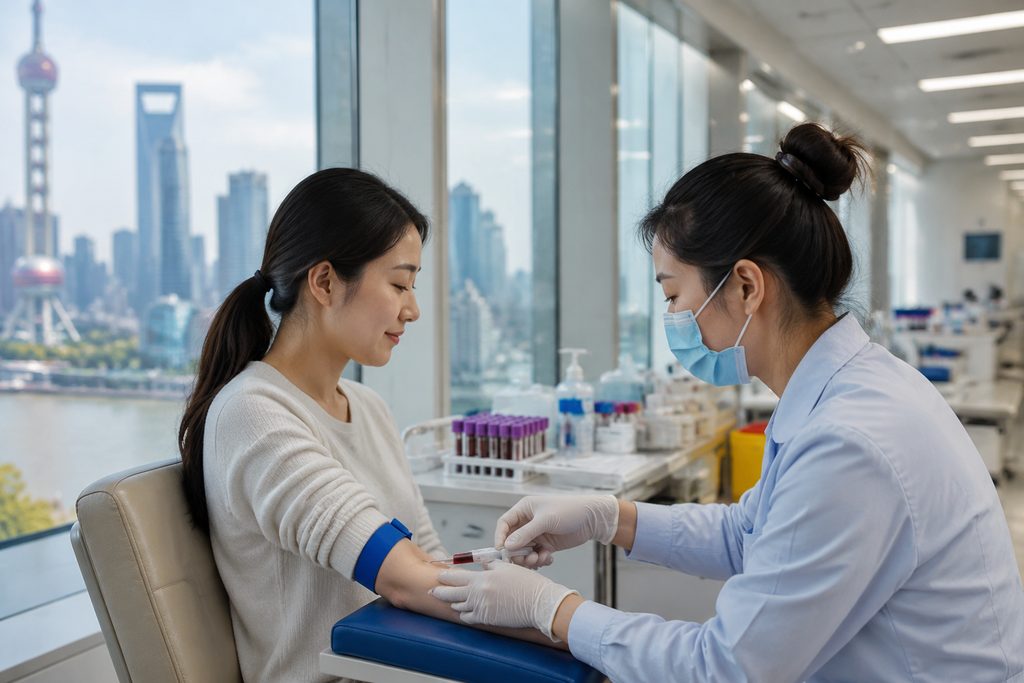
Blood Testing in China: How Same-Day Lab Service Works for Foreigners
You might assume getting a blood test in China as a foreigner means navigating a crowded public hospital with no English support and waiting days for results. The reality is different. A blood test price China typically ranges from $20 to $150 depending on the panel, and many private clinics in Beijing and Shanghai deliver same day lab results Shanghai patients rely on for fast decisions. Our team coordinates this daily.
That said, the system has quirks. Knowing where to go, what to bring, and what you will actually pay separates a smooth experience from a frustrating one. This guide covers the mechanics, the costs, and the practical steps.
Key Takeaways
- A standard comprehensive metabolic panel in China costs $25–$60 at private clinics, roughly 60–80% less than typical US cash prices.
- Same-day results are standard at private international clinics in Shanghai and Beijing; public hospitals often return routine panels within 2–4 hours but require in-person registration.
- You do not need a local doctor referral for most private lab tests, but some specialized panels require a physician order.
- Bring your passport. It is mandatory for registration at every licensed lab and hospital in China.
The Problem: Blood Work Abroad Feels Complicated and Opaque
For the 1.4 million foreigners living in China and the millions more who visit annually for business or medical travel, routine blood work triggers real anxiety. A 2023 survey by the International Medical Travel Journal found that 67% of medical travelers cite “uncertainty about local lab quality and process” as their top concern before booking any diagnostic service abroad. That is higher than cost worries or language barriers.
And the anxiety is not irrational. Public hospital labs in China process enormous volumes. A single top-tier hospital in Shanghai may run 15,000 to 20,000 blood draws per day. Without Chinese language skills, you queue at a registration window, pay a deposit, find the phlebotomy room, and then return hours later to collect a paper report printed entirely in Chinese. For a first-time visitor, that is a half-day ordeal.
Private clinics solve most of this. But they are not evenly distributed. Beijing and Shanghai have dozens of JCI-accredited or internationally oriented labs. Smaller cities often do not. So the real question is not whether China can do blood work well. It is whether you know where to look and what to expect before you walk in.
Why Private Labs in China Deliver Faster, Cheaper Results
Volume Creates Speed
Chinese commercial labs run on scale that Western patients rarely see. KingMed Diagnostics, one of the largest independent lab networks in China, processes over 100 million tests annually across 40+ laboratories. Daan Gene and BGI have similar reach. This infrastructure means routine chemistry panels, CBCs, and hormone assays are batched continuously throughout the day, not once each morning. A sample drawn at 10:00 AM in Shanghai can be processed, validated, and uploaded to a patient portal by 3:00 PM the same afternoon.
Compare that to the average US outpatient lab, where non-urgent panels often take 24–48 hours. The difference is not technology. It is workflow design built around throughput.
Private Clinics Cater Specifically to Foreigners
Clinics like United Family Healthcare, Parkway Health, Raffles Medical, and Jiahui Health operate in major Chinese cities specifically for international patients. Their lab interfaces are in English. Their reports include reference ranges matched to international standards. Their phlebotomists are accustomed to Western patient expectations about privacy and communication. The private blood test clinic Beijing cost structure reflects this service level — higher than public hospitals, but far below Western private pricing.
For example, a standard lipid panel at a private Beijing clinic runs $30–$50. The same test at a US private clinic without insurance is typically $80–$150. A thyroid panel (TSH, FT3, FT4) in Shanghai costs $45–$70 at a private international clinic, versus $120–$250 in the United States.
Regulatory Standards Are Tightening, Not Loosening
China’s National Health Commission has mandated ISO 15189 accreditation as the benchmark for clinical laboratories since 2021. Most private international clinics in Tier 1 cities now hold this accreditation or JCI certification, which includes laboratory standards. This is not a loosely regulated environment. It is a maturing one with real oversight.
How Does Blood Testing Work in China: The Step-by-Step Process
So how does blood testing work in China when you actually walk through the door? The process differs sharply between public hospitals and private clinics. Here is the realistic sequence for both.
At a Private International Clinic
You call ahead or walk in. Most clinics accept walk-ins for routine panels, but booking saves time. At registration, you show your passport. The clinic creates or updates your electronic medical record. A nurse or physician assistant reviews your requested panels. For most standard tests — CBC, metabolic panel, lipid profile, liver function, kidney function, HbA1c — no physician referral is needed. For specialized tests like tumor markers, hormone panels, or infectious disease screening, a clinic physician may do a brief consultation first.
You pay before the draw. Payment methods include WeChat Pay, Alipay, UnionPay, and international credit cards at most international clinics. The draw itself takes five minutes. Results arrive by email or through the clinic’s patient portal. Same-day turnaround is standard for routine panels drawn before noon.
At a Public Hospital
The process is more involved. You arrive at the hospital’s outpatient building, often before 8:00 AM to beat queues. You need a hospital medical card, which requires your passport and a small deposit — typically ¥50–¥100. You then queue at the registration window to get a number for a consultation. A doctor must see you before ordering any blood work. This is non-negotiable in the public system. The consultation may take five minutes, but the queue can take an hour.
After the doctor orders tests, you pay at a separate payment window. Then you go to the phlebotomy room, take a number, and wait. After the draw, you return later — usually 2–4 hours for routine panels — to collect printed results from a self-service machine. The report is in Chinese. If you need English, you must arrange translation yourself or through a service.
| Test Panel | Private Clinic Price (USD) | Public Hospital Price (USD) | Typical US Cash Price (USD) |
|---|---|---|---|
| Complete Blood Count (CBC) | $15–$30 | $5–$12 | $30–$60 |
| Comprehensive Metabolic Panel | $25–$50 | $10–$20 | $50–$120 |
| Lipid Panel | $30–$50 | $12–$25 | $80–$150 |
| Thyroid Panel (TSH, FT3, FT4) | $45–$70 | $20–$35 | $120–$250 |
| HbA1c | $20–$35 | $8–$15 | $40–$80 |
| Vitamin D (25-OH) | $30–$50 | $15–$25 | $60–$150 |
Prices vary by hospital and case complexity. The public hospital figures assume you can navigate the system in Chinese or with a companion. The private clinic figures include English-language service and direct insurance billing at most locations.
Can I Get Blood Work Done in China as a Foreigner? Eligibility and Realities
The short answer is yes. Can I get blood work done in China as a foreigner without a local residency permit? Absolutely. Your passport is sufficient identification at any licensed lab or hospital. There is no requirement for a Chinese national ID, a local address, or a referral from a Chinese physician for most private clinic panels.
But there are caveats worth stating plainly.
First, some specialized tests — particularly genetic screening, certain infectious disease panels, and fertility-related hormone profiles — may require a physician consultation before the lab will process them. This is a clinical governance rule, not a bureaucratic hurdle. The clinic physician wants to ensure the test is appropriate and that results will be interpreted correctly.
Second, public hospitals technically accept foreign patients, but the reality is that without Chinese language ability, the process is exhausting. Registration windows, payment terminals, and result machines are all in Chinese. Many public hospital staff in major cities speak some English, but you cannot rely on it during peak hours.
Third, medical tourism lab packages China providers offer have become more common since 2022. These packages bundle multiple panels — executive health screens, cardiovascular risk profiles, cancer marker panels — at discounted rates compared to ordering tests individually. A typical executive screening package at a private Shanghai clinic costs $300–$600 and includes 30–50 biomarkers, a physician review, and a written summary in English. That is roughly one-third of what a comparable US executive physical costs.
Practical Considerations: Documents, Payment, and Follow-Up
Bring your passport. This is non-negotiable. Bring any previous lab reports if you are tracking a condition over time — clinicians find baseline comparisons genuinely useful. Bring a list of medications, including supplements, since some can affect results.
Payment works differently than in the West. Private international clinics accept international credit cards, WeChat Pay, and Alipay. Public hospitals primarily use WeChat Pay, Alipay, UnionPay, or cash. If you are using insurance, confirm before the draw whether the clinic does direct billing or whether you must pay upfront and claim reimbursement. Most international clinics in Beijing and Shanghai have direct billing agreements with major insurers like Cigna, Aetna, Allianz, and Bupa. Public hospitals almost never do direct billing for outpatient lab work.
For visa purposes, routine blood testing falls under private medical treatment. Foreigners coming to China specifically for diagnostics or treatment use an S2 visa, which covers short-term private affairs including medical care. It is not an M visa — that category is for commercial and trade activities only. The S2 visa application typically requires an invitation letter from the Chinese hospital or clinic where you have booked services. Processing times vary by embassy, so plan at least three to four weeks ahead.
After you return home, most private clinics provide access to your results through a patient portal for at least 12 months. You can share these reports with your home physician. If follow-up testing is needed, the clinic can often coordinate with partner labs in your home country, though this varies by network.
Practical tip: If you need multiple panels done, ask for a package quote before the draw. Most private clinics discount bundled tests by 15–30% compared to ordering each panel separately.
Frequently Asked Questions
At private international clinics, no referral is needed for routine panels like CBC, metabolic panels, lipids, and thyroid tests. For specialized tests — tumor markers, hormone profiles, genetic screening — a brief in-clinic physician consultation is usually required before the lab will process the sample. At public hospitals, a physician consultation is mandatory before any blood work is ordered, regardless of the test.
Routine panels drawn before noon at a private clinic in Shanghai or Beijing are typically available the same day, often within 4–6 hours. Some clinics offer a 2-hour express option for an additional fee. Public hospitals generally return routine results within 2–4 hours, but you must collect them in person from a self-service machine. Specialized tests — cultures, genetic panels, certain hormone assays — take 3–7 days regardless of facility.
Private international clinics include a physician review with most panels. If a value falls outside the reference range, the reviewing physician will flag it and typically recommend follow-up testing or a consultation. You are not left to interpret raw numbers alone. If you are at a public hospital, you will need to return to the ordering physician for interpretation, which may mean another queue.
For accredited private labs and top-tier public hospital labs, yes. The key is accreditation. Look for ISO 15189 certification or JCI accreditation. These standards cover equipment calibration, reagent quality, personnel training, and proficiency testing. Labs without these credentials vary more in quality. The major international clinic networks in Beijing, Shanghai, Guangzhou, and Shenzhen all hold one or both accreditations.
It depends on your policy. Many international health insurance plans cover outpatient diagnostics in China, and major private clinics offer direct billing. If your plan does not have a direct billing agreement, you pay upfront and submit a claim. Public hospitals almost never support direct billing for outpatient services. Check with your insurer before you book.
Your Next Step
Blood testing in China is faster and less expensive than most foreigners expect — provided you go to the right facility with the right documents. The public system works but demands Chinese language skills and patience. The private system costs more than public rates but remains far below Western cash prices and offers English-language service throughout.
Our team at China Medical Services helps international patients identify appropriate labs, understand pricing before they commit, and coordinate same-day appointments in Beijing, Shanghai, and other major cities. We are not a hospital and do not provide diagnoses. What we do is remove the friction — language, logistics, and uncertainty — so you can get your results and move forward. If you are planning blood work in China and want clarity on where to go and what it will cost, request a free consultation and we will map out the practical options for your specific situation.
For more medical information and treatment options in China, visit chinamedservices.com (China Medical Services).
