Body Composition in Shanghai: How to Book a Scan That’s Worth It
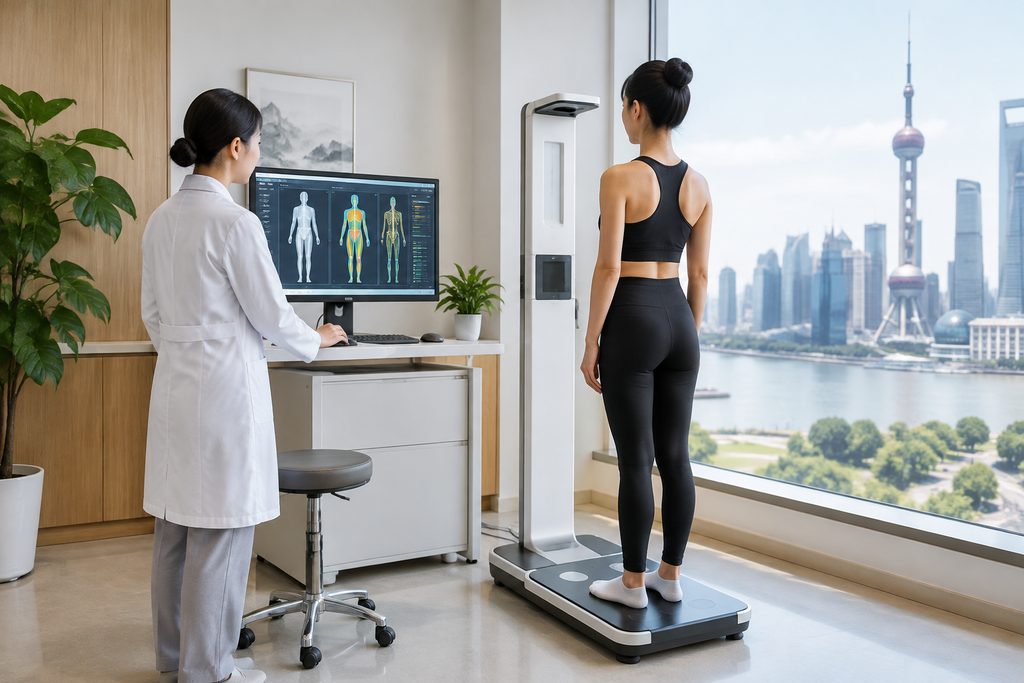
Key Takeaways
- A DEXA body composition scan in Shanghai typically runs $60–$150 at a private or international clinic — often a third of what the same scan costs in the US.
- Shanghai has three distinct testing routes: hospital nuclear medicine departments, private international clinics, and sports-medicine centers. Each has a different booking process.
- Most public hospitals will not let you book a scan from overseas in advance. You register in person, on the day, using your passport.
- Radiation from a single DEXA scan is very low — roughly equivalent to a day or two of natural background exposure — but no scan is right for everyone, and a clinician should confirm yours is appropriate.
According to market research compiled by Grand View Research, the global body composition analyzers market was valued at over $600 million in 2023 and continues to expand as consumers track muscle mass, visceral fat and bone density more closely than ever. For anyone relocating to Shanghai, or simply visiting for a few weeks, that interest quickly runs into a practical question: where do you actually get a proper scan, and what does body composition analysis cost in Shanghai?
The short answer is that Shanghai is one of the easiest cities in Asia to get a high-quality scan — if you know which door to walk through. Prices range from about $60 for a basic DEXA at a public hospital to $150 or more at a private international clinic, and turnaround can be as fast as same-day. The tricky part is booking, because the systems differ sharply depending on the type of facility.
What “Body Composition Analysis” Actually Means in Shanghai
Walk into a Shanghai clinic and ask for a body composition test, and you may be offered one of three very different things. Knowing the difference saves money and confusion.
DEXA (dual-energy X-ray absorptiometry) is the clinical gold standard. It reports fat mass, lean mass and bone mineral density by region, and it is the same machine used to diagnose osteoporosis. Scan time is about 10–15 minutes, radiation dose is minimal, and results come as a printed report within a day or two.
BIA (bioelectrical impedance analysis), often delivered through an InBody or Tanita device, passes a weak current through the body. It is fast, cheap and non-invasive, but accuracy shifts with hydration, recent meals and time of day. Many gyms and wellness centers in Shanghai offer it for under $20.
Air displacement plethysmography (Bod Pod) exists at a handful of sports-science labs and university research centers. It is accurate for fat percentage but far less common here, and booking usually requires a referral or a research connection.
For most international visitors who want a real clinical picture, DEXA is the target. Everything below assumes that.
Body Composition Analysis Cost in Shanghai: What You’ll Actually Pay
Pricing depends on where you go, not on the scan itself. The machine is the same; the service layer around it is what changes.
| Facility Type | Typical Price (USD) | Booking Method | English Support |
|---|---|---|---|
| Public hospital (nuclear medicine / radiology) | $60–$110 | In person, same-day registration | Limited; often none |
| Public hospital international / VIP department | $120–$200 | Phone or email, sometimes advance | Usually available |
| Private international clinic | $100–$150 | Online booking, app, or walk-in | Full English service |
| Sports medicine / performance center | $80–$180 | Online or by phone; may bundle with consult | Varies |
Two things push the price up. One is the international department premium — roughly 1.5 to 2 times the standard rate, in exchange for English-speaking staff and shorter waits. The other is bundling: many private clinics pair the scan with a physician consultation, which is useful but adds $50–$150.
For comparison, a DEXA scan in the United States commonly bills between $150 and $300, and often requires a referral for insurance coverage. Paying out of pocket in Shanghai is frequently cheaper than the US copay alone.
Is Body Composition Analysis Safe in China?
This is the question international patients ask most, and it deserves a direct answer. Regulatory oversight of medical imaging in China falls under the National Medical Products Administration (NMPA), which approves DEXA equipment through a process broadly comparable to the FDA’s 510(k) pathway. Hospitals in Shanghai’s top tier use the same manufacturers — Hologic, GE Lunar — that dominate Western clinics.
The radiation question is worth putting in perspective. A whole-body DEXA scan delivers an effective dose of roughly 1–10 microsieverts, depending on the protocol. Natural background radiation in most cities is about 6–8 microsieverts per day. So one scan is roughly comparable to a day or two of simply being alive.
That said, DEXA is still an X-ray-based study. Pregnancy is a standard contraindication, and anyone who has had multiple recent imaging studies should mention it. A qualified clinician should confirm the scan is appropriate for your situation — this article cannot do that for you.
How to Book a Body Composition Scan in Shanghai
Here is where the process diverges from what most Westerners expect — and where a little preparation saves a wasted morning.
Public hospitals. You generally cannot reserve an ordinary outpatient scan slot from abroad. Registration happens on the day, in person, at the hospital’s outpatient hall. Bring your passport; it functions as your medical ID. Arrive early, expect queues, and be ready for the possibility that the DEXA room is booked out for several days. The workaround is the hospital’s international or VIP department, which does accept advance inquiries and provides English-language assistance — at roughly double the standard fee.
Private international clinics. This is the simplest route. Clinics such as United Family, Jiahui and Parkway operate English-language booking systems, accept international credit cards, and can often schedule within a few days. Some offer direct insurance billing. If you hold a policy that covers diagnostic imaging abroad, confirm with the clinic before your visit.
Sports medicine centers. A growing number of performance-focused clinics in Shanghai cater to runners, cyclists and expatriate athletes. They typically bundle a DEXA scan with a movement assessment and a consultation, which is excellent value if you want interpretation, not just numbers.
Whichever route you choose, bring any prior scan reports. Comparing a Shanghai result against a scan from two years ago in another country is far more useful than a single snapshot.
Choosing the Best Body Composition Testing Clinic in Shanghai
“Best” depends entirely on what you need the scan for. A few decision criteria cut through the marketing.
If you need a clinical diagnosis — suspected osteoporosis, sarcopenia, or unexplained weight change — go where a physician will read the report and act on it. That means a hospital radiology or nuclear medicine department, or a private clinic with an on-site internist. A standalone scan without interpretation is a data point, not a diagnosis.
If you are tracking fitness progress, a sports medicine center or a well-equipped private clinic will serve you better. Ask whether they use the same machine each time; comparing Hologic output to GE Lunar output introduces small but real differences.
Ask three questions before booking: Which machine model do you use? Who interprets the report, and is that included in the price? How long until I receive results? A clinic that cannot answer all three clearly is not the one you want.
One more consideration — location and language. Shanghai is vast, and a “nearby” clinic can still be a 45-minute taxi ride. If your Mandarin is limited, prioritize facilities with confirmed English support. Our team maintains a searchable directory of top-ranked hospitals across China, and the Shanghai city page lists facilities by district, which helps narrow the shortlist fast.
Practical Considerations for International Visitors
The raw DICOM file is machine-standard and readable by any radiologist. The printed report may be in Chinese, so request the digital file and, if possible, an English summary. Most Western physicians will accept the imaging itself without issue.
This happens, particularly at popular public hospitals. Private clinics have more flexibility, and sports medicine centers often hold same-week slots. Build a buffer of two to three days into your itinerary, and have a second clinic in mind before you commit.
Rarely, unless it is medically indicated — for example, in the workup of osteoporosis or a metabolic condition. Routine fitness tracking is almost always out of pocket. Check with your insurer before booking, and ask the clinic for a detailed receipt in English.
Your Next Step
Shanghai offers genuinely excellent body composition testing at a fraction of Western prices, but the booking systems reward preparation. Decide what you need the scan for, pick the facility type that matches, and confirm the machine, the interpretation and the turnaround time before you commit.
China Medical Services is a coordination service, not a hospital — we do not provide diagnoses or medical advice. What we do is help international patients match with appropriate facilities, coordinate appointments, and provide bilingual support on the ground. If you would like help identifying a clinic in Shanghai or understanding what a scan will involve, you can start with a free consultation and we will walk through your options.
This article is for general information only and does not constitute medical advice. Always consult a qualified healthcare professional about your individual situation.
Frequently Asked Questions
Yes. The hospitals used for international patients are JCI-accredited and follow the same international safety standards as top hospitals in the US and Europe. Surgical teams perform high volumes of procedures — often more than their Western counterparts — which studies show leads to better outcomes.
Costs vary by procedure and hospital, but international patients typically save 40-80% compared to US prices — even when factoring in travel and accommodation. A consultation with our team will give you an exact, all-inclusive quote with no hidden fees.
Send us your existing medical reports to get started. We handle everything from hospital selection and appointment scheduling to visa assistance and post-operative recovery planning. Your medical records are reviewed by the specialist before you even book a flight.
For more medical information and treatment options in China, visit chinamedservices.com (China Medical Services).
