Bone Infection Treatment China: Saving Limbs When Others Say Amputate
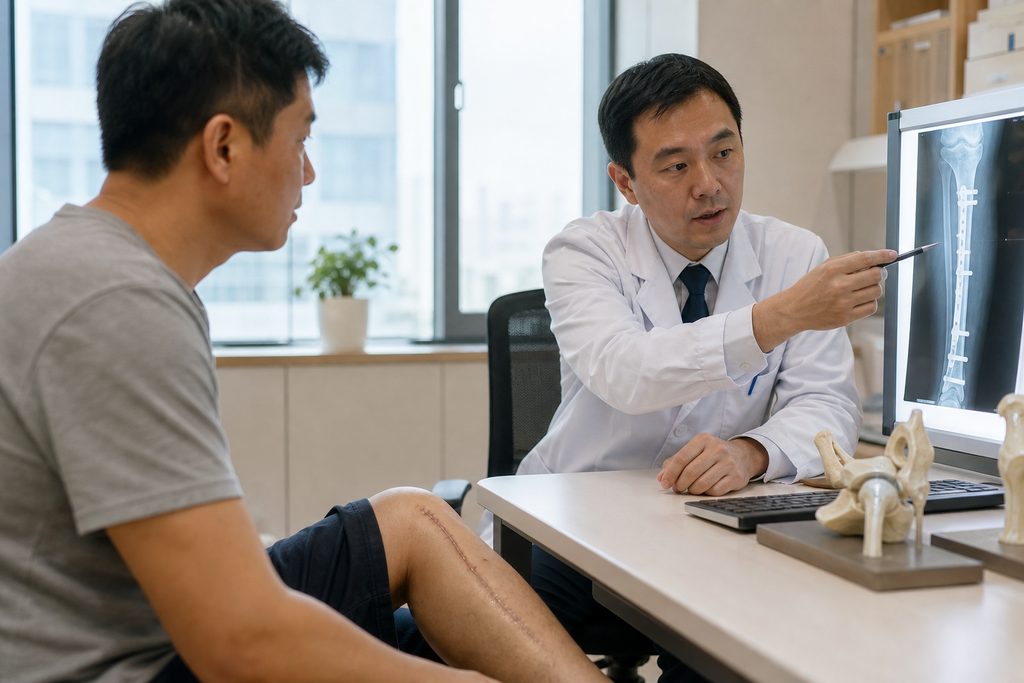
While a patient in the UK waits a median 18 weeks just for a consultant-led orthopedic referral, surgeons at Shanghai Sixth People’s Hospital routinely handle over 1,000 bone defect reconstruction cases annually—many arriving after Western teams have already recommended amputation. The gap is not in surgical talent. It is in systemic volume and institutional courage.
Key Takeaways
- China’s top orthopedic centers perform over 10 times the annual limb salvage surgeries of an average US Level I trauma center, with published infection eradication rates exceeding 93%.
- The chronic osteomyelitis treatment cost China offers for complex reconstruction—including the Ilizarov technique and antibiotic-loaded spacers—ranges from $18,000 to $45,000, roughly one-fifth of the US bill.
- Language barriers and the public hospital queuing system mean a solo Western patient cannot simply walk in and book surgery; a bilingual care coordinator is not optional.
- You must verify that your chosen center genuinely uses a two-stage protocol with a dedicated bone infection team—not just a general orthopedist who occasionally treats infections.
The Problem: A Smoldering Infection That Steals Your Limb
Chronic osteomyelitis is not a fresh wound. It is a war of attrition inside your bone. Bacteria—often Staphylococcus aureus—hide in necrotic bone segments where antibiotics cannot reach. The infection smolders for years. It flares, calms down, then flares again. Draining sinuses open on your skin. The bone weakens. A dead fragment, called a sequestrum, acts like a bacterial fortress. No amount of IV antibiotics alone can cure it.
When the infection eats away enough bone, you face a defect—a literal gap in your tibia, femur, or humerus. This is where many systems throw in the towel. A 2023 study in the Journal of Bone and Joint Infection found that patients with Cierny-Mader Type IV osteomyelitis (diffuse disease with mechanical instability) face a 12-25% amputation rate even in developed nations. The logic is cold and practical: a below-knee amputation is a single surgery with a predictable recovery. Limb salvage is a marathon of multiple surgeries, bone transport, and soft tissue coverage that can stretch 12 to 18 months. Most health systems are not built for marathons.
But you did not search for “amputation packages.” You searched for limb salvage. That means you already suspect there is a better option. There is.
Who We Are
We are not a hospital. We do not provide medical treatment or clinical diagnoses. Our team acts as your logistical architects—we bridge the gap between you and China’s top-tier orthopedic centers. We translate your medical records, match your specific bone defect to the surgical team best equipped to handle it, coordinate your S2 medical visa documentation, and place a bilingual medical companion at your side from the moment you land. We do not promise miracles. We promise process. The surgical outcome belongs to the expert hands we connect you with.
Why China’s Limb Salvage Centers Deliver Where Others Stop
Surgical Volume That Creates Pattern Recognition
A senior orthopedic trauma surgeon at a busy US Level I center might manage 20 to 40 complex bone infection cases annually. At Shanghai Sixth People’s Hospital—widely recognized as China’s top microsurgery and limb reconstruction center—the orthopedic trauma department handles over 300 chronic osteomyelitis cases requiring segmental bone transport each year. That is not just a statistic. It means the attending surgeon has seen every possible complication: the pin-tract infection that starts at week six, the regenerate bone that consolidates too slowly, the soft tissue flap that looks dusky on day three. Pattern recognition at this volume is impossible to replicate in a lower-volume system.
Beijing Jishuitan Hospital’s orthopedic trauma division operates on a similar scale. Their infection team routinely manages post-traumatic osteomyelitis with defects exceeding 10 centimeters. The sheer repetition breeds a kind of clinical intuition. The surgeon does not guess whether the Masquelet technique or the Ilizarov method fits your defect better. They know, because they did both last week. Multiple times.
The Ilizarov Method: Distraction Osteogenesis at Scale
If your bone defect is longer than 4 centimeters, a simple bone graft will not work. You need new bone to grow where bone no longer exists. The Ilizarov technique—pioneered in Siberia and perfected globally—does exactly that. The surgeon cuts the healthy bone above or below your defect, then attaches a circular external fixator with thin wires that pierce the skin and bone. Starting about a week after surgery, you turn a small nut on the frame four times a day. Each turn pulls the bone segment apart by 1 millimeter daily. Your body interprets this as a fracture and fills the gap with new bone. Over months, that millimeter-by-millimeter transport fills even massive defects.
This sounds medieval. It works. A 2022 meta-analysis in Injury reviewed 1,247 patients treated with Ilizarov bone transport for tibial defects. The overall bone union rate was 94.7%. The infection eradication rate was 93.2%. Those are not small numbers. The catch? The average external fixation time was 9.4 months. This is not a quick fix. But for a patient facing amputation, 9 months in a frame buys a lifetime with your own limb. Chinese orthopedic centers have adopted and refined this technique at a scale few Western hospitals match. The volume is the difference.
How to Treat Bone Defect from Osteomyelitis Abroad: The Two-Stage Protocol
Top Chinese bone infection centers do not attempt a single-stage cure for chronic cases. That would be reckless. They follow the same evidence-based two-stage protocol that leading European centers use:
Stage One: Radical Debridement and Spacer Implantation. The surgeon removes every millimeter of dead, infected bone. They excise the draining sinus tracts. They send multiple deep tissue samples for microbiology—not just a superficial swab. Once the debridement cavity is clean, they implant an antibiotic-loaded cement spacer. This spacer delivers a massive local dose of antibiotics directly to the infection bed, achieving concentrations 20 to 100 times higher than IV antibiotics could safely reach. You also receive six weeks of culture-directed IV antibiotics. The spacer maintains the limb’s length and keeps the soft tissue envelope open for the next stage.
Stage Two: Definitive Reconstruction. If your inflammatory markers have normalized and the wound is clean, the surgeon removes the spacer and reconstructs the defect. The choice depends on defect size: cancellous bone grafting for defects under 4 cm, the Masquelet induced membrane technique for mid-sized defects, or distraction osteogenesis (Ilizarov or intramedullary bone transport) for defects over 6 cm. Simultaneously, a plastic surgery team provides soft tissue coverage—a free flap if needed. This is the part that demands a hospital where orthopedic trauma surgeons and microvascular plastic surgeons share a department and a daily operating schedule. Shanghai Sixth and Xijing Hospital in Xi’an are built this way.
Can Chronic Osteomyelitis Be Cured Without Amputation in China?
The short answer: yes, in the majority of cases that reach a dedicated bone infection unit. The longer answer depends on three factors. First, your vascular status. If you have severe peripheral artery disease, bone transport will fail because the regenerate bone needs a robust blood supply. Second, your nutritional and metabolic health. Low albumin and uncontrolled diabetes sabotage healing. Third, and most critically, the surgical team’s willingness to perform a truly radical debridement. Incomplete debridement is the single greatest cause of recurrence. Surgeons who see a dozen cases a year tend to be conservative—they leave questionable bone behind, hoping it will survive. Surgeons who see 300 cases a year cut until every millimeter of bone bleeds. They know the cost of hesitation.
Published recurrence rates from top Chinese centers range from 5% to 8% at five-year follow-up. That compares favorably with the 10-20% recurrence rates commonly cited in Western literature. The difference is not magic. It is volume-driven surgical confidence.
The Cost Reality: What You Actually Pay
Let us address the chronic osteomyelitis treatment cost China question directly. Prices vary by hospital tier, defect complexity, and whether you access the public system via the international VIP channel or a private international hospital. The figures below reflect the all-in hospital charges for international patients—including the surgeon’s fee, anesthesia, implants, and inpatient stay. They do not include airfare, accommodation, or our coordination services.
| Procedure | China (USD) | United States (USD) | United Kingdom (Private, USD) |
|---|---|---|---|
| Radical debridement + antibiotic spacer (Stage 1) | $8,000 – $15,000 | $45,000 – $80,000 | $35,000 – $60,000 |
| Ilizarov bone transport (Stage 2, tibia) | $12,000 – $25,000 | $70,000 – $140,000 | $55,000 – $110,000 |
| Masquelet technique + bone graft | $10,000 – $20,000 | $50,000 – $100,000 | $40,000 – $80,000 |
| Free fibula flap reconstruction | $15,000 – $30,000 | $90,000 – $180,000 | $70,000 – $140,000 |
| Six-week inpatient IV antibiotics (per week) | $800 – $1,500 | $4,000 – $8,000 | $3,000 – $6,000 |
These are not bargain-basement prices. They reflect care at top-tier public hospitals like Shanghai Sixth or Beijing Jishuitan, accessed through their international departments. The cost advantage is structural: lower physician labor costs, higher patient throughput, and a hospital financing model that does not depend on maximizing per-procedure billing. You are not paying for a marble lobby. You are paying for surgical hours and an external fixator frame.
For patients seeking a more Western-style environment, private international hospitals like Shanghai United Family or Jiahui International can coordinate with top orthopedic surgeons for complex cases. Expect costs roughly 40-60% higher than public hospital international departments, but still well below US rates. These facilities offer direct insurance billing and fully English-speaking nursing staff.
Finding the Best Hospital for Bone Infection Limb Salvage Shanghai
Shanghai dominates this specialty for a reason. Shanghai Sixth People’s Hospital is the birthplace of China’s hand and microsurgery discipline. Their orthopedic trauma department runs dedicated bone infection and limb reconstruction wards. The hospital performs over 1,000 microvascular free flap procedures annually—a volume that places it among the top three centers globally. When a bone defect also requires a latissimus dorsi free flap or an anterolateral thigh flap for soft tissue coverage, the microsurgery team is in the same building, often scrubbing into the same case. This co-location of orthopedic trauma and reconstructive plastic surgery is rare. In many Western hospitals, these are separate departments with separate schedules and separate cultures. At Shanghai Sixth, they share a morning huddle.
Other heavyweight centers include Xijing Hospital in Xi’an, which runs a dedicated limb salvage program under its Orthopedic Trauma Department. West China Hospital in Chengdu manages a massive referral volume from across western China, giving its surgeons exposure to high-energy trauma and chronic infection sequelae that few centers see. For patients specifically seeking the best hospital for bone infection limb salvage Shanghai, the decision often comes down to Shanghai Sixth for microsurgical reconstruction or Changzheng Hospital for spine-related infections with vertebral osteomyelitis.
You can explore our full directory of top-ranked Chinese hospitals to compare orthopedic programs across cities. Each listing includes the hospital’s Fudan ranking tier and specialty strengths.
What You Need to Know Before Going Alone
We want you to walk into this with clear eyes. China’s top orthopedic centers are extraordinary. They are also enormous, crowded, and not designed for international patients who arrive without a plan.
- Visa Requirements Are Specific and Inflexible: You need an S2 medical visa, not a tourist visa. The application requires an invitation letter from the Chinese hospital confirming your treatment plan. Without this, your visa will be rejected. We obtain this letter from the hospital’s international department as part of our coordination. Do not book a flight before securing the visa.
- Public Hospital Queues Are Real: The orthopedic trauma clinic at Shanghai Sixth sees over 2,000 outpatients daily. Registration happens at 7 AM via a touchscreen kiosk that displays only Chinese characters. The senior bone infection specialist you need may have a queue of 50 patients by 9 AM. A bilingual medical companion handles this for you—they arrive early, navigate the kiosk, and ensure you see the right consultant, not the general orthopedics resident.
- Payment Is Prepaid and Card Systems Can Fail: Public hospitals require a deposit before admission, typically 50,000 to 100,000 RMB in cash or via UnionPay card. Foreign Visa and Mastercard are often declined at hospital payment counters. We guide you through setting up a UnionPay-compatible payment method or wiring funds to the hospital’s international account before you travel.
How We Help You Navigate This
These barriers exist for structural reasons. A public hospital serving 10,000 outpatients daily cannot redesign its registration system for a handful of international patients. That is where we step in. Our process follows three phases.
Before Travel: You send us your imaging—CT scans, MRI, X-rays, and any microbiology reports from previous debridements. Our medical translation team converts these into Chinese-language clinical summaries formatted to the standards Chinese orthopedic surgeons expect. We submit your case to two or three targeted hospitals, not a generic blast. You receive a comparison of surgical approach recommendations, estimated costs, and proposed timelines. Once you choose a center, we secure the invitation letter for your S2 visa and coordinate your admission date.
During Treatment: A bilingual medical companion meets you at the airport and accompanies you to every appointment. They translate the surgeon’s explanation of the debridement plan, the antibiotic spacer rationale, and the bone transport schedule. When the nurse explains pin-site care for your Ilizarov frame, your companion ensures you understand every step. They also handle the daily logistics—pharmacy runs, meal ordering, and payment top-ups—so you focus entirely on recovery.
After Discharge: Chronic osteomyelitis follow-up spans months. You will need regular X-rays to monitor regenerate bone consolidation and inflammatory marker checks to catch any recurrence early. We coordinate remote follow-up with your surgical team and arrange local imaging if your home country physician can share the files with our team for review.
For those considering the full scope of medical tourism for bone defect reconstruction China, the pathway is well-established. We have guided patients from the UK, Australia, the Middle East, and North America through two-stage limb salvage. The common thread? Every one of them arrived with a file that said “consider amputation.” Most walked out on their own two legs.
Frequently Asked Questions
Cure is the goal of the two-stage protocol, and the data supports it. Published five-year infection eradication rates from centers using radical debridement plus antibiotic spacers exceed 93%. That said, “cure” means no clinical or radiographic signs of infection for five years. It does not mean your leg will look or function exactly as it did before the infection. You will have scars. You may have a limp. The ankle or knee joint near the infection site may have some stiffness. But the infection can be eradicated, and the bone defect can be bridged with living, vascularized bone that remodels over time. This is not a temporary patch.
For a complete two-stage protocol with bone transport, expect $30,000 to $55,000 in hospital charges. Add $3,000 to $6,000 for two round-trip flights and a modest serviced apartment near the hospital for the six-week inter-stage period. Our coordination services start from $300 for hospital appointment coordination and scale depending on the complexity of your case. A full VIP end-to-end coordination package ranges from $5,000 to $8,000. The total all-in cost typically lands between $40,000 and $70,000. Compare that to $150,000 to $250,000 in the US, and the math becomes clear.
This is the hardest question, and we will not sugarcoat it. Recurrence happens. The most common cause is a new breach in the skin near the reconstructed area—a small cut, a blister from ill-fitting shoes, a minor fall. The previously infected bone is always more vulnerable than virgin bone. If recurrence occurs, you need an orthopedic surgeon at home who is willing to manage the case, ideally in communication with your Chinese surgical team. We facilitate that communication. We also help arrange a return visit if the recurrence requires reoperation. This is not a one-and-done transaction. It is a relationship with a surgical team that understands your specific anatomy and infection history.
Verify the hospital’s credentials independently. Look for the hospital on the Fudan University Hospital Ranking—China’s most authoritative hospital evaluation system. Check whether the orthopedic trauma department appears in the Fudan specialty reputation rankings. Request the surgeon’s publication record on PubMed. A legitimate bone infection specialist will have published peer-reviewed papers on the Masquelet technique, Ilizarov bone transport, or antibiotic spacer protocols. If the “package” promises a fixed price without reviewing your imaging, walk away. Real limb salvage cannot be priced without a thorough review of your CT scans and microbiology history. Our approach is to book bone infection surgery package China only after a detailed case review and a video consultation with the treating surgeon. No shortcuts.
Your Next Step
You have lived with this infection long enough. You know the draining sinuses, the antibiotic cycles, the conversations where surgeons gently steer you toward amputation as the “definitive solution.” You also know—instinctively—that your limb is worth fighting for. The surgical expertise to save it exists. It exists at a scale and a cost that may surprise you. The barrier is not medicine. It is logistics.
If you are ready to explore whether your case is suitable for limb salvage in China, our team at China Medical Services is here to walk you through the process. Send us your imaging. We will review it with the surgical teams that handle the cases other hospitals decline. The consultation is free. The decision is yours. And if limb salvage is not possible, we will tell you that directly. You deserve an honest answer, not a sales pitch.
For more medical information and treatment options in China, visit chinamedservices.com (China Medical Services).
