Booking an MRI in China Without a Referral: What Foreigners Need to Know
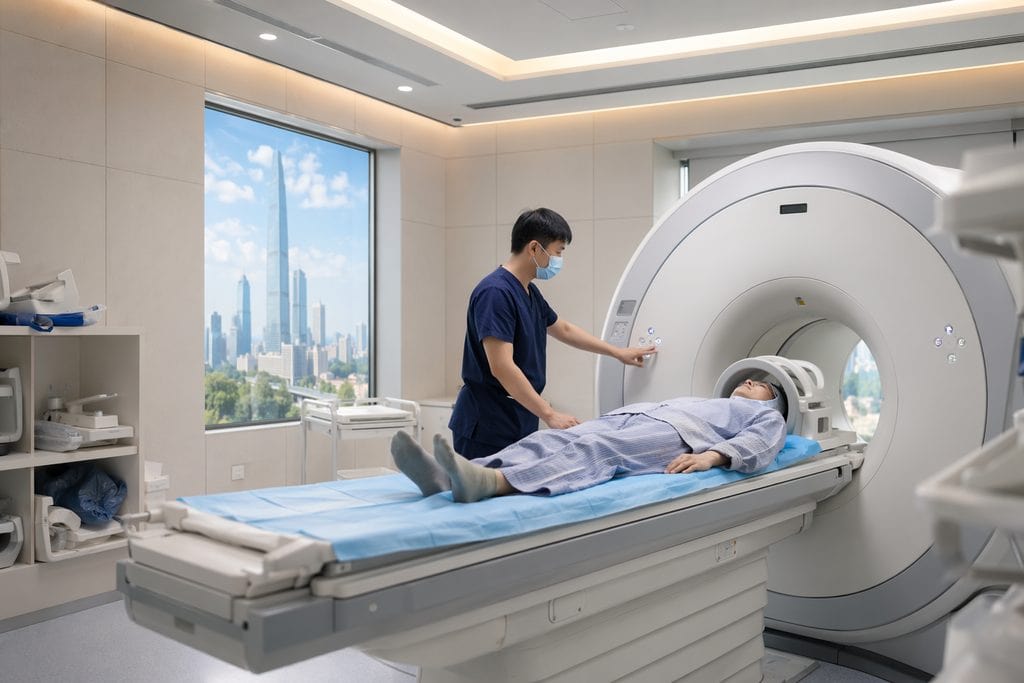
When 47-year-old Sarah from Portland slipped on a wet hiking trail in Yunnan, her knee swelled up within hours. She was three weeks into a six-week trip through Asia. Her travel insurance hotline told her to “see a local doctor,” which was about as useful as a screen door on a submarine. What she actually needed was an MRI — and she had no idea whether she could even get one without a Chinese doctor’s referral first.
That question comes up constantly. The short answer: yes, you can usually book an MRI in China without a referral, especially at private international hospitals and the international departments of major public hospitals. But the process looks nothing like what you’d expect in the US or UK, and the mri scan cost China without referral varies wildly depending on where you go.
Here’s what actually happens on the ground.
How This Actually Works, Step by Step
The typical path for a foreigner needing an MRI in China runs through four stages. It’s not complicated, but skipping a step usually means paying more or waiting longer.
Step one: decide where you’ll scan. You have three realistic options — a private international hospital like United Family or Jiahui, the international or VIP department of a top public hospital, or a standard public hospital outpatient imaging center. Each has a different price, wait time, and language situation.
Step two: contact the imaging department directly. Private hospitals let you call or email and book a slot, often within 24 to 72 hours. Public hospital international departments work similarly, though you may need to submit a brief medical summary first. Standard public hospital imaging usually requires an in-person visit to register and pay before scheduling.
Step three: bring your records. Any prior imaging, reports, or doctor’s notes help the radiologist. If they’re in English, most international departments can work with them. For standard public hospitals, you’ll want a Chinese translation — that’s where a bilingual coordinator earns their fee.
Step four: show up, scan, get results. Most facilities deliver a written report within 24 to 48 hours. Private hospitals often provide English reports. Public hospitals typically issue Chinese reports, which you’ll need translated if you’re sending them to a doctor back home.
Can I Get an MRI in China Without a Doctor Referral?
Yes — and this surprises most Western patients. China’s healthcare system doesn’t gatekeep imaging behind referrals the way the US insurance system does. You can walk into many hospitals and request an MRI directly. The catch is that without a referral, you’re responsible for knowing which body part to scan and which protocol to use.
That’s a real problem. Order the wrong sequence — say, a knee MRI without contrast when your doctor needed contrast — and you’ve burned $400 and a day. Radiologists in China will generally scan what you ask for, but they won’t necessarily question whether it’s the right study.
So the practical rule: get a referral from your home doctor if you can, even informally. A one-paragraph note describing the suspected problem and the requested protocol saves everyone time. If that’s not possible, a video consultation with a Chinese specialist before your scan can clarify exactly what imaging you need. Our team arranges these through hospital international departments, and the fee — typically $100 to $300 — is credited in full toward on-the-ground coordination if you travel to China within 90 days.
A Realistic Timeline
How long does this actually take? It depends heavily on which facility you choose and whether you’re already in China. Here’s a realistic breakdown.
| Stage | Private International Hospital | Public Hospital (International Dept.) | Standard Public Hospital |
|---|---|---|---|
| Initial contact to booking | Same day to 2 days | 1–3 days | Requires in-person visit |
| Wait for scan slot | 1–3 days | 2–7 days | 3–14 days |
| Scan duration | 30–60 min | 30–60 min | 30–60 min |
| Report turnaround | 24–48 hours | 24–72 hours | 48 hours–5 days |
| English report available | Usually yes | Sometimes | Rarely |
| Typical total time | 2–5 days | 4–10 days | 1–3 weeks |
If you’re planning ahead from abroad, add time for visa processing. Medical travel to China uses the S2 visa, which requires supporting documents from the treating hospital. Standard processing runs 4 to 7 business days at most consulates, though it varies by country and season. Don’t book flights until the visa is in hand.
What Can Go Wrong — and What Happens Then
Plenty can go sideways. Here’s the honest list.
You booked the wrong scan. This happens most often when patients self-refer without medical guidance. The fix is a phone consult with a radiologist or specialist before booking — or accepting that you may need a repeat scan.
The report is in Chinese only. Standard public hospitals issue Chinese-language reports. You’ll need a certified translation, which costs $50 to $150 and takes 1 to 3 days. Private hospitals and international departments usually avoid this problem.
Your insurance won’t reimburse. Most Western insurers require pre-authorization for imaging abroad. Call them before you scan. Some policies exclude non-emergency imaging entirely. Public hospitals require upfront payment; private hospitals often bill insurance directly if they have a partnership.
You need follow-up care and can’t get it. An MRI is a snapshot, not a treatment plan. If the scan shows something serious, you’ll need a specialist — and getting one quickly as a foreigner in a Chinese public hospital is genuinely hard without help. This is the single biggest gap in the self-service approach.
Is It Safe to Get an MRI in China as a Tourist?
Yes. China’s top hospitals operate some of the highest-volume imaging centers in the world, and their equipment is current — 3T MRI machines are standard at major facilities. Safety standards for contrast agents, screening protocols, and radiation (for CT) follow international norms at accredited hospitals.
The bigger safety issue isn’t the machine. It’s communication. If you can’t explain your symptoms, your surgical history, or your allergies, you’re relying on luck. That’s why bilingual support matters more than the brand of the scanner.
For tourists specifically: your travel insurance may cover emergency imaging but rarely elective scans. Check your policy. And if you’re in China on a tourist visa and need non-urgent imaging, you can generally still access care — but if you’re planning treatment, the S2 visa is the correct category, not the M visa (which is for commercial and trade activities only).
What Does an MRI Cost in China?
This is where China gets interesting. An MRI that costs $1,500 to $3,000 in the US often runs $150 to $600 in China, depending on the facility and body part.
| Facility Type | Typical MRI Price (USD) | English Support |
|---|---|---|
| Private international hospital (Beijing/Shanghai) | $400–$900 | Yes |
| Public hospital international department | $250–$500 | Partial |
| Standard public hospital | $100–$300 | Rare |
MRI price at a Beijing private hospital tends to sit at the higher end — $500 to $900 for a standard study — because you’re paying for convenience, English-speaking staff, and direct insurance billing. Shanghai private hospitals are comparable. Outside the major cities, prices drop but English support becomes scarce.
These figures vary by hospital and case complexity. Contrast dye, multiple body regions, and urgent scheduling all push costs up.
Medical Tourism China MRI Fast Track: How It Works
Some patients come to China specifically for fast, affordable imaging — often as part of a broader diagnostic workup. The “fast track” isn’t a formal program. It’s a workaround: use private hospitals or international departments to skip the queues that bog down standard public hospital imaging.
If you’re considering this route, evaluate providers on three criteria. First, accreditation — JCI-certified hospitals meet international standards. Second, English capability — not just at reception, but among radiologists and technicians. Third, report usability — will the report be accepted by your doctor at home?
For patients who need imaging as part of a larger diagnostic picture, a written second opinion from a Chinese specialist can be more valuable than the scan itself. You send your existing reports, a specialist reviews them, and you get a written analysis. That service typically runs $300 to $500 — and it’s for reference only, not a prescription.
Practical Considerations: Records, Visas, Payment, and Follow-Up
Records. Bring everything: prior imaging on CD or USB, reports, medication lists, allergy history. Digital copies are easier to share than paper.
Visa. If you’re scanning as a tourist, your existing visa works. If you’re coming specifically for medical evaluation or treatment, apply for the S2 visa with supporting documents from the hospital. Family members accompanying you apply for S2 as well.
Payment. Public hospitals require upfront payment in cash or by card. Private hospitals accept international cards and often bill insurance directly.
Language. If you don’t speak Mandarin, budget for interpretation. A bilingual medical companion typically runs from $300 per day and handles registration, payment, navigation, and translation — but doesn’t guarantee a specific doctor or appointment slot.
Follow-up at home. Ask for DICOM files, not just the written report. Your doctor back home will want to review the actual images.
For a broader look at how hospital selection works across China’s system, our guide to top-ranked hospitals by city breaks down the Fudan rankings, and our specialty directory lists the leading departments for 45 medical fields.
Frequently Asked Questions
In most cases, yes. Private international hospitals and public hospital international departments accept direct bookings. Standard public hospitals may require an in-person registration visit first. You’ll get better results if you arrive with a clear description of what needs scanning and why.
A standard MRI in China runs $100 to $900 depending on facility type, versus $1,500 to $3,000 in the US. Private hospitals sit at the top of that range; standard public hospitals at the bottom. Prices vary by hospital and case complexity.
Private international hospitals usually provide English reports. Public hospital international departments sometimes do. Standard public hospitals issue Chinese reports, which require certified translation — typically $50 to $150 and 1 to 3 days.
If you’re already in China on a tourist visa, you can generally access imaging services. If you’re traveling specifically for medical evaluation or treatment, the S2 visa is the appropriate category. The M visa is for commercial and trade activities and is not a medical visa.
Yes. Major Chinese hospitals use current 3T equipment and follow international safety protocols for contrast agents and patient screening. The main risk isn’t the technology — it’s communication gaps if you don’t speak Mandarin.
Your Next Step
Getting an MRI in China without a referral is genuinely doable, and often faster and cheaper than the same scan at home. The hard part isn’t the machine. It’s knowing which facility fits your needs, getting your records in order, and making sure someone can explain the results to you in a language you understand.
We’re China Medical Services — a coordination team, not a medical provider. We don’t diagnose or treat. We connect international patients with hospitals across 37 cities, handle appointment logistics, and provide bilingual support so you’re never guessing. If you’d like to talk through your situation, start with a free consultation. No pressure, no obligation — just a clear next step.
This article is for informational purposes only and does not constitute medical advice. Always consult a qualified healthcare provider before making decisions about your health.
For more medical information and treatment options in China, visit chinamedservices.com (China Medical Services).
