Brain Tumor Surgery China NZ: Neuro Excellence Without the Long Trip
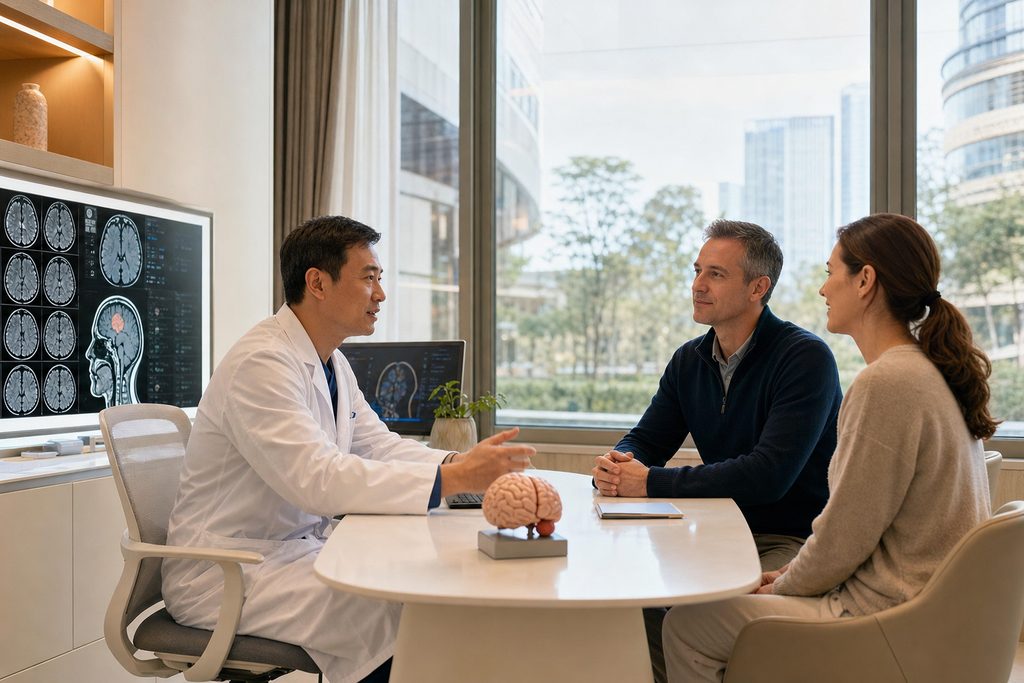
You have probably heard someone say that affordable surgery abroad means cutting corners on safety. The numbers tell a different story. The neurosurgery department at a hospital like Huashan Hospital in Shanghai performs over 17,000 neurosurgical procedures every year. That volume is not a compromise. It is a statistical advantage. For a patient in New Zealand facing a brain tumor diagnosis, the real compromise is often the wait. A public system stretched thin can mean weeks of uncertainty before a craniotomy, while a private route in Auckland or Wellington can exceed NZ$80,000. The question stops being “why go so far?” and becomes “what does the path actually look like?”
We have helped patients map that path. Not by promising miracles. By handling the logistics that make a complex international medical journey possible. A brain tumor surgery cost China is typically a fraction of what you would pay in a New Zealand private hospital, but the real draw for many is access to dedicated neurosurgical centers that run on a scale hard to find in a country of five million. This article walks through the process, the price, the timeline, and the hard questions that deserve honest answers before you book a flight.
How This Actually Works, Step by Step
The sequence is more straightforward than most people assume. But it is not instant. Here is the path from your current situation to a post-op recovery bed in a Chinese neurosurgical ward.
You start with what you already have. Your MRI or CT scan on a CD. Your pathology report if a biopsy was done. A referral letter or summary from your neurologist or GP in New Zealand. You send these to us digitally. We do not interpret them. We translate the key clinical documents into simplified Chinese and route them to the international patient center of a hospital that matches your tumor type and complexity.
A neurosurgeon there reviews the file. Not a generalist. Someone who sees your specific pathology — meningioma, glioma, pituitary adenoma, acoustic neuroma — on a weekly basis. Within three to seven working days, you receive a written second opinion in English. It outlines whether the surgeon agrees with the diagnosis, what surgical approach they recommend, and whether they believe a gross total resection is achievable. This document costs between $300 and $500 and is for reference only, not a prescription.
If the opinion makes sense and you want to proceed, we coordinate a video consultation with the same specialist. You speak directly. You ask about awake craniotomy mapping, intraoperative MRI use, or why they prefer a supraorbital eyebrow approach over a traditional pterional craniotomy for your specific lesion. That call costs $500 to $800. Every dollar you spend on these remote evaluations gets credited in full toward our on-the-ground coordination service if you move forward within 90 days.
Only after the video consult do we lock in a surgical date and begin visa documentation. No one buys a surgery package blind. The remote phase exists to build clinical confidence before you pack a bag.
Why a Dedicated Neurosurgical Center Changes the Risk Equation
Brain tumor surgery is a numbers game. Not in a cynical sense. In a purely surgical one. A 2022 study in *The Lancet Oncology* highlighted that hospitals performing more than 50 glioma resections per year had significantly lower rates of permanent neurological deficit compared to low-volume centers. Many Chinese neurosurgical departments exceed 500 glioma cases annually.
The surgeon you want operating on your brain is the one who has seen your tumor variant hundreds of times. Not the one who is brilliant but operates on a brain tumor once a fortnight.
This is where the scale of Chinese hospital systems becomes relevant. A top-tier neurosurgery department in Shanghai or Beijing runs a dedicated brain tumor ward. Not a shared general surgery floor. Dedicated neuro-anesthesia teams. Dedicated intraoperative neurophysiological monitoring technicians. The equipment is not shared across departments on a rotation schedule. It is parked in the neurosurgery OR suite permanently.
For a New Zealand patient, this means walking into an environment where your case is routine for the team but still treated with individual precision. The best neurosurgeon for brain tumor China is not a single name. It is a department-level capability. Hospitals like Huashan Hospital, Beijing Tiantan Hospital, and West China Hospital of Sichuan University appear consistently in China’s national specialty rankings for neurosurgery. These are not hidden gems. They are high-throughput institutions with published clinical outcomes. You can read their research in *Journal of Neurosurgery* or *Neurosurgery* before you ever send your scans.
The practical implication for you: you are not betting on one star surgeon. You are betting on a system that does this every day.
A Realistic Timeline
People want to know how fast this moves. But speed without accuracy in neurosurgery is dangerous. Here is what the calendar actually looks like from the day you decide to explore the option.
| Stage | What Happens | Typical Duration |
|---|---|---|
| Day 1–3 | You gather and send existing scans, reports, and referral letters. We organize clinical translation. | 2–3 days |
| Day 4–10 | Written second opinion from a neurosurgeon at your matched hospital. You receive an English-language report. | 3–7 working days |
| Day 11–18 | Video consultation scheduling. Specialist availability varies. You speak directly, ask questions, and decide whether to proceed. | 5–7 days to schedule + 30–60 minute call |
| Day 19–35 | If you proceed, we coordinate a surgical slot. Hospital international department confirms the date. We issue the invitation letter for your S2 visa application. | 1–2 weeks for hospital confirmation |
| Day 36–50 | Visa processing at the Chinese embassy or consulate in New Zealand. S2 visa for short-term private affairs, including medical treatment. Supporting documents include the hospital invitation letter and accommodation details. | 10–14 working days (varies by consulate) |
| Day 51–55 | Travel to China. You arrive, rest for 24–48 hours. Pre-operative labs and imaging are repeated per hospital protocol. Not because they distrust your scans — because a fresh MRI with the exact surgical navigation protocol is required for neuronavigation system registration. | 2–3 days pre-op |
| Day 56 | Surgery. | 4–10 hours depending on tumor location and complexity |
| Day 57–67 | Acute post-op recovery in the neurosurgical ward. Monitoring for cerebral edema, neurological status, and wound healing. | 7–10 days inpatient |
| Week 3–6 post-op | You are discharged to a nearby serviced apartment. Follow-up visits at the hospital. Staple or suture removal. Gradual increase in activity. | 2–4 weeks in-city recovery |
| Week 6–12 | Return to New Zealand. Continued recovery at home. Remote follow-up with your NZ neurologist. We can facilitate a final remote check-in with your Chinese surgeon if needed. | Ongoing |
The total time away from New Zealand is typically five to seven weeks. Not a weekend trip. But also not a six-month relocation. The pre-surgery remote phase means you do not travel until there is a confirmed surgical plan and date.
What Can Go Wrong — and What Happens Then
Honesty matters here more than anywhere else. Brain surgery carries risk no matter where it is performed. The question is what happens when things do not go perfectly.
Post-operative cerebral edema. That is the most common complication. The brain swells after manipulation. In a well-equipped neurosurgical ICU, this is managed with mannitol, hypertonic saline, and if necessary, a brief period of mild hyperventilation under close monitoring. Chinese neurosurgical ICUs are staffed with neuro-intensivists who manage this daily. You are not in a general surgical ICU where the nurse has to call a neurosurgeon for every decision.
What about a new neurological deficit? A slight weakness on one side. A speech difficulty. The ward has immediate access to CT scanning to rule out a surgical hematoma. If a deficit occurs and it is not surgical, rehabilitation starts early. Chinese hospitals integrate rehab physicians into the neurosurgery floor. Physiotherapy and speech therapy begin while you are still an inpatient.
And if you simply cannot tolerate the food or the environment? This is a real challenge. Hospital food in China is not what a Kiwi palate expects. We arrange for external meal delivery that meets your dietary requirements. We also place a bilingual companion with you during daytime hours — not just for translation, but because being alone in a foreign hospital after brain surgery is psychologically brutal. That companion costs from $200 per day and is a non-negotiable part of our coordination.
What about a surgical site infection? Rates in top Chinese neurosurgery departments are published and comparable to international benchmarks, typically under 2% for clean craniotomies. But if it happens, treatment follows the same evidence-based protocols you would receive in Auckland: culture, targeted antibiotics, and if necessary, wound revision.
The worst-case scenario is a complication that requires extended ICU stay. Chinese hospitals require prepayment for services. You need to have a financial buffer. We tell patients to plan for 20–30% above the quoted surgical package to cover unexpected extended care. This is not a risk unique to China — it is a reality of any self-funded international medical travel.
How to Evaluate a Hospital When You Cannot Walk the Halls Yourself
You cannot tour the facility. So you need proxy indicators that are hard to fake.
First, look at the department’s published research output. Search PubMed for the hospital name plus your tumor type. A department that publishes on awake craniotomy language mapping or endoscopic endonasal approaches for skull base tumors is a department actively engaged in advancing the field. Not just repeating what they learned a decade ago.
Second, ask about intraoperative MRI or CT availability during your video consultation. Not because every case needs it. Because the presence of intraoperative imaging tells you the hospital has invested in the infrastructure that supports complex tumor surgery. If the surgeon says they do not need it for your case but it is available if required, that is the right answer.
Third, ask directly about their rate of gross total resection for your tumor type. A surgeon who cannot give you a department-level percentage is either evasive or does not track outcomes. The honest answer often sounds like: “For meningiomas in this location, our gross total resection rate is approximately 92% based on our last five years of data.” Specific. Measured. Not a guarantee, but a benchmark.
Affordable neurosurgery China no waiting list is a real combination, but only if you match your case to a hospital that actually specializes in your pathology. A hospital ranked in the top 10 nationally for neurosurgery but that primarily handles cerebrovascular cases is not the right fit for a complex skull base meningioma. We match based on subspecialty alignment, not just overall reputation. You can browse our database of top-ranked departments by specialty to understand which hospitals lead in specific neurosurgical subfields.
Practical Considerations: Records, Visa, Payment, and Follow-Up at Home
Your medical records need to be complete before anything else moves. A CD with DICOM files from your MRI. A written radiology report. Any histopathology if a biopsy was performed. A referral summary from your neurosurgeon or neurologist in New Zealand that explains the clinical context. We translate the key documents. You do not need certified translations for every page — the hospital international department handles the clinical review, and they are accustomed to receiving English-language originals alongside Chinese summaries.
The visa is an S2 visa. Not an M visa. M is for commercial trade. S2 is for short-term private affairs, and medical treatment falls under that category. You need an invitation letter from the hospital, proof of accommodation, and your passport with at least six months validity. We provide the invitation letter once the surgical date is confirmed. The Chinese embassy in Wellington or consulate in Auckland processes S2 applications. Processing times fluctuate. Budget 10 to 14 working days. Do not book a flight until the visa is in your passport.
Payment is upfront. Chinese public hospitals, including their international departments, operate on a prepayment model. You deposit an estimated amount before admission. The final bill is reconciled at discharge. Any surplus is refunded. The brain tumor surgery cost China for a craniotomy with neuronavigation and intraoperative monitoring typically ranges from $25,000 to $45,000 USD depending on tumor complexity, length of stay, and whether the hospital is a public hospital international wing or a private international facility. That compares to NZ$80,000 to NZ$120,000 privately in New Zealand. The difference is not marginal. It is a factor of three to five.
Insurance is another layer. Some New Zealand private health insurers have international treatment provisions. Check your policy. Most do not cover travel and accommodation, but some cover the surgical procedure itself if it is not reasonably available within a clinically acceptable timeframe in New Zealand. You need a letter from your NZ specialist stating the urgency and the wait time. We do not handle insurance billing directly for Chinese public hospitals. You pay the hospital and claim reimbursement from your insurer.
Follow-up at home is essential. Before you leave China, you receive a discharge summary in English, a CD with post-operative imaging, and a medication plan. Your NZ neurologist or neurosurgeon takes over long-term monitoring. We can arrange a remote follow-up video call with your Chinese surgeon at the three-month mark if both sides agree it is useful. But your ongoing care belongs to your local team. The Chinese surgeon’s role ends when you are stable and back in New Zealand.
Language on the ground is the friction point people underestimate. Even in international departments, not every nurse or orderly speaks English. The night shift nurse who checks your vitals at 3 a.m. likely speaks only Mandarin. That moment — groggy, post-craniotomy, trying to communicate discomfort — is when a bilingual companion pays for itself in reduced stress. We place someone with you during daytime hours and ensure you have a phone with a translation app and our emergency contact for the nighttime hours.
Frequently Asked Questions
For a supratentorial tumor resection with neuronavigation and intraoperative monitoring, the brain tumor surgery cost China ranges from $25,000 to $45,000 USD. This includes the surgeon fee, anesthesia, operating theater, inpatient ward stay of 7–10 days, and basic medications. It does not include international patient coordination fees, travel, accommodation outside the hospital, or extended ICU stays beyond the standard post-operative monitoring period. The final figure depends on tumor location, complexity, and the specific hospital’s international pricing schedule.
The neurosurgeon typically clears you for a long-haul flight 10 to 14 days after an uncomplicated craniotomy. The concern is not the cabin pressure — modern commercial aircraft cabins are pressurized to an equivalent of 6,000–8,000 feet, which does not pose a risk for a healed craniotomy. The concern is a rare delayed cerebrospinal fluid leak or a late post-operative seizure. The surgeon wants you close enough to return to the hospital if something happens in the first two weeks. After that, the risk drops sharply. Most patients fly home at the three-week mark.
You can coordinate a comprehensive surgical journey, but no ethical provider sells a fixed-price “package” for brain tumor surgery the way you might book a knee replacement. Tumor surgery is too variable. A meningioma that peels off the brain surface cleanly is a three-hour case. A glioma infiltrating eloquent cortex with awake mapping is a seven-hour case with a different recovery trajectory. What we do is provide a detailed cost estimate after the surgeon reviews your specific scans. The estimate includes the hospital surgical fee, our coordination fee, companion services, and suggested accommodation. The hospital portion is prepaid directly to the hospital. Our coordination fee is separate. You know the numbers before you travel.
Some tumors require adjuvant treatment. If the post-operative pathology indicates a high-grade glioma, for instance, the standard protocol is concurrent radiation and temozolomide chemotherapy. This is available in China. But the treatment course lasts six weeks. That is a long time to be away from home. Most patients in this situation return to New Zealand for adjuvant therapy. The Chinese neurosurgeon provides a detailed treatment recommendation and the pathology slides can be sent to a New Zealand lab for confirmation. We help coordinate the handover. You do not need to stay in China for the full adjuvant course unless you choose to.
Your Next Step
The decision to travel for brain tumor surgery is not one you make from a website. It is one you make after a neurosurgeon has reviewed your scans and spoken to you directly. That remote evaluation phase exists precisely so you do not have to commit to travel before you have clinical clarity.
Our team at China Medical Services handles the logistics that make that evaluation possible. We translate your records, route them
For more medical information and treatment options in China, visit chinamedservices.com (China Medical Services).
