Brain Tumor Surgery: Recovery Timeline, Costs, and China Options
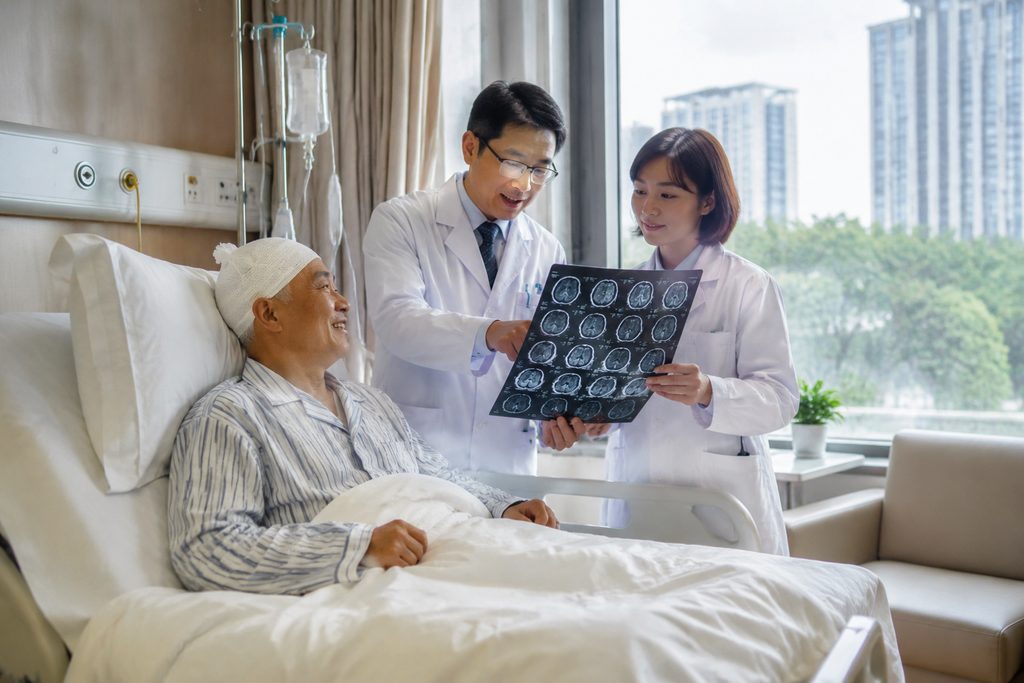
Around 300,000 people worldwide are diagnosed with a primary brain tumor each year. If you or someone you love is facing surgery, the question isn’t just about survival. It’s about what life looks like afterward. How many weeks before you can walk normally? When can you return to work? And if you’re considering traveling for care, what does brain tumor surgery cost China actually look like compared to the United States or Europe? The recovery timeline after a craniotomy is rarely a straight line. But knowing what to expect — day by day, week by week — removes a lot of the fear.
This guide walks through the real sequence. Not the brochure version. We’ll cover the hospital phase, the first month at home, when most patients can fly after brain surgery abroad, and the honest risks that come with this procedure. We’ll also explain how international patients navigate China’s top neurosurgery centers, including the practical steps around documents, visas, and follow-up care. Our team at China Medical Services coordinates this process for patients from over 40 countries, and we’ve seen what makes the difference between a chaotic experience and a controlled one.
How This Actually Works, Step by Step
Most patients don’t start with a plane ticket. They start with a scan and a report. The typical sequence for an international patient considering neurosurgery in China looks like this:
Step 1: You send your existing medical records. That means the MRI or CT images (DICOM files), the radiology report, any biopsy results, and a summary of your symptoms. A family member or local doctor can help gather these. You don’t need to travel yet.
Step 2: A Chinese neurosurgery team reviews the case. This is usually done through a hospital’s international department. The neurosurgeon looks at the tumor’s location, size, and likely pathology. They assess whether surgery is indicated, what approach they would use, and what the expected hospital stay would be. This written second opinion typically costs between $300 and $500. It’s not a prescription — it’s an expert read on your situation.
Step 3: You decide whether to proceed. If the recommendation is surgery, you’ll get a proposed treatment plan and a cost estimate. You can then schedule a video consultation with the actual surgical team. That costs $500–800 for a top specialist. You ask questions. You judge whether you trust them.
Step 4: You apply for an S2 visa. This is the correct short-stay visa category for medical treatment in China. It requires an invitation letter and supporting documents from the hospital. Processing time varies by consulate, but plan for two to four weeks. Family members accompanying you apply for the same S2 visa category.
Step 5: You arrive, complete pre-operative tests, and have surgery. Most hospitals require a face-to-face outpatient consultation before admission. Pre-op testing usually takes one to three days. Then the operation happens.
That’s the honest sequence. It is not instant. The evaluation phase alone takes one to three weeks. But it prevents the worst outcome: flying across the world only to discover that surgery isn’t actually recommended, or that the tumor is better managed with radiation.
Brain Tumor Surgery Cost China: What the Numbers Actually Show
Let’s talk about money. It’s the reason many patients look abroad in the first place. A craniotomy for tumor resection in the United States routinely costs between $50,000 and $150,000 before insurance adjustments. Complex skull-base cases can exceed $200,000. In Western Europe, the range is similar, though often lower than the U.S.
In China’s top-tier public hospitals, the same procedure — performed by neurosurgeons who do hundreds of these operations annually — typically ranges from $15,000 to $40,000. That’s the all-in hospital bill: surgery, anesthesia, ICU days, ward stay, medications, and imaging. The price varies by tumor location, surgical complexity, and whether you go through the standard public channel or the international VIP department. The international channel costs roughly 1.5 to 2 times the standard rate, but it includes English-speaking coordination and faster scheduling.
| Procedure | China (Top Public Hospital) | United States | United Kingdom (Private) |
|---|---|---|---|
| Standard craniotomy, tumor resection | $15,000 – $30,000 | $50,000 – $120,000 | $40,000 – $90,000 |
| Complex skull-base tumor resection | $25,000 – $40,000 | $100,000 – $200,000+ | $80,000 – $150,000 |
| Awake craniotomy (eloquent cortex mapping) | $20,000 – $35,000 | $70,000 – $150,000 | $60,000 – $120,000 |
| Post-op ICU (per day) | $500 – $1,200 | $4,000 – $8,000 | $3,000 – $6,000 |
These are reference ranges, not quotes. Final pricing depends on the hospital, the surgeon’s seniority, whether you use the international department, and how many days you spend in intensive care. But the gap is consistent: patients typically pay one-fifth to one-third of the U.S. price for equivalent surgical expertise.
What about brain tumor surgery packages China? Some international departments and private hospitals offer bundled packages that include the operation, a set number of hospital days, basic rehabilitation, and interpreter support. These packages usually start around $20,000 and go up based on case complexity. The advantage is predictability — you know the ceiling before you commit. The trade-off is that packages assume a standard recovery. If complications arise, costs extend beyond the package.
A Realistic Timeline
Recovery from brain tumor surgery doesn’t follow a calendar. But most patients move through recognizable phases. Here’s what a typical trajectory looks like — including the waiting steps that catch people off guard.
| Phase | What Happens | Typical Duration |
|---|---|---|
| Remote evaluation | Records sent, reviewed by neurosurgery team, written opinion issued | 1–3 weeks |
| Visa processing (S2) | Hospital documents prepared, consulate application submitted | 2–4 weeks |
| Arrival & pre-op testing | Face-to-face consultation, blood work, repeat MRI, anesthesia clearance | 2–4 days |
| Surgery & ICU | Craniotomy performed, patient monitored in neurosurgical ICU | 1–3 days in ICU |
| Ward recovery | Moved to regular neurosurgery ward, drains removed, walking begins | 5–10 days |
| Local recovery (near hospital) | Discharged, staying in nearby accommodation, stitches removed, early rehab | 1–2 weeks |
| Flight home | Cleared by neurosurgeon for air travel | Usually 2–4 weeks post-op |
| Home recovery | Gradual return to normal activity, fatigue management, follow-up imaging | 3–6 months |
Notice the front-loaded waiting. The remote evaluation and visa steps consume a month or more before you ever see an operating room. That’s frustrating when you’re scared and want the tumor out. But it’s also the part that determines whether you’re making the right decision at all.
The hospital phase itself is shorter than most people expect. A standard craniotomy patient spends one to three days in the ICU, then five to ten days on the ward. By discharge, most can walk with assistance, eat normally, and manage basic self-care. What they cannot do is concentrate for long periods, drive, or handle stress.
Then comes the part nobody warns you about: the fatigue. It hits hardest between weeks three and eight. You feel fine in the morning. By 2 p.m., you’re exhausted. This is normal. The brain is healing. Pushing through it makes recovery slower, not faster.
What Can Go Wrong — and What Happens Then
Any honest discussion of brain tumor surgery has to include the risks. These are real. They happen to real patients. And knowing the failure modes in advance is what lets you plan for them.
Neurological deficits. Depending on the tumor’s location, surgery can affect speech, movement, memory, or vision. Some deficits are temporary — swelling around the surgical site peaks around day three to five post-op and then subsides. Other deficits are permanent. A competent neurosurgeon maps the functional areas of your brain before cutting. Awake craniotomy, where you’re conscious during part of the operation, allows the team to test function in real time and avoid critical zones. China’s major neurosurgery centers perform awake craniotomies routinely, and this technique meaningfully reduces the risk of permanent language or motor deficits for tumors in eloquent areas.
Post-operative swelling and seizures. The brain swells after surgery. That’s why you’re on steroids for the first week or two. Some patients experience seizures in the days after a craniotomy — the risk is highest for tumors near the cortical surface. Anti-seizure medication is standard for the first few weeks.
Infection and CSF leak. Any operation that opens the dura (the brain’s protective covering) carries a small risk of infection or cerebrospinal fluid leakage. Rates at top centers are under 3%. Signs include clear fluid draining from the nose, fever, or worsening headache. These require immediate medical attention, not a wait-and-see approach.
Venous thromboembolism. Brain surgery patients are at elevated risk for blood clots in the legs or lungs. Compression devices and early mobilization reduce this. Long-haul flights after surgery increase the risk further — which is why most neurosurgeons want you on the ground for at least two to three weeks before flying.
What happens if something goes wrong while you’re recovering abroad? This is where the hospital’s international department matters. Top Chinese neurosurgery centers have 24-hour emergency lines for international patients. If you’re staying near the hospital during early recovery, you can be re-evaluated within hours. If you’ve already flown home, you need a local neurosurgeon who can receive your Chinese medical records and continue care. That handoff should be arranged before you leave.
Can I Fly After Brain Tumor Surgery Abroad?
The short answer: yes, but not immediately. Most neurosurgeons clear patients for air travel two to four weeks after an uncomplicated craniotomy. The timing depends on several factors.
First, intracranial air. During surgery, some air can enter the cranial cavity. At cabin pressure, that air expands. If you fly too early, the expansion can increase intracranial pressure and cause severe headache, confusion, or worse. A follow-up CT scan before your flight confirms that the air has been reabsorbed. That scan is non-negotiable.
Second, seizure risk. The first month after surgery carries the highest seizure risk. On a long flight, a seizure is a serious event. Most surgeons want you past the peak risk window before you board.
Third, blood clot risk. Long-haul flights increase the risk of deep vein thrombosis in everyone. In a recent brain surgery patient, that risk is compounded. Compression stockings, hydration, and frequent movement during the flight are essential. Some surgeons prescribe a short course of prophylactic blood thinners before travel.
If you’re flying from Shanghai to London or New York, you’re looking at a 10 to 14 hour flight. That’s not a trivial stress on a healing brain. Patients who can afford the time do better staying near the hospital for three weeks, then flying home. Those who must leave earlier need explicit written clearance from their neurosurgeon and a plan for what to do if symptoms develop mid-flight.
Choosing Where to Have Surgery: What the Numbers Mean
If you’re considering China for neurosurgery, you’re probably wondering which hospital is actually good. This is where most patients get lost. They see impressive building photos and assume quality. That’s backwards.
The metric that matters in neurosurgery is volume. A surgeon who performs 200 craniotomies a year has seen complications a low-volume surgeon reads about in textbooks. China’s top neurosurgery departments are among the highest-volume centers in the world. Some perform over 3,000 brain tumor operations annually. That volume translates into refined technique, better intraoperative decision-making, and lower complication rates.
How do you verify a hospital’s neurosurgery credentials? Look at the Fudan University hospital rankings. This is China’s most authoritative hospital evaluation system, published annually. It ranks hospitals by specialty reputation. When a hospital’s neurosurgery department is listed among the top ten nationally, that’s a meaningful signal. You can see these rankings organized by specialty on our department rankings page.
For patients asking specifically about the best neurosurgery hospital Shanghai, the answer usually points to Huashan Hospital affiliated with Fudan University. Its neurosurgery department is consistently ranked at the top nationally and handles an enormous volume of complex tumor cases. Shanghai also has the advantage of being an international city with direct flights to most major hubs, which simplifies logistics for foreign patients.
But Shanghai isn’t the only option. Beijing has several top-ranked neurosurgery programs, including at Tiantan Hospital, which is widely considered the largest neurosurgery center in the world by surgical volume. Guangzhou and Chengdu also have excellent departments. The right choice depends on your specific tumor type, location, and whether you need adjunctive treatments like Gamma Knife radiosurgery, which some centers offer on-site.
Practical Considerations: Records, Visa, Money, and Follow-Up
Before you commit to surgery abroad, get these practical pieces in order. They’re unglamorous. They also determine whether the whole experience works.
Medical records. You need complete imaging, not just reports. Hospitals will ask for DICOM files on a CD or via secure upload. A written report without the actual images is nearly useless for surgical planning. Bring everything: prior scans, biopsy slides if available, medication list, allergy information. If your records are in a language other than English or Chinese, translation will be required. This is a service our team handles as part of case management, and it’s one of the most underappreciated friction points in the process.
Visa. The S2 visa is the correct category for short-term medical treatment in China. It’s not a “medical visa” in the formal sense — that’s a common misconception. The S2 covers private affairs including medical treatment, and it’s what hospitals’ international departments will support with an invitation letter. Stays beyond 180 days require an S1 visa. Family members apply for S2 as well. Processing times vary by country. Apply early. A visa delay is the single most common reason patients miss their scheduled surgery dates.
Payment. Chinese public hospitals require pre-payment. You’ll deposit an estimated amount before surgery, and the hospital draws down from that deposit as services are rendered. International departments accept bank transfers and major credit cards. Private international hospitals in China may bill your insurer directly if they have a contract. Public hospitals generally do not — you pay, then submit for reimbursement. Check with your insurer before traveling. Some policies exclude treatment abroad entirely. Others require pre-authorization.
Language. Even in hospitals with international departments, the nursing staff, radiology technicians, and cafeteria workers will speak Chinese. The international department coordinator handles the medical communication. But the moment you step outside that office, you’re on your own. That’s where a bilingual medical companion changes the experience. They handle registration, queueing, payment, pharmacy pickup, and translation during ward rounds. It’s not a luxury. It’s the difference between understanding your post-op instructions and guessing.
Follow-up at home. Brain tumor surgery isn’t a one-and-done event. You’ll need an MRI at three months, six months, and then at intervals determined by your pathology results. Your home neurosurgeon or neurologist needs to take over this monitoring. Before you leave China, get a complete discharge summary in English, copies of all imaging, the pathology report, and a recommended follow-up schedule. Hand these to your local doctor. If you skip this handoff, you’ll be starting from zero when something feels wrong six months later.
Frequently Asked Questions
Yes. The hospitals used for international patients are JCI-accredited and follow the same international safety standards as top hospitals in the US and Europe. Surgical teams perform high volumes of procedures — often more than their Western counterparts — which studies show leads to better outcomes.
Costs vary by procedure and hospital, but international patients typically save 40-80% compared to US prices — even when factoring in travel and accommodation. A consultation with our team will give you an exact, all-inclusive quote with no hidden fees.
Send us your existing medical reports to get started. We handle everything from hospital selection and appointment scheduling to visa assistance and post-operative recovery planning. Your medical records are reviewed by the specialist before you even book a flight.
For more medical information and treatment options in China, visit chinamedservices.com (China Medical Services).
