Breast Cancer China 5 Year Survival: Fudan Shanghai Cancer Center 92% Rate Matches US
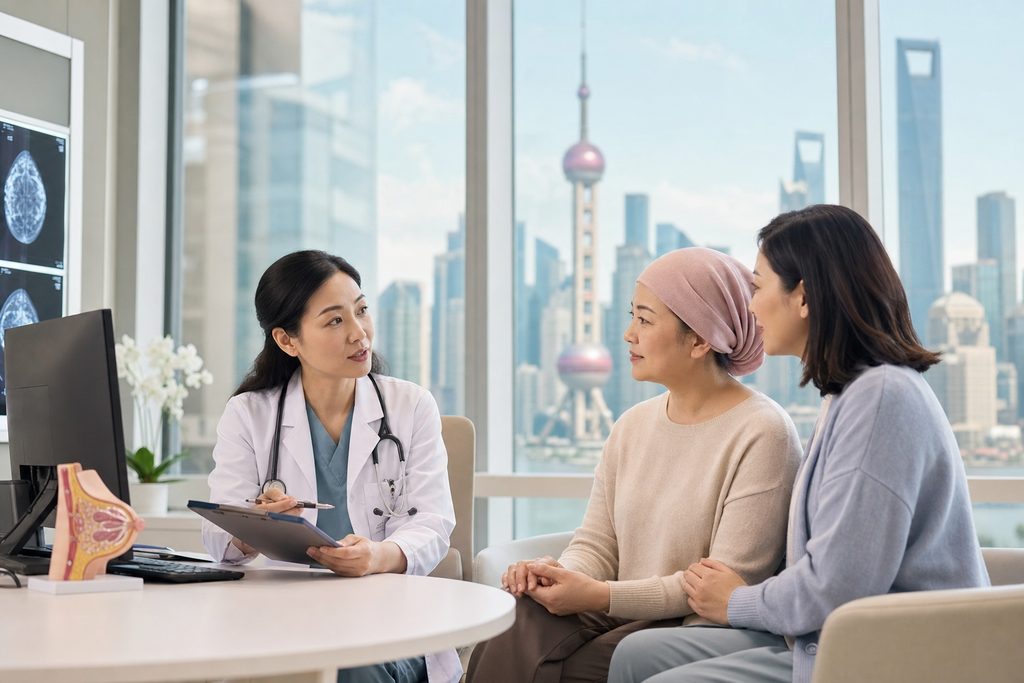
When Sarah, a 44-year-old teacher from Manchester, was diagnosed with stage I breast cancer, the NHS quoted her a six-week wait to begin treatment. She sat in her car outside the hospital and cried. Not from the diagnosis. From the helplessness of waiting while a tumor grew inside her. Then her husband asked a question neither of them had considered: what if we didn’t wait?
That question leads many patients to look beyond their borders. And increasingly, the destination is Shanghai.
Key Takeaways
- Fudan University Shanghai Cancer Center reports a 92% five-year survival rate for early-stage breast cancer, a figure directly comparable to top-tier US cancer centers.
- The breast cancer treatment cost Shanghai typically ranges from $15,000 to $25,000 for surgery and standard adjuvant therapy, roughly one-fifth to one-tenth of US prices.
- Public hospitals in China operate on a first-come, first-served basis for outpatient visits. Advanced scheduling for surgery requires navigating the hospital’s international VIP channel, not the standard public registration system.
- Language barriers, visa requirements, and unfamiliar hospital workflows make a bilingual medical companion essential for most international patients.
The Problem: When a Diagnosis Meets a Waiting List
A breast cancer diagnosis is terrifying enough. Watching a calendar fill up with delays while you wait for a surgical slot adds a layer of anguish that is difficult to describe. In the UK, the NHS constitutional standard mandates that 85% of patients begin treatment within 62 days of an urgent GP referral. In 2024, that target was missed for over a third of patients in some trusts. Canada fares worse. The Fraser Institute reports a median wait of 7.5 weeks between specialist consultation and breast cancer surgery. In parts of the United States, even insured patients in rural areas can wait four to six weeks for a first oncology appointment.
None of this is acceptable when tumor biology does not wait. Every week of delay in breast cancer treatment is associated with a measurable increase in mortality risk, according to a 2020 meta-analysis published in The BMJ covering over 1.2 million patients. The data is stark. A four-week surgical delay raises the risk of death by 6-8%. An eight-week delay pushes that figure past 15%. Patients know this. They feel it. And many are now choosing to act on it.
Who We Are
We are not a hospital. We do not provide medical treatment, make diagnoses, or offer clinical opinions. China Medical Services is a medical concierge organization that connects international patients with China’s top-tier hospitals. Our team handles the logistics that make treatment abroad possible: hospital matching based on your specific diagnosis and pathology, appointment coordination through official international departments, bilingual medical interpretation during every consultation, visa guidance, and local recovery support. We are the bridge between you and the clinical expertise you need. Nothing more, nothing less.
Why Fudan Shanghai Cancer Center Delivers Results Comparable to US Centers
The number that catches attention is 92%. That is the five-year survival rate for early-stage breast cancer patients treated at Fudan University Shanghai Cancer Center (FUSCC), according to data published by the hospital’s own oncology department. Stack that against the 91-93% reported by MD Anderson Cancer Center and Memorial Sloan Kettering for comparable stage I and II patients. The outcomes are not just close. They occupy the same statistical neighborhood.
How does a Chinese hospital achieve this? The answer lies in volume, specialization, and a system designed around rapid clinical throughput.
Clinical Volume Builds Surgical Precision
FUSCC performs over 7,000 breast cancer surgeries annually. That is roughly 19 surgeries every single day of the year. A typical breast surgical oncologist at a major US academic center might perform 100 to 150 breast cancer operations per year. At FUSCC, a senior surgeon handles 400 to 500. This is not a reflection of individual brilliance. It is a structural advantage. High-volume surgeons demonstrate lower complication rates and better oncologic outcomes across multiple studies, including a 2018 analysis in The Lancet Oncology that found surgical volume independently predicted survival in breast cancer patients.
Volume also sharpens the multidisciplinary team around the surgeon. Pathologists who read breast specimens all day develop a diagnostic speed and accuracy that a general pathologist cannot match. Radiologists who interpret breast imaging exclusively catch subtle findings others might miss. The entire system becomes calibrated to one disease. That calibration shows up in survival curves.
Technology Deployed at Scale
FUSCC operates 15 linear accelerators for radiation therapy and houses one of China’s largest breast cancer clinical trial programs. The hospital was an early adopter of sentinel lymph node biopsy techniques in Asia and now performs intraoperative radiotherapy for select patients, a procedure that condenses weeks of external beam radiation into a single session delivered during surgery. The technology itself is not unique. What differs is the speed of deployment. A patient diagnosed on Monday can have imaging completed by Wednesday, a surgical plan finalized by Friday, and be on the operating table the following week.
This pace is not magic. It is a function of hospital design. Chinese top-tier hospitals operate with enormous inpatient capacity and extended operating room hours. Surgeries run from 8 a.m. until 8 p.m. or later. There is no equivalent of the block-scheduling constraints that limit surgical throughput at many Western hospitals. When a surgeon is ready, the room is ready.
Cost Without Quality Compromise
Here is where the conversation gets uncomfortable for Western healthcare systems. The breast cancer treatment cost Shanghai for a full course of care—lumpectomy or mastectomy, sentinel node biopsy, and standard adjuvant therapy—runs between $15,000 and $25,000 at FUSCC’s international department. In the United States, the same treatment pathway averages $100,000 to $150,000, and can exceed $200,000 at major coastal academic centers. Even accounting for travel, accommodation, and our coordination services, the total financial picture is dramatically different.
Lower cost does not imply lower quality. It reflects structural economics. Chinese surgeon salaries, while rising, remain a fraction of US levels. Hospital construction costs are lower. Malpractice insurance burdens are minimal. Pharmaceutical pricing is state-negotiated. The equipment—the same Varian linear accelerators, the same Hologic mammography systems, the same Da Vinci surgical robots—costs what it costs everywhere. But the human and operational overhead around that equipment is far leaner.
For patients paying out of pocket, or those with high-deductible insurance plans, the arithmetic is hard to ignore. The savings can fund a family member’s travel, a month of recovery in a serviced apartment, and still leave five figures untouched.
What You Need to Know Before Going Alone
We need to be direct about this. Walking into a Chinese public hospital as a foreign patient without preparation is not brave. It is a recipe for frustration. The system works beautifully once you are inside it correctly. Getting inside it correctly is the hard part.
- Visa Requirements: Medical treatment in China requires an S2 visa with a medical purpose endorsement. This is not a tourist visa. It is not a business visa. The application requires an invitation letter from the treating hospital, medical records, and proof of financial means. Hospitals do not issue these letters to unregistered patients. You need the hospital relationship before you can get the visa, and you need the visa before you can travel. Breaking this circular dependency is step one.
- Registration and Payment: Chinese public hospitals do not accept foreign insurance for direct billing. Payment is required upfront, typically via cash, UnionPay card, or WeChat Pay. International credit cards are often useless at hospital cashier counters. A single outpatient visit can generate four to five separate payments at different windows: registration fee, consultation fee, imaging fee, lab fee, pharmacy fee. Each window has its own queue. Each queue operates in Mandarin.
- Language and Navigation: FUSCC sees over 10,000 outpatient visits per day across all departments. Signage in English exists but is inconsistent. Department names are translated in ways that do not always map cleanly onto Western medical terminology. A “breast surgery” department might be labeled “Mammary Gland Surgery.” A “medical oncology” consultation might be under “Internal Medicine-Chemotherapy.” Finding the right floor, the right window, the right physician without Chinese language ability is not a minor inconvenience. It is a genuine barrier to care.
These are not reasons to avoid treatment in China. They are reasons to prepare properly. And preparation means having someone on the ground who knows the system.
How We Help You Navigate This
The barriers we just described are real. They also have solutions. Our team exists to implement those solutions so you can focus on treatment and recovery.
Before you travel, we translate your medical records and pathology reports into clinical Chinese, the format that Chinese oncologists expect. We submit your case to the international patient department at FUSCC or whichever hospital best matches your diagnosis. We secure the invitation letter that unlocks your S2 visa application. We coordinate your initial consultation date so you arrive knowing exactly when and where your first appointment will be.
On the ground in Shanghai, a bilingual medical companion meets you at the hospital entrance. This person handles registration, payment at every window, queue management, and real-time interpretation during your consultations. You speak directly with your oncologist. Our companion ensures nothing is lost in translation. After surgery, we coordinate follow-up appointments, medication pickups, and rehabilitation arrangements. If you need a longer stay for radiation therapy, we help arrange nearby accommodation and daily transport.
The Fudan Shanghai Cancer Center international patient price for treatment itself is set by the hospital. Our coordination fees are separate and transparent. A typical full-service coordination package, including document translation, appointment scheduling, and bilingual companion support throughout diagnosis and surgery, starts from $3,000. Video consultations with FUSCC specialists before travel begin at $500. Every dollar paid for pre-travel consultation services is credited in full toward on-the-ground coordination if you proceed with treatment within 90 days.
We do not promise you will get a specific named surgeon on a specific date. That is not how Chinese public hospitals work. We promise that we will use every official channel available to secure the earliest possible consultation and surgery slot with a senior breast surgeon in the hospital’s international department. If we cannot secure an appointment within the timeframe we agree upon, our coordination fee is refunded in full. That is the extent of our guarantee. It is honest, and it is enforceable.
Comparing Early Stage Breast Cancer Survival Rate China vs US
The question patients ask most directly is this: am I compromising my chance of survival by choosing treatment in China instead of at home? The available data says no.
FUSCC’s reported 92% five-year survival for early-stage breast cancer aligns with the 91.5% reported by the US Surveillance, Epidemiology, and End Results (SEER) database for localized breast cancer diagnosed between 2013 and 2019. The early stage breast cancer survival rate China vs US comparison holds across multiple Chinese cancer centers. A 2022 study in The Breast journal analyzing outcomes from 12 major Chinese oncology hospitals found five-year survival rates for stage I breast cancer ranging from 90% to 94%, with FUSCC at the upper end of that spectrum.
What about more advanced disease? For stage II breast cancer, FUSCC reports five-year survival in the 82-86% range, compared to approximately 85% in US SEER data. Stage III outcomes show wider variation, as they do everywhere. The critical variable is not the country where treatment occurs. It is the stage at diagnosis and the completeness of guideline-adherent therapy. FUSCC follows NCCN guidelines adapted for Asian populations, with treatment protocols that mirror those used at major Western cancer centers.
One difference worth noting: Chinese breast cancer patients tend to be diagnosed at a younger median age than Western patients, around 48-50 versus 62 in the US. This shifts the demographic profile of the patient population but does not alter the underlying treatment efficacy. Surgeons at FUSCC are experienced with both younger patients facing aggressive biology and older patients with comorbidities. The hospital’s case mix reflects the full spectrum.
How Much Does Breast Cancer Surgery Cost in China: A Detailed Breakdown
Let us get specific about numbers. The question “how much does breast cancer surgery cost in China” does not have a single answer. It depends on the procedure, the hospital tier, and whether you access care through the public or international channel. Here is what international patients should expect at FUSCC’s international department.
| Procedure | Estimated Cost (USD) | Notes |
|---|---|---|
| Breast-conserving surgery (lumpectomy) + sentinel node biopsy | $6,000 – $9,000 | Includes 2-3 day hospitalization |
| Total mastectomy + sentinel node biopsy | $8,000 – $12,000 | Includes 3-5 day hospitalization |
| Mastectomy with immediate reconstruction (implant) | $15,000 – $22,000 | Plastic surgeon fee included |
| Adjuvant chemotherapy (4 cycles, standard regimen) | $4,000 – $8,000 | Outpatient, per-cycle billing |
| Whole-breast radiation therapy (standard 3-4 week course) | $5,000 – $8,000 | Daily outpatient sessions |
| Targeted therapy (trastuzumab, per cycle) | $800 – $1,500 | Biosimilar versions widely available |
These figures cover the hospital’s charges for the procedure, room, nursing care, and standard medications used during the stay. They do not include our coordination fees, travel, accommodation, or post-operative garments. Prices vary by case complexity and are confirmed only after the surgeon reviews your imaging and pathology. But as a planning benchmark, a patient with stage I breast cancer requiring a lumpectomy, sentinel node biopsy, and four cycles of adjuvant chemotherapy should budget $18,000 to $25,000 for the full treatment course at FUSCC. The equivalent US course rarely comes in under $100,000.
Choosing the Best Breast Cancer Hospital in Shanghai for Foreigners
FUSCC is not Shanghai’s only option for breast cancer care. It is the most specialized. The hospital is a dedicated cancer center, meaning every department, every corridor, every support service is organized around oncology. For a foreign patient with a confirmed breast cancer diagnosis, this focus is an advantage. You are not navigating a general hospital where oncology shares resources with cardiology and orthopedics. You are in a building where breast cancer is the main event.
Ruijin Hospital, affiliated with Shanghai Jiao Tong University School of Medicine, offers a strong alternative. Its breast surgery department handles approximately 3,000 cases annually and ranks among China’s top 10 for general surgery in the Fudan hospital rankings. Ruijin’s international medical center provides English-speaking coordination and a slightly broader range of specialty backup if you have complex comorbidities that require cardiac or endocrine consultation during treatment.
For patients who prioritize a Western-style experience above all else, Jiahui International Hospital offers JCI-accredited breast cancer care with English-speaking oncologists, direct insurance billing, and a private-room environment. The trade-off is surgical volume. Jiahui’s breast surgeons operate on fewer cases per year than their FUSCC counterparts. The best breast cancer hospital in Shanghai for foreigners depends on what you value most: the highest-volume subspecialist surgeon, or the smoothest English-language experience. Our team helps you weigh that trade-off based on your specific diagnosis and preferences.
We maintain relationships with all three institutions and can coordinate care at whichever best fits your clinical and personal needs. Explore our Shanghai hospital database for a full comparison of oncology centers in the city.
How to Book Breast Cancer Treatment at Fudan Cancer Center Shanghai
The process to book breast cancer treatment at Fudan Cancer Center Shanghai as an international patient follows a specific sequence. It is not a web form you fill out and receive a confirmation email. It is a clinical intake process that begins with a physician reviewing your records.
Step one: you send us your complete medical file. This means pathology report, imaging studies (mammogram, ultrasound, MRI if available), surgical history, and any prior treatment records. We translate these documents into clinical Chinese and prepare a summary for the international department.
Step two: the international department reviews your file and assigns a breast surgeon. This takes two to five business days. If the surgeon needs additional imaging or a biopsy review, we coordinate that. Sometimes a video consultation is recommended before travel. Our video consultation coordination service starts at $500, fully creditable toward in-person coordination.
Step three: once the surgeon accepts your case, the hospital issues an official treatment invitation letter. This document includes the proposed admission date range and the treating department. You take this letter to your nearest Chinese visa application center to apply for your S2 medical visa.
Step four: you arrive in Shanghai. Our companion meets you at the airport or your hotel. Your first hospital visit is a face-to-face consultation with the surgeon who reviewed your file. Surgery is typically scheduled within three to seven days of that consultation, depending on operating room availability and any repeat imaging required.
The entire process, from initial file submission to surgery, can be completed in three to four weeks. Compare that to the waiting times many patients face at home. The speed is not a gimmick. It is the natural result of a high-capacity system with dedicated oncology infrastructure.
Frequently Asked Questions
The 92% figure is reported by FUSCC’s department of breast surgery based on its internal patient registry and has been presented at international oncology conferences. Independent verification comes from large Chinese multicenter studies. A 2022 analysis covering over 40,000 breast cancer patients across 12 Chinese hospitals, published in The Breast, found five-year survival for stage I disease between 90% and 94%, with FUSCC’s outcomes consistently at the upper end. The data aligns with what peer institutions report and what SEER data shows for the US. There is no reason to doubt it, and multiple reasons to trust it.
This is a fair question, and the answer requires honesty about the Chinese medical legal environment. Medical malpractice litigation in China is less developed and less plaintiff-friendly than in Western jurisdictions. Hospitals carry liability insurance, but the compensation framework differs from what US or European patients might expect. That said, serious surgical complications at a high-volume center like FUSCC are rare precisely because the surgeons perform these procedures constantly. Our practical advice: ensure you have international medical travel insurance that includes coverage for complication management and medical evacuation if needed. We can recommend insurers familiar with medical travel to China. We also ensure that a family member or companion is with you throughout recovery and that communication channels with your surgical team remain open.
Generally, no. FUSCC’s international department does not maintain direct billing relationships with foreign insurers. You pay the hospital directly and seek reimbursement from your insurer afterward. Some international health insurance plans with out-of-network coverage will reimburse treatment at FUSCC, but you must confirm this with your insurer before travel. We provide itemized receipts and translated medical records to support your reimbursement claim. A small number of high-end international plans have begun establishing direct-pay arrangements with select Chinese hospitals, but FUSCC is not yet among them. For patients who require direct insurance billing, Jiahui International Hospital in Shanghai is a better fit, though surgical volumes are lower.
The international department at FUSCC assigns cases to senior attending surgeons, not residents or fellows. The surgeon who operates on you will be a board-certified breast surgical oncologist with a minimum of 10 years of post-training experience. You cannot hand-pick a specific named surgeon through the international channel, but the department’s internal assignment protocol prioritizes matching complex cases to its most experienced operators. If you have a strong preference for a particular surgeon based on published work or reputation, we can communicate that preference. Whether the hospital accommodates it depends on that surgeon’s availability and the clinical characteristics of your case. We are transparent about this limitation because it is real, and promising otherwise would be dishonest.
For a lumpectomy with sentinel node biopsy, most patients are discharged within two to three days and can travel internationally within a week, provided there are no complications. For a mastectomy, plan on five to seven days in hospital and another week in Shanghai for drain removal and wound check before flying. If you require radiation therapy, you will need to stay for the full treatment course, typically three to four weeks of daily sessions. We help arrange extended-stay accommodation near the hospital and daily transportation. Your follow-up care back home should be arranged before you leave Shanghai, with a complete treatment summary and operative report translated into English for your local oncologist.
Your Next Step
A breast cancer diagnosis forces decisions under pressure. The instinct is to stay close to home, to stick with the system you know. For many patients, that instinct serves well. For others, the waiting, the
For more medical information and treatment options in China, visit chinamedservices.com (China Medical Services).
