Bunion Surgery Cost China: Is the Pain Worth the Price?
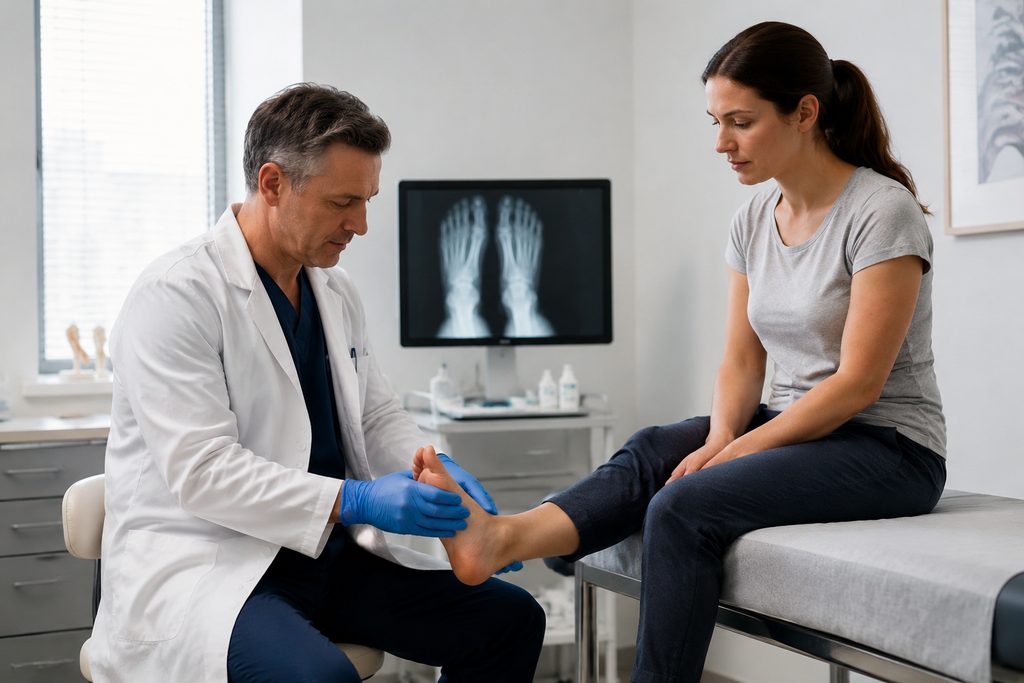
You have probably heard that flying to another country for foot surgery sounds extreme, maybe even reckless. But when the quote from your local orthopedic surgeon lands at $18,000 and your insurance covers a fraction, the math stops being abstract. The question “Is bunion surgery worth the pain?” gets tangled up with a second one: what does bunion surgery cost China actually deliver, and does lower price mean lower standards?
Our team fields this exact question from patients in the US, UK, and Australia every month. They share X-rays, surgical quotes, and the same underlying fear — that a cheaper operation overseas will leave them limping. The honest answer requires separating the procedure itself from the price tag attached to it. A hallux valgus correction performed by a senior foot and ankle surgeon at a top Chinese orthopedic center is not a discount version of the surgery. It is the same osteotomy, the same fixation principles, the same rehabilitation demands. The cost difference comes from system economics, not surgical shortcuts.
This article walks through what the literature says about outcomes, what the recovery genuinely feels like week by week, and how to evaluate a hospital in Shanghai or Beijing without falling for glossy brochures. No promises of painless miracles. Just the data and the decision framework we use when advising patients.
How This Actually Works, Step by Step
The path from “I have a bunion” to “I am walking comfortably again” follows a predictable sequence. Skipping steps is where people get hurt.
Step 1: You send what you already have. That means weight-bearing X-rays of both feet, ideally taken within the last six months. A photo of your foot standing, from above and from the side. Any prior surgical notes if this is a revision case. Your age, activity level, and what specifically bothers you — pain at rest, pain in shoes, the cosmetic angle, or all three.
Step 2: A foot and ankle specialist reviews the imaging. Not a general orthopedist. We connect you with surgeons who do hallux valgus corrections weekly, not occasionally. They measure the intermetatarsal angle, the hallux valgus angle, and assess whether the deformity is mild, moderate, or severe. That classification determines which of the 150-plus named bunion procedures actually fits your foot.
Step 3: You get a written assessment and a video conversation. The surgeon explains which procedure they recommend and why. Mild deformities might need a distal osteotomy like a chevron. Severe ones often require a proximal osteotomy or a Lapidus fusion. You ask the hard questions: how many of these have you done, what is your recurrence rate, what do you do if the bone does not heal.
Step 4: You decide whether to travel. If you proceed, we handle hospital registration, scheduling, and a bilingual companion who stays with you through admission, surgery, and discharge. You are never alone in a corridor trying to mime “where is the pharmacy.”
Step 5: Surgery and structured follow-up. The operation itself takes one to two hours depending on complexity. You stay in hospital one to three nights. Before you fly home, you get a written discharge summary in English, your post-op X-rays, and a rehabilitation protocol your local physiotherapist can follow.
Is Bunion Surgery Worth the Pain: What the Evidence Says
Let us address the core question head-on. Patients ask is bunion surgery worth the pain because they have heard recovery is brutal. Some of what circulates online is outdated.
Modern osteotomies use small, rigid internal fixation. That means no protruding pins, earlier weight-bearing, and less post-operative stiffness. A 2022 systematic review in the Journal of Foot and Ankle Surgery examined patient satisfaction after hallux valgus correction and found that over 85% of patients reported they would undergo the procedure again. But — and this matters — satisfaction correlated strongly with realistic expectations. Patients who expected zero pain at week two were miserable. Patients who understood the arc of recovery were not.
So the honest answer is: the pain is usually manageable and time-limited. The first 72 hours after the nerve block wears off are the hardest. Swelling peaks around day three. Elevation and ice matter more than willpower. By week two, most patients are in a surgical shoe, not a cast. By week six, X-rays typically show early bone healing, and you transition into a stiff-soled shoe. By month three, walking is usually comfortable. By month six, you are back to impact activity if all went well.
What patients rarely hear: the alternative to surgery is not painless either. A progressive bunion does not spontaneously improve. The joint continues to drift, the big toe crowds the second toe, and arthritis can set in. Conservative options — wide shoes, toe spacers, orthotics — manage symptoms but do not correct the deformity. For moderate to severe bunions, surgery is the only intervention that addresses the mechanical problem.
A Realistic Timeline
Here is the timeline people forget. It includes the waiting steps no brochure mentions.
| Stage | Duration | What Actually Happens |
|---|---|---|
| Remote evaluation | 3–7 days | You send X-rays and photos. A foot and ankle specialist reviews them. You schedule a video consultation. |
| Video consultation | 30–60 minutes | Surgeon explains the recommended procedure, risks, and expected outcome. You ask questions. No obligation to travel. |
| Visa processing | 1–3 weeks | You apply for an S2 visa with supporting documents from the hospital. Processing time varies by consulate. |
| Travel and pre-op | 2–3 days | You arrive, complete pre-operative labs and ECG, and meet the surgical team in person. |
| Surgery and hospital stay | 1–3 nights | The procedure takes 1–2 hours. You stay for pain management and initial mobilization. |
| First 2 weeks | Non-weight-bearing or heel-weight-bearing | Elevation, ice, and pain medication. Surgical shoe. Stitches removed around day 14. |
| Weeks 2–6 | Gradual weight-bearing | Swelling persists. You transition from surgical shoe to stiff-soled footwear. No driving if it is your right foot. |
| Weeks 6–12 | Bone healing confirmed | X-ray shows consolidation. Physical therapy for gait and range of motion begins in earnest. |
| Months 3–6 | Return to normal activity | Most patients walk comfortably. Impact sports wait until month 4–6 depending on the procedure. |
| Months 6–12 | Final swelling resolution | Residual swelling can persist for up to a year, especially after a Lapidus fusion. |
Notice the gap between “video consultation” and “surgery.” That is the visa window. It is not a delay caused by the hospital. It is a consulate process. Budget three weeks for it, and if the visa arrives faster, you simply move your surgery date up.
What Can Go Wrong — and What Happens Then
Every honest surgical discussion includes failure modes. Bunion surgery is no exception.
Recurrence. The bunion can return, particularly if the underlying biomechanical cause — flatfoot, hypermobility — is not addressed. Recurrence rates range from 5% to 15% depending on the procedure and follow-up duration. A surgeon who recommends a Lapidus fusion for a hypermobile first ray is not upselling you. They are trying to prevent the bunion from coming back.
Nonunion or malunion. The bone may heal slowly or in a poor position. Smokers face significantly higher risk. If you smoke, say so during the consultation. A responsible surgeon will ask you to stop six weeks before surgery.
Nerve injury. The superficial peroneal nerve and the medial dorsal cutaneous nerve run near the surgical site. Injury can cause numbness along the inner edge of the big toe. It is usually temporary but can be permanent in a small percentage of cases.
Stiffness. The metatarsophalangeal joint can stiffen, especially if post-operative mobilization is delayed. This is why the rehabilitation protocol matters as much as the surgery itself.
Infection and DVT. Superficial wound infection occurs in 1–3% of cases. Deep infection is rare. Your surgeon will prescribe prophylactic antibiotics and early mobilization to reduce clot risk. If you are flying long-haul after surgery, discuss compression stockings and timing with the team.
What happens if something goes wrong after you fly home? You are not abandoned. The surgical team reviews follow-up X-rays remotely. If a complication requires intervention, you return or, in some cases, a local surgeon takes over with the full operative record in hand. We have coordinated both scenarios. The key is that you leave China with complete documentation, not a one-page discharge note.
How Long Does Bunion Surgery Pain Last — and What Minimally Invasive Recovery Really Looks Like
Patients searching how long does bunion surgery pain last are usually trying to plan time off work. The answer depends on the technique.
Traditional open osteotomies involve a 4–6 cm incision. Minimally invasive bunion surgery recovery time is often shorter in the early phase because the incisions are 2–3 mm punctures and soft tissue disruption is less. But — and surgeons are blunt about this — the bone still needs the same time to heal. Minimally invasive does not mean instantly weight-bearing. It means less wound pain, less swelling, and often a faster return to normal shoes. The bone biology does not speed up because the incision is smaller.
Most patients describe the pain curve like this: days 1–3 are controlled with oral medication and elevation. Days 4–10 are uncomfortable but manageable. By day 14, the sharp pain is gone; what remains is swelling and stiffness. By week 6, pain is intermittent, triggered by prolonged standing. By month 3, most patients are largely pain-free with activity. By month 6, the foot feels normal for daily life, though residual swelling after a long day can linger for a year.
If someone promises you a painless bunion surgery, walk away. The honest answer is that the pain is real but finite, and it is dramatically less than what patients feared based on stories from 20 years ago.
What the Numbers Mean: Comparing Bunion Surgery Cost China vs the US
Here is where the financial picture clarifies. The bunion surgery cost China at a top-tier public hospital or reputable private international hospital typically ranges from $4,000 to $9,000 for a unilateral procedure, depending on the technique and the hospital tier. A bilateral procedure costs more but not double — usually $7,000 to $14,000.
Compare that to the United States, where the same unilateral osteotomy without complications averages $12,000 to $20,000, and can exceed $25,000 at academic centers in major cities. The UK private sector lands between £6,000 and £10,000. Australia sits at AUD $10,000 to $18,000.
| Location | Unilateral Bunion Surgery | Bilateral (Same Admission) | Notes |
|---|---|---|---|
| China — top public hospital (international department) | $4,000–$7,000 | $7,000–$11,000 | Surgeon fee, hospital stay, implants included. English coordination extra. |
| China — private international hospital | $6,000–$9,000 | $10,000–$14,000 | English-speaking staff, direct insurance billing possible at some facilities. |
| United States | $12,000–$20,000 | $20,000–$35,000 | Varies by state, facility fees dominate. |
| United Kingdom (private) | £6,000–£10,000 | £10,000–£16,000 | NHS wait times often push patients private. |
| Australia (private) | AUD $10,000–$18,000 | AUD $18,000–$28,000 | Medicare rebate reduces out-of-pocket but rarely eliminates it. |
These are ranges, not quotes. Your actual cost depends on the procedure, the hospital, and whether you need additional imaging or a longer stay. What the table shows is the structural gap: Chinese hospital systems run at high volume with lower administrative overhead, and that efficiency translates into lower fees without lower surgical standards.
Also factor in the cost of not having surgery. A 2021 health economics analysis in Foot & Ankle International estimated that patients with symptomatic hallux valgus lose an average of 11 work days per year to pain and medical appointments. Over five years, that is roughly two months of lost productivity. The surgery is not just a medical decision. It is a time decision.
Choosing the Best Hospital for Bunion Surgery in Shanghai
If Shanghai is on your shortlist, you are looking in the right place. The city hosts several hospitals ranked among China’s top 10 for orthopedics in the Fudan specialty reputation rankings. The best hospital for bunion surgery in Shanghai is not a single institution — it depends on your case complexity and your language needs.
For straightforward hallux valgus correction, several top-tier public hospitals have foot and ankle subspecialty teams that perform hundreds of these procedures annually. For complex revision cases or patients who want fully English-speaking care from admission to discharge, private international hospitals like Jiahui and United Family Shanghai offer JCI-accredited orthopedic departments with Western-trained surgeons.
What should you actually check? Ask the surgeon how many hallux valgus corrections they performed last year. Ask about their recurrence rate at five years. Ask which fixation system they use and why. Ask whether they perform minimally invasive techniques and, if so, how many. A confident surgeon answers these questions directly. A vague one does not.
Our database covers Shanghai’s top hospitals with verified orthopedic departments, and the orthopedics specialty rankings break down which institutions lead in foot and ankle surgery specifically. You can also browse the broader top-ranked hospital list to compare across cities.
Practical Considerations: Records, Visa, Payment, and Follow-Up
Records. Bring weight-bearing X-rays, any MRI or CT if done, and a list of medications. If you have diabetes, cardiac issues, or a history of blood clots, disclose everything. Your surgical clearance depends on it.
Visa. Medical treatment in China falls under the S2 visa category for short stays, with S1 for stays exceeding 180 days. The hospital provides an invitation letter and treatment confirmation that supports your application. Consulates do not guarantee approval, but a complete application with hospital documentation is processed as a routine private affairs case. Do not apply for an M visa — that is for commercial trade, not medical care.
Payment. Public hospitals require pre-payment for surgical packages. Private international hospitals may bill your insurer directly if they have an agreement. Most international patients pay out of pocket and claim reimbursement from their insurer afterward. Ask for itemized invoices in English before you leave.
Language. Top public hospitals have international departments with English-speaking coordinators, but the depth of English support varies. A bilingual companion who stays with you through admission, surgery, and discharge removes the friction. It is not a luxury. It is the difference between knowing what the nurse said and guessing.
Follow-up at home. You need a local physiotherapist or podiatrist willing to follow a protocol written by a surgeon they have never met. Most are cooperative if the protocol is clear. We provide a written rehabilitation plan and facilitate remote review of your follow-up X-rays with the operating team.
Frequently Asked Questions
Is bunion surgery worth the pain if my bunion does not hurt every day?
That depends on trajectory. If the deformity is progressing, the joint is stiffening, or you are avoiding activities you used to enjoy, surgery addresses a mechanical problem that will not resolve on its own. If your symptoms are mild and stable, conservative management is a reasonable first step. A foot and ankle surgeon can measure your
For more medical information and treatment options in China, visit chinamedservices.com (China Medical Services).
