Cancer Radiation in Guangzhou China: Advanced Radiotherapy, Local Full Service
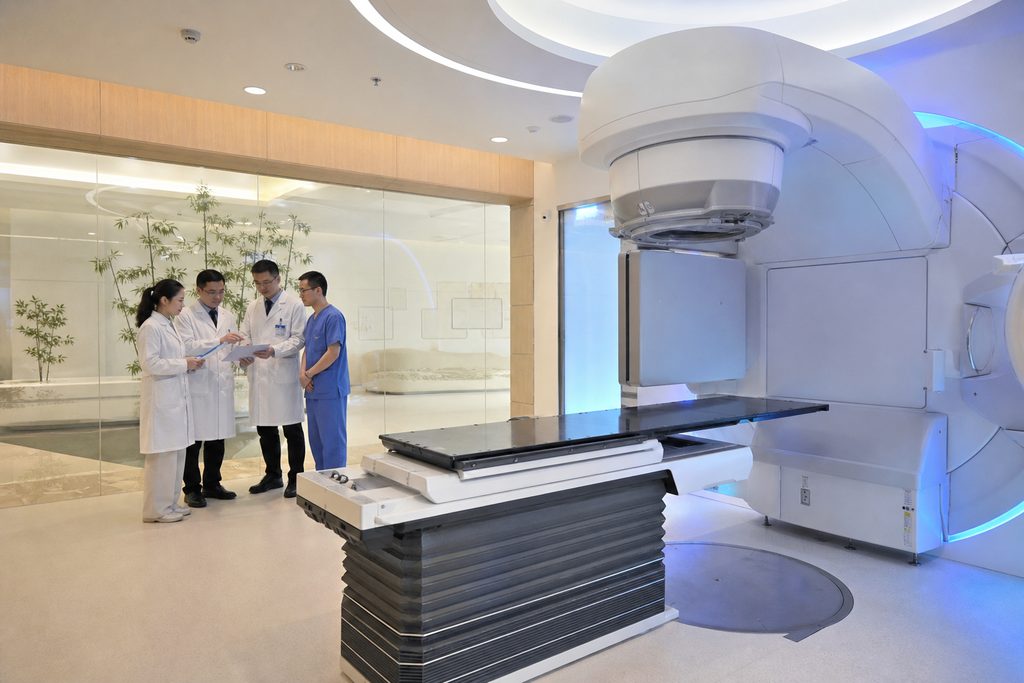
Radiation therapy sounds complex. At its core, it means using high-energy beams — usually X-rays or protons — to damage the DNA inside cancer cells. The cells die or stop multiplying. Healthy cells nearby can repair themselves. Cancer cells, generally, cannot. So the tumor shrinks, while the rest of you recovers. That is the principle. But the delivery? That has changed dramatically.
We see patients searching for “advanced radiotherapy local full service” because they want one thing: a complete, coordinated treatment experience without the fragmentation that terrifies anyone facing a cancer diagnosis. They want the machine, the physicist, the oncologist, the follow-up — all in one place, with someone who speaks their language. Guangzhou has built exactly that infrastructure. The city hosts several of China’s top-ranked oncology centers, equipped with TrueBeam, Halcyon, and Gamma Knife systems. The radiation therapy cost in Guangzhou China typically runs 60-70% below Western private-pay rates, with no clinical trade-off in technology. But cost alone isn’t the story. Getting here safely, understanding the process, and knowing what “full service” actually means — that’s what matters.
Our team has coordinated radiotherapy journeys for international patients across China’s hospital network. We handle the logistics. We connect you with the clinical teams. This article explains what you need to know before you book a flight.
How This Actually Works, Step by Step
You do not simply arrive and lie down on a treatment table. There is a sequence. Here is the real path from inquiry to first fraction.
Step 1: You send us your existing records. This means your diagnostic imaging (CT, MRI, PET-CT), pathology report, treatment history, and any prior radiation summaries. We need DICOM files, not just printed films. Our team arranges certified medical translation into Chinese. This takes 2-3 business days.
Step 2: Written second opinion. A senior radiation oncologist from a relevant Guangzhou department reviews your file. You receive a written analysis: Is the diagnosis confirmed? Is radiotherapy appropriate? Which modality — IMRT, VMAT, SBRT, proton? What total dose and fractionation schedule do they recommend? This document costs $300-500 and arrives within 5-7 business days. It is for reference only, not a prescription.
Step 3: Video consultation. You speak with the same specialist. You ask your questions. They explain the proposed plan, the immobilization devices needed, the expected side effects, the number of fractions. The conversation usually lasts 30-45 minutes. Fee: $500-800 for a top-specialist session. Ninety days later, if you proceed to treatment in Guangzhou, this entire consultation fee is credited toward your coordination service.
Step 4: Treatment plan and cost estimate. The hospital’s international department issues a formal quotation. This covers simulation, treatment planning, quality assurance checks, and each fraction. It also includes the professional fees for the radiation oncologist, medical physicist, and dosimetrist. You will see a line-item breakdown. No hidden charges.
Step 5: Visa and travel. You apply for an S2 visa at your nearest Chinese embassy or consulate, with supporting documents from the hospital. Processing takes 5-10 business days in most jurisdictions. Our team provides the invitation letter package. We also arrange airport pickup and accommodation near the hospital.
Step 6: On-site simulation and treatment start. You arrive. Within 1-2 days, you undergo a CT simulation — a planning scan where technicians create your immobilization mold or mask. The physics team builds your treatment plan. Quality assurance checks follow. Your first fraction typically happens 5-7 working days after simulation. Then you proceed through your full course, with weekly on-treatment visits to review progress and manage side effects.
What “Advanced Radiotherapy” Means in Guangzhou Right Now
You do not book a session directly. You start with remote evaluation. Send your records. Receive a written second opinion and video consultation. Once the clinical team confirms radiotherapy is appropriate, the international department issues a treatment plan and cost estimate. You accept, transfer the deposit, and schedule your arrival. The hospital then books your simulation and treatment slots. Walk-in booking does not exist. The remote evaluation step is mandatory — it protects you from traveling to Guangzhou only to learn that your case requires a different approach.
The technology is the same. The workflow differs. In China, the public hospital system centralizes care — your radiation oncologist, physicist, and treatment therapists all work within the same department, often on the same floor. Multidisciplinary tumor boards are standard. The pace is faster: simulation to first fraction in 5-7 working days, compared to 2-3 weeks in some Western public systems. The cost is lower for reasons unrelated to quality. The patient volume is higher — top centers treat hundreds of patients daily — which means the clinical teams have deep experience with both common and rare presentations. The trade-off: less hand-holding. You need to advocate for yourself or have someone advocate for you. That is where a bilingual companion changes the experience.
Many protocols combine concurrent chemotherapy with radiation. The Guangzhou team will assess whether this applies to your case during the second opinion. If yes, the international department coordinates both the radiation oncology and medical oncology schedules. Chemotherapy infusion suites are located in the same hospital. The cost estimate will include both modalities. You receive integrated care under one roof, with one medical record.
Yes. Your accompanying family member applies for an S2 visa alongside you. Accommodation near the hospital ranges from serviced apartments to international hotels. Our team recommends options within walking distance or a short taxi ride. During treatment, family members can wait in the international department lounge. They are not permitted in the linear accelerator vault during beam delivery — that is a universal radiation safety rule — but they can be present for consultations and simulation. Guangzhou has extensive English-speaking expatriate communities and international dining options, which makes extended stays more comfortable than in smaller Chinese cities.
Your Next Step
Radiation therapy is a precise, technically demanding treatment. Guangzhou offers world-class delivery platforms at a cost structure that makes self-pay feasible for many international patients. The challenge is not
Frequently Asked Questions
Yes. The hospitals used for international patients are JCI-accredited and follow the same international safety standards as top hospitals in the US and Europe. Surgical teams perform high volumes of procedures — often more than their Western counterparts — which studies show leads to better outcomes.
Costs vary by procedure and hospital, but international patients typically save 40-80% compared to US prices — even when factoring in travel and accommodation. A consultation with our team will give you an exact, all-inclusive quote with no hidden fees.
Send us your existing medical reports to get started. We handle everything from hospital selection and appointment scheduling to visa assistance and post-operative recovery planning. Your medical records are reviewed by the specialist before you even book a flight.
For more medical information and treatment options in China, visit chinamedservices.com (China Medical Services).
