Cancer Recurrence After Treatment: Understanding Your Real Risk and Options
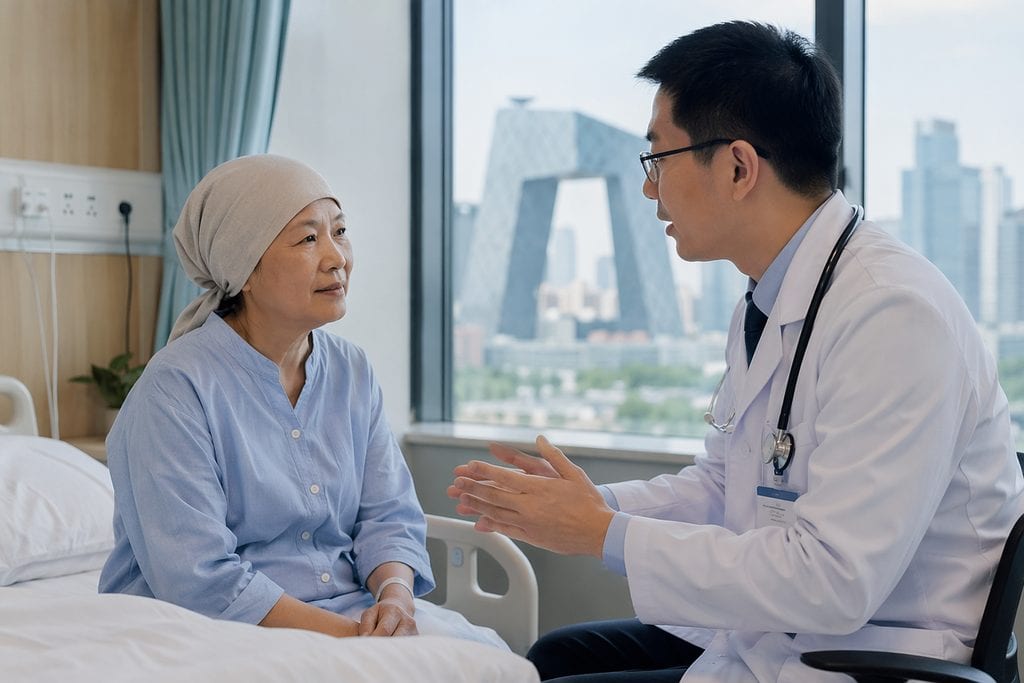
When 42-year-old Michael heard the word “remission,” he exhaled for the first time in eight months. Then came the quieter question, the one his oncologist answered with statistics instead of certainty. Could it come back?
For millions of patients, that question never fully leaves the room. Understanding the cancer recurrence rate after treatment China and globally means confronting a hard truth: recurrence risk is real, measurable, and deeply dependent on tumor biology, treatment completeness, and follow-up rigor. This article explains what the data shows, what you can control, and how patients evaluate their options—including seeking second opinions from high-volume oncology centers abroad.
Key Takeaways
- Recurrence risk varies dramatically by cancer type—from under 5% for some early-stage thyroid cancers to over 50% for certain aggressive glioblastomas and ovarian cancers.
- Most recurrences happen within the first 2-3 years after treatment, which is why surveillance protocols are most intensive during this window.
- China’s top oncology centers treat patient volumes that dwarf most Western hospitals—Fudan-ranked cancer hospitals routinely manage 10,000+ new cases annually.
- No scan or blood test can guarantee cancer will never return. Monitoring reduces risk of late detection, not risk of recurrence itself.
The Problem: Recurrence Is Not Rare, and Anxiety Is Universal
About 1 in 5 cancer survivors will experience a recurrence at some point, though that figure hides enormous variation. For early-stage breast cancer treated with surgery plus adjuvant therapy, the 10-year recurrence rate ranges from 3% to 15% depending on hormone receptor status and lymph node involvement. For stage III ovarian cancer, recurrence exceeds 70% even after optimal debulking surgery and chemotherapy. The numbers are not abstractions—they are the lived reality of survivorship.
What makes this harder is the asymmetry of information. Patients finish treatment, receive a follow-up schedule, and are sent back into their lives with a surveillance plan they may not fully understand. Scans happen. Blood tests happen. But what do the results actually mean? When should a borderline finding trigger alarm? When is a second opinion worth pursuing? These questions rarely get answered in a 15-minute follow-up appointment.
Why High-Volume Oncology Centers Deliver Different Results
A radiologist at a major Chinese cancer center may read 50-80 oncology scans per day. That repetition builds pattern recognition that no textbook can replicate. Fudan University’s hospital rankings place institutions like Fudan University Shanghai Cancer Center and Sun Yat-sen University Cancer Center among China’s top oncology programs—centers where a single department sees more rare tumor subtypes in a month than a regional Western hospital sees in a year. For patients asking “can cancer come back after surgery,” the quality of the original surgical margins and the thoroughness of pathological review are often the deciding factors. High-volume centers have dedicated pathology subspecialists who review every margin, every node, every receptor status. That granularity changes treatment plans.
China’s top hospitals maintain longitudinal databases tracking tens of thousands of patients over decades. This data informs follow-up protocols—which tumor markers matter, which imaging intervals actually improve outcomes, which recurrences can be caught early enough to treat curatively. The best oncology hospital Shanghai cancer remission programs publish extensively on recurrence patterns for hepatocellular carcinoma, nasopharyngeal carcinoma, and gastric cancer—diseases far more common in Asia than in the West, giving Chinese centers unmatched clinical exposure.
The cost of cancer treatment abroad stops many patients from seeking international expertise. In the US, a comprehensive second opinion from a top cancer center can run $3,000-$10,000 without insurance. A written second opinion from a top-ranked Chinese oncology specialist typically costs $300-$500 through coordination services. Video consultations with top specialists run $500-$800. These are not trivial sums, but they are an order of magnitude lower than Western equivalents—and many patients find the perspective worth far more than the price.
What Recurrence Actually Means: Types and Timelines
Not all recurrences are equal. Understanding the distinctions changes how patients interpret their risk and plan their monitoring.
A local recurrence means cancer returns in or near the original site. These are often surgically treatable if caught early. A regional recurrence involves nearby lymph nodes—more serious, but still potentially curable with combined-modality therapy. A distant recurrence, or metastasis, means cancer has spread to organs far from the original tumor. This is the most serious category and generally requires systemic therapy rather than surgery alone.
Timing matters too. Recurrence within 6 months of completing treatment suggests the original therapy did not fully eradicate the disease. Recurrence after 5 years is sometimes called “late recurrence” and may represent a biologically distinct process—particularly in hormone-positive breast cancer, where late recurrences can occur 10-20 years after diagnosis. Most solid tumor recurrences cluster in the first 2-3 years. This is not random; it reflects the growth kinetics of residual micrometastatic disease.
How to Prevent Cancer Recurrence After Treatment: What the Evidence Supports
Patients often ask what they can do to reduce recurrence risk. The honest answer: some factors are within your control, and some are not. But the controllable factors matter more than most people assume.
Adherence to adjuvant therapy is the single most powerful controllable factor. For hormone-positive breast cancer, completing 5-10 years of endocrine therapy reduces recurrence risk by roughly 40-50% compared to stopping early. Yet studies show 30-50% of patients discontinue therapy prematurely, often due to side effects. This is a tragedy of execution, not knowledge.
Surveillance compliance is the second pillar. Missing follow-up scans or tumor marker tests means recurrences are detected later, when treatment options are narrower. The schedule exists for a reason. Keep it.
Lifestyle factors play a modest but real role. The American Cancer Society’s guidelines on nutrition and physical activity for cancer survivors cite evidence that regular exercise reduces recurrence risk for breast, colorectal, and prostate cancers by 20-40% in observational studies. Smoking cessation after a lung cancer diagnosis improves survival more than any single intervention. These are not guarantees—but they shift probabilities in your favor.
Practical Considerations: Seeking a Second Opinion Abroad
For patients who want an independent review of their recurrence risk or treatment plan, China’s top oncology centers offer a compelling option. The process is more navigable than most assume, but it requires planning.
You will need your complete medical records: pathology reports, surgical notes, imaging studies on CD or via secure transfer, chemotherapy regimens with exact doses and dates, and radiation therapy summaries. Translation into English or Chinese is typically handled by the coordination service or the hospital’s international department.
Visa requirements are straightforward for medical consultations. The S2 visa is the applicable short-stay category for private affairs including medical treatment, issued with supporting documentation from the hospital. Family members accompanying a patient apply under the same category. Processing times vary by consulate, but most patients receive approval within 1-3 weeks. You can find more detail on navigating China’s hospital system on our guide to Fudan-ranked hospitals.
Payment is typically required upfront at public hospitals, with insurance reimbursement handled afterward. Private international hospitals like United Family or Jiahui offer direct billing with many international insurers, though consultation fees run higher. For patients comparing options, our overview of private international hospitals in China breaks down what to expect.
Practical tip: Request a written second opinion before committing to travel. For $300-$500, a top-ranked Chinese oncologist reviews your records and provides a written analysis. If the opinion suggests a meaningful change in your treatment plan, then consider a video consultation or in-person visit. This staged approach saves thousands in travel costs while still giving you access to high-level expertise.
Frequently Asked Questions
What is the cancer recurrence rate after treatment in China?
Recurrence rates in China are comparable to those reported in Western literature for the same cancer types and stages. Chinese centers publish extensively on recurrence patterns for cancers more prevalent in Asia—hepatocellular carcinoma, nasopharyngeal carcinoma, gastric cancer—where their data is among the most robust globally. For most solid tumors, recurrence risk depends on stage at diagnosis, completeness of surgical resection, and tumor biology, not geography.
Can cancer come back after surgery even if margins were clear?
Yes. Clear margins mean no visible tumor was left behind, but microscopic cancer cells can exist beyond the surgical field or in the bloodstream. This is why adjuvant chemotherapy or radiation is recommended for many cancers even after “successful” surgery. Clear margins reduce local recurrence risk substantially, but they do not eliminate the possibility of distant recurrence.
How much does cancer treatment abroad cost compared to staying home?
The cost of cancer treatment abroad varies widely by country, hospital, and treatment complexity. In China, a comprehensive oncology consultation at a top public hospital typically costs $100-$300, while a full treatment course for common cancers runs 60-80% less than equivalent care in the US. A written second opinion costs $300-$500. These figures vary by hospital and case complexity, but the structural cost advantage is consistent across most cancer types.
How do I book a cancer treatment package in China?
The most reliable path is through a hospital’s official international department or a coordination service that works directly with those departments. Public hospitals in China generally cannot schedule surgery or treatment remotely without an in-person consultation first. The process works like this: submit records for review, receive a preliminary assessment, schedule an in-person visit, complete the consultation and any additional testing, then finalize the treatment plan. Coordination services handle registration, translation, and logistics—fees start around $300 for appointment coordination and $300 per day for bilingual medical companion services.
What if a recurrence is found during monitoring?
Early detection changes the treatment landscape. A local recurrence caught on routine imaging may be treated with surgery or radiation with curative intent. A distant recurrence detected early may respond better to systemic therapy. This is why surveillance matters—not because it prevents recurrence, but because it catches recurrence when treatment options are most effective. If a recurrence is found, seek multidisciplinary input before committing to a treatment path. A second opinion at that juncture is not a luxury; it is due diligence.
Recurrence risk is a number, not a sentence. Understanding your specific risk profile, following your surveillance plan, and knowing when to seek additional expertise are the practical tools that turn anxiety into action. At China Medical Services, we help international patients connect with top-ranked Chinese oncology centers for second opinions, video consultations, and coordinated treatment planning. We are not a hospital and do not provide diagnoses—we are the bridge between you and the clinical expertise you need to make informed decisions. If you are weighing your options, a conversation costs nothing. Request a free consultation and let us help you understand what is possible.
For more medical information and treatment options in China, visit chinamedservices.com (China Medical Services).
