Health Checkup: Cancer Screening Explained for International Patients
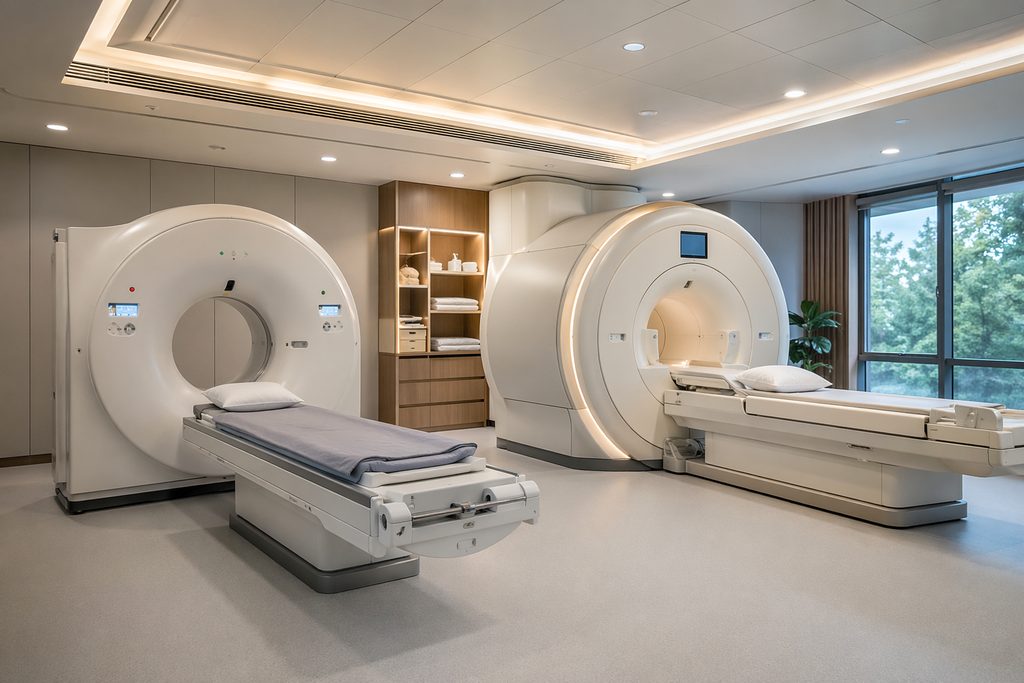
Health Checkup: Cancer Screening Explained for International Patients
A cancer screening checkup is a structured medical evaluation designed to detect malignancies before symptoms appear — often through blood panels, imaging scans, and endoscopic procedures. For many Western patients, the cancer screening cost China is the deciding factor: comprehensive packages at top-tier hospitals typically run $400 to $2,500, compared to $5,000 to $15,000 for equivalent private screenings in the United States. That gap exists not because of shortcuts, but because of structural differences in how Chinese hospitals deliver high-volume diagnostics.
This guide explains what cancer screening actually involves, how it is performed at Chinese academic medical centers, what it costs, and how to evaluate reliability before you book anything. No medical jargon without translation. No vague promises. Just the facts you need to make a clear-headed decision.
Key Takeaways
- Comprehensive cancer screening in China costs $400–$2,500 at top public hospitals, roughly 70–90% less than comparable US private programs.
- China’s leading oncology centers perform over 100,000 imaging studies annually, giving radiologists exceptional pattern-recognition volume.
- Public hospital outpatient departments generally cannot be pre-booked from overseas — you either walk in, use the hospital’s international department, or work with a coordination service.
- Reliability depends on the institution, not the country. Fudan-ranked oncology hospitals follow international imaging and pathology protocols.
The Problem: Cancer Screening Is Priced Out of Reach for Many Westerners
In the United States, a full-body MRI screening can cost $2,500 to $5,000 out of pocket. A comprehensive executive health assessment with CT, ultrasound, endoscopy, and tumor markers often exceeds $10,000. Insurance typically covers only age-specific, guideline-based screenings — a colonoscopy at 45, a mammogram at 40 — not the broader “executive” panels many people want. So patients in their 30s or 40s with family histories, or those simply wanting a thorough baseline, face a wall of out-of-pocket costs.
Europe is not dramatically different. Private comprehensive screening in London or Frankfurt runs £3,000 to £8,000. Public systems offer limited, age-gated programs. The result: millions of people defer screening. Some never get it. That delay is the real risk — early-stage cancers are frequently asymptomatic, and the window for inexpensive, curative treatment is narrow.
This is exactly why international patients have started looking at China.
Why Cancer Screening in China Delivers Results
China’s top-tier hospitals are not small clinics. They are enormous academic medical centers. Peking Union Medical College Hospital sees over 5 million outpatient visits per year. Fuwai Hospital performs more cardiac surgeries than any hospital on earth. The oncology departments at Fudan-ranked institutions handle patient volumes that simply do not exist in most Western hospitals. That volume translates into operational speed and diagnostic exposure.
Clinical Volume Creates Radiological Pattern Recognition
A radiologist at a major Chinese cancer center may read 15,000 to 20,000 imaging studies per year. The average US radiologist reads perhaps 8,000 to 12,000. This matters for screening because early malignancy detection is fundamentally a pattern-recognition problem. The more scans a radiologist has seen, the more likely they are to catch a subtle lesion that a less-exposed reader might dismiss as artifact. When you ask how is cancer screening done in China, the answer is: with the same modalities — low-dose CT, ultrasound, MRI, endoscopy, and serum tumor markers — but at a throughput that builds exceptional clinical experience.
Technology and Operational Efficiency at Scale
Chinese hospitals adopted digital imaging and AI-assisted detection faster than many Western systems, partly because they had less legacy infrastructure to replace. Major centers now run AI triage on chest CTs to flag suspicious nodules before a radiologist even opens the file. Blood panels for tumor markers — CEA, AFP, CA19-9, CA125, PSA — are processed in-house with same-day turnaround in many hospitals. A full screening protocol that takes three to five days of scheduling in the US can often be completed in one or two days at a Chinese hospital, because imaging, lab work, and specialist review all happen under one roof.
Cost Advantage Without Quality Compromise
Let’s address the obvious objection. Lower cost can mean lower quality — but in China’s case, the price gap comes from structural economics, not clinical shortcuts. Physician salaries are lower. Hospital overhead is lower. Equipment, however, is the same: Siemens, GE, Philips, and Canon scanners are standard at top-tier institutions. The full body scan price Shanghai patients pay — typically $600 to $1,800 for a comprehensive CT/MRI plus ultrasound and labs — reflects those economics. The scan itself is identical technology to what you would receive in Boston or Berlin.
What a Cancer Screening Checkup Actually Includes in China
There is no single “cancer screening” — the protocol depends on your age, sex, family history, and risk factors. But most comprehensive packages at top Chinese hospitals follow a similar structure. Here is what a typical executive oncology screening at a Fudan-ranked hospital includes:
| Screening Component | What It Detects | Typical Cost Range (USD) |
|---|---|---|
| Low-dose chest CT | Lung nodules, early lung cancer | $80–$200 |
| Abdominal ultrasound | Liver, pancreas, kidney masses | $40–$100 |
| Upper endoscopy + colonoscopy | Esophageal, gastric, colorectal cancer | $300–$800 (combined, with sedation) |
| Serum tumor markers (CEA, AFP, CA19-9, CA125, PSA) | Biochemical flags for multiple cancer types | $50–$150 |
| Breast ultrasound / mammography (women) | Breast cancer | $60–$150 |
| Thyroid ultrasound | Thyroid nodules and malignancy | $40–$80 |
| Pelvic ultrasound / PSA (men) | Prostate and pelvic cancers | $40–$100 |
These are reference ranges. Final pricing varies by hospital and case complexity. A full package at a public hospital’s international department typically lands between $400 and $1,200. A premium private international hospital — United Family, Jiahui, Parkway — will charge $1,500 to $2,500 for the same scope with English-speaking staff and direct insurance billing.
How to Book a Cancer Screening Package in Beijing or Shanghai
This is where the process differs sharply from what Western patients expect. You cannot simply call a Chinese public hospital from overseas and book an appointment. Public hospital outpatient departments operate on a same-day registration system. You show up, queue, register, and see a doctor that day. For a comprehensive screening package, you generally need one of three routes.
Route one: the hospital’s international department. Many top-tier public hospitals — Peking Union, Zhongshan, Ruijin — operate dedicated international or VIP departments. These can sometimes accept advance bookings, offer English coordination, and provide expedited scheduling. Expect to pay 1.5 to 2 times the standard rate. This is the most direct way to book cancer screening package Beijing residents and overseas patients use.
Route two: a private international hospital. Facilities like United Family or Jiahui are designed for foreigners. English-speaking staff, JCI accreditation, direct insurance billing, and online booking. You pay more, but the process is familiar and frictionless.
Route three: a coordination service. This is the middle path. A bilingual coordinator handles registration, scheduling, translation of your medical history, and on-the-ground logistics. Our team at China Medical Services does exactly this — we match you with an appropriate hospital, arrange the screening package, and provide a bilingual companion for the day of your visit. The coordination fee is separate from hospital charges.
Evaluating Reliability: Is Cancer Screening in China Trustworthy?
The honest answer: it depends entirely on which hospital you choose. A screening at a Fudan-ranked academic center or a JCI-accredited international hospital is performed to international standards. The equipment is modern, the protocols are standardized, and the interpreting physicians are highly trained. A screening at an unranked, low-volume facility may be less consistent.
So when patients ask is cancer screening in China reliable, the useful response is: reliability is a function of institutional quality, not nationality. The specialty rankings for oncology show which hospitals have the strongest reputations among Chinese physicians themselves. Fudan’s specialty reputation rankings — compiled from peer surveys of thousands of Chinese specialists — are the closest thing to a US News-style ranking that exists in China.
One caveat worth stating plainly: a screening is not a diagnosis. If a scan shows something suspicious, you will need follow-up — a biopsy, a PET-CT, a specialist consultation. Chinese hospitals can do all of this quickly, often within days. But you should understand going in that a screening is the first step, not the last one.
What the Fudan Rankings Actually Mean
China has over 35,000 hospitals. The Fudan University hospital rankings identify the top 100 — roughly the top 0.3%. Within that group, hospitals are graded in tiers (A++++ through A) rather than given specific numerical ranks. For oncology specifically, Fudan publishes a specialty reputation ranking that names the top 10 hospitals for cancer care. When you are choosing where to get screened, look for a hospital that appears on both the general top-100 list and the oncology specialty list. That dual presence is a strong signal.
If you want to understand which hospitals lead in oncology, the department-level rankings are the place to start. You can also browse top-ranked hospitals by city to see what is available in Beijing, Shanghai, Guangzhou, and elsewhere.
Practical Considerations: Visas, Payment, and What to Bring
For medical travel to China, the applicable short-stay visa category is the S2 visa, which covers private affairs including medical treatment. Family members accompanying you also apply for S2. The M visa is for commercial and trade activities — it is not appropriate for medical travel. Visa approval is never guaranteed; you will need supporting documents from the hospital confirming your appointment, plus standard application materials. Requirements vary by embassy, so check with the Chinese consulate in your country before booking flights.
Payment at public hospitals is typically required upfront. International departments generally accept major credit cards and sometimes international wire transfers. Private international hospitals often bill insurance directly. If you plan to claim reimbursement from a US or European insurer, request itemized receipts and translated reports before you leave — it is far easier to get these on-site than from abroad.
Bring every relevant prior study: imaging discs, pathology reports, blood work, and a summary of your family cancer history. Chinese oncologists will want to see baseline data. If your records are not in English or Chinese, arrange translation in advance. A bilingual companion can handle on-the-spot interpretation during the screening itself — but documents need to be prepared ahead of time.
Practical tip: Schedule your screening for a weekday morning. Hospitals are quieter, wait times are shorter, and same-day lab results are more likely. Avoid the week before Chinese national holidays, when outpatient volumes spike.
Frequently Asked Questions
A comprehensive screening at a top public hospital’s international department typically costs $400 to $1,200. A premium private international hospital charges $1,500 to $2,500. These prices include imaging, labs, and specialist review, but final quotes vary by hospital and case complexity.
Public hospital outpatient departments generally cannot be pre-booked from abroad. You can pre-book through a hospital’s international or VIP department, through a private international hospital, or through a coordination service that handles registration and scheduling on your behalf. Each route has different costs and lead times.
You will be referred for follow-up — typically a targeted imaging study, a biopsy, or a specialist consultation. Chinese hospitals can usually schedule these within days. You are never obligated to pursue treatment in China; you can take the results home and consult your own physicians. But having the full diagnostic workup done in one place is often faster and less expensive.
At Fudan-ranked academic hospitals and JCI-accredited international facilities, yes. The scanners are from the same manufacturers — Siemens, GE, Philips, Canon — and the imaging protocols follow international standards. The difference is throughput and cost, not hardware.
Not if you use an international department, a private international hospital, or a bilingual companion service. At a standard public hospital outpatient clinic, however, most staff will not speak English, and navigating registration, payment, and test locations without language support is genuinely difficult.
Your Next Step
Cancer screening is one of the highest-value medical investments you can make — and the cancer screening cost China offers makes it accessible to people who would otherwise defer it. We are not a hospital and we do not provide diagnoses. What we do is help international patients navigate the Chinese healthcare system: matching you with an appropriate institution, coordinating your screening package, and providing bilingual support on the day. If you are considering a screening in Beijing, Shanghai, or another Chinese city, start with a conversation. We will help you understand your options, the realistic costs, and the practical steps involved — no pressure, no obligation.
For more medical information and treatment options in China, visit chinamedservices.com (China Medical Services).
