Treating Cancer Before Traveling: Timing, Safety, and Your Options
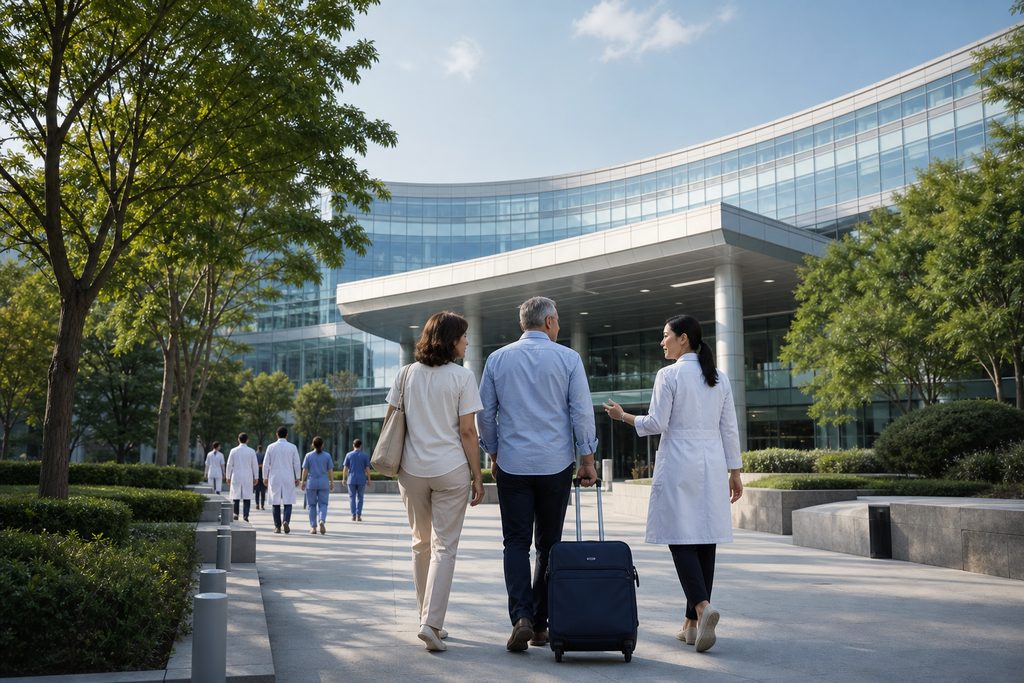
When 42-year-old Michael from Austin, Texas, heard the word “lymphoma,” his first thought wasn’t about treatment protocols. It was about the trip to Shanghai he’d booked six months earlier for his sister’s wedding. Could he still go? Should he start chemotherapy immediately, or could it wait three weeks? His oncologist gave him a cautious answer. Michael needed more than caution — he needed a framework for a decision that felt impossible.
If you’re asking “Should I treat my cancer before traveling?”, you’re likely weighing two fears at once: the fear of delaying treatment and the fear of missing something important. Maybe it’s a wedding, a work commitment, a long-planned family reunion. Or maybe the travel is the treatment — you’re considering flying to another country for care because the cancer treatment cost China offers is a fraction of what you’d pay at home. Either way, the question deserves a clear, evidence-based answer, not a vague “talk to your doctor” that leaves you stranded between a rock and a hard place.
This guide walks through the medical, logistical, and financial dimensions of that decision. We’ll cover what oncologists actually worry about when a patient flies, how long you can reasonably wait, what records you need, and how to evaluate hospitals abroad — including in China, where top-tier oncology centers now treat thousands of international patients each year.
How This Actually Works, Step by Step
Here’s the real sequence, stripped of abstraction. You have a diagnosis. You’re considering travel — either for personal reasons before treatment, or to receive treatment elsewhere. The path looks like this.
First, you need a complete picture of your disease. That means pathology reports, imaging (CT, MRI, PET-CT), blood work, and — for many cancers — molecular or genetic testing. Without this, no oncologist anywhere can responsibly advise you on timing or treatment options. If you’re missing pieces, get them now. This takes days to weeks, depending on your health system.
Second, you need a treating oncologist’s written assessment of urgency. Some cancers demand treatment within days — acute leukemias, aggressive lymphomas, small-cell lung cancer. Others move slowly. Prostate cancer with a low Gleason score? You often have months. The key is getting your specific risk documented in writing. That document becomes your travel clearance, your second-opinion packet, and your baseline for any hospital you approach later.
Third, if travel is for care abroad, you send your complete records to the target hospital’s international department. They review, ask clarifying questions, and provide a written opinion or video consultation. This remote evaluation happens before you book a flight. It’s how you avoid arriving in a foreign city only to discover the hospital can’t help you.
Fourth, you decide. With a written urgency assessment and a remote treatment plan in hand, the decision to travel — or wait — stops being a guess.
Can You Fly With Cancer Before Treatment? What Oncologists Actually Assess
The search phrase “can I fly with cancer before treatment” gets typed into Google thousands of times a month. The honest answer: usually yes, but with three medical checks first.
The first is thrombosis risk. Cancer itself raises the risk of blood clots, and long-haul flights compound that. A 2019 review in The Lancet Haematology found that cancer patients have a four-to-seven-fold higher risk of venous thromboembolism compared to the general population, and that risk spikes during and immediately after long flights. If your oncologist is concerned, they may prescribe prophylactic low-molecular-weight heparin for the flight, recommend compression stockings, or advise against flying altogether in high-risk cases.
The second is immunosuppression. If you’ve already started chemotherapy, your neutrophil count may be low. Flying with a neutrophil count below 1.0 × 10⁹/L puts you at meaningful risk of infection in a confined cabin. Most oncologists recommend avoiding air travel during the nadir — the 7 to 14 days after each chemo cycle when your immune system is weakest.
The third is disease-specific emergencies. A bulky mediastinal mass can compress the superior vena cava. Brain metastases can cause seizures at altitude. Bowel tumors can obstruct. Your oncologist needs to rule out these mechanical risks before clearing you for a flight.
So the answer isn’t a blanket yes or no. It’s: get a written clearance that addresses thrombosis, immune status, and mechanical risk. Most patients can fly. Some can’t. You need to know which group you’re in.
How Long Can Cancer Treatment Wait While Traveling?
The second question patients ask — “how long can cancer treatment wait while traveling” — has no universal answer. But it has a framework.
Oncologists categorize cancers by doubling time and aggressiveness. A slow-growing prostate adenocarcinoma might have a doubling time measured in months. An aggressive diffuse large B-cell lymphoma can double in weeks. The National Comprehensive Cancer Network (NCCN) guidelines don’t give a single “safe wait” number because the range is too wide — from days to months.
What the evidence does show: for most solid tumors, a treatment delay of 4 to 8 weeks has minimal impact on overall survival. A 2020 meta-analysis in The BMJ examined 34 studies covering 1.2 million patients and found that a 4-week delay in treatment was associated with a modest but real increase in mortality risk for some cancers — but the effect was highly variable. For breast cancer, the hazard ratio for a 4-week delay was around 1.06. For head and neck cancers, it was higher. For some indolent cancers, it was undetectable.
Translation: a 2-to-3-week trip before starting treatment is usually fine for most patients with early-stage solid tumors. A 3-month delay is not. And for hematologic malignancies or rapidly progressing disease, even 2 weeks can matter. This is exactly why you need your oncologist to write down the urgency for your specific case, not a generic guideline.
A Realistic Timeline
Here’s what the sequence actually looks like, including the waiting steps most people forget.
| Stage | What Happens | Realistic Duration |
|---|---|---|
| Day 1–7 | Diagnosis confirmed; pathology and imaging completed | 1 week (often already done) |
| Day 8–21 | Oncologist writes urgency assessment; records compiled and translated if needed | 1–2 weeks |
| Week 3–5 | If traveling for care: records sent to target hospital; remote written opinion or video consultation | 7–14 days after submission |
| Week 5–7 | Visa application (S2 for medical treatment in China, with hospital invitation letter) | 1–3 weeks, varies by consulate |
| Week 6–8 | Travel and in-person consultation at target hospital | 1–2 weeks on the ground |
| Week 8–10 | Treatment begins (surgery, chemotherapy, or radiation) | Depends on hospital scheduling |
Notice the hidden steps. Document translation can eat a week if your records aren’t in English or Chinese. Visa processing varies wildly by country — some consulates issue S2 visas in 5 business days, others take 3 weeks. And hospital scheduling for surgery in a top Chinese oncology department can add another 1–2 weeks after your in-person consultation. Plan for the full range, not the best case.
What Can Go Wrong — and What Happens Then
Let’s be honest about failure modes, because that’s where trust is earned.
The remote evaluation says no. You send your records to a hospital abroad, and the oncology team reviews them and says: we cannot offer you a better option than what you have at home. This happens. It’s not a rejection of you — it’s an honest assessment. What do you do? You’ve just saved yourself a $3,000 flight and two weeks of false hope. That remote evaluation cost a few hundred dollars. The alternative — arriving and being told the same thing in person — costs far more.
The visa gets delayed. You’ve booked flights, arranged accommodation, and the consulate sits on your S2 application. What then? You push the hospital to extend its invitation letter, you ask the consulate for an update, and you adjust your timeline. This is why we always recommend applying for the visa after the hospital confirms your treatment plan, not before. A hospital invitation letter with a specific treatment purpose carries more weight than a generic tourist application.
Your condition changes while traveling. You arrive in Shanghai for a pre-treatment consultation and your blood work shows new abnormalities. The hospital adjusts the plan. Maybe you need additional imaging before treatment. Maybe the treatment protocol changes. This is not a failure — it’s medicine. The key is being at a hospital that can pivot quickly. Top-tier Chinese oncology departments run 24-hour imaging and labs, so adjustments happen in days, not weeks.
Is Chemotherapy Safe in China for Foreigners? Evaluating the Real Risks
The question “is chemotherapy safe in China for foreigners” deserves a direct answer. Yes — at accredited hospitals, chemotherapy in China meets international safety standards. But the word “accredited” is doing real work there.
China has over 35,000 hospitals. The top tier — roughly the top 5% — includes institutions ranked by the Fudan University hospital rankings and accredited by Joint Commission International (JCI). These are the hospitals where international patients receive care. At these centers, chemotherapy protocols follow NCCN or ESMO guidelines, pharmacy compounding meets international standards, and oncology nurses are trained in cytotoxic drug handling. The safety gap between these hospitals and a mid-tier US community hospital is minimal.
What about the gap between a top Chinese hospital and a mid-tier Chinese hospital? That gap is real and wide. A 2021 study in The Lancet Oncology examining cancer outcomes across Chinese hospitals found significant variation in chemotherapy safety and protocol adherence between top-tier and lower-tier institutions. The takeaway: hospital selection matters more in China than it does in the US or Europe, because the variance is larger. You don’t just choose “China” for treatment — you choose a specific hospital, and the choice determines almost everything.
For international patients, the practical difference is language and logistics. A top Chinese oncology department treats thousands of foreign patients a year. The international department handles translation, scheduling, and billing. The chemotherapy ward has English-speaking nurses. But the system still runs on Chinese medical records, Chinese pharmacy labels, and Chinese administrative processes. A bilingual medical companion — someone who handles registration, queueing, payment, and translation — transforms that experience from overwhelming to manageable. That’s not a luxury. It’s the difference between navigating a foreign health system alone and having a local guide.
Cancer Treatment Cost China: The Numbers That Drive Decisions
For many patients, the cancer treatment cost China offers is the deciding factor. Let’s look at actual ranges, understanding that every case varies by hospital, stage, and complexity.
| Treatment | China (USD, top-tier public hospital) | United States (USD, average) |
|---|---|---|
| Radical prostatectomy (robotic) | $12,000–20,000 | $40,000–80,000 |
| Lung lobectomy (VATS) | $10,000–18,000 | $35,000–70,000 |
| Chemotherapy (6 cycles, standard regimen) | $8,000–15,000 | $30,000–100,000+ |
| Radiation therapy (IMRT, full course) | $6,000–12,000 | $25,000–60,000 |
| Gastric cancer surgery | $10,000–18,000 | $50,000–120,000 |
These are ranges, not quotes. They vary by hospital tier, surgeon seniority, and whether you go through the standard public channel or the international/VIP department. The international department typically costs 1.5 to 2 times the standard rate — but that premium buys English-speaking staff, faster scheduling, and a dedicated coordinator. For most international patients, that’s worth it.
Insurance complicates the picture. Chinese public hospitals generally require prepayment and provide receipts for reimbursement. If your US or European insurer covers out-of-network international care, you’ll pay upfront and file for reimbursement. Some private international hospitals in China — United Family, Jiahui, Parkway — offer direct insurance billing if your insurer has a relationship with them. That’s a meaningful advantage if your policy supports it.
Best Oncology Hospitals in Shanghai for International Patients: What to Look For
Shanghai hosts several of China’s strongest oncology programs. When patients search for the best oncology hospitals in Shanghai for international patients, they’re usually comparing two or three names. Here’s what actually matters in the comparison.
The Fudan University hospital rankings place several Shanghai hospitals among China’s top tier for oncology. Fudan University Shanghai Cancer Center handles one of the highest volumes of cancer surgeries in the country. Zhongshan Hospital, affiliated with Fudan University, is known for liver and thoracic oncology. Ruijin Hospital, affiliated with Shanghai Jiao Tong University, has a strong hematology and lymphoma program.
But hospital reputation is only half the equation. For an international patient, the practical questions are: Does the hospital have a dedicated international department with English-speaking staff? What’s the typical wait time for a new-patient consultation? Can they provide written treatment plans in English for your home oncologist? Do they have experience with patients from your country?
Volume matters too. A thoracic surgery department that performs 3,000 lobectomies a year has refined its complication management in ways a department performing 300 cannot match. China’s top oncology centers operate at volumes that dwarf most Western hospitals. That volume translates into procedural expertise — and it’s one of the strongest arguments for considering treatment in China at all.
You can explore oncology departments ranked among China’s top 10 across 45 specialties, or browse Shanghai’s top-ranked hospitals to see which institutions match your diagnosis.
Practical Considerations: Records, Visas, Payment, and Follow-Up
If you’re leaning toward treatment in China, four practical matters need attention before you book anything.
Records. Every hospital you approach will ask for the same packet: pathology report, imaging (original DICOM files, not just printed films), blood work, and any prior treatment summary. If your records aren’t in English, you’ll need certified translation. Chinese hospitals require English or Chinese documentation. Get this organized once, and you can send the same packet to multiple hospitals for remote evaluation.
Visa. Medical treatment in China falls under the S2 visa category — a short-stay visa for private affairs, including medical treatment. Your hospital’s international department provides an invitation letter that you submit with your application. The S2 visa typically allows stays up to 180 days. For treatment requiring longer stays, an S1 visa applies. The M visa is for commercial and trade activities — it is not appropriate for medical travel, despite what some outdated guides claim. Always confirm current requirements with your local Chinese embassy or consulate, as rules shift.
Payment. Expect to prepay for hospital services. Most Chinese public hospitals require a deposit before admission, with additional payments as treatment progresses. Private international hospitals may bill your insurer directly if they have a relationship. Ask about payment structure before you commit to a hospital — it affects your cash flow planning.
Follow-up at home. The hospital in China will provide a discharge summary and treatment plan in English. Your home oncologist needs this to continue your care. Some patients arrange video follow-ups with their Chinese oncology team after returning home — a service most international departments now offer. Clarify this before you leave.
Frequently Asked Questions
If your oncologist says treatment is urgent, start it. A second opinion can happen remotely — you don’t need to travel to get one. Send your records to the hospital you’re considering and request a written opinion or video consultation. That’s a $300–500 investment that gives you clarity without delaying care.
Can I fly internationally during chemotherapy cycles?
Generally no — not during the nadir period 7 to 14 days after each cycle, when your immune system is weakest and infection risk is highest. Some patients fly during the recovery window before the next
For more medical information and treatment options in China, visit chinamedservices.com (China Medical Services).
