Cancer Treatment China Kenya: Radiation from Nairobi Without the Wait
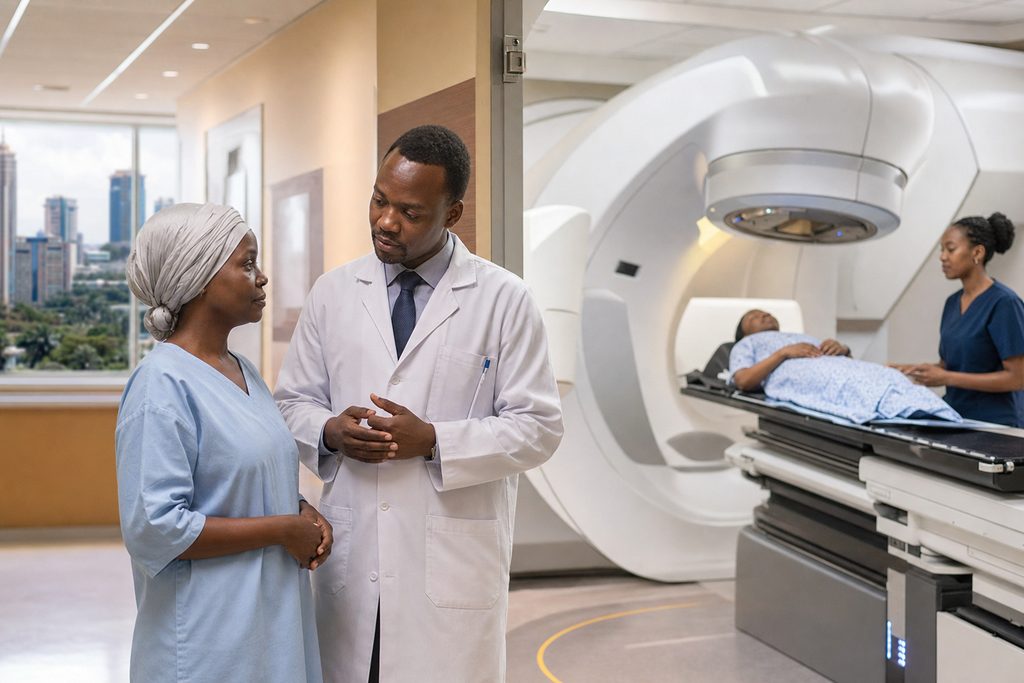
You have the diagnosis. The oncologist in Nairobi has recommended radiation. But the waiting list for the linear accelerator at Kenyatta National Hospital stretches months, and the private option is financially out of reach. What do you do?
The math that pushes many Kenyan families to look east is stark. A full course of intensity-modulated radiation therapy (IMRT) in a top-tier Chinese public hospital typically runs between $8,000 and $15,000. That figure includes the treatment planning, the daily fractions over several weeks, and the physics fees. In Nairobi’s private hospitals, the same technology can exceed $25,000, and you may still face queues for the machine. The radiation therapy cost China Kenya comparison is not just a spreadsheet exercise—it is the difference between starting treatment in three weeks versus three months.
Our team has coordinated care for patients from 37 cities across China’s network of 340+ top-ranked hospitals. This article walks through what the process actually looks like when you are sitting in Nairobi, holding a biopsy report, and need to move forward.
How This Actually Works, Step by Step
The path from a consultation in Nairobi to lying on a treatment couch in Shanghai is more straightforward than most people assume. But it is not instant, and skipping steps costs more time than it saves.
Step 1: Gather everything you already have. The pathology report. The imaging—CT scans, MRIs, PET-CT if it was done—on a CD with the DICOM files, not just the printed report. The oncologist’s clinical notes. The blood work. If any of these are missing, the Chinese radiation oncology team cannot proceed. They will not give a treatment opinion without seeing the source data.
Step 2: Send the records for a written second opinion. This is the fork in the road. You can book a flight and show up at a hospital registration desk, but you will wait in a general queue with thousands of other patients and may not see the sub-specialist you need. The alternative—what we facilitate—is a remote review. Your records are translated, submitted to the radiation oncology department at a hospital like Fudan University Shanghai Cancer Center or Peking University Cancer Hospital, and a senior specialist reviews them. You receive a written analysis: whether the proposed radiation plan makes sense, what modifications they recommend, and whether they would accept you for treatment.
Step 3: The video consultation. After the written opinion, you speak directly with the Chinese oncology team. They ask about symptoms you cannot capture in a report: fatigue levels, pain patterns, how you tolerated chemotherapy. You ask your questions. Is the machine they use a modern linear accelerator with IMRT and VMAT capability? How many of your specific cancer type have they treated? What is the expected acute toxicity? This conversation usually lasts 30 to 45 minutes and costs between $500 and $800 for a top-specialist consultation.
Step 4: Lock in the treatment slot. If both sides agree to proceed, the hospital’s international department issues a treatment invitation letter. This document is required for your S2 visa application. The hospital confirms a start date—not a vague “sometime next month” but a specific week when the CT simulation and first fraction will occur.
Step 5: Travel and begin. You fly to Shanghai or Beijing. Our team meets you at the airport. Within 48 hours of arrival, you undergo a CT simulation scan for treatment planning. The physicists spend three to five working days creating your radiation plan. Then the linear accelerator starts delivering daily fractions, typically Monday through Friday, for four to seven weeks depending on the total prescribed dose.
Why Kenyans Are Choosing Chinese Radiation Oncology Centers
Yes. This is the standard path. The remote written second opinion and video consultation are designed precisely so you do not need to make two trips. Once the Chinese oncology team accepts you for treatment based on your records and the video discussion, you travel once for the actual radiation course. The coordination fee for this remote-to-treatment pathway starts from $300, and any consultation fees are credited in full toward on-the-ground coordination if you proceed within 90 days.
Some hospitals offer bundled packages that include the CT simulation, treatment planning, a set number of radiation fractions, and basic on-treatment visits. These packages typically do not include accommodation, visa support, interpretation, or management of unexpected toxicity. We help patients evaluate whether a package or an itemized billing approach makes more sense for their specific case. Packages can simplify budgeting but may exclude services you end up needing. Always get the exclusions in writing.
This is common and is often the reason patients seek a second opinion in the first place. The Chinese team may recommend a higher total radiation dose, a different fractionation schedule, or the addition of concurrent chemotherapy. You are not obligated to accept the recommendation. You can take the Chinese opinion back to your Kenyan oncologist for discussion. The decision is yours. What you should not do is accept a treatment plan you do not understand. Ask the Chinese team to explain their reasoning in the video consultation, and request that the key points be summarized in the written report.
Start with the Fudan University specialty rankings for oncology. Cross-reference with whether the hospital has a dedicated international department that handles foreign patients—this is critical for visa support and English-language coordination. Then verify the specific radiation technology available at that hospital. Our team maintains a database of 340+ hospitals across 37 Chinese cities with this information. You can browse our top-ranked hospital directory organized by city and specialty, or contact us for a personalized match based on your diagnosis and budget.
Your Next Step
You are not committing to treatment by sending your records. You are asking a question: does this Chinese center have something materially better to offer than what is available to you in Nairobi? The answer to that question determines whether you travel.
Our team at China Medical Services handles the translation, submission, and scheduling so you receive a written opinion from a radiation oncologist who has reviewed your actual images and pathology. We do not practice medicine. We do not promise outcomes. We connect you with the specialists who can give you an honest assessment, and we manage the
Frequently Asked Questions
Yes. The hospitals used for international patients are JCI-accredited and follow the same international safety standards as top hospitals in the US and Europe. Surgical teams perform high volumes of procedures — often more than their Western counterparts — which studies show leads to better outcomes.
Costs vary by procedure and hospital, but international patients typically save 40-80% compared to US prices — even when factoring in travel and accommodation. A consultation with our team will give you an exact, all-inclusive quote with no hidden fees.
Send us your existing medical reports to get started. We handle everything from hospital selection and appointment scheduling to visa assistance and post-operative recovery planning. Your medical records are reviewed by the specialist before you even book a flight.
For more medical information and treatment options in China, visit chinamedservices.com (China Medical Services).
