Cancer Treatment in China: A Realistic Timeline Guide for International Patients
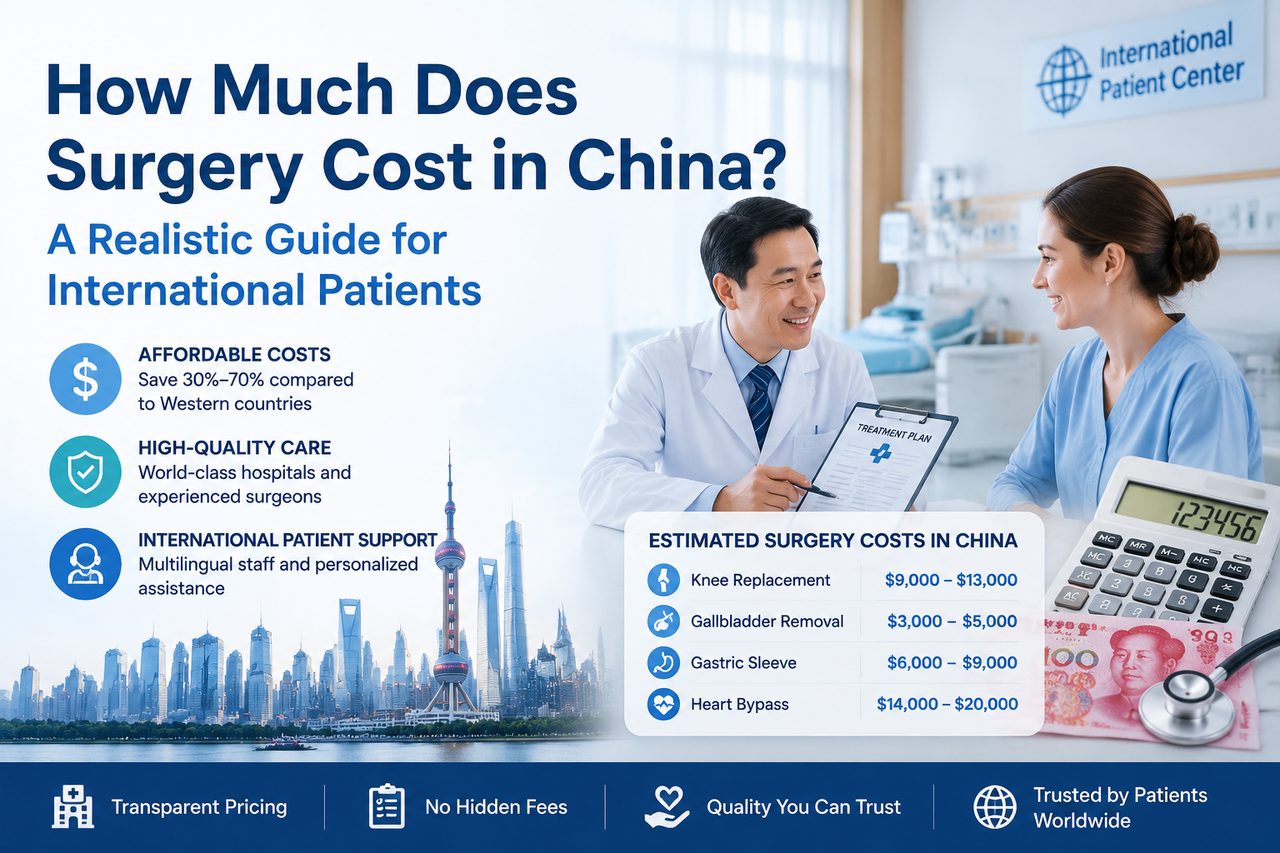
According to the National Cancer Center of China, approximately 4.82 million new cancer cases were diagnosed in the country in 2022. For international patients, the appeal is clear: the cancer treatment cost in China typically runs 50–70% lower than in the United States or Western Europe for comparable protocols. But cost is only half the equation. The other half is time—how long everything takes, from the first email to the first infusion. Most patients underestimate this. They budget for treatment but not for the waiting that surrounds it.
That waiting has a structure. It is predictable. Once you see the stages laid out, the process becomes manageable rather than overwhelming. Our team coordinates these stages daily for patients from North America, Europe, the Middle East, and Southeast Asia. Here is the honest sequence.
How This Actually Works, Step by Step
You do not fly to China and walk into a hospital. The sequence matters. It begins with records, not travel.
Step 1: You send us your existing medical records. Pathology reports, imaging (CT, MRI, PET scans), blood work, and any treatment history. If documents are not in English, we arrange certified translation. This takes 2–4 days depending on volume and language.
Step 2: We match your case to the right department. Not just the right hospital—the right specialty team within it. We use the Fudan University hospital rankings and our own case database. This matching usually takes 2–3 working days. For complex or rare cancers, it can take a week.
Step 3: Remote evaluation. The Chinese oncology team reviews your records. They issue a written second opinion or recommend a video consultation. A written second opinion from a top-tier specialist costs $300–500. A video consultation runs $100–800 depending on the hospital tier and specialist seniority. This step takes 5–10 working days after records are submitted.
Step 4: Treatment plan and cost estimate. If the team accepts your case, they propose a protocol—surgery, chemotherapy, radiation, immunotherapy, or a combination. You receive a formal treatment plan and a cost estimate. This arrives 3–7 days after the remote evaluation.
Step 5: Visa and travel. You apply for an S2 visa at your local Chinese embassy or consulate, with supporting documents from the hospital. Standard processing is 4–10 working days, though this varies by country. You book flights and accommodation. We coordinate airport pickup and local logistics.
Step 6: Arrival, face-to-face consultation, and treatment start. The hospital requires an in-person consultation before admission or surgery. For chemotherapy or radiation, treatment typically begins 3–10 days after your first hospital visit, depending on scheduling and any additional tests the hospital requires.
How Long Does Chemotherapy Take in China?
Chemotherapy is not a single event. It is a cycle. The question patients actually ask is: “How long will I need to stay in China?” The answer depends on the regimen.
Most standard chemotherapy protocols run in cycles of 2–4 weeks. A typical cycle includes 1–5 days of infusion, followed by a recovery period before the next cycle. For a course of 4–6 cycles, you are looking at 3–6 months total. Some patients complete the full course in China. Others do 1–2 cycles in China to establish the protocol, then continue with a local oncologist at home under remote guidance from the Chinese team. Both are valid paths. The choice affects your stay: 3–6 weeks for the first option, or 6–12 months for the full course.
A common question from Western patients: “How long does chemotherapy take in China compared to back home?” The infusion itself takes the same time—chemo drugs do not run faster in Shanghai than in Seattle. What differs is scheduling. Chinese public hospitals operate at enormous scale. A top oncology department in Beijing or Shanghai may see thousands of outpatients daily. That scale can compress waiting times for chemotherapy slots once you are an established patient. But initial scheduling still takes days, not hours.
For patients considering medical tourism cancer treatment packages China, understand what “package” means in practice. Reputable coordinators—including us—do not sell fixed-price all-inclusive packages the way a resort sells a vacation. Cancer treatment does not work that way. What we coordinate is a sequence: remote evaluation, hospital matching, appointment scheduling, bilingual accompaniment, and logistics. The treatment cost itself goes directly to the hospital. Anyone quoting you a single flat price for “cancer treatment in China” before a doctor has reviewed your records is not being honest with you.
A Realistic Timeline
Here is the full picture, from first contact to treatment completion. These are honest ranges based on cases we have coordinated, not best-case scenarios.
| Stage | What Happens | Typical Duration |
|---|---|---|
| Week 1 | Initial inquiry, records collection, document translation | 3–7 days |
| Week 2 | Hospital and department matching | 2–5 days |
| Week 3–4 | Remote evaluation (written second opinion or video consultation) | 5–10 working days |
| Week 5 | Treatment plan and cost estimate issued | 3–7 days |
| Week 6–8 | S2 visa application and processing | 4–10 working days, varies by country |
| Week 8–9 | Travel to China, first in-person consultation | 2–5 days after arrival |
| Week 9–10 | Additional tests, treatment scheduling | 3–10 days |
| Month 3 | Treatment begins (surgery, first chemo cycle, or radiation start) | — |
| Month 3–9 | Full treatment course, depending on protocol | 3–6 months for chemo; 2–8 weeks for radiation; surgery plus recovery varies |
Total realistic time from first contact to treatment start: 6–10 weeks. That is the number patients need to plan around. Some cases move faster. A few move slower. But 6–10 weeks is the honest middle.
What people forget: document translation, appointment lead time, and visa processing. These three items consume more time than the medical evaluation itself. Plan for them.
What Can Go Wrong — and What Happens Then
We would rather tell you now than have you discover it in a hospital corridor in Guangzhou.
Records are incomplete or unclear. The Chinese oncology team cannot issue a meaningful second opinion without adequate imaging and pathology. If records are missing, the process stalls. The fix: we contact your home hospital and request the missing items. This adds 1–3 weeks.
The hospital rejects the case. It happens. A patient arrives with a cancer that is too advanced, or a comorbidity profile that makes treatment unsafe, or a tumor type the hospital does not specialize in. The fix: we pivot. We take the same records to a different department or hospital, often within days. Not every case is accepted on the first attempt.
Visa complications. S2 visa requirements vary by embassy. Supporting documents from the hospital must be complete and correctly formatted. If the embassy requests additional materials, processing extends by 1–2 weeks. The fix: we provide document checklists specific to your country and review everything before you submit.
Treatment costs more than the initial estimate. Hospitals issue estimates based on standard protocols. If complications arise, or if the doctor adjusts the regimen after seeing you in person, costs shift. The fix: we ask hospitals to itemize estimates and flag potential variables up front. You should budget a 15–20% buffer above the written estimate.
Language barriers during treatment. Even at hospitals with international departments, not every nurse or technician speaks English. The fix: our bilingual medical companions attend appointments, translate in real time, and handle registration, payment, and pharmacy runs. This is not a luxury. It is the difference between a smooth treatment course and a stressful one.
Radiation Therapy Duration in China
Radiation follows a different clock than chemotherapy. The radiation therapy duration China patients experience depends on the technique and the tumor site.
Standard external beam radiation therapy (EBRT) typically runs 5 days per week for 4–8 weeks. Each session takes 10–30 minutes, with most of that time spent on positioning. That means a patient receiving 6 weeks of radiation needs to stay in China for roughly 6–8 weeks, allowing for initial simulation, treatment planning, and the course itself.
Stereotactic body radiation therapy (SBRT) and stereotactic radiosurgery (SRS) are different. These deliver high doses in fewer sessions—often 1–5 treatments over 1–2 weeks. For patients traveling from abroad, SBRT can dramatically shorten the stay. Chinese hospitals have invested heavily in these technologies. Major oncology centers in Beijing, Shanghai, and Guangzhou routinely offer SBRT for lung, liver, and spinal tumors, and SRS for brain metastases.
Proton therapy is available in China but limited to a small number of centers. Wait times for proton therapy can be longer than for conventional radiation, sometimes 4–8 weeks for a treatment slot. If proton therapy is part of your plan, factor that lead time in.
One practical note: radiation oncology departments in Chinese public hospitals often require a repeat simulation or planning CT after you arrive, even if you had imaging done abroad. This is standard practice and adds 3–5 days before treatment begins. Do not interpret it as inefficiency. It is how the physics team ensures accuracy.
Choosing the Best Oncology Hospital in Shanghai for Foreigners
Shanghai is not the only city with excellent cancer care, but it is the most common starting point for international patients. The city has direct international flights, a large expatriate community, and several hospitals with dedicated international departments.
When patients ask us about the best oncology hospital Shanghai for foreigners, we frame the answer differently. The better question is: which hospital has the strongest department for your specific cancer type? A hospital ranked highly for lung cancer may not be the best choice for breast cancer or lymphoma.
The Fudan University Hospital Rankings publish a specialist reputation list covering 45 specialties. For oncology, they rank departments by reputation among Chinese physicians—not by marketing budgets. Several Shanghai hospitals appear consistently in the top tier for cancer care. Fudan University Shanghai Cancer Center and Zhongshan Hospital are two names that come up repeatedly for solid tumors. Ruijin Hospital has a strong hematology and lymphoma program. Renji Hospital is known for urologic oncology.
But here is what matters more than the name on the building: whether the hospital has an international department that can handle foreign patients. Not every top-ranked oncology department does. Some treat only domestic patients through the standard public channel, which requires Chinese language ability and same-day queueing for registration. That is not realistic for most international patients.
Our approach: we match the cancer type to the department first, then confirm the international patient pathway exists. If a top department has no international channel, we look at the next best option that does. The best hospital on paper is useless if you cannot actually get an appointment there.
For a broader view of ranked hospitals across China, see our guide to Fudan-ranked hospitals by city. For specialty-specific rankings, the oncology department rankings break down the top 10 hospitals in each of the 45 specialties.
Is Cancer Treatment in China Safe for International Patients?
The short answer: yes, at the right hospitals, with the right coordination. The longer answer requires nuance.
China’s top-tier hospitals—those in the Fudan Top 100 or with JCI accreditation—operate at standards comparable to major Western centers. Fuwai Hospital performs more cardiac surgeries annually than any hospital in the world. Leading oncology centers treat tens of thousands of cancer patients yearly. Volume builds competence. Chinese surgeons and oncologists at these institutions are highly trained, many with international fellowships.
But “China” is not one standard of care. There are over 35,000 hospitals in the country. The top 5%—roughly 1,700 institutions—offer genuinely excellent care. The rest vary widely. This is why hospital selection matters enormously. We only work with hospitals that meet specific criteria: Fudan ranking, JCI accreditation, or a demonstrated track record with international patients. You can read more about how we evaluate hospitals on our top hospitals page.
Safety also depends on communication. Medication errors, missed instructions, and misunderstood consent forms are more common when language barriers exist. A bilingual medical companion is not a convenience. It is a safety measure.
And yes, there are inconveniences. Public hospitals in China are crowded. Waiting areas are busy. Privacy norms differ from Western hospitals. Food options may not match your dietary needs. These are real trade-offs. Patients who accept them in exchange for lower costs and high-volume clinical expertise tend to have positive experiences. Patients who expect a Western private-hospital environment at Chinese public-hospital prices will be disappointed.
Practical Considerations: Records, Visa, Payment, and Follow-Up
Medical records. Bring everything. Original pathology slides, if available. DICOM files for all imaging. A written summary of prior treatments, including drug names, doses, and dates. The more complete your records, the faster the remote evaluation moves.
Visa. You need an S2 visa for medical treatment in China. Not an M visa—that is for commercial and trade activities. The S2 is the correct category for short-term private affairs, including medical treatment. If your treatment will exceed 180 days, you need an S1 visa. Your accompanying family members also apply for S2 visas. Processing times vary by embassy, so start early. We provide document checklists and hospital invitation letters to support your application.
Payment. Chinese public hospitals generally require prepayment for treatment. You deposit funds, and the hospital deducts as treatment proceeds. Private international hospitals may bill differently and often accept direct insurance settlement. Most international patients pay out of pocket and seek reimbursement from their home insurer afterward. Confirm your insurance coverage before travel.
Language. Even at hospitals with English-speaking doctors, the infrastructure around care—registration, pharmacy, billing, scheduling—often runs in Chinese. A companion handles this. Our bilingual medical companion service starts at $300 per day and covers queueing, payment, translation, and navigation.
Follow-up at home. Before you leave China, the treating team issues a discharge summary and follow-up plan. You share this with your home oncologist. Many Chinese specialists are willing to conduct follow-up video consultations for international patients. This continuity matters. Cancer treatment does not end when you board the flight home.
Frequently Asked Questions
The cancer treatment cost China patients pay is typically 50–70% lower than comparable care in the United States. A chemotherapy course that costs $80,000–120,000 in the US might run $25,000–50,000 at a top Chinese hospital. Surgery costs follow a similar ratio. Exact figures vary by hospital, cancer type, and protocol complexity.
No. Chinese public hospitals require an in-person consultation before treatment begins. You will also need repeat imaging or blood work in most cases. Plan for 3–10 days between your first hospital visit and the start of treatment. Anyone promising same-week treatment start is not being realistic.
That is a conversation worth having before you commit. The written second opinion you receive from the Chinese team is exactly that—an opinion. Share it with your home oncologist. If the two plans diverge, ask both sides to explain their reasoning. Sometimes the difference is philosophical. Sometimes it reflects different drug availability. You make the final call.
At hospitals with international departments, doctors often speak English. But the surrounding infrastructure—nurses, technicians, pharmacy staff, billing clerks—may not. A bilingual companion bridges that gap. Patients who bring a companion report significantly smoother experiences than those who do not.
At Fudan-ranked or JCI-accredited hospitals, yes. These institutions follow international protocols and maintain rigorous quality standards. The key is hospital selection. Do not choose a hospital based on a website or a low price. Choose based on rankings, specialty reputation, and verified experience with international patients.
