Cancer Treatment China UAE: Real CAR-T Access from Dubai
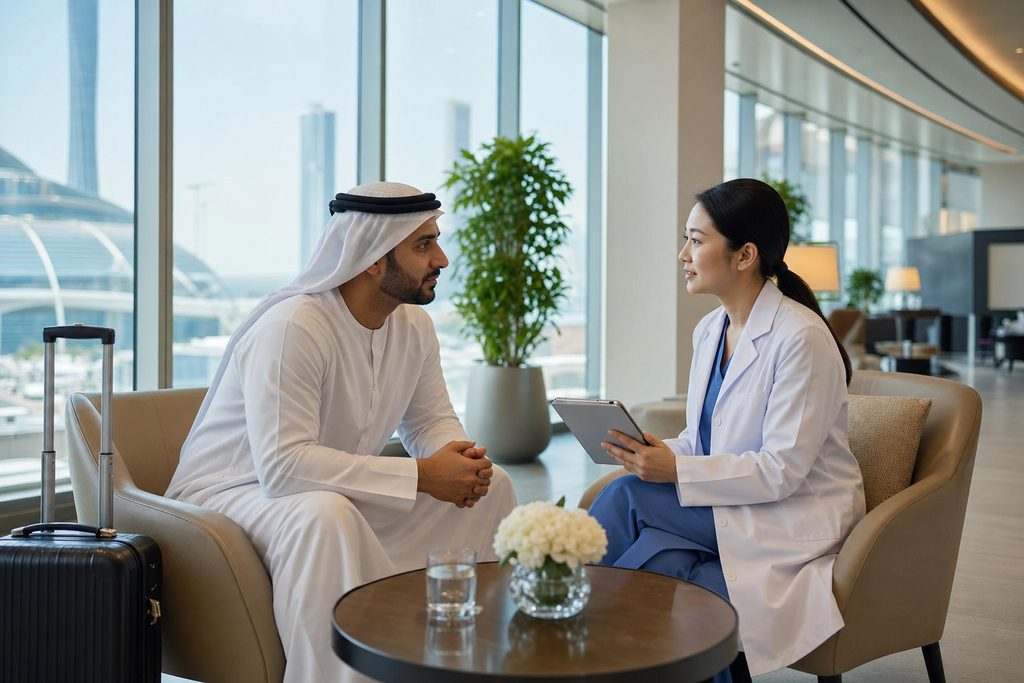
You have probably seen the headlines. A single infusion. A complete remission. The stories around CAR-T cell therapy sound like science fiction, but the logistics of accessing it from Dubai can feel painfully earthbound. The assumption many patients make is that the only viable routes are the United States or Europe—and that the financial and travel hurdles are simply insurmountable.
That assumption is worth a second look.
Our team has spent years coordinating complex care pathways between the Middle East and China’s top-tier hospitals. We have seen firsthand how the gap between “available therapy” and “accessible therapy” narrows when you know the exact sequence of steps. China has become one of the most active countries in the world for CAR-T research and clinical application, with a regulatory framework that has approved multiple commercial products. For a patient in Dubai, the question is not whether the science exists. The question is how to bridge the 4,000 miles efficiently, safely, and with full clarity on costs before you ever board a plane.
How This Actually Works, Step by Step
The process is not a single transaction. It is a staged medical evaluation that starts at your home in Dubai and moves forward only when the data supports it. Here is what the sequence looks like in practice.
First, you send your existing medical records. We need the full history: pathology reports, immunohistochemistry or flow cytometry results, PET-CT or MRI scans on a DICOM disc, and a detailed summary of prior lines of treatment. If the records are in Arabic, we arrange certified translation into English and Chinese—this is non-negotiable for the Chinese hospital to accept the file.
Second, the records go to a specialist team. For lymphoma or multiple myeloma patients, this typically means a hematology-oncology department at a hospital with an active CAR-T program. The team reviews whether your disease subtype matches an approved indication, whether your organ function supports the therapy, and whether you have failed the required number of prior lines. This is a hard clinical gate. No reputable center will accept a patient who does not meet the criteria.
Third, you receive a written second opinion. This document outlines whether CAR-T is recommended, which specific product fits your case, and what the treatment pathway would look like. It is not a prescription—it is a clinical analysis for you and your Dubai-based oncologist to evaluate together. The cost for this written opinion from a top-tier specialist runs from $300 to $500.
Fourth, if the opinion is favorable and you decide to proceed, we coordinate a video consultation. You speak directly with the Chinese medical team, with a bilingual coordinator on the line. You ask your questions. Your family asks theirs. The team explains the apheresis schedule, the bridging therapy plan, the hospitalization timeline, and the risk profile. This consultation costs $500 to $800.
The critical point: you are not committing to treatment at this stage. You are gathering verified clinical intelligence. The hospital’s international patient center then provides a formal treatment proposal and cost estimate. Only after you accept that proposal does the logistical coordination—visa support, accommodation, hospital admission—begin in earnest.
The Real Cost of CAR T-Cell Therapy in China from Dubai
Let us talk about the number that dominates most conversations. The cost of CAR T-cell therapy in China from Dubai breaks into two distinct categories: the medical treatment itself and the coordination and travel expenses.
For the medical treatment, China’s commercially approved CAR-T products—such as Yescarta (axicabtagene ciloleucel) and Carteyva (relmacabtagene autoleucel)—are priced domestically. The drug cost alone typically falls between $120,000 and $170,000 USD. This is the manufacturer’s list price for the engineered cell product.
The total hospitalization and treatment package—including apheresis, lymphodepleting chemotherapy, the CAR-T infusion, and the multi-week inpatient monitoring period—varies by hospital and case complexity. Based on cases our team has coordinated, the all-inclusive medical bill at a top-tier public hospital’s international department generally ranges from $150,000 to $220,000 USD.
Compare this to the United States, where the total cost for the same therapy frequently exceeds $500,000 and can reach $700,000 when hospitalization is included. The UAE itself has begun offering CAR-T, but capacity remains limited and costs are comparable to Western pricing.
The second category is the coordination layer. This includes document translation, the written second opinion, the video consultation, visa guidance, airport transfer, and a bilingual medical companion during your hospital stay. For a typical CAR-T journey—which involves an initial trip for apheresis, a return to Dubai for several weeks while the cells are manufactured, and then a second trip for the infusion and recovery—the coordination fees for the full episode of care run from $5,000 to $8,000.
None of these figures are a guarantee. They are ranges drawn from actual cases. Every hospital adjusts its quote based on the patient’s specific condition, the product used, and the anticipated length of stay.
| Cost Component | China (USD) | UAE (USD) | USA (USD) |
|---|---|---|---|
| CAR-T Drug Product | $120,000 – $170,000 | $200,000 – $300,000 | $373,000 – $475,000 |
| Hospitalization & Monitoring | $30,000 – $50,000 | $40,000 – $70,000 | $100,000 – $200,000 |
| Total Estimated Medical Cost | $150,000 – $220,000 | $240,000 – $370,000 | $500,000 – $700,000 |
| Coordination & Logistics | $5,000 – $8,000 | Included or separate | Varies widely |
Note: All figures are estimates based on publicly available data and cases coordinated through our platform. Actual costs vary by hospital, product, and patient condition.
A Realistic Timeline
The calendar is the part most patients underestimate. CAR-T is not a quick procedure. It is a manufacturing process that uses your own cells as the raw material. Here is a realistic timeline for a UAE patient traveling to China.
| Stage | Duration | What Actually Happens |
|---|---|---|
| Document Preparation | 1–2 weeks | Collecting and translating all medical records from your Dubai treating team. DICOM imaging files must be organized. Any missing reports will delay the review. |
| Remote Specialist Review | 1–2 weeks | The Chinese hospital’s CAR-T team evaluates your records. They may request additional tests. This is not bureaucratic delay—it is clinical due diligence. |
| Video Consultation | Within week 3 | A live discussion with the treating team. You confirm the plan, or you decide not to proceed. Either outcome is acceptable at this stage. |
| Visa Processing | 2–4 weeks | S2 visa application with supporting documents from the hospital. Processing times vary by UAE season and consulate workload. We provide the invitation letter package. |
| First Trip: Apheresis | 3–5 days in China | You travel to the hospital. Leukapheresis collects your T-cells. This is a 3–4 hour procedure. You then return to Dubai while manufacturing begins. |
| Cell Manufacturing | 3–6 weeks | Your cells are genetically modified, expanded, and quality-tested. You remain in Dubai under your local oncologist’s care. Bridging therapy may be given to control disease during this window. |
| Second Trip: Infusion & Recovery | 4–8 weeks in China | Lymphodepleting chemotherapy, then CAR-T infusion. The first 30 days require proximity to the hospital for monitoring of cytokine release syndrome (CRS) and neurotoxicity. This is the longest stretch away from home. |
| Return to Dubai | Ongoing | You return home with a detailed follow-up plan. Your Dubai oncologist receives a full discharge summary and direct contact with the Chinese team for any questions. |
The total commitment from first contact to returning home after infusion is typically 4 to 6 months. That is the honest range. Anyone promising a significantly shorter timeline is omitting the manufacturing wait or the mandatory monitoring period.
What Can Go Wrong—and What Happens Then
This section is not pleasant to write. It is necessary to read.
The first failure point is clinical ineligibility. The Chinese team reviews your records and determines that your disease burden is too high, your organ function is insufficient, or your subtype does not match an approved CAR-T product. This happens. It is disappointing, but it is also protective—proceeding with CAR-T when you are not a candidate carries lethal risks. If this occurs, the team may suggest alternative therapies available in China, or recommend you continue treatment in Dubai. The money spent on the written second opinion and video consultation has still served its purpose: it gave you a definitive answer from a world-class center.
The second failure point is disease progression during the manufacturing window. CAR-T requires 3 to 6 weeks to produce. Some aggressive lymphomas do not wait. If your disease progresses rapidly after apheresis, you may become too unwell to receive the infusion. This is the hardest scenario. The manufactured cells exist, but you cannot safely receive them. In this case, the hospital will have already discussed a bridging therapy plan. Sometimes it works. Sometimes it does not. There is no refund for the manufactured product—it was custom-made for you and cannot be used for anyone else.
The third failure point is severe toxicity. CRS and immune effector cell-associated neurotoxicity syndrome (ICANS) are well-described and managed in experienced centers. But grade 4 events can require ICU admission. The hospitals we connect patients with have dedicated CAR-T toxicity management protocols and ICU capacity. That does not eliminate the risk. It means the team knows what to do when it happens.
The practical recourse in all these scenarios: the Chinese hospital’s international department communicates directly with your family and your Dubai physician. Our bilingual team remains on-site throughout your hospitalization. If a medical evacuation back to Dubai becomes necessary, we coordinate with your insurer and the relevant air ambulance providers. These are contingencies we plan for, not surprises we react to.
How to Evaluate a Hospital for CAR-T: What the Numbers Actually Mean
When you search for the best CAR-T cancer treatment hospitals in China for UAE patients, you will find a list of names. The harder task is understanding what differentiates one center from another. Here are the criteria that matter.
First, look at the number of CAR-T infusions the center has performed. A hospital that has done 20 infusions is on a different part of the learning curve than one that has done 200. Cytokine release syndrome management, in particular, improves dramatically with volume. Ask for the center’s total case count and their grade 3+ CRS rate. Reputable centers track this and will share it.
Second, check whether the center runs its own cell manufacturing or relies on a commercial partner. Some hospitals have in-house GMP laboratories; others ship apheresis products to a central manufacturing facility. Both models work, but the logistics differ. In-house manufacturing can sometimes shorten the vein-to-vein time—the period between cell collection and infusion.
Third, confirm the international patient infrastructure. The best clinical team in the world is inaccessible if no one speaks your language and the discharge paperwork is only in Chinese. Look for hospitals with a dedicated international medical center, English-speaking nursing staff, and experience managing Middle Eastern patients. Dietary requirements, prayer space, family accommodation—these are not luxuries. They are the support structure that gets a patient through a 6-week hospital stay far from home.
The hospitals in our network include centers in Beijing and Shanghai that rank among China’s top 10 for hematology, as recognized by the Fudan University hospital rankings. These are not small boutique clinics. They are academic medical centers where the CAR-T program sits within a comprehensive hematology department that handles thousands of cases annually. You can explore the full database of ranked hospitals on our top hospitals page.
How does CAR-T therapy work for cancer at these centers? The mechanism is identical to what you would receive anywhere in the world. T-cells are collected, genetically modified to express a chimeric antigen receptor that targets a protein on the cancer cell surface—typically CD19 for B-cell malignancies—and then reinfused. The difference in China is not the science. It is the volume of patients treated, the experience managing toxicities, and the cost structure.
Practical Considerations: Visas, Payment, and Follow-Up in Dubai
The visa category for medical treatment in China is the S2 visa. It is a short-stay visa issued for private affairs, including medical treatment. The hospital’s international patient center provides an invitation letter and a treatment confirmation document that you submit with your application at the Chinese consulate in Dubai. Processing typically takes 2 to 4 weeks. The S2 visa allows a stay of up to 180 days, which covers the full CAR-T treatment and recovery period. Family members accompanying you apply for the same S2 category.
Payment works on a pre-deposit model. The hospital provides a cost estimate before you travel. You transfer the estimated amount to the hospital’s account or pay upon admission. The hospital draws down from this deposit as services are rendered. At discharge, you receive a detailed statement. Any unused balance is refunded. Most international patients pay out of pocket and then seek reimbursement from their insurer. Chinese public hospitals do not generally bill international insurers directly. Private international hospitals in China do offer direct billing, and some have CAR-T programs—you can review those options on our private hospitals page.
Insurance is a conversation you must have before traveling. Confirm with your Dubai-based insurer whether CAR-T treatment in China is covered, whether pre-authorization is required, and what documentation you need for claims. We provide itemized invoices and translated discharge summaries to support your reimbursement.
Follow-up after returning to Dubai is essential. The Chinese team will provide a schedule for post-treatment monitoring: PET-CT at 3 months, 6 months, and 12 months typically. Your Dubai oncologist receives the full protocol and can order these scans locally. The Chinese team remains available for email consultation if questions arise. This shared-care model works when both sides commit to communication.
Frequently Asked Questions
Yes. Several Chinese hospitals with active CAR-T programs accept international patients through their international medical centers. The process requires remote pre-evaluation of your medical records before travel. Not every patient is accepted—eligibility depends on disease type, prior treatments, and current health status. The hospitals that accept international patients have English-speaking coordinators and experience managing the full treatment pathway for patients traveling from the Middle East.
CAR-T is not a procedure you can book like a hotel room. The correct sequence is: remote specialist review first, then a video consultation, then a formal treatment proposal from the hospital. Only after the hospital confirms you are a candidate do you proceed with logistics. Any service promising a fixed-price “CAR-T package” before a clinical review has occurred is skipping the most important step. Our coordination service covers the full journey—from document translation through hospital admission and recovery support—but it always begins with the medical evaluation. That evaluation determines whether the journey proceeds at all.
The all-inclusive medical cost in China typically ranges from $150,000 to $220,000 USD. In Dubai, where CAR-T is offered at select centers, the cost is generally higher—often $240,000 to $370,000 USD—reflecting the higher pricing of imported cell therapy products and the cost structure of the UAE healthcare system. The difference is substantial but must be weighed against the value of receiving treatment close to home, with family support and your existing medical team nearby. There is no single right answer. The decision depends on your financial situation, your clinical urgency, and your personal support network.
This is one of the hardest scenarios in CAR-T therapy. The manufacturing window is 3 to 6 weeks. During that time, your Dubai oncologist may administer bridging therapy—chemotherapy or targeted agents—to keep the disease under control. The Chinese team will recommend a specific bridging regimen based on your case. If disease progression makes you too unwell for the infusion, the manufactured CAR-T cells cannot be used, and the drug cost is not refundable. This risk is real and should be discussed openly with both your Dubai and Chinese medical teams before you begin the process.
How do I know if a Chinese hospital’s CAR-T program is legitimate?
Legitimate CAR-T programs use products that have received marketing approval from China’s National Medical Products Administration (NMPA). Ask the hospital which specific CAR-T product they intend to use and verify
For more medical information and treatment options in China, visit chinamedservices.com (China Medical Services).
