CAR-T Therapy in China for Foreigners: Full Treatment Coordination Explained
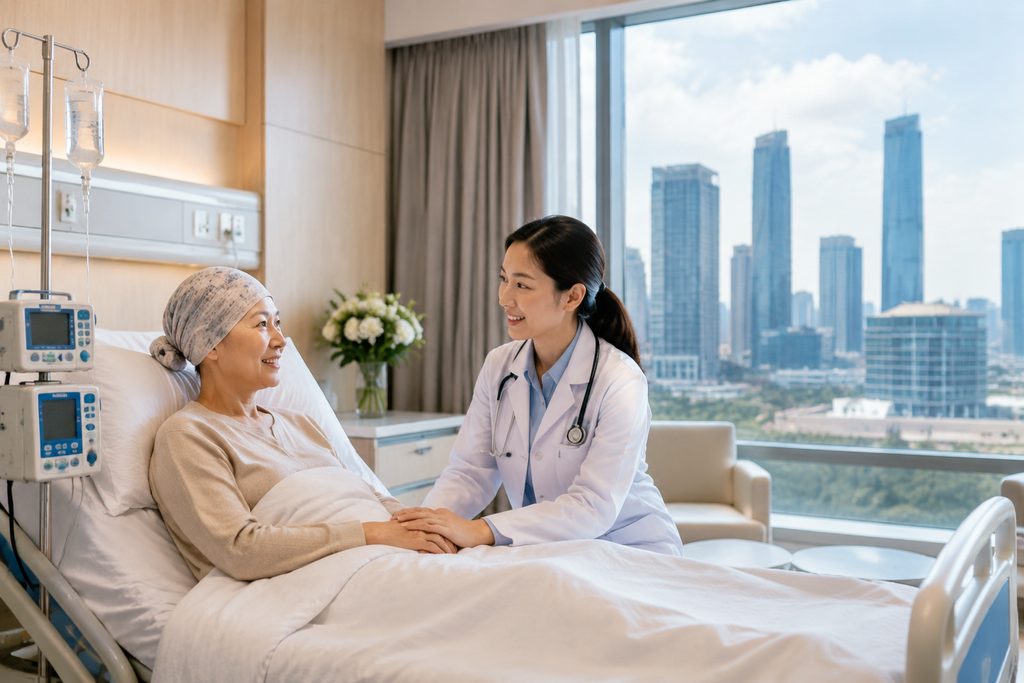
Have you ever stared at a treatment option that feels like a last chance, but the logistics of getting it feel impossible? That tension—between hope and the paralyzing complexity of international travel for advanced cancer care—is what we navigate daily. CAR-T cell therapy in China has moved from experimental to established for certain blood cancers, but accessing it as a foreigner requires a clear map. The landscape includes domestically developed products, government-negotiated pricing, and a hospital infrastructure that processes some of the highest patient volumes globally. Getting here is not a simple flight booking. It is a sequence of document reviews, hospital matching, and visa coordination that demands precision.
CAR-T Cell Therapy in China for International Cancer Patients: The Short Answer
Yes, international patients can access CAR-T cell therapy in China. The treatment exists within a structured system. Several major hospitals in Shanghai, Beijing, and Guangzhou administer both globally licensed and China-developed CAR-T products for relapsed or refractory B-cell acute lymphoblastic leukemia, diffuse large B-cell lymphoma, and multiple myeloma. The CAR-T cell therapy cost China ranges from approximately $70,000 to $120,000 USD for the infusion product alone, with hospitalization and monitoring adding $15,000 to $30,000 USD depending on the cytokine release syndrome management required.
That is the headline number. The reality underneath is more textured. Not every patient qualifies medically. Not every hospital accepts international cases for this specific therapy. The price you see quoted often excludes the apheresis procedure, the bridging chemotherapy, and the weeks of post-infusion monitoring that determine the final bill. We have seen patients arrive expecting a single payment and leave understanding it is a phased financial commitment tied to clinical milestones.
Who This Is Right For — and Who It Isn’t
CAR-T is not a universal cancer solution. It targets specific proteins on cancer cells. If your cancer does not express CD19 or BCMA, depending on the product, the therapy will not work. Full stop.
Who is typically a good candidate:
- Diagnosed with relapsed or refractory B-cell ALL, diffuse large B-cell lymphoma, or multiple myeloma after at least two lines of systemic therapy have failed.
- ECOG performance status of 0 to 1—meaning you are still largely active and self-caring. CAR-T is physically grueling.
- Adequate organ function: cardiac ejection fraction above 50%, creatinine clearance above 60 mL/min, liver transaminases less than 2.5 times the upper limit of normal. The pre-screening is rigid for a reason.
- You have a confirmed target antigen expression from a recent biopsy report. Without this documentation, no reputable center will proceed.
Who should not pursue this:
- Active, uncontrolled infection. CAR-T requires lymphodepleting chemotherapy first; an untreated infection can become fatal rapidly.
- Active graft-versus-host disease if you have had a prior allogeneic stem cell transplant. The immune activation can spiral.
- CNS-only disease or significant neurological comorbidities. The neurotoxicity risk is real and can be irreversible.
- Patients seeking CAR-T for solid tumors. Despite thousands of clinical trials, no CAR-T product is approved globally for solid tumors as of now. Anyone promising you this is not being honest.
This is also not for someone who needs treatment next week. From the day we receive your complete medical records to the day you receive infusion, plan on five to seven weeks. Rushing kills safety margins.
The Options, Compared
You are not choosing between identical products. China’s CAR-T market includes both globally recognized constructs and domestically innovated ones with different cost structures and target profiles. The decision tree splits by diagnosis first, then by product availability at specific hospitals.
| Product (Example) | Target | Indication | Approximate Product Cost (USD) | Typical Hospital Setting |
|---|---|---|---|---|
| Yescarta (Axicabtagene Ciloleucel) | CD19 | LBCL, FL | $100,000–$120,000 | International Dept., Shanghai |
| Relma-cel (Relmacabtagene Autoleucel) | CD19 | LBCL | $70,000–$85,000 | Multiple centers, Shanghai & Suzhou |
| Inaticabtagene Autoleucel | CD19 | B-ALL | $75,000–$90,000 | Beijing, Hefei |
| Equecabtagene Autoleucel | BCMA | Multiple Myeloma | $80,000–$95,000 | Shanghai, Beijing |
The product cost is one line item. The hospitalization, apheresis, lymphodepletion, and tocilizumab for CRS management add layers. A patient with a smooth seven-day hospitalization might pay $15,000 in hospital fees. A patient with grade 3 CRS requiring ICU monitoring for two weeks can see that number triple. The comparison above matters because the best CAR-T hospital Shanghai for international patients is not a single institution—it depends on which product matches your antigen profile and which center has an international department equipped to handle the coordinated care you need before and after infusion.
If your diagnosis is diffuse large B-cell lymphoma and cost is the primary constraint, a domestically developed CD19 CAR-T at a high-volume center may offer a $30,000 to $40,000 USD price advantage over an imported product. But that decision must be made with your referring oncologist reviewing the clinical trial data for that specific construct, not on cost alone.
How Effective Is CAR-T Cell Therapy in China for Cancer: What the Data Shows
Efficacy data for CAR-T in China mirrors global outcomes when you compare equivalent products and patient populations. A 2023 multicenter analysis published in *The Lancet Haematology* reported a 12-month overall survival rate of approximately 78% for relapsed/refractory B-ALL patients treated with CD19-directed CAR-T across major Chinese centers. For large B-cell lymphoma, the ZUMA-1 trial data for axicabtagene ciloleucel showed a five-year overall survival rate of 42.6%, and Chinese real-world data with the same construct shows consistency with those numbers.
The question how effective is CAR-T cell therapy in China for cancer often comes with an unspoken worry: is the quality different? The answer lies in volume. Shanghai’s Ruijin Hospital and Beijing’s Peking University Cancer Hospital each administer CAR-T to hundreds of patients annually. The management of cytokine release syndrome and immune effector cell-associated neurotoxicity syndrome improves with institutional experience. These centers have dedicated CAR-T toxicity management protocols and 24-hour on-call neurology and ICU teams. That institutional muscle memory translates to lower treatment-related mortality. Published data from a major Shanghai center showed a grade ≥3 CRS rate of 8% and a grade ≥3 neurotoxicity rate of 5%—numbers that align with top-tier Western centers.
But. The data is strongest for the specific indications listed on the label. If you have transformed lymphoma, or if you have a history of CNS involvement, the response rates drop and the toxicity risks rise. No center can guarantee a response. What the data says is that for the right patient, the chance of a durable remission is real and measurable.
Is CAR-T Cell Therapy Safe in China for Foreign Patients: The Safety Infrastructure
Safety in CAR-T is not about the country. It is about the center. The question is CAR-T cell therapy safe in China for foreign patients is better reframed as: does the specific hospital have the infrastructure to manage a foreign patient through a toxicity that can escalate in hours?
The safety net has three layers. First, the apheresis and manufacturing quality control. China’s National Medical Products Administration (NMPA) regulates CAR-T products under the same Good Manufacturing Practice standards that apply to biologics globally. The approved products have passed rigorous chemistry, manufacturing, and controls review. Second, the clinical monitoring. The centers we work with require a minimum of two weeks of hospitalization post-infusion, with daily neurologic assessments and twice-daily vital sign monitoring. The tocilizumab and corticosteroids required for CRS management are stocked on the unit, not ordered from a pharmacy downstairs. Third, the language barrier in an emergency. This is where a bilingual medical companion becomes not a convenience but a clinical safety tool. When a patient develops confusion from neurotoxicity and cannot describe their symptoms in Mandarin, the companion bridges the gap between the patient’s subjective experience and the medical team’s assessment.
Foreign patients face one additional risk that domestic patients do not: the flight home. After discharge, you are immunocompromised and at risk for late-onset cytopenias and infections. The standard recommendation is to remain in China for at least four weeks post-infusion for monitoring before attempting long-haul travel. We have seen patients try to leave at day 14 and end up with febrile neutropenia mid-flight. That is a scenario no one should risk.
What the Full Treatment Coordination Actually Costs
Let us build the budget from the ground up. The CAR-T cell therapy cost China is not a single invoice. It arrives in phases.
Phase 1: Pre-treatment evaluation. This includes the remote written second opinion from the specialist who will treat you. We coordinate this for $300 to $500 USD, and if you proceed to treatment, that fee credits fully toward the coordination service. The evaluation confirms your eligibility and product match before you book a flight.
Phase 2: Product and hospitalization. The CAR-T product itself: $70,000 to $120,000 USD. Apheresis and bridging chemotherapy: $8,000 to $15,000 USD. The infusion hospitalization, including CRS monitoring: $15,000 to $30,000 USD. These are paid directly to the hospital, not to any intermediary.
Phase 3: Non-medical logistics. Round-trip airport transfers: $200 USD. A bilingual medical companion for the critical infusion and monitoring period: from $300 per day. If you need a companion for the full five to seven weeks from arrival to post-infusion clearance, that is a significant line item. Visa guidance, document translation, and accommodation coordination are part of our case management scope.
Phase 4: Post-discharge monitoring. Weekly lab draws, imaging as needed, and specialist follow-ups for four weeks post-infusion. These are billed by the hospital on a fee-for-service basis.
A realistic all-in budget, excluding international flights and family accommodation, ranges from $100,000 to $160,000 USD. The variance depends almost entirely on whether your post-infusion course is uneventful or complicated.
Practical Considerations: Documentation, Visas, and Payment
The medical records you will need are specific. A summary from your oncologist is not enough. You need the original pathology report confirming the diagnosis and antigen expression, all prior chemotherapy regimens with dates and responses, a recent PET-CT or MRI, and a complete blood count and organ function panel from within the last two weeks. Missing documents delay evaluation by days or weeks.
For the visa, foreign patients coming to China for medical treatment apply for an S2 visa, annotated for medical purposes. This is a short-stay visa. If your treatment and monitoring will exceed 180 days, an S1 visa applies. The hospital provides an invitation letter and treatment confirmation that you submit with your application. We guide you through the specific documentation required by the Chinese embassy or consulate in your country. Do not apply for an M visa. That is for commercial and trade activities and will be rejected for medical treatment purposes.
Payment is a practical hurdle. Chinese public hospitals, including their international departments, typically require prepayment for the estimated treatment cost. A deposit of $50,000 to $80,000 USD is common before the apheresis even begins. International wire transfers can take three to five business days to clear. Credit card limits often cap at amounts far below what is needed. We advise patients to arrange for wire transfer capability through their bank before travel and to confirm with their bank that international transactions to Chinese hospital accounts will not be blocked by fraud algorithms.
Insurance is another reality check. Most international health insurance plans do not cover CAR-T therapy administered outside the policyholder’s home network, and many exclude experimental or high-cost biologics entirely. You should assume this will be a self-pay treatment. Some patients successfully negotiate single-case agreements with their insurers; we can provide the itemized hospital invoices and treatment summaries to support that negotiation, but we cannot guarantee coverage.
Frequently Asked Questions
Can I book CAR-T treatment as a package and just show up?
No. The concept of a “book CAR-T treatment package China” as a simple online purchase does not exist in ethical medical practice. What you can do is initiate a remote evaluation. You send your complete medical records. A specialist reviews them and confirms that you are a candidate for a specific CAR-T product at a specific hospital. Only then do you proceed to scheduling. Any service offering to book you directly into a CAR-T slot without a prior medical review is cutting a corner that puts you at risk. The evaluation is the gatekeeper. It protects you from traveling across the world only to be told you are ineligible.
What happens if the CAR-T therapy doesn’t work?
This is the hardest question, and the answer is not comforting. CAR-T fails in a significant minority of patients. If there is no response at the day-30 evaluation, or if the cancer progresses after an initial response, the options narrow. Some patients may be eligible for a second CAR-T infusion targeting a different antigen. Others may be candidates for bispecific antibodies or enrollment in a clinical trial. A few will transition to palliative care. Before you travel, you need a clear conversation with your referring oncologist about what your next line of therapy would be if CAR-T fails, and whether that next line is available in your home country. Do not burn your bridges. Keep your home oncologist informed and engaged throughout the process.
Is the quality of CAR-T manufacturing in China reliable?
The approved products—Yescarta, Relma-cel, and the domestically developed BCMA-targeted therapies—are manufactured under NMPA-inspected GMP facilities. The manufacturing failure rate, where the collected T-cells cannot be successfully engineered and expanded, is reported in the 2 to 5 percent range across major Chinese manufacturers, consistent with global experience. The vein-to-vein time, from apheresis to infusion, typically runs 18 to 24 days. This is a logistical metric that matters clinically: patients with aggressive disease can deteriorate while waiting. The Chinese centers we work with have refined their manufacturing and shipping logistics to minimize this window.
Can I receive CAR-T therapy in China and then return home for follow-up care?
Yes, and this is the standard model. You remain in China for the infusion and the acute monitoring period—typically four to six weeks total. After discharge, you return home with a detailed medical summary in English, including the CAR-T product certificate, infusion date, toxicity management record, and a recommended follow-up schedule. Your home oncologist takes over the long-term monitoring: monthly blood counts, immunoglobulin levels, and surveillance imaging. The critical handoff is the documentation. We ensure the discharge summary is comprehensive enough that your home oncologist is not guessing about what you received.
Your Next Step
CAR-T therapy in China is a defined, regulated pathway for patients who have exhausted other options and meet strict clinical criteria. The costs are substantial but transparent when broken into phases. The safety profile depends more on the center’s experience than on geography, and the best hospitals in Shanghai, Beijing, and Guangzhou operate at a standard that is globally benchmarked.
We are not a hospital. We do not diagnose, treat, or promise outcomes. Our team handles the coordination layer that makes the clinical work possible: matching your diagnosis to the right center and product, arranging the remote specialist evaluation, guiding the visa process, and providing the on-ground bilingual support that keeps you safe during the critical weeks of treatment and monitoring. If you want to understand whether this path fits your specific diagnosis, the place to start is a no-cost initial consultation where we review your situation and explain what the next three months would actually look like. You can reach that step through our patient coordination page.
For more medical information and treatment options in China, visit chinamedservices.com (China Medical Services).
