What Are My Chances of IVF Success: Age, Clinic Choice, and Real Data
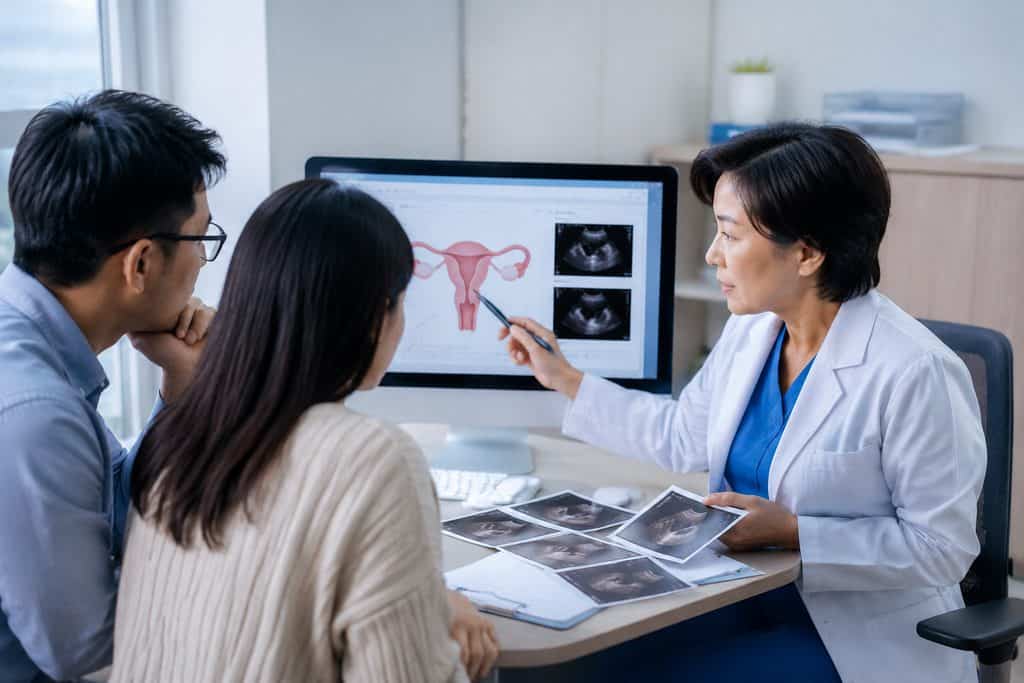
While a single IVF cycle in the United States now averages over $23,000 before medication, comparable treatment at a top-tier reproductive center in Shanghai typically runs between $4,500 and $7,500. Meanwhile, clinics in both systems report live birth rates that cluster around 40–45% for women under 35 using their own eggs. The gap in price does not reflect a gap in technology. It reflects a different cost structure entirely.
That gap is exactly why patients from London, Sydney, Vancouver, and Dubai now ask us a sharper question than “what are my chances of IVF success?” They ask: what drives those chances, and can I access the same odds without the same bill? The answer requires looking past marketing language and into the data that actually predicts outcomes.
How This Actually Works, Step by Step
You start with records, not with a plane ticket. Most international patients send us their existing fertility workup — day-3 FSH, AMH, antral follicle count, semen analysis, any previous stimulation protocols and outcomes. Our team reviews which documents matter for a Chinese reproductive medicine department and requests anything missing.
That file goes to a hospital international department or a private clinic with English-speaking coordination staff. A fertility specialist reviews it and returns one of two things: a written second opinion with a proposed protocol, or a scheduled video consultation to discuss your case directly. The written second opinion from a top hospital specialist costs between $300 and $500. A video consultation with a senior reproductive endocrinologist runs $500 to $800.
Only after that remote step do you decide whether to travel. If you do, we coordinate the on-the-ground logistics — registration, medical card creation, translator accompaniment, and appointment sequencing. No one promises a specific outcome. But the sequence removes the biggest risk: flying across the world before a doctor has confirmed you are a suitable candidate.
What Are My Chances of IVF Success: The Numbers That Actually Matter
Age is the dominant variable. That is true in Shanghai, London, and Los Angeles alike. Chinese national registry data and published clinic cohorts align closely with Western benchmarks. For women using their own eggs, live birth rate per embryo transfer runs approximately 40–45% under age 35. It drops to roughly 30–35% for ages 35–37, 20–25% for ages 38–40, and 10–15% for ages 41–42. After 43, most reputable centers will have an honest conversation about donor eggs.
But age alone does not determine your odds. Three other factors matter more than patients expect.
Embryo quality and genetic testing. Chinese clinics now routinely perform blastocyst culture and, where indicated, preimplantation genetic testing for aneuploidy (PGT-A). A euploid embryo transfers with success rates that are far less age-dependent. The question shifts from “how old are your ovaries” to “can we produce one normal embryo.”
Protocol selection. Shanghai and Beijing centers have deep experience with high-responder, low-responder, and poor-ovarian-reserve protocols. Some use mild stimulation or luteal-phase stimulation approaches that Western clinics adopt more slowly. The volume matters: a single large Chinese reproductive center may complete more cycles in one year than a mid-sized European country.
Laboratory quality. Embryology lab standards determine blastocyst formation rates. Top Chinese centers use time-lapse incubators, vitrification, and laser-assisted hatching as standard. The best ivf clinic Shanghai offers will publish or share its own lab KPIs — fertilization rate, blastulation rate, and live birth rate per transfer. Ask for these numbers. If a clinic will not share them, that is an answer in itself.
A Realistic Timeline
| Stage | What Happens | Typical Duration |
|---|---|---|
| Week 1–2 | You send records; we translate and submit to hospital international department | 3–7 business days |
| Week 2–4 | Specialist review; written opinion or video consultation scheduled | 1–3 weeks depending on specialist availability |
| Week 4–6 | You decide on travel; we coordinate hospital registration and visa support documents | 1–2 weeks |
| Week 6–10 | S2 visa application with hospital invitation letter | 1–4 weeks depending on consulate |
| Month 2–3 | Arrival, baseline ultrasound, stimulation start | 10–14 days stimulation |
| Month 3 | Egg retrieval, fertilization, embryo culture, fresh or frozen transfer | 5–6 days culture; transfer timing varies |
| Month 4–5 | Pregnancy test and early ultrasound; return home | 2 weeks after transfer for beta-hCG |
The forgotten waiting step is document translation. Chinese hospital international departments require notarized or certified translations of prior medical records. That alone can add a week. Visa processing varies by consulate and season. Plan for the whole sequence to take three to five months from first contact to embryo transfer, not three weeks.
What Can Go Wrong — and What Happens Then
The honest failure modes matter more than the success stories.
Poor ovarian response. You travel, start stimulation, and produce two follicles. The cycle is cancelled before retrieval. What happens next? The clinic adjusts protocol and often refunds the unused portion of the cycle fee. Ask about cancellation policies before you pay anything. Reputable Chinese centers state these in writing.
No euploid embryos. You retrieve eight eggs, four fertilize, one reaches blastocyst, and PGT-A shows aneuploidy. Nothing to transfer. The recourse is another cycle with modified stimulation, or a hard conversation about donor eggs. Chinese clinics offer anonymous and known donor programs. The cost difference is significant, but the path exists.
Language breakdown mid-cycle. A nurse gives instructions in Mandarin during a critical stimulation window. This is why bilingual accompaniment matters. Our companions cost from $300 per day and handle real-time interpretation during every visit. The cost is small compared to a cancelled cycle.
Visa delay. The S2 visa used for medical treatment and private affairs requires supporting documents from the hospital. If the consulate stalls, your cycle window shifts. We have seen this happen. The mitigation is applying early and using the hospital’s official invitation letter, not a travel agency template.
How to Evaluate a Chinese IVF Clinic Without Speaking Mandarin
Patients often ask us how much does ivf cost abroad, then realize the harder question is how to judge quality from 9,000 kilometers away. Here is the evaluation framework we use internally.
Published success rates. Ask for live birth rate per embryo transfer, stratified by age band. Not “pregnancy rate.” Not “clinical pregnancy rate.” Live birth. A clinic that hesitates on this metric is hiding something.
Lab certifications. Look for ISO 15189 accreditation or equivalent. Ask whether the embryology lab performs vitrification in-house. Outsourced labs add a variable you cannot control.
International patient infrastructure. Does the hospital have a dedicated international department with English-speaking coordinators? Or are you relying on a third-party translator who may not understand reproductive endocrinology? The difference determines whether your stimulation protocol gets communicated accurately.
PGT-A capability. If you are over 37 or have recurrent loss, genetic testing may change your odds. Confirm the clinic performs biopsy and contracts with an accredited genetics lab. Some Chinese centers now use non-invasive PGT-A on spent culture media, though the evidence base remains developing.
Donor program transparency. If donor eggs are on the table, ask about screening protocols, donor age distribution, and whether the program complies with Chinese regulations on gamete donation. China prohibits commercial gamete trade, but compensated donation within regulated programs exists. Understand the legal framework before proceeding.
Practical Considerations: Records, Visa, Payment, and Follow-Up
You cannot book ivf treatment China package deals the way you book a hotel. The legitimate path runs through medical evaluation first. Any provider promising a fixed-price “package” without reviewing your records is marketing, not medicine.
Records. Bring everything: AMH, FSH, estradiol, antral follicle count, semen analysis, HSG or saline sonogram, prior IVF protocols with response data. Certified English translations are usually acceptable. Some hospitals request Chinese translation; we handle that.
Visa. The S2 visa covers short-term medical treatment and private affairs. If your treatment plan requires a stay beyond 180 days, the S1 visa applies. Your accompanying partner applies for S2 as well. The hospital’s international department issues the invitation letter that anchors your application. We never guarantee visa approval, but a complete hospital letter dramatically strengthens the file.
Payment. Public hospital international departments and private clinics in China generally require prepayment or staged deposits. Insurance rarely covers IVF directly. Some international insurers reimburse after the fact. Budget for the cycle fee, medication ($1,000–$2,500 for a typical stimulation), PGT-A if needed ($2,000–$4,000 for a batch of embryos), and accommodation.
Follow-up at home. After transfer, you fly home and your local OB takes over. Chinese clinics provide discharge summaries and medication protocols in English. Coordinate early pregnancy monitoring with your home provider before you leave. The handoff is smoother when both sides know the protocol.
Frequently Asked Questions
Yes, when performed at a licensed, accredited center. China’s Ministry of Health regulates assisted reproductive technology strictly, with mandatory licensing and periodic inspection. Top centers follow protocols comparable to ESHRE and ASRM guidelines. The safety question is less about the country and more about the specific clinic. Verify licensing, lab accreditation, and published outcomes before committing.
Chinese registry data and published clinic cohorts show live birth rates per transfer of approximately 40–45% under 35, 30–35% for 35–37, 20–25% for 38–40, and 10–15% for 41–42. These figures align closely with Western benchmarks. Your individual odds depend on ovarian reserve, embryo quality, and whether PGT-A is used. No clinic can guarantee a live birth.
At a top-tier public hospital international department or private clinic in Shanghai or Beijing, a full IVF cycle including medication typically runs $4,500–$7,500. PGT-A adds $2,000–$4,000. In the United States, the same cycle often exceeds $23,000 before genetic testing. European prices fall between. The Chinese cost advantage is real but varies by hospital and case complexity.
Not responsibly. Any legitimate clinic will review your records and conduct a remote consultation before confirming a treatment plan. Be wary of fixed-price packages that skip medical evaluation. The right sequence is: records review, specialist opinion, protocol agreement, then travel coordination.
Reputable Chinese clinics state cancellation policies in writing. Depending on when cancellation occurs, you may receive a partial refund of the cycle fee. Medication costs are usually non-refundable. Ask for the cancellation policy before making any payment. Our coordination service from $300 per appointment helps ensure you understand what you are signing.
Your Next Step
The question “what are my chances of IVF success” has no single answer. It has a distribution, and your position on that curve depends on age, ovarian reserve, embryo quality, and the laboratory you choose. Understanding ivf cost China gives you leverage: the same or better odds at a fraction of the Western price, if you select the right center.
Our team at China Medical Services connects international patients with top-ranked reproductive medicine departments across 37 cities. We do not practice medicine and we never promise outcomes. We translate records, coordinate with hospital international departments, arrange bilingual companionship, and help you navigate the S2 visa process. If you are weighing a cycle abroad, start with a conversation. Send us your records and we will connect you with a specialist who can tell you honestly where you stand.
For more medical information and treatment options in China, visit chinamedservices.com (China Medical Services).
