How to Have Your Cancer Chemotherapy in Tianjin China: Oncology Day Treatment Local Full Guide
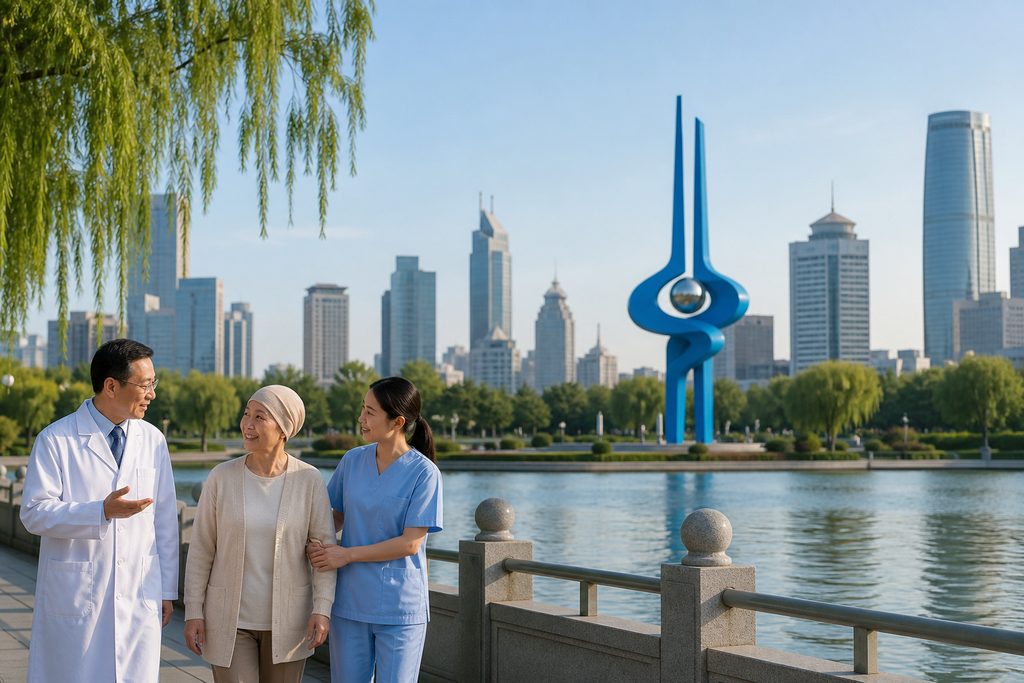
When 42-year-old Michael first heard the diagnosis, he had no idea where to start looking for treatment. His oncologist in Manchester recommended a six-month chemotherapy protocol. The quote for the drug regimen alone, before hospital fees, was staggering. Then a colleague mentioned Tianjin. Not as a last resort. As a calculated financial decision. Michael’s question was simple: can I actually fly to China, walk into a hospital, and receive safe, modern chemotherapy as an outpatient? The answer is yes. But the path from that question to sitting in a recliner with an IV drip requires a guide who knows the local landscape. This is that guide.
Chemotherapy in Tianjin: The Short Answer
You can receive outpatient chemotherapy in Tianjin at internationally accredited oncology centers. The chemotherapy cost Tianjin China typically ranges from $400 to $1,200 per cycle for standard regimens, depending on the drug protocol and hospital tier. That figure is for the infusion session, pharmacy charges, and basic monitoring. It does not include the initial specialist consultation, required bloodwork, or imaging restaging. The real complexity is not the medicine. It is navigating a system built for domestic patients. English-speaking administrative staff are rare in public hospitals. Registration portals are in Mandarin. And you cannot simply email a professor and book a chair for next Tuesday. The clinical quality is genuine. The logistical friction is, too.
Who This Is Right For — and Who It Isn’t
This path suits a specific profile. It is not for everyone.
A good candidate is someone with a confirmed diagnosis and a written treatment plan from their home oncologist. They need the specific drug names and dosages. They are stable enough to fly and stay independently for weeks at a time. They have a caregiver accompanying them. And they are seeking cost reduction on the drug administration itself, not a miracle cure unavailable elsewhere.
This is not right for someone who needs an initial diagnosis. Chinese oncology departments expect a complete workup before they will administer treatment. It is also not suitable for patients requiring intensive inpatient monitoring, those with unstable vital signs, or anyone whose protocol demands continuous infusion pumps over multiple days that cannot be managed in a day-unit setting. If your home oncologist says you need a dedicated inpatient bed with 24-hour nursing, a day-treatment model will not work. Being honest about this saves everyone time and risk.
The Options, Compared
When international patients research oncology day treatment price Tianjin options, they are usually weighing three distinct pathways. The table below lays them out without gloss.
| Pathway | Typical Cost Per Cycle (Drugs + Administration) | English Support | Appointment Lead Time | Insurance Handling |
|---|---|---|---|---|
| Public Grade-A Tertiary Hospital (Standard Outpatient) | $400 – $800 | Minimal — bring your own interpreter | 1–3 days after in-person specialist approval | Pay upfront, claim reimbursement yourself |
| Public Hospital International/VIP Department | $800 – $1,200 | Dedicated English-speaking coordinator | Often same-week with pre-arranged coordination | Pay upfront, assistance with documentation for insurer |
| Private International Hospital (e.g., United Family Tianjin) | $1,200 – $2,000+ | Full English clinical and administrative staff | Usually within 48 hours | Direct billing with many international insurers |
The public standard pathway wins on chemotherapy cost Tianjin China. It loses on navigability. For a foreigner without Mandarin, the savings evaporate into confusion and missed appointments. The VIP department of a major public hospital is often the pragmatic middle ground: genuine oncology depth at a fraction of Western prices, with a bridge across the language gap. The private international hospitals offer the smoothest experience at a higher price point that is still well below US or European private rates.
How Outpatient Chemotherapy Actually Works in a Tianjin Day Unit
If you are wondering how does outpatient chemotherapy work in China, the rhythm is more structured than many patients expect. You do not simply arrive and get treated.
The sequence is rigid for good reason. First, a blood draw. Usually 24 to 48 hours before your scheduled infusion. The oncology team will not proceed without confirming your white blood cell count, platelet level, and organ function markers. If your counts are too low, the session is postponed. No exceptions. This is standard safety practice globally, but in Tianjin the blood draw often happens at the hospital’s central phlebotomy station, not in the oncology unit. You queue with all other patients. A bilingual companion makes this step 15 minutes instead of a bewildering hour.
Once bloodwork clears, you present to the day-treatment unit. You hand over your hospital card and the doctor’s treatment order. A nurse assigns you a recliner or bed. The pharmacy prepares your specific drug admixture. This can take 45 to 90 minutes. Then the infusion begins. A standard regimen might run two to four hours. Throughout, nurses monitor vital signs. At discharge, you receive a summary and the order for your next blood draw. The whole process, from arrival to walking out, often spans five to six hours.
The rhythm repeats every one to three weeks depending on your protocol. The system works. But it assumes you understand each handoff. That is the part no one tells you.
Is Cancer Treatment Safe in Tianjin Hospitals?
The blunt question patients ask our team: is cancer treatment safe in Tianjin hospitals? The answer requires separating clinical quality from patient experience.
On clinical safety, the top oncology centers in Tianjin operate at a standard comparable to academic medical centers in the West. Tianjin Medical University Cancer Institute and Hospital is one of China’s largest dedicated cancer centers. Its oncology department is ranked among the top tier nationally in the Fudan University hospital rankings. The chemotherapy protocols follow NCCN and CSCO guidelines. Pharmacies dispense original-brand and approved generic drugs through regulated supply chains. Chemotherapy preparation follows sterile compounding standards. Infusion reactions are managed by experienced nursing teams.
The patient experience is where the gap appears. A public oncology day unit may treat 200 patients in a single day. The environment is efficient, not serene. Privacy is limited. Most signage and verbal communication is in Mandarin. If you have a question mid-infusion, the nurse may not understand you. That is not a safety failure in the clinical sense. But it is a real stressor. Patients who bring a bilingual companion or access care through a hospital’s international department consistently report a smoother, calmer experience. The medicine is the same. The context around it changes everything.
What It Costs: A Realistic Breakdown
The oncology day treatment price Tianjin hospitals quote is rarely a single all-in number. Understanding the components prevents surprise.
A typical self-pay chemotherapy cycle at a Tianjin public hospital VIP department breaks down like this:
- Specialist consultation (initial or restaging visit): $80 – $200
- Pre-infusion bloodwork panel: $50 – $120
- Chemotherapy drug cost (per cycle, regimen-dependent): $200 – $800
- Infusion administration and day-unit bed fee: $100 – $200
- Ancillary medications (anti-nausea, hydration, G-CSF if needed): $50 – $150
A straightforward cycle of a common regimen like FOLFOX or paclitaxel might total $600 to $900. More complex protocols using targeted agents or immunotherapy can push the per-cycle cost to $1,500 or beyond. These are self-pay prices. They are not insurance-negotiated rates. Payment is required upfront, typically via card or wire transfer. The hospital issues a detailed receipt and medical documentation that you submit to your international insurer for reimbursement.
What is not included: international flights, accommodation for multi-week stays, food, local transport, and any emergency inpatient admission that becomes necessary if complications arise. Budget for those separately. A six-cycle course with three-week intervals means roughly four to five months of intermittent stays in Tianjin.
Practical Considerations: Records, Visas, and the Paper Trail
You cannot book chemotherapy session Tianjin appointments by sending an email and hoping for the best. The documentation requirements are specific.
Your home oncologist must provide a signed treatment summary that includes the confirmed diagnosis with pathology report, the proposed chemotherapy protocol with exact drug names and dosages per square meter of body surface area, cumulative prior treatment history, and any relevant imaging and lab results from the past 90 days. Chinese oncology teams will review these independently. They may request repeat imaging or a fresh biopsy before proceeding. That is not a money grab. It is medical due diligence.
For the visa, the applicable category is an S2 visa with the purpose noted as private medical treatment. Your accompanying family member applies under the same category. The visa invitation letter comes from the hospital after they have accepted your case. Our team handles this coordination, but the timeline is not instant. Plan for two to four weeks from document submission to visa issuance.
Payment logistics matter. Chinese public hospitals do not direct-bill international insurers. You pay first, then claim. Bring a credit card with a high enough limit to cover the estimated total, or arrange wire transfers in advance. Some international departments accept international cards. Standard outpatient counters often do not. Cash limits on foreign cards apply. Check with your bank before departure.
Follow-up after returning home is essential. The Tianjin oncology team will provide a discharge summary in English if requested. Your home oncologist needs this to continue care. Arrange this handoff before you leave Tianjin. Do not assume records will be emailed automatically later.
Frequently Asked Questions
Can I just walk into a Tianjin cancer hospital and start chemotherapy the same week?
No. Even for domestic patients, chemotherapy requires a confirmed treatment plan from a hospital specialist after reviewing complete records. For international patients, the process adds document translation, specialist review, and scheduling coordination. Realistically, plan for a first trip that includes consultation, possible additional testing, and treatment plan confirmation. The first infusion may happen on that trip or a subsequent one. Anyone promising same-week walk-in chemotherapy without prior review is not being honest about how Chinese hospitals operate.
Are cancer treatment packages Tianjin for foreigners a real thing, or just marketing?
Some hospitals and medical facilitation services offer structured packages that bundle consultation, bloodwork, a set number of chemotherapy cycles, and basic support services. These are real and can simplify budgeting. But read the terms carefully. A package typically covers the predictable components. It does not cover dose modifications, treatment delays due to low blood counts, unexpected hospitalizations, or changes in regimen. Ask what happens when the plan changes. Because in oncology, the plan often changes.
What if I have a serious complication during outpatient treatment?
This is the question that keeps patients up at night. Day-treatment units are equipped to manage common infusion reactions. For severe events — anaphylaxis, cardiac symptoms, febrile neutropenia — the protocol is immediate transfer to the hospital’s emergency department and likely inpatient admission. The day unit is physically inside or adjacent to a full-service hospital. You are not in a standalone strip-mall clinic. That said, inpatient admission means additional costs and a disrupted schedule. Your travel insurance or international health coverage should explicitly include inpatient hospitalization abroad. Confirm this before you leave home.
Do Tianjin oncologists follow the same protocols as Western doctors?
The major cancer centers follow NCCN guidelines alongside China’s CSCO guidelines. There are some differences in drug availability. Certain newer agents approved by the FDA may still be under review in China. Conversely, some drugs available in China are not yet approved in the West. Your oncologist in Tianjin will propose a regimen based on what is available and appropriate for your case. If your home protocol specifies a brand-name drug that is not stocked, the team will discuss equivalent alternatives. This conversation should happen during the remote consultation phase, not after you have already traveled.
Your Next Step
The information here is a map. Walking the route is another matter. Our team at China Medical Services does not provide medical advice or make treatment decisions. We are not a hospital. We are the coordination layer that connects you with the right oncology department, ensures your records are reviewed properly, and puts a bilingual companion at your side through every blood draw, consultation, and infusion session. A remote written second opinion or video consultation with a Tianjin oncology team is the logical first move. It costs from $300 and, if you later proceed to in-person treatment, that fee is credited in full toward our on-the-ground coordination service. No pressure. Just a clear path forward when you are ready to take it.
For more medical information and treatment options in China, visit chinamedservices.com (China Medical Services).
