Why American Patients Choose China for Cancer Treatment: An Oncology Full-Service Cost Guide
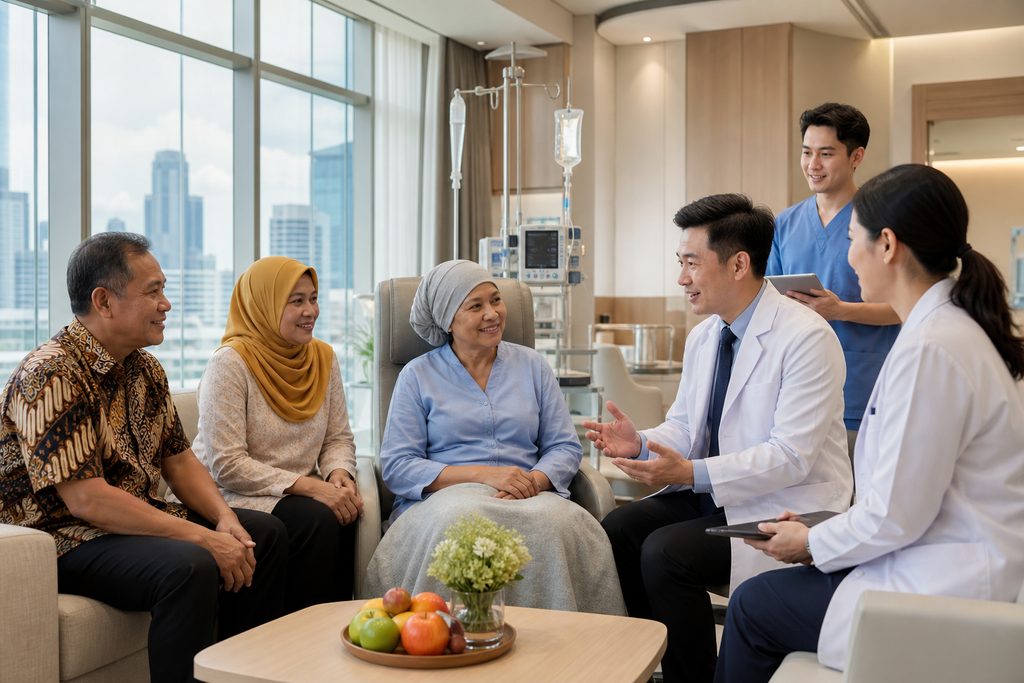
A 2023 analysis published in the *Journal of Clinical Oncology* found that the financial toxicity of cancer care forces roughly 42% of newly diagnosed American patients to deplete their entire life savings within two years. That statistic isn’t just a number. It’s a mortgage default. It’s a skipped infusion. It’s the reason a growing number of Americans are boarding long-haul flights to Shanghai and Beijing. They are looking at the cancer treatment cost China vs USA and realizing that identical—or in some cases, more advanced—protocols are available for a fraction of the price. Our team at China Medical Services helps patients make sense of that gap without the marketing fluff. We connect you with the data, the hospitals, and the logistics. We do not sell hope. We deliver clarity.
How This Actually Works, Step by Step
The process isn’t a mystery. But skipping a step can leave you stranded in a foreign hospital lobby with a stack of unreadable reports. Here is the real sequence we walk patients through.
You start by sending us your existing medical records. Pathology slides, PET-CT DICOM files, genomic sequencing reports, and current medication lists. Our in-house clinical team translates these into medical-grade Chinese. Not Google Translate. We need precise terminology because a mistranslated mutation marker can derail a treatment plan.
The translated dossier goes to the international department of your matched hospital. This is where the oncology full service package Beijing price or Shanghai protocol gets defined. The oncology board reviews your case. They return a written second opinion. This document includes a proposed treatment protocol, a line-by-line cost estimate, and a schedule of required pre-treatment tests. You receive this in English. You review it with your home oncologist. Only then do you decide whether to travel.
If you move forward, we handle the S2 visa invitation letter from the hospital. We coordinate your arrival, the repeat diagnostics required by Chinese law, and the start of treatment. You never stand alone at a registration window.
The Real Cost Gap: Cancer Treatment Cost China vs USA
Let’s put numbers on the table. The cancer treatment cost China vs USA differential isn’t a minor discount. It’s a structural price reset driven by lower pharmaceutical pricing, high patient volumes, and a regulatory environment that doesn’t support the same billing markups seen in the U.S. system.
The table below reflects cash-pay prices at top-tier Chinese public hospital international wings. These are the centers listed in the Fudan University Hospital Rankings, not unaccredited clinics.
| Treatment Modality | Average U.S. Cash Price (USD) | China Top-Tier Hospital (USD) |
|---|---|---|
| Chemotherapy (6-cycle regimen) | $45,000 – $120,000 | $8,000 – $18,000 |
| IMRT Radiation (full course) | $35,000 – $65,000 | $6,000 – $12,000 |
| PD-1 Immunotherapy (annual) | $150,000 – $200,000 | $20,000 – $40,000 |
| CAR T-Cell Therapy | $500,000 – $600,000 | $80,000 – $120,000 |
| Minimally Invasive Lobectomy | $55,000 – $80,000 | $12,000 – $20,000 |
These figures vary by hospital and case complexity. A patient with multiple comorbidities will see higher monitoring costs. But the baseline delta remains stark. How much does immunotherapy cost in Shanghai specifically? For domestically manufactured PD-1 inhibitors—which have demonstrated non-inferiority in multiple *The Lancet Oncology* publications—the annual cost at a center like Fudan University Shanghai Cancer Center runs between $18,000 and $25,000. Imported Keytruda sits closer to $40,000. Both are a fraction of U.S. list prices.
The oncology full service package Beijing price typically bundles the treatment cost, international ward nursing, bilingual coordination, and discharge medication into a single transparent quote. You are not chasing down surprise facility fees.
A Realistic Timeline
Medical tourism marketing loves to promise a seamless sprint. Reality includes waiting on pathology, waiting on visas, and waiting on your own body. Here is a timeline that accounts for the friction.
| Phase | Duration | What Actually Happens |
|---|---|---|
| Document Collection & Translation | 5–7 days | You gather DICOM files, pathology reports, and treatment history. Our team translates them into clinical-grade Chinese. Incomplete records cause delays here. |
| Hospital Review & Written Second Opinion | 7–14 days | The oncology department reviews your case. They may request additional tissue blocks or restaining. This is not bureaucracy—it is diagnostic rigor. |
| Visa Processing (S2) | 10–20 days | The hospital issues an invitation letter. You apply at your local Chinese embassy. Processing times spike during summer and before major Chinese holidays. |
| Travel & Arrival Diagnostics | 5–7 days | Chinese hospitals repeat key scans and bloodwork before initiating treatment. This is a legal requirement, not an upsell. Expect a PET-CT and fresh labs. |
| Treatment Initiation | Day 1 of treatment | Chemotherapy, immunotherapy, or radiation begins typically 3–5 days after repeat diagnostics are cleared. |
From first contact to first infusion, plan on 5 to 7 weeks. Patients with rapidly progressing disease need to weigh this timeline honestly against the urgency of starting local treatment.
What Can Go Wrong — and What Happens Then
We lose trust the moment we pretend everything is smooth. It isn’t.
A common failure mode: the genomic report you sent was from a 2021 panel. The Chinese oncology board wants a fresh NGS test using a panel that covers mutations more prevalent in Asian populations. You now face a 10-day delay and a $2,500 repeat biopsy cost. This happens. And it’s the right medical decision—it just feels like a setback.
Another scenario: you arrive and the repeat PET-CT shows disease progression that wasn’t visible on your scan from six weeks ago. The planned curative protocol is off the table. The Chinese team pivots to a palliative or bridging strategy. We have seen this shatter expectations. That is why we insist on a frank conversation with your home oncologist before you book a flight. The written second opinion is your safety net. Use it.
Logistical failures happen too. A visa gets delayed. A family member falls ill. Our coordination team rebooks appointments and negotiates with the hospital’s international scheduler. We cannot guarantee a specific start date, but we can guarantee that you won’t be abandoned in a WeChat group with no translator. The book cancer treatment China medical tourism search is easy. The execution requires a team that handles Plan B.
Is Cancer Treatment in China Good? The Evidence Beyond the Price
The question is cancer treatment in China good usually comes from a place of anxiety, not condescension. Western patients worry about quality control. The answer sits in the data.
China’s National Cancer Center performs over 200,000 cancer surgeries annually. High-volume centers like the Cancer Hospital Chinese Academy of Medical Sciences in Beijing see more esophageal and gastric cancer cases in a month than a typical U.S. academic center sees in a year. Volume drives technical proficiency. A 2022 study in *The BMJ* found that for esophagectomy, Chinese high-volume centers reported a 30-day mortality rate below 1%, comparable to the best Western centers.
Then there is the technology gap. China has approved domestic CAR T-cell therapies with a safety and efficacy profile that has attracted international attention. The country is also a global leader in adoptive cell therapy trials. For patients with relapsed hematologic malignancies, access to these trials can be a lifeline that doesn’t exist at home.
But quality is uneven. The best oncology hospital China for international patients will be one of the Fudan-ranked top-tier centers with a dedicated international medical department. These departments employ English-speaking coordinators, accept translated medical records, and are accustomed to Western expectations around informed consent and shared decision-making. A provincial hospital without an international wing will not meet those standards. The gap between the best and the rest is real. Our hospital database covers 340+ top-ranked hospitals across 37 cities—the top 5% of China’s 35,000+ hospitals, ranked by Fudan and JCI criteria. That filtering is the entire value of a medical concierge.
Practical Considerations: Records, Visas, and Follow-Up
Your medical records are the passport. Without a complete DICOM file and a formal pathology report, no top-tier hospital will review your case. Send everything. The hospital will decide what is relevant.
The visa is an S2 short-stay visa annotated for medical treatment. Your accompanying family member applies under the same category. The hospital’s international department provides the official invitation letter. Processing takes 10 to 20 business days. Do not book a flight until the visa is stamped in your passport.
Payment is cash or wire transfer. Chinese public hospitals do not bill U.S. insurance directly. You pay upfront and seek reimbursement from your insurer. We provide itemized invoices and medical coding support to facilitate that process. Private international hospitals like those listed on our private hospitals page often have direct billing arrangements, but their oncology services are typically limited to chemotherapy and immunotherapy—not complex surgical oncology.
Language is the invisible barrier. A PET-CT report in Mandarin is useless to your home oncologist. Our bilingual medical companions translate clinical conversations in real time, not just the polite greetings. They also handle the physical chaos of a Chinese hospital: the queue ticket machines, the pharmacy pickup windows, the inter-departmental navigation. A single visit can involve six different stations. Without a companion, you burn hours and risk missing a critical instruction.
Follow-up care back home must be arranged before you leave. The Chinese discharge summary will be translated into English. You hand this to your local oncologist. They take over surveillance scans and maintenance therapy. The Chinese team typically offers a post-treatment video consultation at the 3-month mark. This continuity is part of the oncology full service package Beijing price at many international centers.
Frequently Asked Questions
Can I really book cancer treatment in China as a medical tourist?
You don’t “book” it like a hotel room. The sequence is: remote case review, written second opinion, treatment plan agreement, visa, travel, repeat diagnostics, treatment start. The phrase book cancer treatment China medical tourism suggests a transaction. It is a clinical process with checks built in. Any service promising to skip the second opinion step is dangerous.
How much does immunotherapy cost in Shanghai compared to the US?
For domestic PD-1 inhibitors, the annual cost at Fudan University Shanghai Cancer Center ranges from $18,000 to $25,000. Imported Keytruda is approximately $40,000 annually. The same drugs in the U.S. carry list prices above $150,000. These are cash-pay international patient rates. The gap narrows if you have excellent U.S. insurance with a low out-of-pocket max—but for the underinsured or cash-pay patient, the savings are transformative.
What is the best oncology hospital in China for international patients?
The best oncology hospital China for international patients depends on your diagnosis. For thoracic cancers, the Cancer Hospital Chinese Academy of Medical Sciences in Beijing is unmatched. For liver cancer, Zhongshan Hospital Fudan University in Shanghai leads. For hematologic malignancies, Peking University People’s Hospital runs one of the world’s largest HSCT programs. The key is matching your specific mutation profile and cancer type to the center with the deepest relevant expertise. Our oncology department rankings break this down by subspecialty.
What happens if the treatment doesn’t work?
This is the hardest question. Some patients travel, start treatment, and progress. The Chinese team will pivot to a second-line protocol or a clinical trial if one is available. If no viable option remains, they will provide a palliative care plan and a translated medical summary for your return home. Our role is to ensure that transition is medically documented and logistically supported. We do not abandon a patient because the outcome was unfavorable.
Your Next Step
The numbers are clear. The quality at top-tier Chinese oncology centers is real. But the logistics of navigating a foreign healthcare system are unforgiving. Our team at China Medical Services handles the translation, the hospital matching, the visa coordination, and the on-the-ground support so you can focus on treatment, not bureaucracy. We do not provide medical advice. We connect you with the doctors who do. To start with a free consultation and case evaluation, visit our patient services page. A clear path forward begins with a single conversation.
For more medical information and treatment options in China, visit chinamedservices.com (China Medical Services).
