Why Choose China for Dental Implants: Cost, Quality, and Logistics Explained
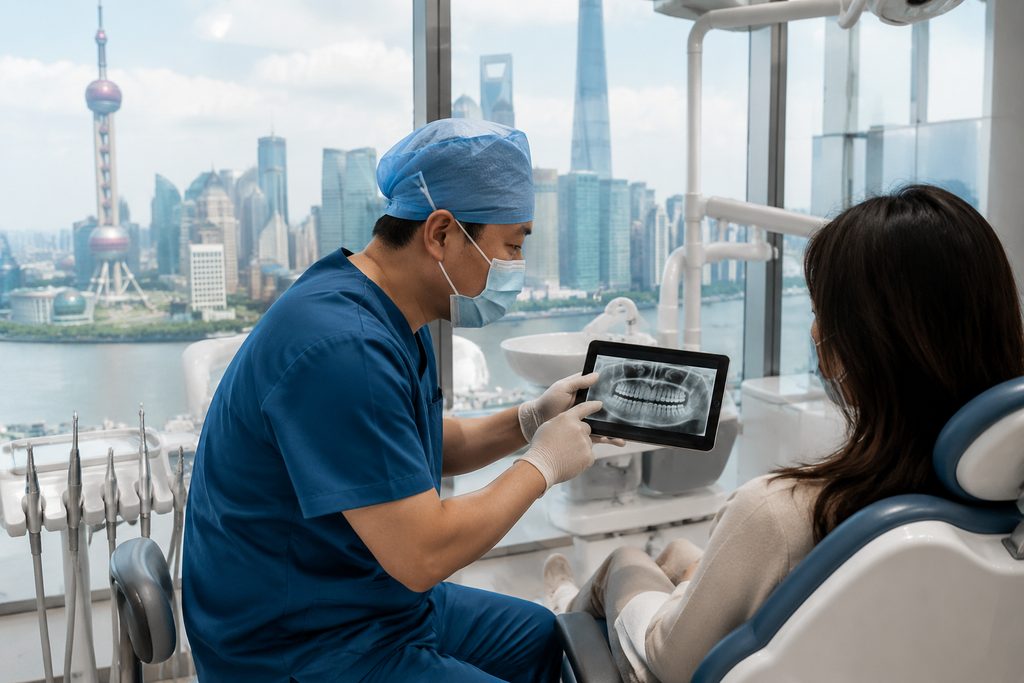
Have you ever looked at a dental implant quote and felt your stomach drop? A single tooth replaced for $4,000 to $6,000 in the United States. A full-arch restoration pushing $25,000 to $50,000. For many patients, that number is not a medical decision anymore — it is a financial wall. So the real question becomes: what if the same procedure, performed with the same implant systems and rigorous protocols, cost a fraction of that? That question is exactly why thousands of international patients now investigate dental implants cost China as a serious alternative to treatment at home.
This article walks through the actual numbers, the safety record, the clinic landscape, and the logistics you would need to manage. We are not a dental clinic. We are a medical coordination service that helps international patients connect with top-tier Chinese hospitals and dental centers. Our team has seen the full arc — from first inquiry to post-operative follow-up — and we will give you the unvarnished picture.
Key Takeaways
- A single titanium implant and crown in China typically costs $800 to $1,800, compared to $3,000 to $6,000 in the US — savings of 60% to 80% on the same implant brands.
- Top dental centers in Shanghai, Beijing, and Guangzhou use the same implant systems (Straumann, Nobel Biocare, Osstem, Dentium) and digital planning software found in Western clinics.
- Language, documentation, and follow-up logistics are the real barriers — not clinical quality. You need a clear plan for records transfer and post-return care.
- Dental implant treatment requires at least two visits: surgical placement and, after 3 to 6 months of osseointegration, crown restoration. Some clinics offer same-day or early-loading protocols for eligible cases.
The Problem: Dental Implants Are Priced Out of Reach for Millions
Around 178 million Americans are missing at least one tooth, according to the American College of Prosthodontists. That is not a niche problem. And the standard solution — a titanium implant with a ceramic crown — remains one of the most expensive single-tooth procedures in dentistry. In the United States, the average cost for one implant, abutment, and crown sits between $3,100 and $5,800. In the United Kingdom, the National Health Service rarely covers implants, pushing private fees to £2,000 to £3,500 per tooth. In Australia, expect AUD $4,000 to $7,000.
What happens when patients cannot afford these prices? They delay treatment. A missing tooth leads to bone resorption — the jawbone shrinks where the root used to be. Adjacent teeth shift. Occlusion changes. Within five years, a single missing tooth can cascade into multiple dental problems that cost far more to fix. The price of not treating is not zero. It compounds.
But cost is not the only barrier. Wait times for specialist oral surgeons in Canada and parts of Europe stretch to 3 to 6 months for the initial consultation alone. Then another 3 to 6 months for the surgical placement. Then another 3 to 6 months for the crown. A process that should take 6 to 9 months total can easily stretch to 18 months.
So patients start looking elsewhere. Mexico. Thailand. Turkey. Hungary. And increasingly, China.
Why China Delivers Results for Dental Implant Patients
China is not the first country most Western patients think of for dental care. That is changing. The country has invested heavily in dental education, digital dentistry infrastructure, and international-standard sterilization protocols over the past 15 years. The result is a dental sector that competes on quality, not just price.
Clinical Volume Creates Procedural Familiarity
Chinese oral surgeons and implantologists perform a high volume of cases. A busy dental hospital in Shanghai or Guangzhou may place several hundred implants per month across its departments. That repetition matters. Studies consistently show that surgeon experience — measured by annual procedure volume — correlates with lower complication rates in implant dentistry. A clinician who places 300 implants a year has seen the difficult cases: thin bone, angled ridges, failed prior implants. They are less likely to be surprised.
Compare that to a general dentist in a Western suburb who places 20 to 30 implants a year. Both may use the same implant system. The difference is reps.
Technology and Digital Workflow Are Standard, Not Optional
The stereotype of Chinese healthcare as low-tech is outdated. Top dental centers in Shanghai and Beijing use cone-beam computed tomography (CBCT) for 3D bone mapping, intraoral scanners for digital impressions, and computer-guided surgical templates for precise implant placement. The workflow is not meaningfully different from what you would find at a high-end clinic in Zurich or Los Angeles.
Several Chinese dental hospitals operate fully digital labs. The crown is designed on CAD software, milled from a solid block of zirconia or lithium disilicate, and delivered within days — not weeks. For international patients, this compression of the timeline is significant. Fewer visits. Less time away from work.
Cost Advantage Without Quality Compromise
Why is dental implants cost China so much lower? The answer is structural, not clinical. Labor costs for dental assistants, lab technicians, and administrative staff are lower in China than in the US or Western Europe. Real estate and facility overhead are lower. Malpractice insurance premiums are dramatically lower. The implant components themselves — the titanium fixture and abutment — are often the same brands purchased from the same manufacturers.
So the savings do not come from cutting corners on materials or sterilization. They come from a lower cost base. That is why a Straumann implant placed in Shanghai costs less than the same Straumann implant placed in New York. The fixture is identical. The economics are not.
Dental Implant Price Beijing vs Abroad: A Direct Comparison
Let us look at real numbers. The table below compares typical all-inclusive prices for a single titanium implant with a standard ceramic crown, across several major destinations. These are ranges, not quotes — final pricing depends on bone condition, implant brand, whether a bone graft or sinus lift is needed, and the specific clinic.
| Destination | Single Implant + Crown (USD) | Full-Arch Restoration (USD) | Typical Wait for Surgery |
|---|---|---|---|
| United States | $3,100 – $5,800 | $25,000 – $50,000 | 2 – 6 months |
| United Kingdom | $2,800 – $4,500 | $20,000 – $38,000 | 3 – 6 months |
| Australia | $3,000 – $5,000 | $22,000 – $40,000 | 2 – 5 months |
| Thailand | $1,200 – $2,200 | $8,000 – $15,000 | 1 – 3 weeks |
| China (top-tier city) | $800 – $1,800 | $6,000 – $14,000 | 1 – 4 weeks |
| China (private international clinic) | $1,500 – $2,500 | $10,000 – $18,000 | 1 – 2 weeks |
The dental implant price Beijing vs abroad comparison shows a consistent pattern. Chinese pricing undercuts Western markets by 60% to 75% for the same implant systems. Even the premium private international clinics in China — which offer English-speaking staff and Western-style service — come in well below US or UK prices.
One important caveat: the lowest prices in China are typically found at public hospital dental departments, where English support is limited and the process is more bureaucratic. The higher end of the range reflects private clinics and international departments that cater to foreign patients. You are not just paying for the implant. You are paying for coordination, translation, and a smoother experience.
Is It Safe to Get Dental Implants in China?
This is the question every patient asks, and it deserves a straight answer. The short version: yes, at accredited, well-established dental centers, the safety profile is comparable to any developed country. The longer version requires nuance.
China’s top-tier dental hospitals follow international sterilization protocols. Autoclave sterilization, single-use disposables, and instrument tracking are standard in facilities that treat international patients. Many of the leading dental centers are affiliated with major medical universities — Peking University School of Stomatology, Shanghai Ninth People’s Hospital, West China School of Stomatology — and operate at a level that would be recognized anywhere in the world.
But — and this matters — quality varies. China has over 35,000 hospitals and thousands of dental clinics. The top tier is excellent. The bottom tier is not where you want to be. That variation is why international patients should focus on a defined set of criteria: JCI accreditation or university hospital affiliation, documented experience with foreign patients, use of internationally recognized implant systems, and transparent pricing. You can review our directory of top-ranked Chinese hospitals to understand how we filter for quality.
Also worth noting: China’s National Health Commission has tightened regulations on medical advertising and unlicensed practice over the past decade. The regulatory environment is not perfect, but it has moved in the right direction. The key is choosing a facility that operates within the formal healthcare system, not a strip-mall clinic with no verifiable credentials.
How Long Do Dental Implants Last in China?
An implant placed in Shanghai does not have a different biological lifespan than one placed in Chicago. The implant is a titanium screw. The variable is the quality of placement, the patient’s bone density, oral hygiene, and the crown restoration. Published long-term survival rates for dental implants range from 90% to 95% over 10 years, with many studies showing 95% to 98% survival over 5 years. Those numbers apply to properly placed implants regardless of country.
What matters more than geography is the clinician’s experience and the materials used. A Straumann or Nobel Biocare implant placed with good surgical technique and restored with a properly fitted crown should last 15 to 25 years. That is not a Chinese outcome. That is a dental implant outcome.
One factor patients sometimes overlook: follow-up care after returning home. If a crown chips or a screw loosens six months after you leave China, you need a local dentist who can assess the issue. Most Western dentists will treat an implant placed abroad, though some may charge a consultation fee to evaluate unfamiliar work. Before committing to treatment in China, identify a dentist at home who is willing to provide maintenance care. This is not a dealbreaker — it is just planning.
Best Dental Implant Clinic Shanghai: What to Look For
Shanghai is the most common entry point for international dental patients in China. The city has direct flights from most major Western hubs, a large expatriate community, and a concentration of high-quality dental facilities. Searching for the best dental implant clinic Shanghai will return dozens of options. How do you sort them?
Start with three filters. First, implant system: the clinic should offer internationally recognized brands — Straumann, Nobel Biocare, Zimmer Biomet, Osstem, or Dentium — and be transparent about which system is included in the quoted price. Second, imaging: the clinic should require a CBCT scan before any surgical planning. If a clinic quotes you an implant price without seeing a 3D scan of your jaw, walk away. Third, communication: for international patients, the clinic should have at least one English-speaking coordinator or work with a third-party service that provides interpretation.
Shanghai Ninth People’s Hospital is the heavyweight in the city — one of the largest oral and maxillofacial centers in China, affiliated with Shanghai Jiao Tong University School of Medicine. It is a public hospital, which means lower prices but more complex navigation for foreigners. Private options like Jiahui Health and United Family Shanghai offer English-speaking staff and a more familiar patient experience at a higher price point. Both paths are legitimate. The right choice depends on your budget and your tolerance for navigating a Chinese public hospital.
For a broader view of dental and maxillofacial departments across China, see our specialty department rankings, which list top hospitals by clinical discipline.
How to Book a Dental Implant Package China Medical Tourism: The Process Step by Step
Planning dental implant treatment in China is not like booking a hotel. It requires a sequence of steps, and skipping any of them creates problems downstream. Here is how the process actually works when patients try to book dental implant package China medical tourism.
Step 1: Gather your records. You need recent dental X-rays — ideally a panoramic radiograph or CBCT scan — plus a written treatment plan from your home dentist if you have one. These records let the Chinese clinic assess your case before you travel. Without them, the first visit is wasted on diagnostics you could have done at home.
Step 2: Remote consultation. Send your records to the clinic or to a coordination service. The dental team reviews the scans, confirms whether you are a candidate for implants, and provides a preliminary treatment plan with a price range. This step costs $100 to $300 for a video consultation at most international clinics, or $300 to $500 for a written second opinion from a top specialist. That fee is typically credited toward your treatment if you proceed.
Step 3: Surgical visit. You travel to China for the implant placement surgery. This visit usually lasts 5 to 10 days: initial in-person consultation and CBCT scan, surgical placement of the implant fixture, and a follow-up check before you fly home. If you need a bone graft or sinus lift, that is done during this visit and adds to the timeline.
Step 4: Osseointegration period. You go home and wait. The implant fuses with your jawbone over 3 to 6 months. Nothing happens during this period except bone healing. You do not need to be in China.
Step 5: Restoration visit. You return to China for the abutment placement and crown. This visit is shorter — usually 3 to 5 days. The clinic takes a digital impression, fabricates the crown, and seats it. Some clinics can do this in 2 to 3 days with an in-house lab.
Some clinics offer immediate-loading or same-day implants for eligible patients with good bone quality. That can compress the entire process into a single trip of 2 to 3 weeks. But immediate loading is not suitable for everyone, and a responsible clinician will tell you if your case does not qualify.
Practical Considerations: Visa, Payment, and Follow-Up for Dental Treatment in China
Dental treatment falls under medical travel for visa purposes. The applicable short-stay category is the S2 visa, which covers private affairs including medical treatment. You will need supporting documents from the Chinese hospital or clinic — typically an invitation letter or treatment confirmation. Your accompanying family member applies for the same S2 category. We cannot guarantee visa approval, and requirements vary by embassy and consulate, so check the latest rules with the Chinese diplomatic mission in your country before booking flights.
Payment is another practical matter. Chinese public hospitals typically require prepayment — you deposit funds at admission and draw down as services are provided. Private international clinics usually accept major credit cards and sometimes direct insurance billing. If you have dental insurance that covers implants abroad, check the reimbursement terms before you travel. Many international insurers reimburse after the fact, which means you pay upfront and file a claim. Keep every receipt and clinical record. For more on how hospitals in China handle international patients, see our guide to private international hospitals.
Language is the barrier most patients underestimate. Outside the private international clinics, English is rare. Even in top public hospitals, the dental staff may have limited English. A bilingual coordinator or companion — whether provided by the clinic or a third-party service — changes the experience dramatically. Bilingual medical companion services in China typically start from $300 per day and cover registration, navigation, translation, and payment logistics.
Follow-up after returning home deserves real planning. Most implant complications — peri-implantitis, crown loosening, abutment fracture — occur months or years after placement. Your home dentist should be willing to provide routine maintenance. Send them the implant system documentation and the surgical report from China. A good dentist can manage a well-documented implant regardless of where it was placed.
Frequently Asked Questions
Not at the top-tier facilities. The leading Chinese dental hospitals and private clinics use the same implant systems sold in the US and Europe — Straumann, Nobel Biocare, Osstem, Dentium, Zimmer Biomet. Ask the clinic to name the exact implant system in your quote. If they will not, that is a red flag.
What happens if my implant fails after
For more medical information and treatment options in China, visit chinamedservices.com (China Medical Services).
