Which Hospital in China Offers Pain Management? A Practical Guide for International Patients
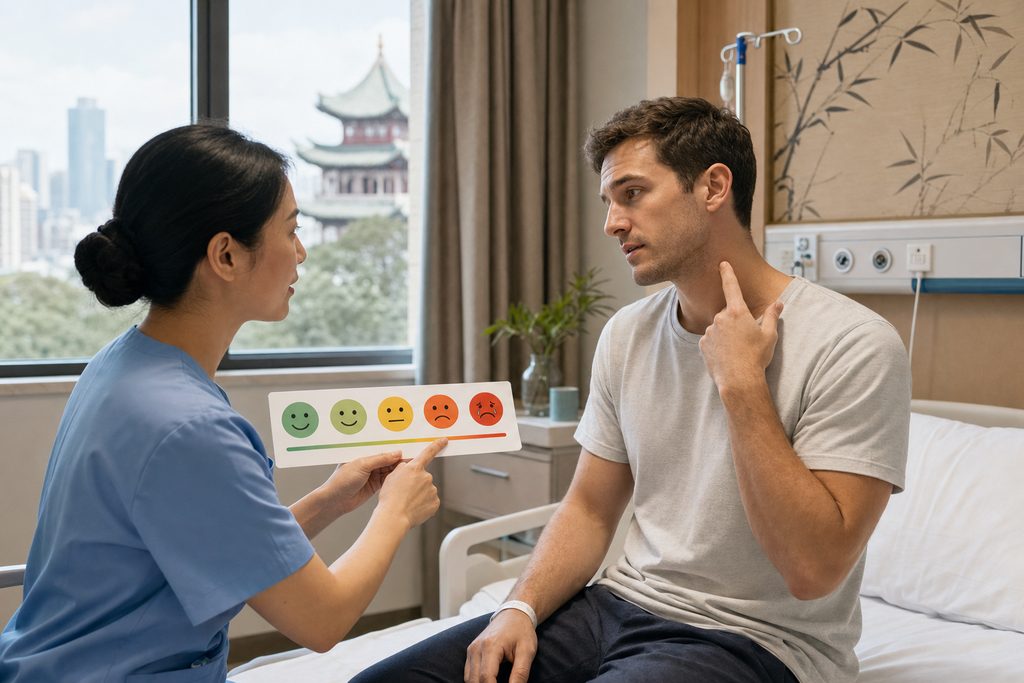
Have you ever wondered whether the chronic pain you have been living with could be treated effectively — and affordably — outside your home country? The answer is yes, and more international patients are looking to China each year. But which hospital in China offers pain management that is both world-class and accessible to foreigners? The short answer: several, concentrated in Beijing, Shanghai, and Guangzhou, with a mix of public hospital international departments and private international clinics.
Pain Management in China: The Short Answer
If you need a direct answer, here it is. Top-tier public hospitals with dedicated pain departments include Peking Union Medical College Hospital (PUMCH) in Beijing, Zhongshan Hospital Fudan University in Shanghai, and West China Hospital in Chengdu. For English-speaking care and direct insurance billing, private international hospitals like United Family Healthcare and Jiahui International Hospital offer pain management programs designed for expats and medical travelers.
But the real question behind “which hospital” is usually “what will this cost and how do I actually get in?” That is where things get more nuanced. Public hospital pain clinics in China do not typically accept overseas bookings for routine outpatient visits. You cannot simply email a top pain specialist and reserve a Tuesday morning slot. The system works differently — and understanding that difference is the key to a smooth experience.
Who This Is Right For — and Who It Isn’t
Pain management in China makes the most sense for a specific profile of patient. You should consider it if:
- You have a confirmed diagnosis of chronic pain — neuropathic pain, failed back surgery syndrome, complex regional pain syndrome, cancer-related pain, or severe osteoarthritis — and you have imaging and medical records to prove it.
- You have already tried conventional treatments at home and found them either too expensive or insufficiently effective.
- You are open to a multidisciplinary approach. Chinese pain departments often combine medication management, interventional procedures, physical therapy, and in some cases acupuncture or TCM adjuncts.
- You can commit to at least 5 to 10 days in China for initial evaluation and a first round of treatment.
Who should not pursue this? If your pain is undiagnosed and you have never had a proper workup, flying to China is premature. You need a diagnosis first. Also, if you are seeking high-dose opioid therapy as a primary treatment, you should know that opioid prescribing in China is significantly more restrictive than in the United States. Pain specialists here lean heavily on interventional procedures — nerve blocks, radiofrequency ablation, spinal cord stimulation trials — rather than long-term opioid management.
And if you need ongoing, weekly physical therapy for months, a short trip to China will not solve that. The value is in diagnosis refinement, advanced interventions, and a treatment plan you can continue at home.
The Options, Compared
You have three realistic pathways for pain management in China. They differ in cost, language support, and how much coordination you need to handle yourself.
| Option | Typical Cost Range | Language Support | Booking Reality | Best For |
|---|---|---|---|---|
| Public hospital, standard outpatient pain clinic | $30–$80 per visit | Minimal; Chinese required | Same-day queue; no advance overseas booking | Chinese-speaking patients or those with a local companion |
| Public hospital international/VIP department | $150–$400 per consultation | English-speaking coordinators | Advance booking possible through coordination services | International patients who want top specialists with English support |
| Private international hospital (United Family, Jiahui, Parkway, Raffles) | $200–$600 per consultation | Fully English-speaking staff | Direct online or phone booking | Expats, travelers, and patients who prioritize convenience and insurance billing |
Which column fits you? If you speak Chinese or have a trusted local contact, the standard public route is dramatically cheaper. If you do not, the international department route gives you access to the same senior specialists at roughly half the cost of a private international hospital — but with more paperwork and less hotel-like comfort. Private international hospitals are the easiest and most expensive. For most medical travelers, the public hospital international department is the sweet spot.
How to Find a Pain Specialist in Beijing and Shanghai
Here is what nobody tells you about finding a pain specialist in China: the hardest part is not identifying the doctor. It is navigating the registration system. Top pain specialists at PUMCH or Zhongshan Hospital see dozens of patients per half-day session. Their public clinic slots fill within minutes when released. The international department slots are separate and easier to secure, but they are not published on a simple English booking portal.
So how do you actually find a pain specialist in Beijing? You have three routes. One, contact the hospital’s international medical center directly by email or phone. Response times vary from 24 hours to a week. Two, use a medical coordination service that already has relationships with these departments — this is what we do at China Medical Services, matching your records to the right department before you travel. Three, arrive in China and attempt walk-in registration, which is realistic only if you have flexible time and Chinese language support.
For Shanghai specifically, the best hospital for chronic pain Shanghai patients tend to choose is Zhongshan Hospital Fudan University, whose pain department is among the most established in eastern China. Ruijin Hospital also runs a respected pain clinic with a strong focus on interventional procedures. Both have international departments that accept overseas patients with advance coordination.
What It Costs: Pain Management Clinic Cost China vs the West
Let us talk numbers, because this is where China becomes genuinely compelling. A single consultation with a pain specialist in a US academic hospital typically runs $400 to $800 without insurance. A nerve block procedure might cost $2,000 to $5,000. A spinal cord stimulation trial can exceed $15,000.
In China, the pain management clinic cost picture looks very different. A specialist consultation in a public hospital international department runs $150 to $400. Interventional procedures — epidural steroid injections, facet joint blocks, radiofrequency ablation — typically cost $800 to $3,000 depending on complexity. Even a spinal cord stimulation trial at a top public hospital generally falls between $8,000 and $15,000, often 40 to 60 percent less than US list prices.
What drives the variance? Hospital tier, procedure type, whether you need inpatient admission, and whether you go through a public international department or a private hospital. Private international hospitals charge roughly 1.5 to 2 times the public international department rate. None of these figures include travel, accommodation, or coordination fees.
Is Pain Management Treatment Available in China for Foreigners?
The direct answer is yes. Is pain management treatment available in China for international patients? Absolutely — but with conditions. You cannot simply show up at a public hospital pain clinic and expect to be seen that day without Chinese language skills. The system requires either local navigation or a coordinated pathway.
What you can access as a foreigner includes:
- Comprehensive pain assessment and diagnosis refinement
- Image-guided interventional procedures (nerve blocks, radiofrequency ablation, epidural injections)
- Spinal cord stimulation and intrathecal pump evaluation
- Multidisciplinary rehabilitation programs
- Acupuncture and TCM-based pain management, which many international patients specifically seek in China
What you cannot access easily: long-term opioid prescriptions, emergency pain treatment without prior records, and any procedure without a face-to-face consultation first. Chinese law and hospital policy require in-person evaluation before any intervention. No reputable hospital will schedule a nerve block based on emailed records alone.
Affordable Pain Management Programs Abroad: Why China Competes
Patients searching for affordable pain management programs abroad typically compare Thailand, India, Turkey, Mexico, and China. Each has strengths. Thailand and India offer strong private hospital networks with English-speaking staff. Turkey markets heavily to European patients. Mexico attracts Americans due to proximity.
China’s edge is different. It is not the cheapest option — India and Mexico often undercut Chinese prices. China’s advantage is the combination of high procedural volume, advanced imaging infrastructure, and the depth of its top-tier public hospitals. A pain specialist at PUMCH or West China Hospital may perform more interventional procedures in a month than a Western specialist does in a year. Volume drives skill. And the cost remains a fraction of US or European pricing.
One more factor: China’s pain management approach is genuinely multidisciplinary in a way that many Western systems have moved away from. It is common to see a pain physician, a rehabilitation specialist, and a TCM practitioner involved in the same patient’s care plan. That integrated model is hard to find elsewhere at this price point.
Practical Considerations: Visas, Records, Payment, and Follow-Up
If you are seriously considering pain treatment in China, here is what you need to prepare.
Medical records come first. Bring everything: imaging on CD or cloud link, radiology reports, procedure notes, medication lists, and any nerve conduction or EMG studies. Chinese pain specialists will want to review your full history before recommending anything. Incomplete records mean wasted time and repeat imaging.
Visa is next. For medical treatment in China, the S2 visa is the relevant short-stay category, typically issued for private affairs including medical treatment when supported by hospital documentation. Family members accompanying you also apply for S2. The M visa is for commercial and trade activities and is not appropriate for medical travel. Requirements change, so confirm with your nearest Chinese embassy or consulate before booking flights.
Payment works differently than you may expect. Public hospitals require prepayment — you deposit funds at admission and draw down as services are rendered. International departments accept major credit cards and sometimes international insurance. Private international hospitals like United Family bill insurance directly. If you use a coordination service, their fee is separate from hospital charges and is typically paid in advance.
Follow-up after returning home is the part most patients underplan. You will need a local physician willing to continue the treatment plan your Chinese specialist recommends. Ask for a written summary in English before you leave — most international departments provide this as standard. Video follow-up consultations are available at many hospitals for $100 to $300, which is a reasonable way to check in without flying back.
Frequently Asked Questions
You can book the consultation and evaluation before you arrive, but not the procedure itself. Chinese hospitals require an in-person assessment before any interventional pain treatment. What you can secure in advance is a specialist consultation slot, usually through the hospital’s international department or a coordination service. That consultation is the gateway to everything else.
For a typical international patient, expect $150 to $400 for the initial specialist consultation, $800 to $3,000 for most interventional procedures, and $8,000 to $15,000 for advanced neuromodulation like spinal cord stimulation trials. Private international hospitals run higher. These are out-of-pocket figures; insurance reimbursement depends entirely on your policy and whether the hospital can bill directly.
This is a fair concern and you should not ignore it. Chinese top-tier hospitals have complication rates comparable to Western academic centers, but no procedure is risk-free. What differs is the legal framework for malpractice claims, which is far less developed for foreign patients than in the US or Europe. Your practical protection is choosing a hospital with an established international department, getting everything documented in writing, and maintaining travel medical insurance that covers complications. Do not expect the same legal recourse you would have at home.
Not if you go through an international department or a private international hospital. These facilities have English-speaking coordinators and interpreters. In standard public clinics, you will struggle without Chinese. Even in international departments, bring a translated summary of your medical history — it speeds everything up and reduces the chance of miscommunication.
Yes, and this is one area where China offers something genuinely different. Many top public hospitals integrate acupuncture into pain management protocols, particularly for chronic musculoskeletal pain, headache, and post-surgical pain. It is typically used alongside conventional interventions, not as a replacement. If you are interested, ask specifically whether the hospital’s pain department includes TCM practitioners — not all do. Our guide to TCM hospitals in China covers this in more detail.
Your Next Step
Finding the right pain management hospital in China is not a Google search away. It requires matching your specific diagnosis to the right department, navigating a registration system built for locals, and preparing documentation that Chinese specialists will accept. That is the work we do. We are not a hospital, we do not diagnose or treat, and we do not promise outcomes. What we do is connect you with the right specialists, coordinate your booking through official hospital channels, and provide bilingual support on the ground so you are not navigating alone.
If you are weighing whether this is worth pursuing, start with a conversation. Tell us about your condition and what you have already tried. We will help you figure out whether China makes sense for your situation — and if it does, what the realistic next steps look like. You can reach us through our free consultation page. No pressure, no commitment. Just a clear-eyed assessment of your options.
Chronic pain narrows your world. The right treatment can widen it again. Whether that treatment is in China or closer to home, we hope you find it.
For more medical information and treatment options in China, visit chinamedservices.com (China Medical Services).
