Is the Pharmacy Marking Up Your Medication? A China Price Reality Check
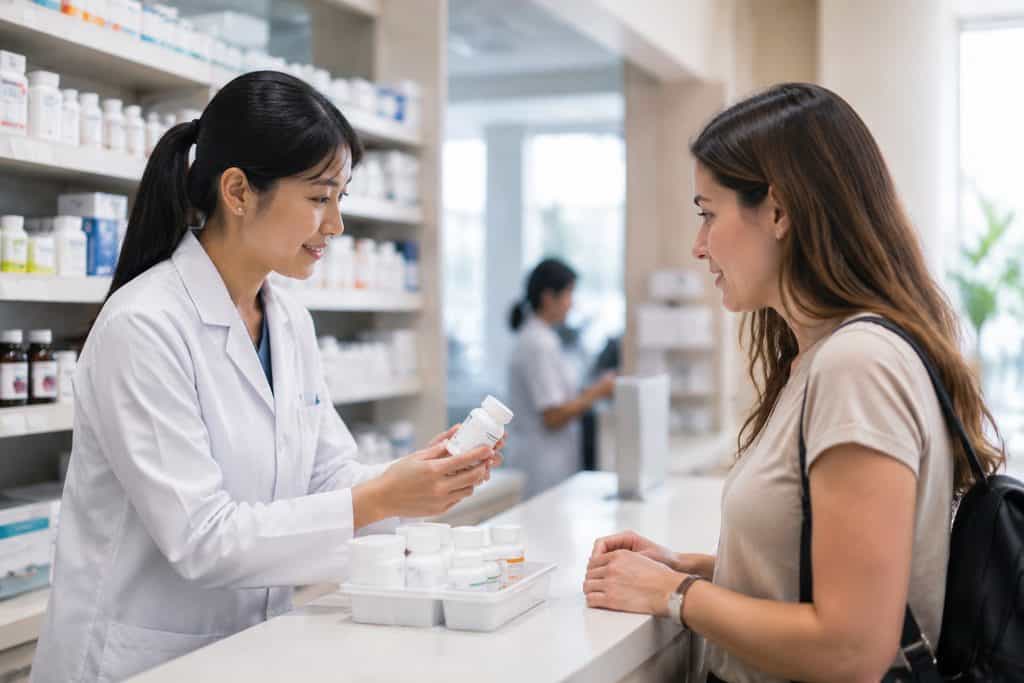
While an uninsured American patient can pay $450 for a month of insulin that costs $35 in Shanghai, the same inhaler priced at $280 in a London pharmacy might ring up at $62 in Beijing. That gap is not an accident. It is a pricing structure. And if you are traveling to China, you need to understand it before you walk into a pharmacy.
A prescription drug price comparison China shows something most Western patients do not expect: the markup is not always where you think it is. Hospital pharmacies in major Chinese cities often sell medications at or near the government-listed price. Private pharmacies, airport outlets, and tourist-facing shops can charge two to five times that amount. The question is not whether anyone marks up medication. The question is which counter you are standing at.
We work with international patients every day. Some arrive with a printed list of prescriptions and a budget. Others arrive with no plan and pay triple. This article explains the mechanics, the legal landscape, and the practical steps to get fair pricing.
How This Actually Works, Step by Step
You land in Shanghai with a prescription from your home doctor. You need a refill. Here is the sequence that determines what you pay.
First, you identify the exact drug. Not the brand name. The generic or chemical name. A brand-name statin might cost $80 at one counter. The identical generic, same molecule, same dose, might cost $9. Pharmacies count on you not knowing the difference.
Second, you choose the pharmacy type. A hospital pharmacy attached to a public tertiary hospital typically sells at the government reference price. A chain pharmacy in a shopping district may add 20–40%. A pharmacy inside a hotel, airport, or expat compound may add 100–300%. Same box. Different shelf.
Third, you present documentation. For non-controlled medications, a foreign prescription often works for consultation purposes, but Chinese pharmacies legally dispense based on their own licensed pharmacist’s assessment. For controlled substances, the rules are completely different — and much stricter.
Fourth, you pay. Pharmacies in China rarely negotiate. The price on the register is the price. But if you know the reference price before you walk in, you will immediately recognize an inflated quote and can walk to the next counter.
That is the step most travelers skip: checking the baseline price before they arrive.
Prescription Drug Price Comparison China: Where the Markup Actually Lives
China’s National Healthcare Security Administration publishes a centralized drug procurement list. It covers hundreds of essential medications with fixed reference prices. A hospital pharmacy in Shanghai must display these prices. A private pharmacy does not.
So the markup is not a single number. It is a spectrum.
| Pharmacy Type | Typical Markup vs. Reference Price | Example: 30 tablets of metformin 500mg |
|---|---|---|
| Public hospital pharmacy | 0–10% | $2–4 |
| Chain retail pharmacy | 20–50% | $5–8 |
| Private clinic pharmacy | 50–150% | $8–15 |
| Airport / hotel / tourist pharmacy | 100–300% | $15–30 |
That metformin example is not hypothetical. It reflects the price spread we have observed across Shanghai and Beijing outlets. The drug is identical. The location changes everything.
What about the question “is the pharmacy marking up your medication?” The honest answer: yes, many are. But public hospital pharmacies generally are not. And that distinction is the single most useful piece of information for a foreign patient in China.
Is It Legal to Buy Prescription Drugs in China as a Tourist?
Short answer: yes, with caveats.
China classifies drugs into prescription and over-the-counter categories. A foreign tourist can legally purchase many prescription medications from a licensed pharmacy, provided the pharmacist reviews your situation and the drug is not on the controlled substance list. But “legal” does not mean “automatic.”
Controlled medications — opioids, certain sedatives, stimulants, some psychiatric drugs — require a Chinese physician’s prescription. Your foreign prescription will not be honored for these. You need to see a doctor at a licensed Chinese hospital, obtain a local prescription, and fill it at a hospital pharmacy.
Some travelers assume they can bring a six-month supply from home. That assumption can create problems at customs. China permits a reasonable personal-use quantity, generally up to 30 days for most medications, with a doctor’s letter recommended. Larger quantities may be held or require documentation.
So the legal path for a tourist is: bring a short-term supply, carry your prescription and a doctor’s letter, and for anything controlled or long-term, plan to see a Chinese physician.
How Much Do Medications Cost in Shanghai Hospitals?
Shanghai public hospital pharmacies operate on thin margins. The city participates in national volume-based procurement, which has driven prices down dramatically since 2019. A month of generic atorvastatin can cost under $3. A month of amlodipine for blood pressure, under $2. Insulin analogs that cost $300 in the U.S. can cost $30–60 in a Shanghai hospital pharmacy.
But there is a catch. Hospital pharmacies in Shanghai primarily serve patients who have registered and seen a doctor at that hospital. You cannot simply walk in off the street and buy whatever you want. You first register, pay a consultation fee (typically $10–40 for a general outpatient visit), see a physician, and receive a local prescription. Then you fill it at the hospital pharmacy.
That process takes time. You need your passport, a hospital medical card, and often help with Chinese-language forms. Without Chinese ability, the registration counter alone can take an hour.
This is where a bilingual companion changes the experience. We have walked patients through registration at major Shanghai hospitals in under 20 minutes — the same process that takes a solo traveler two hours. The medication price is the same. The time cost is not.
A Realistic Timeline
You do not arrive in China and refill a prescription in 30 minutes. Here is what actually happens.
| Stage | What Happens | Realistic Duration |
|---|---|---|
| Day 0 | You decide which medication you need and whether it is controlled | 1–2 hours research |
| Day 1 | You arrive and locate a hospital or pharmacy. If hospital: passport, registration, consultation | 2–4 hours for a public hospital visit |
| Day 1–2 | You receive a local prescription and fill it at the hospital pharmacy | Same day for non-controlled; 1–3 days if a specialist consult is required |
| Day 3–7 | For controlled substances: additional documentation, possible specialist review | Up to 1 week |
| Before departure | You verify export/carry rules for your home country | 1–2 days |
People forget the consultation step. In China, you cannot buy most prescription medications without seeing a physician first. That is not a markup tactic. It is the law. But it adds time you need to plan for.
What Can Go Wrong — and What Happens Then
You brought your foreign prescription. The pharmacy says no. This happens frequently with controlled substances and injectables. The recourse is not to argue. The recourse is to see a Chinese physician, explain your condition, and obtain a local prescription. That consultation costs $10–40 and often resolves the issue the same day.
You paid $80 for a drug that should cost $20. You bought it at an airport pharmacy. The recourse is limited. Chinese pharmacies do not price-match. You can return unopened medication in some cases, but do not count on it. The lesson is prevention: know the reference price before you buy.
You cannot find your exact brand. This is common. China’s formulary favors domestic generics. The active ingredient is usually identical, but the brand name differs. A pharmacist can help you identify the generic equivalent. If you need a specific brand, you may need to visit a private international pharmacy, where prices run higher.
You need a controlled medication and your trip is short. This is the hardest scenario. Some controlled drugs require a specialist prescription, and specialist appointments at top hospitals can take days to weeks. We advise patients to handle controlled medication refills in their home country whenever possible, or to plan a longer stay with a confirmed appointment.
Can I Buy My Prescription Medication Cheaper in Beijing?
Beijing and Shanghai have similar pricing structures. Hospital pharmacies in both cities follow the national reference list. Retail pharmacy markups are comparable. The difference is not the city. The difference is the counter.
But Beijing has more top-tier public hospitals than any other city — 21 in the Fudan Top 100 list. That means more hospital pharmacies with reference pricing, and more competition. If you are flexible about which hospital you visit, Beijing gives you more options for finding the same drug at the base price.
What about the question “can I buy my prescription medication cheaper in Beijing?” The answer is yes, if you buy at a public hospital pharmacy and use the generic version. The savings versus U.S. cash prices can be 70–90% for common chronic medications. Versus Western European prices, 40–70%.
But those savings assume you do the legwork. Register at the hospital. See the doctor. Fill the prescription. If you instead walk into a pharmacy near Tiananmen Square, you may pay Western prices or more.
International Pharmacy Markup vs China Pharmacy Prices: The Structural Gap
Why does the gap exist at all? Three structural reasons.
First, China’s national procurement program negotiates drug prices directly with manufacturers. The government buys in volume — hundreds of millions of doses — and sets a reference price. No individual pharmacy can mark up beyond that without losing customers to the hospital down the street.
Second, public hospital pharmacies are not profit centers. They are service functions. A Chinese public hospital earns revenue from procedures and consultations, not from drug margins. The incentive to inflate medication prices simply does not exist in that setting.
Third, Western pharmacy pricing reflects a different system. In the U.S., pharmacy benefit managers, insurance formularies, and manufacturer rebates create a web of list prices and negotiated prices. The cash price — what an uninsured patient pays — is often the highest price in the system. That is not markup. That is architecture.
So an international pharmacy markup vs China pharmacy prices comparison is not about Chinese pharmacies being cheap. It is about Western cash prices being structurally high, and Chinese hospital pharmacies being structurally restrained.
How to Avoid Pharmacy Tourist Markup in China
Five rules. Follow them and you will not overpay.
Rule 1: Buy at hospital pharmacies. This is the single most effective step. Public hospital pharmacies in Beijing, Shanghai, and other major cities sell at or near the reference price. Find a hospital, register, see a doctor, fill the prescription.
Rule 2: Know the generic name. Write down the chemical name of your medication before you travel. Amlodipine, not Norvasc. Atorvastatin, not Lipitor. The generic is what the pharmacist will recognize and what the reference price covers.
Rule 3: Avoid airport and hotel pharmacies. They exist for convenience, not value. The markup is highest exactly where travelers are most likely to shop. Walk past them.
Rule 4: Carry documentation. A doctor’s letter, your original prescription, and a translation of your diagnosis. Chinese pharmacists are more willing to dispense when they understand your medical history.
Rule 5: Ask for the receipt. The receipt shows the actual price breakdown. If a pharmacy refuses to provide one, leave. Legitimate pharmacies always issue receipts.
Practical Considerations: Records, Visa, Payment, and Follow-Up
You need your passport for any hospital registration or pharmacy purchase of prescription medication. Bring it. A photocopy is not sufficient for first-time registration at a public hospital.
For visa purposes, medical treatment falls under the S2 category, not the M visa. If your trip is specifically to manage a medical condition or refill a critical prescription, apply for the S2 visa with supporting documentation from a Chinese hospital. Our team can guide you through the document requirements for medical coordination in China.
Payment is straightforward. Hospital pharmacies accept WeChat Pay, Alipay, and international credit cards at larger facilities. Smaller pharmacies may be cash-only or mobile-payment-only. Carry some RMB.
Language is the biggest practical barrier. Registration forms, physician consultations, and pharmacy counters operate in Chinese. Without language help, a simple refill can take half a day. With a bilingual companion, the same task takes an hour. That is not a luxury. It is logistics.
Follow-up at home matters too. If a Chinese physician prescribes a medication you will continue taking after you leave, ask for a written summary and the generic name. Your home doctor will need that to continue the prescription legally.
Frequently Asked Questions
Yes, for most non-controlled medications. You need to see a Chinese physician at a licensed hospital for a local prescription. Foreign prescriptions are not directly honored for controlled substances.
Common chronic medications cost 70–90% less at Shanghai public hospital pharmacies than U.S. cash prices. A month of generic atorvastatin can cost under $3. The savings require a hospital visit and a local prescription.
No. Prescription medications in China require a physician consultation. You can buy over-the-counter drugs without one, but anything classified as prescription-only requires a local prescription.
Buy at public hospital pharmacies, know the generic name of your drug, avoid airport and hotel outlets, carry documentation, and compare prices before you buy. The markup lives in convenience locations.
See a Chinese physician promptly. Controlled substances require a local prescription, often from a specialist. This can take days. Plan ahead and bring enough medication for your trip whenever possible.
Your Next Step
The pharmacy markup question has a clear answer: it depends entirely on where you buy. Public hospital pharmacies in China sell at government reference prices. Tourist-facing outlets mark up aggressively. The difference is structural, not random.
Our team at China Medical Services helps international patients navigate hospital registration, physician consultations, and pharmacy access across 340+ top-ranked hospitals in 37 cities. We do not sell medication. We make sure you know where to buy it at the right price, with the right documentation, without losing a day to language barriers. If you are planning a trip and want to understand your medication options before you arrive, start with a free consultation.
For more medical information and treatment options in China, visit chinamedservices.com (China Medical Services).
