China Second Opinion: Is Flying for a Cancer Review Worth It?
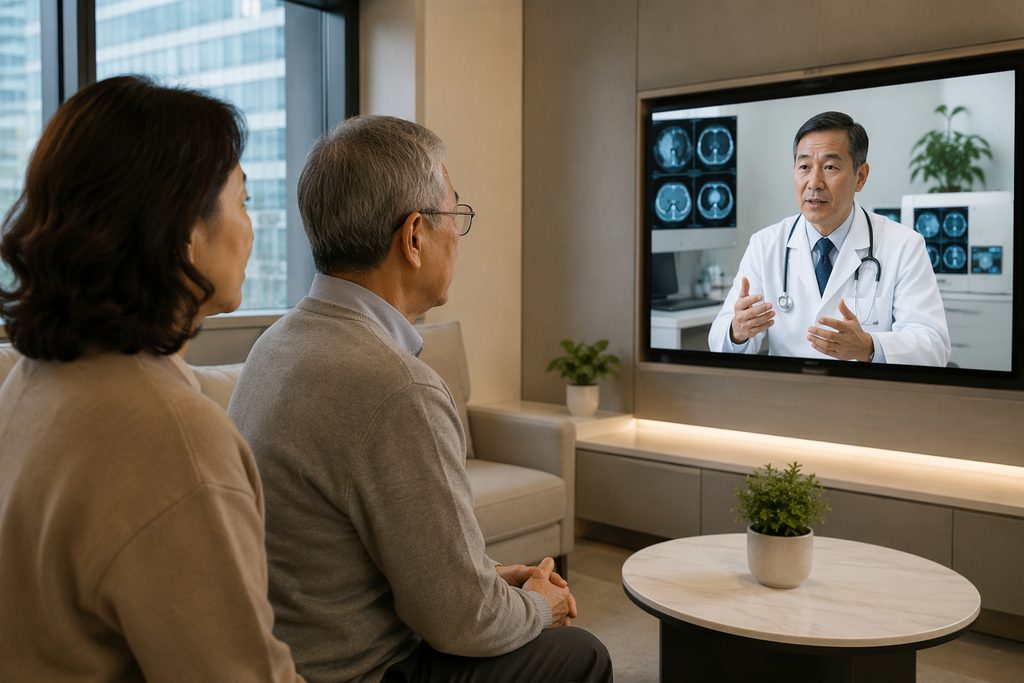
While patients in Canada wait a median 27.4 weeks between specialist referral and treatment, a foreign patient can secure a written second opinion from a Fudan-ranked Chinese oncology department within 5 to 7 working days. The cost difference is just as stark — a comprehensive oncology review in Shanghai typically runs $300 to $500, versus $2,000 to $5,000 for an equivalent academic-center review in the United States. Those two numbers explain why thousands of international patients now look east for answers.
Our team coordinates these reviews every week. We have watched patients arrive anxious and leave with clarity. This guide walks through the real decision — not the brochure version. You will learn what a Chinese second opinion actually includes, what it costs, how safe the process is, and whether it makes sense for your specific situation.
Key Takeaways
- A written second opinion from a Fudan-ranked Chinese oncology department costs $300–$500 and is delivered within 5–7 working days, compared to $2,000–$5,000 and 2–4 weeks in the US.
- China’s top 100 hospitals perform surgical volumes that dwarf Western centers — Fuwai Hospital alone completes over 14,000 cardiac surgeries annually.
- You cannot book a public hospital outpatient appointment from overseas; the international department or VIP channel is the only route for pre-arranged specialist reviews.
- An S2 visa is the correct category for medical treatment in China — the M visa is strictly for commercial and trade activities.
The Problem: When Your Diagnosis Feels Like a Dead End
A cancer diagnosis lands like a door slamming. The first treatment plan you receive may be the only one you ever hear. Yet studies show that second opinions change the diagnosis in up to 15% of oncology cases and alter the treatment plan in roughly 30%. That is not a small margin — it is the difference between the right protocol and the wrong one.
Getting that second look in the US or Europe often means waiting. The median time from referral to oncology consultation in Canada stretched to 27.4 weeks in 2023, according to the Fraser Institute. In the UK, the NHS target of 62 days from urgent referral to first treatment was missed for over a third of patients in 2023–2024. Meanwhile the disease does not pause.
Cost adds another wall. A second opinion at a major US cancer center typically runs $2,000 to $5,000 when you factor in pathology review, imaging re-reads, and the consultation itself. Many insurers refuse to cover out-of-network reviews. Patients drain savings accounts just to confirm what they already know — or to find out the first plan was wrong.
Why a Chinese Second Opinion Delivers Results
China’s top hospitals operate at a scale that most Western centers cannot match. That volume translates into pattern recognition — the kind that only comes from seeing thousands of cases. And the price structure makes a second opinion accessible rather than aspirational.
Clinical Volume Sharpens Diagnostic Accuracy
Fuwai Hospital in Beijing performs over 14,000 cardiac surgeries every year — the highest volume of any heart center on the planet. Zhongshan Hospital in Shanghai handles more than 100,000 interventional procedures annually. These numbers matter for oncology too. A senior oncologist at a Fudan Top 100 hospital reviews hundreds of complex cases each month, not dozens. Pattern recognition at that scale catches things that lower-volume practices miss.
Second Opinion Cancer Treatment China Cost Is Structurally Lower
Why does the same review cost $400 in Shanghai and $3,000 in Boston? Labor costs, administrative overhead, and malpractice insurance premiums differ by an order of magnitude. Chinese public hospitals operate on thin margins and enormous patient volumes. The international departments charge more than the standard public channel — usually 1.5 to 2 times — but that still lands far below Western prices. A written second opinion from a top-tier Chinese specialist runs $300 to $500. A video consultation with a senior oncologist at an international department costs $500 to $800.
Ranked Hospitals, Not Unknown Entities
You are not flying blind. The Fudan University hospital rankings — China’s equivalent of US News hospital rankings — evaluate over 3,000 hospitals and publish a Top 100 list divided into five tiers, from A++++ down to A. These institutions sit in the top 5% of China’s 35,000+ hospitals. Many also hold JCI accreditation, the same international standard used by hospitals in Singapore, Germany, and the US. When we coordinate a review, we work with departments that appear on the Fudan specialty reputation lists — the 45 subspecialty rankings that name China’s top 10 departments for oncology, cardiac surgery, orthopedics, and more.
How the Second Opinion Process Actually Works
Understanding the exact workflow removes most of the anxiety. Here is what happens, step by step, when you request a written oncology second opinion through an international department.
Day 1–2: Record submission. You send your existing medical records — pathology reports, imaging files (DICOM format preferred), surgical notes, current treatment protocol, and a brief summary of your history. The hospital’s international department reviews the file for completeness. Missing records are the most common cause of delay, so we help patients compile everything before submission.
Day 3–4: Specialist assignment. The department assigns your case to a senior specialist in the relevant subspecialty. For a lung cancer review, that means a thoracic oncologist, not a general oncologist. The specialist re-reads your imaging and pathology slides if you send the physical samples or high-resolution scans.
Day 5–7: Written opinion delivered. You receive a written report in English that includes the specialist’s assessment, treatment recommendations, and specific questions answered. This document is for reference only — it is not a prescription and does not replace in-person evaluation. But it gives you a second expert view to compare against your current plan.
Practical tip: Request a video consultation instead of a written-only review if you want to ask follow-up questions. The $500–$800 fee for a top-specialist video consult includes a live conversation where you can probe the reasoning behind each recommendation.
Is It Safe to Get a Second Opinion in China?
Check the Fudan University hospital rankings — the Top 100 list is published annually and publicly available. Verify JCI accreditation status on the Joint Commission International website. Confirm the hospital’s international department exists and communicates through official hospital email domains. We only coordinate with hospitals that appear on the Fudan list or hold JCI accreditation, and we verify every department before recommending it.
No. The remote review is a standalone service. You receive the written report and decide what to do with it. Many patients use the Chinese opinion to negotiate with their home-country oncologist or to seek a third opinion elsewhere. Only a minority proceed to treatment in China. The decision remains entirely yours.
Rarely. Most Western insurers do not cover out-of-network international second opinions. Some international health insurance plans — those designed for expatriates or global coverage — do include second opinion benefits. Check your policy’s fine print for “international second opinion” or “global medical review” coverage. If your insurer requires a US-based second opinion service, the Chinese review may not qualify for reimbursement.
Five to seven working days for a written second opinion, assuming your records are complete and well-organized. Video consultations typically take 7 to 10 working days to schedule, since they require coordinating a live time slot across time zones. MDT reviews take 2 to 3 weeks. The biggest variable is record completeness — missing pathology slides or low-resolution imaging scans cause most delays.
Your Next Step
A second opinion from a Fudan-ranked Chinese oncology department costs less than a routine MRI in the US and arrives within a week. That asymmetry is worth understanding, whether or not you ultimately travel to China. We are China Medical Services — a coordination team that connects international patients with top-tier Chinese hospitals for second opinions, video consultations, and treatment coordination. We are not a hospital and we do not provide diagnoses. If you want to explore whether a Chinese second opinion makes sense for your case, send us your records and a brief summary. We will tell you honestly whether this path is worth pursuing for your specific situation — and if it is not, we will say so plainly.
Frequently Asked Questions
Yes. The hospitals used for international patients are JCI-accredited and follow the same international safety standards as top hospitals in the US and Europe. Surgical teams perform high volumes of procedures — often more than their Western counterparts — which studies show leads to better outcomes.
Costs vary by procedure and hospital, but international patients typically save 40-80% compared to US prices — even when factoring in travel and accommodation. A consultation with our team will give you an exact, all-inclusive quote with no hidden fees.
Send us your existing medical reports to get started. We handle everything from hospital selection and appointment scheduling to visa assistance and post-operative recovery planning. Your medical records are reviewed by the specialist before you even book a flight.
For more medical information and treatment options in China, visit chinamedservices.com (China Medical Services).
