Chinese Dental Implant Disclosure: What Your Surgeon Needs Before Operating
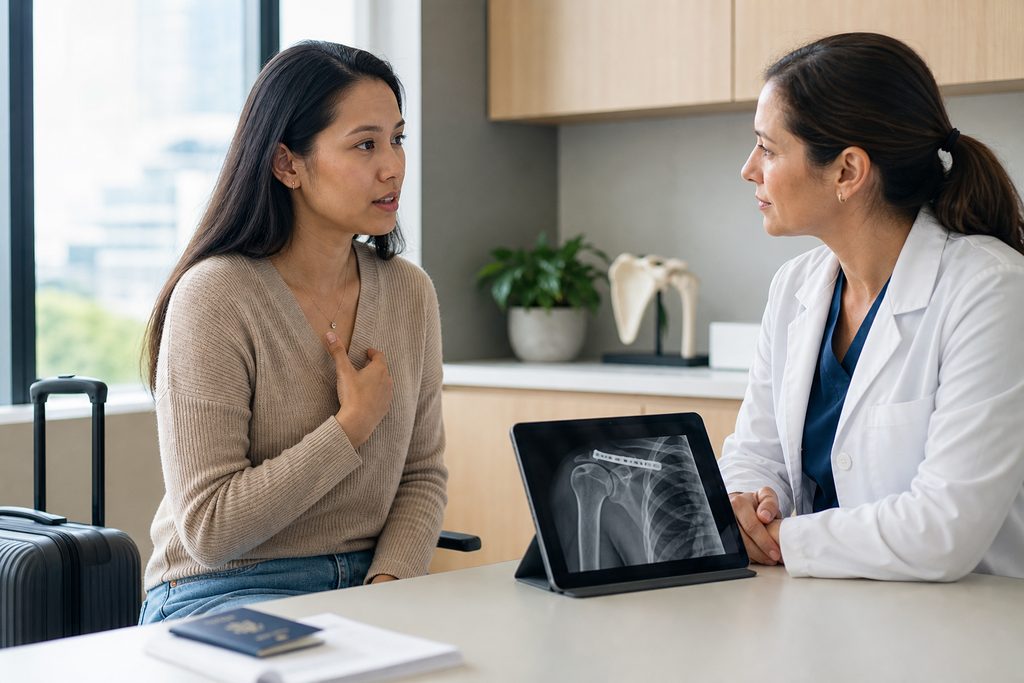
According to the International Society of Oral Implantology, over 4 million dental implants are placed annually in China, a number that has grown 30% year-over-year since 2020. A significant portion of those patients eventually return home and need follow-up care. If you are one of them, the single most important thing you can do before any future dental procedure is disclose the origin and specifications of your implant. Not doing so creates clinical risk that no surgeon wants to walk into blind.
How This Actually Works, Step by Step
You are sitting in a dentist’s chair in Chicago, London, or Sydney. The surgeon asks about the implant in your jaw. You know it was placed in Shanghai, but the brand name escapes you. Here is what needs to happen next, and in what order.
Step 1: Retrieve your implant passport. In China, reputable hospitals and clinics issue a small card or document after implant surgery. It lists the manufacturer, the implant line, the diameter, the length, and the lot number. This is sometimes called an implant passport or implant ID card. If you did not receive one, the hospital that placed it can issue a duplicate from your medical record. Our team regularly retrieves these on behalf of former patients — it usually takes 3 to 5 business days once the hospital confirms your identity.
Step 2: Identify the prosthetic components. The implant fixture itself is only part of the equation. The abutment and the crown sitting on top may be from a different manufacturer. Your new surgeon needs to know both. A periapical X-ray can reveal the implant-abutment connection type, but knowing the brand eliminates guesswork.
Step 3: Send the records ahead of your appointment. Do not wait until the day of surgery. Email the implant passport, any post-placement X-rays, and the discharge summary to your new surgeon at least two weeks before. This gives the team time to source compatible drivers, torque wrenches, and any brand-specific components they might need if the implant needs to be accessed or removed.
Step 4: Have the conversation. Tell the surgeon plainly: “My implant was placed in China. Here is the brand, the size, and the date it was placed.” That sentence alone changes the clinical plan from exploratory to precise.
Why Implant Brand Transparency Changes Your Surgical Outcome
A dental implant is not a generic screw. Different manufacturers use different hex connections, different thread pitches, and different platform diameters. Straumann implants use a Morse taper connection. Nobel Biocare uses an internal conical connection with a tri-channel. Osstem, one of the most commonly placed implant brands in China, uses an internal hex with an 11-degree taper. If your new surgeon assumes one and gets another, the torque wrench will not seat. Worse, the wrong driver can strip the internal connection. Then a straightforward crown replacement becomes a surgical implant removal.
Chinese hospitals place a wide range of implant brands. Some are globally recognized — Straumann, Nobel Biocare, Dentsply Sirona. Others are high-quality domestic brands that have strong clinical data but limited distribution in Western markets. Brands like WEGO, Trausim, and Bicon have significant market share in China. They are safe, well-engineered implants. But your surgeon in the US or UK may never have seen one. That does not make the implant dangerous. It makes disclosure essential. The surgeon needs to order the correct parts.
If your implant is a brand your surgeon does not recognize, do not panic. Most major Chinese implant manufacturers provide IFU documents and component catalogs in English. Our team can source the exact surgical manual and prosthetic catalog for your implant and forward it to your dentist. This is a routine part of what we do for returning patients.
A Realistic Timeline
| Stage | What Happens | Typical Duration |
|---|---|---|
| Week 1 | You contact the original Chinese hospital or clinic. Request implant passport, surgical notes, and post-op X-rays. If you cannot reach them directly, a service like ours can act as your proxy. | 3–7 days |
| Week 2–3 | Documents are translated if needed. Implant brand and component list are identified. You send the complete packet to your new surgeon. | 5–10 days |
| Week 4 | Your new surgeon reviews the records. If a specific driver or prosthetic part is needed, the practice orders it. Some components ship from the manufacturer’s regional warehouse; others may need to come from Asia. | 1–3 weeks for part delivery |
| Week 5–7 | You attend the consultation. The surgeon examines the implant clinically and radiographically. A treatment plan is confirmed. | 1 appointment |
| Week 6–10 | Surgery or restoration takes place. If the implant is healthy and only the crown needs replacement, turnaround is faster. If the implant itself has failed, removal and grafting may extend the timeline by months. | 1–3 appointments |
This timeline assumes no complications. A failed implant that requires bone grafting and a new implant placement can stretch the process to 6 to 9 months. That is not a China-specific issue — it is the biology of osseointegration. But the retrieval of accurate records from the original treating hospital is the step most patients underestimate. Start early.
What Can Go Wrong — and What Happens Then
The worst-case scenario is not that your surgeon refuses to work on a Chinese implant. It is that they attempt to work on it without knowing what it is. Stripping the internal hex of an implant during crown removal is a real complication. It happens when a clinician uses a driver that is close but not exact — a 1.25mm hex on a 1.27mm connection. The difference is 0.02mm. That is enough to destroy the implant. Once the internal connection is stripped, the implant usually must be removed surgically. That means trephine drilling, bone loss, and a new implant months later.
Another failure mode: mismatched prosthetic components. If the original abutment is damaged and the surgeon orders a replacement from a different system, the fit will be imperfect. A micro-gap between the abutment and implant invites bacterial infiltration. Peri-implantitis sets in. Bone recedes. The implant fails. All of this is preventable with one document: the implant passport.
What if you have lost the implant passport and the original hospital has closed? This happens. Clinics open and close. Records go missing. In that case, your new surgeon can take a CBCT scan and a periapical X-ray. Some implant brands have distinctive radiographic signatures — the thread pattern, the apex shape, the connection geometry. An experienced oral surgeon can narrow it down to two or three possibilities. From there, the practice can order a few likely drivers and test them intraorally. It is not ideal. It adds time and cost. But it is a viable fallback when records are truly lost.
How to Evaluate Implant Quality and Hospital Choice Before You Go
Many of the patients we work with are planning implant treatment in China and want to avoid problems later. The question is not simply “is Chinese dental implant safe?” — it is about which implant, placed by whom, in what setting.
China’s top dental hospitals operate at volumes that are hard to comprehend. The stomatology department at Shanghai Ninth People’s Hospital, affiliated with Shanghai Jiao Tong University, places thousands of implants annually. The implantology department at Peking University School of Stomatology is another high-volume center. These institutions use the same implant systems you would find in a top-tier US or European practice. They also participate in international clinical research. A Straumann implant placed at Shanghai Ninth is the same Straumann implant placed in Zurich. The difference is the cost.
That brings us to the numbers patients actually search for. The dental implant cost China vs USA gap is substantial. In the United States, a single implant with a crown ranges from $3,000 to $6,000 depending on the region and the need for bone grafting. At a top-tier Chinese public hospital, the same procedure using a comparable implant system typically costs between $800 and $1,800. That includes the fixture, the abutment, and the crown. Even at a private international clinic in Shanghai or Beijing — where English-speaking staff and JCI accreditation are standard — the cost runs $1,500 to $2,800. That is still meaningfully below US pricing.
But cost is not the only factor. The implant brand matters for future compatibility. If you plan to return to your home country, choose an implant system your local dentist can service. Straumann, Nobel Biocare, and Dentsply Sirona are globally supported. Some Chinese domestic brands, while clinically excellent, have no distribution in North America or Europe. That does not rule them out — but it does mean you must keep your implant passport, and you must be prepared to help your future dentist source components. We have helped patients do exactly that. It is manageable, but it requires organization.
For patients specifically looking at medical tourism implant packages China, the landscape varies widely. Some agencies offer all-inclusive packages that bundle the implant procedure with flights, hotels, and translation. Prices for these packages start from around $1,200 for a single implant and can exceed $4,000 for full-arch restorations. The key is verifying which hospital or clinic is actually performing the surgery. A package sold by a tourism company is only as good as the dentist placing the implant. Ask for the hospital name, the implant brand, and the surgeon’s credentials. Then verify all three independently.
If you are asking yourself can I request a specific implant brand for surgery abroad, the answer is yes — within reason. Most Chinese hospitals stock two or three major implant systems. If you want Straumann, say so during the consultation. The hospital will either accommodate the request or explain why another system is better suited to your anatomy. You have the right to choose. And you should exercise that right with your long-term dental care in mind.
Practical Considerations: Records, Visa, and Follow-Up
If you are traveling to China for implant treatment, get your records organized from day one. Before you leave the hospital, ask for the implant passport, the surgical report, a copy of the post-operative X-ray, and the discharge instructions — all in English if possible. If the hospital cannot provide English translations, we can arrange certified medical translation as part of our coordination service. Store digital copies in a cloud folder. Give a copy to your dentist back home. This is not paranoia. It is continuity of care.
Visa logistics matter. Patients traveling to China for dental treatment typically use an S2 short-stay visa, which covers private medical affairs. The hospital will provide an invitation letter and treatment confirmation letter to support the visa application. Processing time varies by embassy, but 2 to 4 weeks is a realistic window. Do not book a surgery date before the visa is in hand.
Insurance is another practical point. Most international health insurance plans do not cover dental implants, which are classified as elective. However, some plans cover implant treatment if it is related to trauma or congenital defects. Check your policy. If you are paying out of pocket, Chinese hospitals generally require a deposit upfront, with the balance settled before discharge. Private international hospitals in China may accept direct billing from certain insurers — our private hospital listings include insurance compatibility details.
After you return home, schedule a follow-up with your local dentist within 4 weeks. Bring the implant passport. Your dentist will take a baseline X-ray and check the soft tissue. This is also the moment to ask: “If this implant ever needs work, can you service it?” If the answer is no because the brand is unfamiliar, you have time to solve that problem now — not when the crown cracks on a Saturday night.
Frequently Asked Questions
Be direct and specific. Say: “I am considering implant treatment in China. Can you tell me which implant brands you are comfortable servicing long-term?” Most dentists will give you a short list — usually Straumann, Nobel Biocare, or Dentsply Sirona. Take that list to your consultation in China and request one of those brands. This keeps your dentist in the loop and ensures future compatibility.
When placed at a top-tier Chinese hospital using a globally recognized implant system, a Chinese dental implant is as safe as one placed anywhere else. The implant itself is the same product. The variable is surgical skill and infection control. Choose a hospital with a high-volume implantology department — ideally one ranked in China’s national stomatology rankings. The major teaching hospitals in Shanghai, Beijing, and Guangzhou meet international standards.
Implant failure is not country-specific. Early failure happens within the first few months and is usually due to failed osseointegration. Late failure occurs years later and is often due to peri-implantitis. If your implant fails, a local oral surgeon can remove it and place a new one — provided they know the implant system. If the original implant was a brand your local surgeon does not recognize, removal is still straightforward. Placing the new one is independent of the old system. The key is having the original records so the surgeon understands the bone anatomy and any grafting that was done.
Shanghai Ninth People’s Hospital consistently ranks among China’s top institutions for stomatology and oral implantology. Its Department of Oral and Maxillofacial Implantology handles an exceptionally high surgical volume and uses major international implant systems. For English-speaking patients who prefer a private setting, Jiahui International Hospital and ParkwayHealth in Shanghai offer implant services with Western-trained dentists and direct insurance billing. The right choice depends on your budget and language needs. Our team can help you compare options — our Shanghai hospital guide has more detail on each institution.
Your Next Step
Disclosing your implant history to a future surgeon is not a courtesy. It is a clinical necessity. Whether you are planning implant treatment in China or already have one in your jaw, having the right records in the right hands prevents complications that are entirely avoidable.
Our team at China Medical Services helps international patients retrieve implant records from Chinese hospitals, arrange consultations with top-ranked stomatology departments, and coordinate treatment logistics — from visa documentation to bilingual accompaniment. We do not place implants. We do not give medical advice. We make sure you have the information and access you need to make your own decisions. If you need help tracking down an implant passport or planning treatment, reach out for a free consultation. We will tell you honestly what is possible and what it will take.
For more medical information and treatment options in China, visit chinamedservices.com (China Medical Services).
