Chinese Hospital Visiting Hours: What Family Presence Rules Actually Mean for International Patients
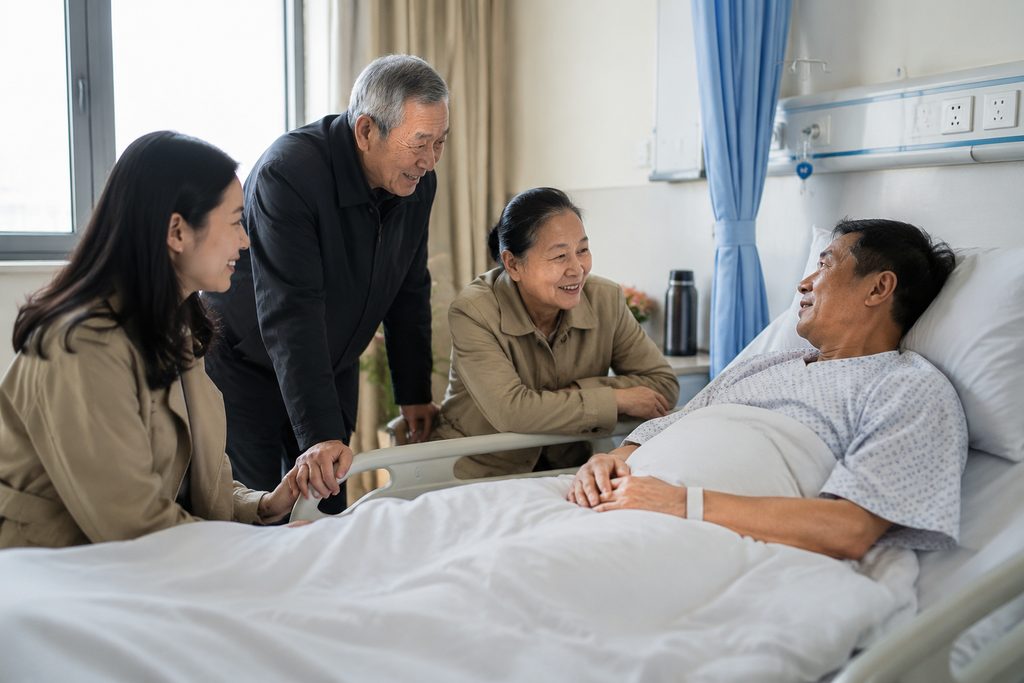
According to a 2023 report by the National Health Commission, China’s top-tier hospitals handle over 2.5 billion outpatient visits annually. For international patients, the question isn’t just about treatment quality. It’s about whether family can be there. The short answer: yes, family can visit patients in Chinese hospitals. But the rules are nothing like what you’re used to at home.
The reality shifts dramatically depending on whether you’re in a public ward, a VIP international department, or an ICU. Some units allow one family member to stay overnight. Others restrict visits to 30-minute windows twice a day. And the ICU? That’s a completely different conversation.
We coordinate hospital access for international families across China’s 37-city network. We’ve seen the confusion firsthand. A daughter flies 14 hours expecting to sleep in her father’s room. She arrives to find visiting hours ended at 7 PM sharp. No exceptions. That’s the kind of surprise this article prevents.
Hospital Visiting Hours China for Foreigners: The Short Answer
Public hospital wards typically enforce strict visiting hours: 3:00 PM to 7:00 PM, sometimes with a morning window from 11:00 AM to 1:00 PM. One visitor per patient at a time. Masks required. No children under 12. These rules apply equally to Chinese families and international visitors.
But here’s where it gets interesting for foreigners.
The international departments and VIP wards at hospitals like Peking Union Medical College Hospital and Zhongshan Hospital Fudan University operate on a different set of rules entirely. These units were built for patients who expect family involvement. Visiting hours stretch longer. Overnight stays become possible. The tradeoff? Cost. VIP ward rates run 1.5 to 2 times higher than standard rooms.
The real question isn’t “can family visit patients in Chinese hospitals.” It’s “which part of the hospital are you in, and what did you arrange before arrival?”
Who Gets Family Access — and Who Gets Turned Away at the Door
Public ward access is straightforward but inflexible. You show up during visiting hours with your visitor pass. You leave when the nurses tell you to leave. There is no negotiation.
International department access works differently. These units recognize that family presence aids recovery — especially for patients who don’t speak Mandarin. They accommodate longer visits. Some allow a designated family member to stay in the room overnight on a fold-out cot.
Who should expect restricted access:
- Families of patients in general public wards — visiting hours are firm and enforced by nursing staff
- Anyone hoping to bring young children into a ward — most hospitals prohibit visitors under 12, sometimes under 16
- Families expecting to rotate multiple visitors throughout the day — the one-visitor-at-a-time rule is standard
- Relatives arriving outside posted hours without prior arrangement — security will turn you away
Who typically gets more flexible access:
- Patients admitted through international medical centers or VIP departments
- Families who’ve arranged a bilingual medical companion — the companion coordinates with nursing staff on access timing
- Post-surgical patients in private rooms where one overnight caregiver is permitted
- End-of-life situations, where hospitals almost universally relax restrictions
This isn’t about favoritism. It’s about ward design. A six-bed public room simply cannot accommodate six family members plus six patients plus nursing staff. A private VIP suite can.
The Options, Compared
| Feature | Public General Ward | International/VIP Department | Private International Hospital |
|---|---|---|---|
| Visiting hours | 3–7 PM (some add 11 AM–1 PM) | Extended; often 9 AM–9 PM | Flexible; often 24-hour family access |
| Overnight family stay | Rarely permitted | Often permitted (one person) | Standard; private rooms with guest bed |
| Visitor limit | 1 at a time | 1–2 at a time | Negotiable |
| Children allowed | Generally no (under 12–16) | Case-by-case; usually no | Often yes, with supervision |
| Room type | Shared (3–6 beds) | Private or semi-private | Private suite |
| English-speaking staff | Limited; mostly Mandarin | Yes — international department standard | Yes — JCI-accredited facilities |
| Cost (USD, per day) | $50–150 | $200–500 | $500–1,500+ |
The public ward works if your priority is cost and you can manage limited family presence. The VIP international department is the sweet spot for most medical travelers we work with — you get extended access, English support, and private space without the full premium of a private hospital. Private international hospitals like United Family and Jiahui offer the most family-friendly policies, but the daily room rate alone can exceed $1,000.
ICU Family Access Rules China: What Nobody Warns You About
The ICU is where family presence rules get hardest. And most misunderstood.
Chinese ICU family access rules are among the strictest in the world. Standard protocol: one 30-minute visit per day. Sometimes every other day. No exceptions for international families. No amount of pleading changes this.
The reason isn’t callousness. It’s infection control in high-acuity units where patients are immunocompromised. It’s also a cultural norm — Chinese ICUs operate on a model where the medical team assumes total care responsibility, and family presence is seen as a potential disruption to clinical workflow.
Some top-tier hospitals have begun loosening this. The international ICU at Fuwai Hospital now permits two 30-minute visits daily for international patients. West China Hospital‘s VIP ICU allows one hour. But these are exceptions, not the rule.
What you can do:
- Ask the attending physician about the specific unit’s policy before admission — policies vary even within the same hospital
- Designate one family member as the primary contact; that person gets the daily update and the visiting slot
- Expect to wear full protective gear — gown, mask, shoe covers, hair cap — during any ICU visit
- Do not bring flowers, food, or personal items into the ICU; they will be refused
If extended ICU family presence is non-negotiable for you, this needs to be part of your hospital selection conversation before you travel. Not all hospitals can accommodate it. We discuss this with families during the matching process because it’s that important.
How Long Can Relatives Stay in Chinese Hospital Rooms During Recovery
Post-surgical recovery is when family presence matters most. A patient waking up from anesthesia, disoriented and in pain, needs a familiar face. Especially when the nurses speak a language they don’t understand.
In a public ward, relatives can stay during visiting hours only. That means 3:00 PM to 7:00 PM for most hospitals. Some allow a morning window. Outside those hours, the patient is alone with the nursing staff.
In an international department private room, one family member can typically stay from morning until night — often 7:00 AM to 10:00 PM. Overnight stays require approval and usually a fold-out bed arrangement. The nursing station will check on the patient regularly regardless, but the family member provides comfort and translation.
Private international hospitals are the most accommodating. Visiting a family member in Shanghai hospital after surgery at Jiahui International Hospital, for example, means essentially unrestricted access. The private room includes a sofa that converts to a bed. Family can come and go. The tradeoff is cost — but for many families, the peace of mind is worth it.
One thing that surprises Western families: Chinese hospitals expect family members to handle certain care tasks. Feeding. Bathing assistance. Walking the patient to the bathroom. This is cultural — in China, nursing staff focus on clinical tasks, and families handle personal care. In international departments, this expectation is less pronounced but still present. If you can’t be there for those duties, you need to arrange for a hired caregiver. Hospitals can usually recommend one.
What It Costs: The Real Numbers on Family Access
Family presence isn’t free. It’s built into the room rate and the department tier.
Public general ward: $50 to $150 per day. Strict visiting hours. No overnight stay. Shared room. This is the baseline.
International department private room: $200 to $500 per day. Extended visiting hours. One overnight family member usually permitted. Private bathroom. English-speaking nursing staff. This is where most of our patients land.
Private international hospital suite: $500 to $1,500+ per day. Flexible family access. Guest bed included. Full-service care. Direct insurance billing available at facilities like United Family and Parkway.
What’s not included: the family member’s meals, their transportation to and from the hospital, their accommodation if they cannot stay overnight in the room. Hotels near major hospitals in Beijing and Shanghai run $80 to $200 per night. Budget for this.
Also not included: the bilingual medical companion. If the family member can’t be there during the day — or if they need help navigating the hospital system — a companion runs from $200 per day. They handle translation, coordination with nursing staff, and the logistics that eat up visiting time.
Practical Considerations: Documentation, Language, and What to Bring
Walking into a Chinese hospital as a foreign visitor requires preparation. You can’t just show up.
Documentation: You need your passport. The patient needs to have listed you as an emergency contact or authorized visitor at admission. Some hospitals issue visitor passes with photo ID. Without that pass, security stops you at the ward entrance.
Language: The nurses on a public ward floor speak Mandarin. Maybe some basic English. The international department nurses speak functional English. The private international hospital staff speak fluent English. If your family member doesn’t speak Mandarin and the patient is in a public ward, visiting hours become a frustrating exercise in charades. A bilingual companion solves this. Or you learn key phrases. “Where is the bathroom?” “She needs water.” “He is in pain.”
What to bring: Your own food and water. Hospital cafeterias exist but the food is Chinese. Vending machines are hit or miss. Bring snacks. Bring a phone charger — outlets in Chinese hospital rooms are not always conveniently located. Bring patience. The system works, but it works on its own rhythm.
What not to bring: Flowers. Many Chinese hospitals prohibit them in patient rooms for infection control reasons. Large gifts. Outside food for the patient without clearance from nursing staff. Young children, unless you’ve confirmed in advance that they’re permitted.
Frequently Asked Questions
Can family visit patients in Chinese hospitals outside of posted visiting hours?
In public wards, no. The nursing staff enforces visiting hours strictly, and security will not let you onto the floor. In international departments, sometimes — if you’ve arranged it with the head nurse in advance and there’s a clinical reason. In private international hospitals, usually yes. But never assume. Always confirm the specific unit’s policy before you travel.
Do Chinese hospitals allow spouses to stay overnight?
It depends entirely on the room type. In a shared public ward with three to six beds, overnight stays are almost never permitted — there’s simply no space and no privacy for other patients. In a private room in an international department, one family member can often stay overnight on a fold-out cot. In a private international hospital suite, overnight stays are standard and expected. If overnight presence is essential to you, you need to book a private room in an international department or private hospital. There is no way around this.
What happens if a family member needs to be reached urgently but can’t be at the hospital?
The hospital will call the emergency contact number on file. This is why it’s critical that the patient’s admission paperwork lists a reachable number — ideally a Chinese mobile number. If you’re using a foreign number, confirm that the hospital can dial internationally. Some can’t. We recommend international patients get a temporary Chinese SIM card upon arrival for exactly this reason. The hospital will attempt to reach the contact. If they can’t, medical decisions proceed according to the treatment consent already signed.
Are the family presence rules different for pediatric patients?
Yes. Chinese hospitals almost universally allow one parent or guardian to stay with a hospitalized child, even in public wards. The parent typically sleeps on a cot next to the child’s bed. This applies across public, VIP, and private settings. The rationale is straightforward: a child needs a caregiver who can communicate, comfort, and assist with basic needs. For international pediatric patients, this is especially important given the language barrier. The parent becomes the essential bridge between the child and the clinical team.
How do I find out the specific visiting policy for a particular hospital before committing to treatment there?
You ask. Directly. Before you book anything. The hospital’s international patient office can provide their current visiting policy in writing. If the hospital doesn’t have an international office, the information may only be available in Chinese — and that’s where a service like ours becomes useful. We contact the hospital on your behalf, confirm the specific unit’s rules, and relay them in plain English. Policies change. A hospital that allowed overnight stays in 2023 may have tightened rules in 2025. Never rely on outdated information from a forum or social media post.
Your Next Step
Family presence in Chinese hospitals is not a simple yes or no. It’s a negotiation between your needs, the hospital’s policies, and the level of care you’re willing to pay for. The right answer depends on which hospital, which department, and what you arrange before you arrive.
We help international families navigate these decisions every day. We’re not a hospital. We don’t provide medical advice or diagnoses. What we do is match you with the right facility for your clinical needs and your family’s practical requirements — then coordinate the logistics so you arrive knowing exactly what to expect. If you’re considering treatment in China and family presence is a priority, start with a conversation. Our team can walk you through the options for your specific situation.
For more medical information and treatment options in China, visit chinamedservices.com (China Medical Services).
