First Affiliated Hospital of Chongqing Medical University Orthopedics: A Guide for International Patients
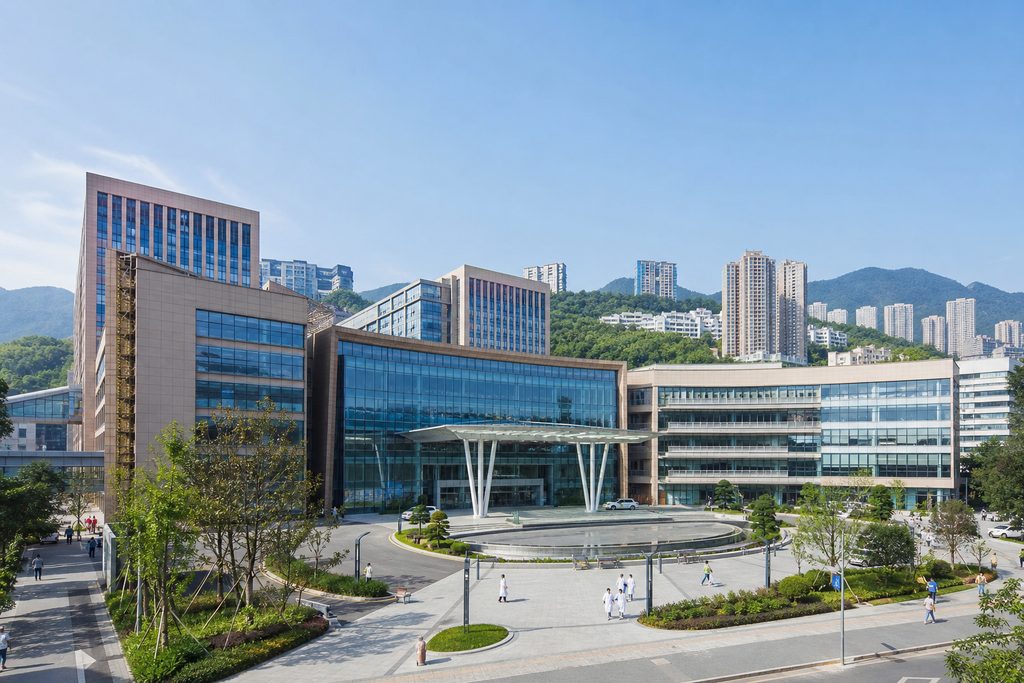
You’ve probably heard that getting orthopedic surgery in China means compromising on quality to save money. The reality is more complicated. Some of the highest-volume joint replacement and spine centers in the world operate in Chinese public hospitals — and the First Affiliated Hospital of Chongqing Medical University sits among them. The real question isn’t whether the surgeons are competent. It’s whether you can navigate the system without local language skills and institutional knowledge. That’s where most international patients get stuck.
First Affiliated Hospital of Chongqing Medical University Orthopedics for International Patients: The Short Answer
The First Affiliated Hospital of Chongqing Medical University runs a large orthopedic department with subspecialties in joint replacement, spine surgery, sports medicine, and trauma. International patients can access it, but not through the same walk-in route Chinese patients use. You’ll need either the hospital’s international department or a coordinator who handles registration, translation, and scheduling. The orthopedic surgery cost at Chongqing Medical University typically ranges from $8,000 to $25,000 for major procedures like total knee or hip replacement — roughly one-fifth to one-tenth of US private-pay prices. But that figure assumes you’ve already cleared the consultation and imaging steps.
The catch: this is a public tertiary hospital, not a private international clinic. English-speaking staff are limited outside the international department. Wait times for top specialists can stretch weeks. And you cannot simply email the hospital and book a surgery date from abroad. The system requires in-person evaluation first.
Who This Is Right For — and Who It Isn’t
A good candidate for traveling to Chongqing for orthopedic care typically fits this profile:
- You have a confirmed diagnosis from imaging (MRI, CT, X-ray) already done in your home country
- Your condition is stable enough to fly long-haul and wait 1–2 weeks for surgical scheduling
- You need a procedure with high volume in China: knee replacement, hip replacement, lumbar discectomy, spinal fusion
- You’re paying out of pocket or have insurance that reimburses overseas care
- You can accept that follow-up after returning home will be coordinated remotely or with a local orthopedist
Who should not pursue this:
- Patients requiring emergency trauma surgery — do not fly to China for acute fractures
- Anyone with unstable cardiovascular or pulmonary conditions that make long flights risky
- Patients expecting Western-style bedside manner and fully English-speaking nursing floors throughout the hospital
- Those who need a guaranteed surgery date before leaving home — Chinese public hospitals rarely commit to dates before in-person evaluation
- Complex revision joint replacements with multiple prior failures — these require careful case review before any travel decision
Being honest about who should stay home is what makes the rest of this guidance trustworthy.
The Options, Compared
International patients considering orthopedic care in China have three realistic pathways. Here’s how they stack up:
| Pathway | Typical Cost (Knee Replacement) | Language Support | Booking Timeline | Best For |
|---|---|---|---|---|
| Public hospital international department (e.g., CQMU First Affiliated) | $8,000–$15,000 | Limited English, coordinator recommended | 2–4 weeks after arrival | Cost-sensitive patients with clear diagnoses |
| Private international hospital (e.g., United Family, Jiahui) | $25,000–$45,000 | Full English staff | 1–2 weeks | Patients prioritizing comfort and speed |
| Stay in home country (private pay) | $35,000–$70,000+ | Native language | Variable | Patients with insurance coverage or low travel tolerance |
The public hospital international department route wins on price. The private route wins on convenience. Neither is objectively better — it depends on what you’re optimizing for. If you have $40,000 and want zero friction, go private in Shanghai or Beijing. If you have $12,000 and can tolerate some coordination hassle, Chongqing makes sense.
How Safe Is Joint Replacement Surgery in China? What the Data Actually Shows
This is the question every patient asks before booking a flight. The honest answer: Chinese joint replacement outcomes at top-tier centers are comparable to international benchmarks, but the data landscape is different from what Western patients are used to.
Chinese orthopedic surgeons at high-volume centers perform hundreds of joint replacements annually. The First Affiliated Hospital of Chongqing Medical University operates one of the busiest orthopedic departments in western China. Volume matters in joint replacement — studies consistently show lower complication rates at centers performing more than 100 procedures per year. Chinese registry data, while less comprehensive than Scandinavian national registries, shows infection rates for primary total knee arthroplasty in the 0.5–1.5% range at major centers. That aligns with international norms.
But here’s what Western patients need to understand: China does not have a unified national joint registry like Sweden or Australia. Individual hospitals track their own outcomes. That means you should ask the hospital directly about their infection rates, revision rates, and surgeon volume for your specific procedure. A reputable international department will provide this data. If they won’t, that’s a red flag.
Also worth noting: Chinese hospitals often use the same implant systems as Western centers — Zimmer Biomet, Stryker, DePuy Synthes, Smith & Nephew. The hardware isn’t the differentiator. The surgical team and postoperative protocol are.
Book Knee Replacement Surgery in China: The Actual Process
You cannot book knee replacement surgery in China from abroad the way you’d book a hotel room. The process works like this:
Step 1: Remote evaluation. You send your existing imaging and medical records to the hospital’s international department or a coordination service. A Chinese orthopedic specialist reviews them and gives a written opinion on whether you’re a surgical candidate. This costs $300–500 for a written second opinion, or $500–800 for a video consultation with a top specialist.
Step 2: Travel and in-person consultation. You fly to Chongqing on an S2 visa (short-stay, private affairs — the correct category for medical treatment). You meet the surgeon in person. They examine you, review imaging, and confirm the surgical plan. This step is mandatory. No reputable Chinese public hospital will schedule surgery without it.
Step 3: Pre-operative workup. Blood tests, ECG, chest X-ray, anesthesia clearance. Usually 1–3 days.
Step 4: Surgery and inpatient stay. For knee replacement, expect 3–7 days in hospital. For spinal fusion, 5–10 days.
Step 5: Post-operative recovery in Chongqing. Most international patients stay 1–2 weeks after discharge for wound checks and initial physical therapy before flying home.
The total trip typically runs 3–5 weeks for a joint replacement. Spine surgery can stretch to 6–8 weeks depending on the procedure.
Spine Surgery Abroad Price Comparison: China vs. the West
Spine surgery prices vary enormously by procedure. A single-level lumbar discectomy costs far less than a multi-level spinal fusion with instrumentation. Here’s a realistic comparison:
| Procedure | China (Public Hospital International Dept.) | China (Private International) | USA (Private Pay) | UK (Private Pay) |
|---|---|---|---|---|
| Single-level lumbar discectomy | $6,000–$10,000 | $15,000–$22,000 | $30,000–$50,000 | $18,000–$28,000 |
| Single-level spinal fusion | $12,000–$18,000 | $25,000–$35,000 | $80,000–$120,000 | $35,000–$50,000 |
| Total knee replacement | $8,000–$15,000 | $25,000–$40,000 | $35,000–$70,000 | $20,000–$30,000 |
| Total hip replacement | $9,000–$16,000 | $26,000–$42,000 | $40,000–$75,000 | $22,000–$32,000 |
These are surgical package estimates — operating room, implant, hospital stay, and surgeon fees. They exclude airfare, accommodation, visa costs, and coordination services. Prices vary by hospital and case complexity. Always request a written quote before committing.
The savings are real but not magical. A $15,000 knee replacement in Chongqing plus $3,000 in travel and coordination costs still beats a $50,000 US bill. But if complications require extended stay or revision, the gap narrows.
Practical Considerations: Records, Visas, Payment, and Follow-Up
You’ll need complete medical records before any Chinese hospital will evaluate you. That means recent imaging (within 3–6 months), radiology reports, surgical history, medication list, and any relevant lab work. Chinese hospitals generally accept English-language records, but translations into Chinese can speed up review.
For the visa: apply for an S2 visa with documentation from the hospital confirming your medical appointment. Family members accompanying you also apply for S2. Processing typically takes 1–3 weeks depending on your home country’s Chinese embassy or consulate. Do not apply for an M visa — that’s for commercial and trade activities, not medical treatment.
Payment is upfront. Chinese public hospitals require a deposit before surgery, typically 50–100% of the estimated package. International departments accept wire transfers and major credit cards, but confirm payment methods before you travel. Insurance is almost always reimbursement-based — you pay the hospital, then file a claim with your insurer. Private international hospitals in China sometimes offer direct billing, but public hospital international departments generally do not.
Follow-up after returning home is the most overlooked part of medical travel. Your Chinese surgeon will provide discharge instructions and imaging review via email or video call. But you need a local orthopedist willing to manage wound care, physical therapy, and any complications. Find that local provider before you fly to China. Not after.
Best Orthopedic Hospital in Chongqing for Foreigners: What “Best” Actually Means
The First Affiliated Hospital of Chongqing Medical University ranks among the top orthopedic centers in western China. But “best” depends on your specific condition. A hospital that excels at joint replacement may not be the strongest for complex spinal deformity. A center known for sports medicine may not be your first choice for revision arthroplasty.
What makes a hospital good for foreigners specifically is different from what makes it good clinically. You need three things: clinical competence, an international department that handles foreign patients, and a city with adequate infrastructure for a long stay. Chongqing delivers on all three, but it’s not Beijing or Shanghai. English is less common. Direct international flights are fewer. The international patient pipeline is smaller.
That’s not a reason to avoid Chongqing. It’s a reason to plan more carefully. The orthopedic department at CQMU First Affiliated handles high volumes across all major subspecialties. The hospital’s international department can arrange consultations, but you should expect to bring your own coordination support or hire a bilingual medical companion. Our team has walked patients through this exact process, and the friction points are predictable: registration queues, payment counters, imaging departments, and pharmacy pickups. None of it is impossible alone. All of it is harder without Chinese language skills.
For a broader look at how Chinese hospitals compare across specialties, see our orthopedics rankings by specialty and our guide to China’s top-ranked public hospitals.
Frequently Asked Questions
No, but you’ll need support. The international department has some English-speaking staff, but the broader hospital — nursing floors, imaging, pharmacy, billing — operates in Chinese. A bilingual medical companion or coordinator fills that gap. Trying to navigate a Chinese public hospital alone with zero language support is genuinely difficult.
Expect $8,000 to $15,000 for the surgical package at the public hospital’s international department. That covers the implant, operating room, surgeon fees, and inpatient stay. It excludes airfare, visa fees, accommodation, and any coordination services. Private international hospitals in China charge $25,000 to $40,000 for the same procedure with full English support. Final quotes vary by hospital and case complexity.
Your Chinese surgeon remains available for remote consultation — reviewing imaging, answering questions, adjusting rehabilitation plans. But they cannot treat you locally. Complications like infection, implant loosening, or delayed wound healing will be managed by your local orthopedist. That’s why identifying a local provider willing to take over follow-up care before you travel is non-negotiable. Some patients also purchase medical travel insurance that covers complication-related care in their home country.
No. Chinese public hospitals require in-person evaluation before scheduling surgery. You can secure a consultation appointment in advance, but the surgeon must examine you and review imaging before committing to a date. Anyone promising a guaranteed surgery date before you arrive is not being honest about how the system works.
Most surgeons clear patients for long-haul flights 10–14 days after uncomplicated joint replacement, provided there are no signs of deep vein thrombosis. You’ll need compression stockings, mobility aids, and possibly a wheelchair assist through airports. Spine surgery patients typically need longer — 3–4 weeks — before long flights. Your surgeon makes the final call based on your specific case.
Your Next Step
The First Affiliated Hospital of Chongqing Medical University offers genuine orthopedic expertise at prices that make medical travel worth considering. But the gap between “good hospital” and “successful treatment experience” is filled with logistics: records, visas, appointments, language, payments, and follow-up. That’s the part most patients underestimate.
We’re China Medical Services, a coordination team that helps international patients navigate Chinese healthcare. We are not a hospital and we don’t provide medical advice or diagnoses. What we do is handle the practical layer — connecting you with the right department, arranging consultations, providing bilingual support on the ground, and helping you plan the trip. If you’re considering orthopedic surgery in Chongqing, start with a conversation. Tell us your situation and we’ll help you figure out whether this path makes sense for you. No pressure, no obligation — just a clear-eyed assessment of your options.
For more medical information and treatment options in China, visit chinamedservices.com (China Medical Services).
