Companion for Traditional Chinese Medicine: What It Costs and How It Works
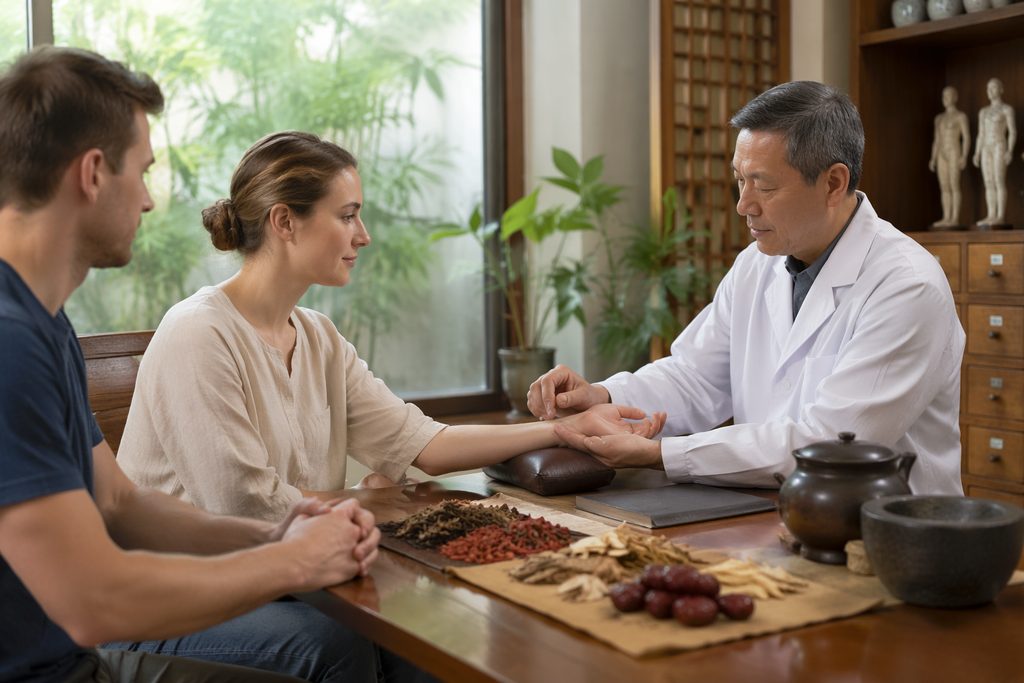
Key Takeaways
- A bilingual TCM companion in China costs from $300 per day, covering hospital navigation, translation, and coordination — not the treatment itself.
- China’s top-tier TCM hospitals, such as Guang’anmen Hospital in Beijing and Longhua Hospital in Shanghai, treat over 8,000 outpatients daily across their networks.
- Language is the biggest barrier for international patients: fewer than 5% of clinical staff at public TCM hospitals speak functional English.
- S2 visa is the correct category for medical treatment in China, and a companion service can help you prepare the required hospital invitation documents.
The Problem: Navigating TCM Without Chinese Language Skills
Traditional Chinese Medicine draws patients from around the world. Acupuncture, herbal medicine, tuina massage, and moxibustion are no longer niche therapies — the WHO’s 2019 global report on traditional medicine noted that 170 of its 194 member states reported use of traditional and complementary medicine. But here is the practical reality for a foreigner seeking TCM in China: the hospitals where the best practitioners work are not built for English speakers.
A single visit to a top TCM hospital in Beijing or Shanghai involves registration counters, payment windows, pharmacy queues for herbal decoctions, and consultation rooms — all operating in Mandarin. Signs are often bilingual in major cities, but the people behind the desks are not. You cannot ask a registration clerk which department handles chronic insomnia versus digestive disorders. You cannot explain to a pharmacist that you are allergic to licorice root. You cannot clarify whether your herbs should be taken before or after meals.
This is not a minor inconvenience. It is the difference between receiving a correct, personalized TCM treatment plan and leaving with the wrong herbs, the wrong dosage instructions, or no treatment at all.
Why a TCM Companion Service Delivers Real Value
Clinical Volume and Specialized Expertise
China’s leading TCM hospitals handle patient volumes that dwarf most Western institutions. Guang’anmen Hospital in Beijing, affiliated with the China Academy of Chinese Medical Sciences, sees over 3 million outpatient visits annually. Longhua Hospital in Shanghai, a teaching hospital of Shanghai University of Traditional Chinese Medicine, operates over 1,200 beds and runs specialized departments for oncology, dermatology, and respiratory diseases — all treated with integrated TCM and Western protocols.
What does this mean for you? A physician who has treated 10,000 cases of eczema with herbal medicine has seen patterns that a general practitioner with 200 cases has not. Volume builds pattern recognition. That is the clinical argument for seeking TCM in China rather than from a local practitioner with limited exposure.
Integrated Diagnostics Without Language Friction
TCM diagnosis relies on detailed questioning: sleep patterns, appetite, emotional state, menstrual history, bowel habits, temperature sensitivity. A good TCM physician asks twenty questions before prescribing. If you cannot answer those questions accurately in Mandarin, the diagnosis is compromised.
A companion acts as your medical interpreter — not a generic translator. They understand TCM terminology. They know how to describe “damp-heat in the lower jiao” or “liver qi stagnation” in English without losing clinical nuance. They also know how to phrase your Western medical history — current medications, prior surgeries, allergies — in ways a TCM physician can integrate into the diagnosis.
Cost Transparency and Pricing Structure
Let us address the question directly: how does traditional Chinese medicine companion service work, and what does it cost? The tcm companion service cost China varies by city, hospital tier, and scope of service. A baseline bilingual companion typically runs from $300 per day for an 8-hour shift covering registration, queue management, payment assistance, and on-site translation. This does not include your consultation fees, herbal medicine costs, or any treatment charges — those are paid directly to the hospital at standard public rates.
For context, a first-time TCM consultation at a top public hospital in China costs between $15 and $50. A two-week course of customized herbal decoction typically ranges from $30 to $120, depending on ingredients. These are public hospital prices — not private international clinic rates, which can run three to five times higher.
How a TCM Companion Program Actually Works: Step by Step
You send your existing medical records — translated into English or your native language, whichever you have. The companion team reviews them with the target hospital’s international department or a TCM specialist. This determines which department you should register with. Sending a patient with chronic migraines to a general TCM clinic when they need the neurology-integrated TCM department wastes time and money.
Not every TCM hospital excels at every condition. The best traditional Chinese medicine hospital for foreigners Beijing is often considered Guang’anmen Hospital for oncology and endocrinology, while Dongzhimen Hospital (also in Beijing) is stronger for respiratory and cardiovascular TCM. In Shanghai, Longhua Hospital leads in oncology and orthopedics, while Shuguang Hospital is known for liver diseases. Your companion service should match your condition to the right department — not just the most famous hospital.
Public TCM hospitals in China generally do not allow overseas patients to pre-book standard outpatient appointments online. You register in person on the day of your visit, using your passport. A companion handles this: arriving early, securing your queue number, and completing the hospital medical card application. For patients who need to see a specific senior specialist, the companion can coordinate through the hospital’s international or VIP department, which does allow advance scheduling — at approximately 1.5 to 2 times the standard consultation fee.
During your consultation, the companion translates both directions: your symptoms and history into Mandarin, and the physician’s diagnosis and prescription into English. They also take notes. TCM consultations are dense — tongue diagnosis, pulse reading, dietary recommendations, herbal formulas. You will not remember everything. Good companions provide a written summary after each visit.
After the consultation, you pay for your herbs at the hospital pharmacy. If you choose decoction, most top hospitals offer same-day or next-day preparation. Your companion ensures the pharmacist’s instructions — storage, dosage, timing, potential side effects — are translated clearly before you leave.
Evaluating Safety: What International Patients Need to Know
Is traditional Chinese medicine safe for international patients? The honest answer: it depends on the source, the practitioner, and the herbs themselves. TCM is not inherently dangerous. But poorly sourced herbs or unqualified practitioners can cause harm.
China’s top-tier TCM hospitals operate under the same regulatory oversight as Western medical institutions. The National Medical Products Administration regulates herbal medicine production. Hospitals like Guang’anmen and Longhua source herbs from certified suppliers with batch testing for heavy metals and pesticide residues. This is not the case for every small private clinic or street-level herbal shop.
Safety caution: Some TCM herbal formulas interact with Western pharmaceuticals. Licorice root, for example, can potentiate corticosteroids and deplete potassium. Always disclose your full medication list — including supplements — to the TCM physician. A companion can help ensure this disclosure is complete and accurately translated.
Also consider the regulatory reality: TCM products exported to the US or Europe are classified as dietary supplements, not drugs. They are not subject to the same efficacy testing as pharmaceuticals. In China, TCM is a fully integrated medical system with hospital departments, inpatient wards, and clinical research. If you want TCM treatment that is supervised by licensed physicians in a regulated clinical environment, China’s top hospitals are the most rigorous setting available.
Traditional Chinese Medicine Treatment Package Shanghai: What Is Included
Many international patients search for a traditional Chinese medicine treatment package Shanghai — a bundled offering that simplifies the process. Packages vary by hospital and by the coordinating service, but a typical 5-day TCM treatment program in Shanghai includes:
| Component | What You Receive | Typical Cost Range (USD) |
|---|---|---|
| Initial comprehensive TCM consultation | Full diagnostic workup: tongue, pulse, meridian assessment, medical history review | $30–$80 |
| Daily acupuncture or tuina session | 30–45 minute session, 5 consecutive days | $15–$40 per session |
| Customized herbal prescription | 2-week supply, decocted or granule form | $40–$120 |
| Bilingual companion service | Full-day escort, translation, coordination | $300 per day |
| Follow-up consultation | Progress review and prescription adjustment | $20–$50 |
These figures are representative for public top-tier TCM hospitals. Private international clinics in Shanghai — such as those affiliated with Parkway or Jiahui — charge significantly more, often $150 to $300 per consultation, with companion services bundled at premium rates. The cost difference reflects the English-speaking staff and Western-style amenities, not necessarily better clinical outcomes.
Before committing to any package, ask what is included and what is not. Some packages quote only the medical fees and exclude companion services. Others bundle everything but use lower-tier hospitals. Read the breakdown carefully.
Practical Considerations: Documentation, Visa, and Payment
If you are serious about traveling to China for TCM treatment, plan for these logistics before you book anything.
Visa Requirements
Medical treatment in China falls under the S2 visa category, which covers short-term private affairs including medical treatment. If your treatment plan requires a stay longer than 180 days, you would apply for an S1 visa. The hospital or your coordinating service should provide an invitation letter and treatment plan documentation to support your visa application. Do not apply for an M visa — that is for commercial and trade activities, not medical travel. Visa approval is never guaranteed and depends on the latest consulate requirements.
Medical Records
Bring translated copies of your relevant medical history: diagnostic reports, imaging results, current medications, allergy list. If you have a specific condition you want treated with TCM, bring the Western diagnosis and any test results. TCM physicians value this information even if their diagnostic framework differs.
Payment Methods
Public hospitals in China accept cash, domestic Chinese payment apps (WeChat Pay, Alipay), and sometimes international credit cards at VIP or international departments. Standard outpatient departments may not accept Visa or Mastercard. Your companion can handle payment logistics, but plan to have sufficient funds accessible — either through a payment app set up before arrival or cash.
Insurance and Reimbursement
Most international health insurance plans do not cover TCM treatment in China, especially herbal medicine. Some plans cover acupuncture if performed by a licensed physician. Check your policy before you travel. If coverage exists, you will need itemized receipts and possibly translated medical records for reimbursement — your companion can help you obtain these.
Post-Treatment Follow-Up
Herbal formulas may need adjustment after two to four weeks. Many TCM hospitals now offer follow-up video consultations for international patients. This is where a written second opinion or remote consultation becomes valuable: you send updated symptom reports, the physician adjusts your formula, and the new herbs are shipped to you. Shipping herbal medicine internationally has customs restrictions in some countries — verify before you leave.
Frequently Asked Questions
What exactly does a TCM companion do that I cannot do myself with a translation app?
A translation app converts words. A companion converts context. They know which window to approach first, which documents the hospital requires, which department handles your condition, and how to phrase your symptoms in clinically accurate TCM terminology. They also advocate for you when something goes wrong — a queue mix-up, a pharmacy error, a scheduling conflict. In a busy public hospital seeing 10,000 patients per day, that advocacy is the difference between a smooth visit and a wasted day.
Is the tcm companion service cost China worth it compared to just going to an international clinic?
That depends on your priorities. International clinics in Beijing and Shanghai offer English-speaking staff and Western comfort — but their TCM departments are often smaller, and consultation fees run $150 to $300. A public top-tier TCM hospital charges $15 to $50 for the same consultation, with access to the country’s most experienced TCM physicians. Even with a $300 companion fee, a full day at a top public TCM hospital often costs less than a single consultation at a private international clinic. If you want the best clinical expertise at the most reasonable total cost, the companion route is the better value.
What happens if I have an adverse reaction to the herbal medicine while in China?
Contact your companion immediately. They can arrange a same-day return visit to the prescribing physician, who will assess the reaction and adjust or discontinue the formula. Top TCM hospitals have emergency departments and can coordinate with Western medical facilities if needed. This is another reason to choose a regulated hospital over a small private clinic: adverse event management is built into the system. Before you leave China, ask for a written summary of your prescription in English so you can share it with your home physician.
Can I book a TCM companion program before I arrive in China?
Yes. Most coordinating services require at least one to two weeks of lead time to review your medical records, select the appropriate hospital and department, and prepare your visa documentation. Last-minute bookings are sometimes possible for simple consultations, but complex cases need preparation. The earlier you start, the more options you have for scheduling with senior specialists.
Your Next Step
Traditional Chinese Medicine in China offers access to a depth of clinical experience that is difficult to find elsewhere. But the practical barriers — language, hospital navigation, documentation — are real. That is what a companion service addresses, and that is what we do at China Medical Services: we are not a hospital, we do not provide diagnoses, and we do not make promises about clinical outcomes. We help international patients connect with China’s top-ranked hospitals and navigate the process with clear, honest guidance. If you are considering TCM treatment in China, start with a conversation about your condition and goals — we will tell you honestly whether this path makes sense for you. Request a free consultation and we will help you evaluate your options.
For more medical information and treatment options in China, visit chinamedservices.com (China Medical Services).
