Confirm the Doctor Actually Reviewed Your Scans: A Practical Guide
Radiology errors happen more often than most patients assume. A 2023 analysis in the Journal of the American College of Radiology found that clinically significant discrepancies between initial and secondary imaging interpretations occur in roughly 26–30% of cases. That is not a typo. Nearly one in three scans gets a meaningfully different read the second time around. If you are considering treatment in China — or anywhere — knowing whether a real specialist actually reviewed your films matters. And if you are comparing costs, the radiology second opinion China price is often a fraction of what Western hospitals charge, which makes verification affordable.
But here is the uncomfortable question most patients never ask: how do you know a doctor actually looked at your images and not just the typed report? This guide walks through the verification process, what the review should include, what it costs, and where the process breaks down.
How This Actually Works, Step by Step
The sequence is straightforward, but each step has friction points. Understanding them before you start saves weeks.
Step 1 — Gather everything, not just the report. You need the original DICOM files from your MRI, CT, or PET scan. A written report alone is not enough for a meaningful second read. Request the images on a CD, USB drive, or via a secure upload link from the imaging center. Most hospitals in the US and Europe are legally required to provide these within 30 days. Many patients wait too long to request them and then face delays when a second reviewer asks for the raw data.
Step 2 — Send the files through a secure channel. Chinese hospitals and international medical coordination services typically accept DICOM uploads through encrypted portals. Avoid emailing medical images as unencrypted attachments. If you are working with a service like China Medical Services, the coordination team handles the transfer and confirms receipt with the reviewing department.
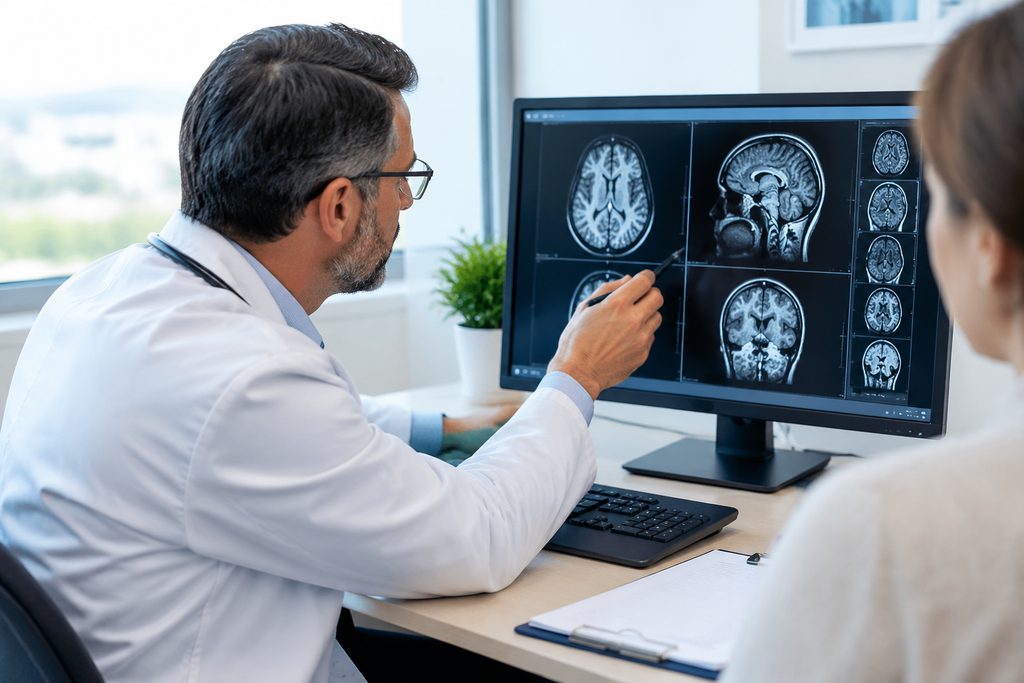
Step 3 — The reviewing radiologist opens the actual images. This is the critical step. A legitimate second opinion requires the specialist to scroll through the imaging slices, not just read the original report. In China’s top-tier hospitals, radiology departments use the same PACS systems found in major Western centers. The reviewer should note which sequences they examined, the slice thickness, and any artifacts that might affect interpretation.
Step 4 — You receive a written opinion, signed. The output should be a formal document with the reviewing physician’s name, hospital affiliation, and signature or official stamp. Chinese hospital reports typically carry the department seal. If the document lacks a named physician, ask why.
Step 5 — You decide what to do with the information. The second opinion may confirm the original read, raise new questions, or recommend additional imaging. It does not replace an in-person consultation if surgery or intervention is being planned.
How Do You Know a Radiologist Actually Reviewed Your CT or MRI?
A written second opinion from a top Chinese hospital typically costs $300–500 and includes the radiologist’s review of your DICOM files, a signed report, and English translation. Video consultations with the reviewing specialist range from $100–800 depending on the hospital tier and the specialist’s seniority. Prices vary by hospital and case complexity.
Yes. Major centers like Zhongshan Hospital, Ruijin Hospital, and Huashan Hospital have radiology departments where attending physicians personally review imaging studies. The international patient departments at these hospitals can arrange for the reviewing radiologist to walk you through your images. Ask for this explicitly when you request the second opinion.
Disagreement is common — roughly a quarter to a third of cases show clinically significant discrepancies. Get a third read from a subspecialist radiologist, or request a combined radiology-clinical review. Do not make treatment decisions based on a single contradictory report without further clarification.
From requesting your DICOM files to receiving a signed second opinion, expect 2 to 4 weeks. If you then decide to travel for treatment, add 3 to 6 weeks for visa processing and appointment scheduling. Rushing any single step increases the chance of error.
Your Next Step
Verifying that a doctor actually reviewed your scans is not paranoia — it is basic due diligence, and the process is more accessible than most patients realize. China Medical Services helps international patients coordinate second opinions from 340+ top-ranked hospitals across 37 Chinese cities. We handle file transfer, hospital communication, and translation. We do not practice medicine, and we do not promise specific outcomes. If you want to know whether your scans have been genuinely reviewed — or want a second read before making a treatment decision — request a free consultation and we will walk you through the options.
Frequently Asked Questions
Yes. The hospitals used for international patients are JCI-accredited and follow the same international safety standards as top hospitals in the US and Europe. Surgical teams perform high volumes of procedures — often more than their Western counterparts — which studies show leads to better outcomes.
Costs vary by procedure and hospital, but international patients typically save 40-80% compared to US prices — even when factoring in travel and accommodation. A consultation with our team will give you an exact, all-inclusive quote with no hidden fees.
Send us your existing medical reports to get started. We handle everything from hospital selection and appointment scheduling to visa assistance and post-operative recovery planning. Your medical records are reviewed by the specialist before you even book a flight.
For more medical information and treatment options in China, visit chinamedservices.com (China Medical Services).
