CPAP Alternative Treatment in China: Costs, Options, and How to Access Care
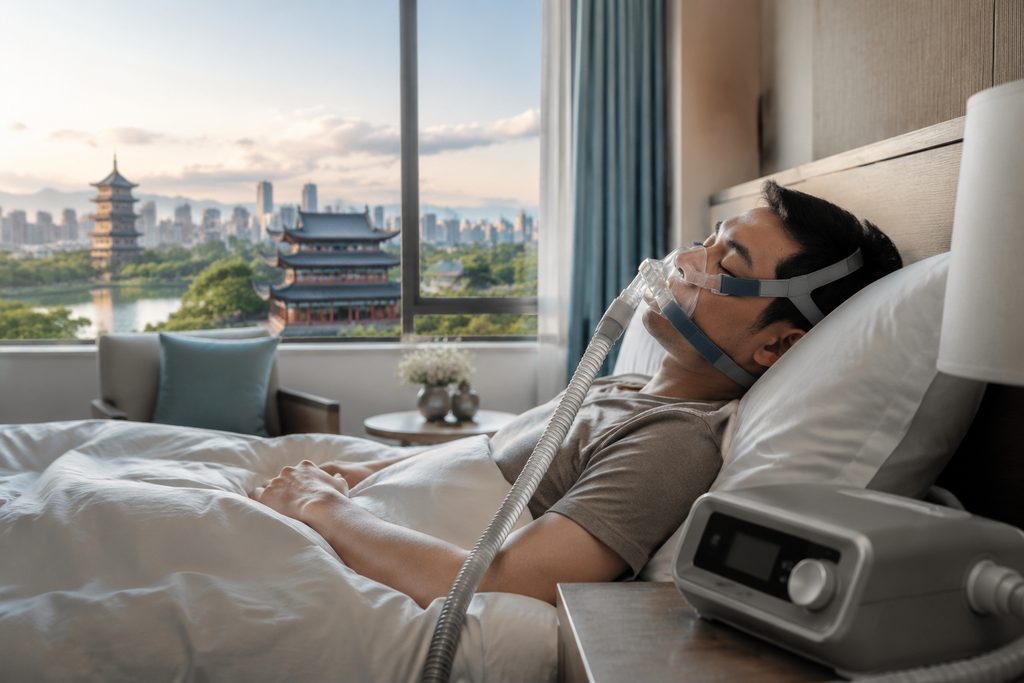
CPAP Alternative Treatment in China: Costs, Options, and How to Access Care
Continuous positive airway pressure (CPAP) is the gold-standard therapy for obstructive sleep apnea (OSA). It works by pushing a steady stream of air through a mask to keep the upper airway open during sleep. For millions of people, it is life-changing. For millions of others, it is a nightly battle they eventually lose. If you are searching for a CPAP alternative treatment in China, you are likely one of those people — or someone who has watched a loved one struggle with a machine they cannot tolerate.
You are not being difficult. Research published in the journal Sleep and echoed by the American Academy of Sleep Medicine suggests that roughly 30 to 50 percent of patients prescribed CPAP use it inconsistently or abandon it altogether. The reasons are practical: claustrophobia, nasal congestion, mask leaks, noise, dry mouth, or a bed partner who cannot sleep through the hum. When adherence fails, the health risks of untreated sleep apnea — hypertension, atrial fibrillation, stroke, and daytime accidents — do not disappear. They simply go unmanaged.
China has become a genuine destination for patients seeking alternatives, particularly surgical and implantable options that are expensive or slow to access elsewhere. This guide explains what those alternatives are, what they cost, and how the medical travel system in China actually works for a foreign patient.
How This Actually Works, Step by Step
Most people assume you book a flight, land in Beijing or Shanghai, and see a doctor. That is not how Chinese public hospitals operate, and misunderstanding this is the single most common mistake international patients make.
Here is the real sequence.
Step one: records collection. You gather your existing documentation — a recent polysomnography (sleep study) report with your apnea-hypopnea index (AHI), any prior CPAP titration data, a drug-induced sleep endoscopy (DISE) report if you have had one, plus relevant imaging and a list of prior surgeries. If you have not had a sleep study, that is usually the first test arranged in China.
Step two: written second opinion. These records are translated and sent to the relevant specialty — typically an otolaryngology (ENT) or respiratory medicine department at a top-tier hospital. A specialist reviews them and returns written analysis: whether you are a candidate for surgery, which procedure might fit, and what further testing is needed. This is a document, not a conversation.
Step three: video consultation. You then speak online with the Chinese specialty team, explain your symptoms and goals, and hear their recommendations directly. This is where you ask the uncomfortable questions.
Step four: decision and travel. Only after a feasible plan is agreed do you consider traveling. An in-person outpatient visit is required before any surgery is scheduled at a public hospital — there is no way around this. If you want a confirmed surgical slot in advance, that generally means going through a hospital’s international or VIP department.
Step five: treatment and follow-up. Surgery happens, recovery begins, and your home physician receives the operative records.
What CPAP Alternatives Exist, and Which Are Available in China
Hypoglossal nerve stimulation has shown meaningful AHI reduction in published clinical trials for appropriately selected patients who cannot tolerate CPAP. It is not effective for everyone, and candidacy depends on specific anatomical and sleep study criteria. Availability in China is more limited than in the US, so this must be verified with the hospital.
Costs vary widely by hospital and case complexity. Oral appliances are typically the least expensive option, while implantable nerve stimulation and jaw surgery sit at the higher end. Chinese public hospital pricing is generally a fraction of US pricing for comparable procedures, but you should treat any figure as an estimate until a hospital reviews your case and issues a formal quote.
You can arrange a written second opinion and a video consultation remotely. However, surgery at a public hospital requires an in-person assessment first — this is a firm rule. If you need a confirmed surgical date in advance, that generally means using a hospital’s international or VIP department, which costs more.
Some private international hospitals in Shanghai offer bundled services covering consultation, testing, and accommodation. Public hospitals do not operate this way. Be cautious of any package that promises a specific outcome — legitimate providers describe services, not guaranteed results.
Your Next Step
The core message is simple: CPAP is not your only option, but alternatives require careful evaluation, honest expectations, and a clear understanding of how Chinese hospitals actually admit patients. Getting a written second opinion before you travel is the single most useful thing you can do.
Our team at China Medical Services helps international patients navigate this process — we coordinate written second opinions, video consultations, appointment scheduling, and bilingual support on the ground. We are not doctors and we do not provide medical advice or guarantee any clinical outcome. If you would like to understand whether a CPAP alternative makes sense for your case, you can start with a free consultation and we will help you take the next step at your own pace.
Frequently Asked Questions
Yes. The hospitals used for international patients are JCI-accredited and follow the same international safety standards as top hospitals in the US and Europe. Surgical teams perform high volumes of procedures — often more than their Western counterparts — which studies show leads to better outcomes.
Costs vary by procedure and hospital, but international patients typically save 40-80% compared to US prices — even when factoring in travel and accommodation. A consultation with our team will give you an exact, all-inclusive quote with no hidden fees.
Send us your existing medical reports to get started. We handle everything from hospital selection and appointment scheduling to visa assistance and post-operative recovery planning. Your medical records are reviewed by the specialist before you even book a flight.
For more medical information and treatment options in China, visit chinamedservices.com (China Medical Services).
