Deep Brain Stimulation in China: How DBS Surgery Works, Costs, and Where to Go
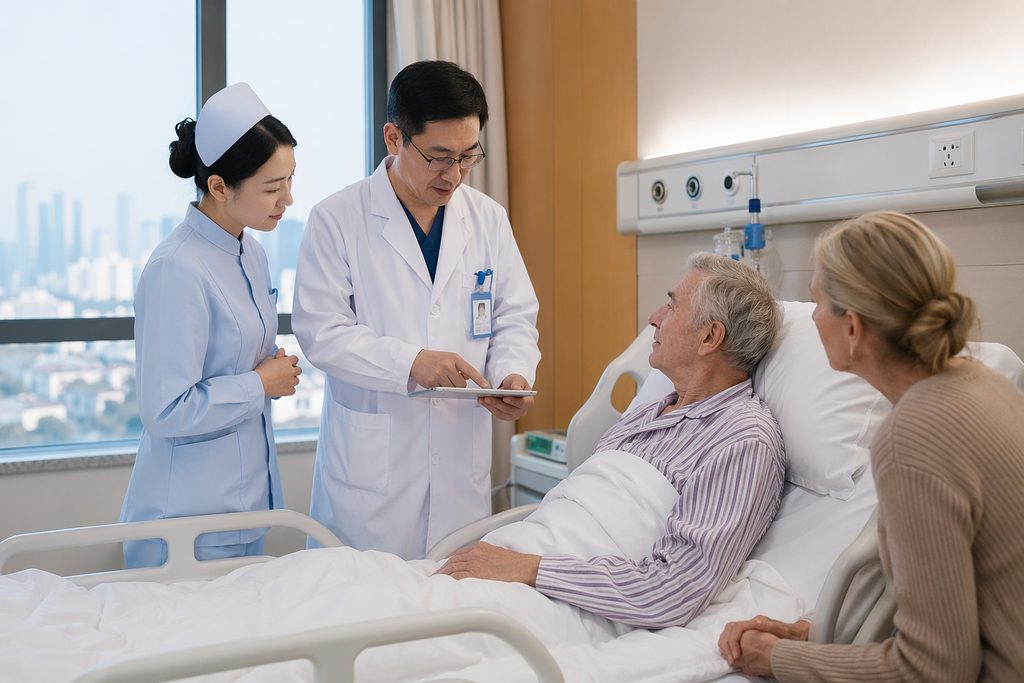
Deep Brain Stimulation in China: How the Procedure Works, What It Costs, and Where Patients Go
Key Takeaways
- Deep brain stimulation cost China typically ranges from $28,000 to $45,000 for the full procedure, including the implantable pulse generator — roughly one-third to one-half of the price in the United States.
- Chinese neurosurgery teams at top-tier hospitals perform hundreds of DBS implantations annually, giving them procedural volume that few Western centers can match.
- Language barriers and the public hospital registration system are real obstacles; most international patients use hospital international departments or a coordination service to navigate them.
- DBS is not a cure for Parkinson’s disease. It manages motor symptoms and can reduce medication needs, but patients must have realistic expectations and meet strict eligibility criteria.
While a patient in the United States might wait months for a neurosurgery consultation and then face a bill exceeding $60,000 for deep brain stimulation, the same procedure at a top Chinese hospital costs between $28,000 and $45,000. The technology is identical — Medtronic, Abbott, and Boston Scientific devices dominate both markets. What differs is the economics of care delivery and the sheer volume of cases Chinese centers handle.
Deep brain stimulation, or DBS, involves implanting thin electrodes into specific brain regions and connecting them to a pulse generator placed under the skin near the collarbone. The generator sends electrical impulses that modulate abnormal neural activity. For Parkinson’s disease, essential tremor, and dystonia, this can mean the difference between severe motor fluctuations and a return to functional independence. But how does deep brain stimulation work for Parkinson’s specifically? The electrodes target the subthalamic nucleus or globus pallidus interna, areas that become hyperactive as dopamine-producing neurons die off. The stimulation essentially jams the faulty signals, restoring more normal movement patterns.
This article explains the procedure, the realistic costs in China, the safety record at major centers, and what an international patient actually needs to arrange before traveling.
The Problem: Parkinson’s Disease Progression and the Limits of Medication
Parkinson’s disease affects approximately 1 in 100 people over age 60, and the global burden is rising faster than any other neurological disorder. By 2030, an estimated 12 million people worldwide will live with the condition. Levodopa remains the gold-standard treatment, but after five to ten years, most patients develop motor fluctuations and dyskinesias — involuntary writhing movements that can be as disabling as the disease itself.
In the United States, the average annual direct medical cost for a Parkinson’s patient exceeds $25,000. Medication adjustments help for a while. But when a patient spends hours per day in an “off” state — frozen, rigid, unable to move — the calculus changes. That is when neurologists begin discussing surgical options. And that is when many patients discover that deep brain stimulation, while life-changing, is also financially devastating in Western healthcare systems.
Wait times compound the problem. In Canada, the median wait from referral to DBS surgery is over 12 months in some provinces. In the UK, NHS waiting lists for elective neurosurgery routinely stretch beyond 18 weeks for the initial consultation alone. A patient whose symptoms are worsening does not have a year to spare.
Why China Delivers Results for DBS Surgery
Clinical Volume That Western Centers Cannot Match
Volume matters in neurosurgery. A surgeon who implants 100 DBS systems per year has seen anatomical variations, handled intraoperative complications, and refined their targeting technique in ways that a surgeon doing 20 per year simply has not. At major Chinese centers like Huashan Hospital in Shanghai and Xuanwu Hospital in Beijing, neurosurgery teams perform between 150 and 400 DBS implantations annually. Compare that to the average US center, where even high-volume programs typically complete 50 to 80 cases per year.
This volume translates into precision. Chinese neurosurgeons were early adopters of intraoperative MRI and CT-guided targeting, and many centers now use robot-assisted stereotactic systems. The result is lower rates of electrode misplacement and fewer revision surgeries.
Technology Parity with Western Systems
There is a persistent assumption that lower-cost medical care means outdated technology. For DBS in China, that assumption is wrong. The same Medtronic Percept PC and Abbott Infinity DBS systems used at Johns Hopkins or Charité Berlin are standard equipment at top Chinese hospitals. Chinese regulatory approval for new DBS devices often lags the US and EU by only 12 to 24 months. Some centers even offer domestic DBS systems from Chinese manufacturers like PINS Medical and SceneRay, which cost significantly less than imported devices.
The surgical workflow is also comparable. Patients undergo preoperative MRI and CT fusion imaging, microelectrode recording during surgery to confirm target accuracy, and intraoperative test stimulation while awake. Postoperative programming follows the same protocols used internationally.
Why the Deep Brain Stimulation Cost China Is Lower
Let us address the obvious question directly: why does DBS surgery price abroad vary so dramatically? The answer lies in structural economics, not quality shortcuts. Chinese hospital labor costs are a fraction of Western levels. A senior neurosurgeon in Shanghai earns perhaps $80,000 to $150,000 annually, compared to $600,000 or more for a comparable US specialist. Operating room fees, anesthesia charges, and hospital bed costs are all proportionally lower.
At the same time, Chinese hospitals operate at enormous scale. A single neurosurgery department may have 200 inpatient beds and run eight operating rooms daily. Fixed costs are spread across vastly more patients. The result: the same DBS procedure with the same device costs $28,000 to $45,000 in China versus $60,000 to $120,000 in the United States. That is a real, verifiable difference — and it does not reflect a compromise in clinical standards.
How the DBS Procedure Actually Works in China: A Step-by-Step Timeline
A patient searching “how does deep brain stimulation work for Parkinson’s” deserves more than a textbook explanation. Here is what actually happens, week by week, when you pursue DBS at a major Chinese hospital.
Week 1–2: Remote Evaluation and Candidacy Screening
Before you book a flight, the hospital needs your records. This includes a neurologist’s confirmation of Parkinson’s diagnosis, medication history, brain MRI within the last 12 months, and a levodopa challenge test result if available. Chinese hospitals will not schedule DBS surgery without this documentation. The remote evaluation typically involves a written second opinion, which costs $300 to $500 through hospital international departments. Some patients also arrange a video consultation with the neurosurgery team, priced at $500 to $800 for top specialists.
Not everyone is a candidate. Patients with significant cognitive impairment, severe depression, or atypical parkinsonism are generally excluded. Age alone is not a barrier — many Chinese centers operate on patients in their 70s — but frailty and comorbidities are carefully assessed.
Week 3–4: On-Site Preoperative Assessment
Once cleared remotely, you travel to China. The first in-person visit involves a comprehensive neurological examination, neuropsychological testing, and repeat imaging. The neurosurgery team conducts a multidisciplinary review, often involving neurologists, psychiatrists, and anesthesiologists. This assessment typically takes two to three days.
You will also meet with the anesthesiology team to plan the surgical approach. Most Chinese centers perform DBS in two stages: electrode implantation under local anesthesia with the patient awake for intraoperative testing, followed by pulse generator implantation under general anesthesia. Some centers now offer asleep DBS using intraoperative imaging, but awake surgery remains the standard for optimal target confirmation.
Week 5: Surgery and Hospital Recovery
The electrode implantation surgery takes four to six hours. You are awake but sedated, with your head fixed in a stereotactic frame. The surgeon drills a small burr hole, inserts microelectrodes to map the target region, and then places the permanent electrode. Intraoperative test stimulation confirms symptom improvement — tremor reduction or improved limb movement — before the electrode is secured.
Hospital stay after electrode implantation is typically three to five days. The pulse generator is implanted in a second surgery one to two weeks later, under general anesthesia, lasting about one hour. Total hospitalization in China for both stages averages 10 to 14 days.
Week 6–8: Initial Programming and Return Home
Programming begins two to four weeks after the generator is implanted, once brain swelling has subsided. This is a critical phase. A neurologist or DBS nurse adjusts stimulation parameters — frequency, pulse width, amplitude — to maximize symptom control while minimizing side effects. Initial programming sessions may take several hours. Most international patients stay in China for two to three programming sessions before returning home, with remote follow-up programming arranged via video consultation.
Is DBS Surgery Safe in Beijing? What the Data Shows
Safety is the first question every patient asks, and it deserves a direct answer. Is DBS surgery safe in Beijing? The short answer: yes, at experienced centers, with complication rates comparable to Western benchmarks. But the honest answer requires nuance.
The most serious risks of DBS surgery include intracranial hemorrhage (bleeding in the brain), infection, and hardware complications. Large international studies report hemorrhage rates of 1 to 3 percent and infection rates of 3 to 5 percent. Data from major Chinese centers, including published series from Xuanwu Hospital and Tiantan Hospital in Beijing, show similar figures. A 2023 review of DBS outcomes in Chinese patients found permanent neurological deficit rates below 1 percent at high-volume centers.
What differs in China is the concentration of experience. Beijing alone has at least four hospitals performing more than 100 DBS surgeries per year. That density of expertise means that even complex cases — patients with bilateral symptoms, prior brain surgery, or unusual anatomy — are handled routinely.
However, safety depends heavily on hospital selection. A patient choosing a low-volume provincial hospital will face different risks than one treated at a top-tier center. This is where the rankings of China’s top hospitals become essential reading. The Fudan University hospital rankings identify the top 100 hospitals nationally, and the neurosurgery specialty rankings list the strongest departments. For DBS specifically, patients should look for centers with dedicated functional neurosurgery programs and documented case volumes.
How to Evaluate a DBS Center in China
Three criteria matter most. First, annual DBS case volume — ask for the specific number, not a vague assurance. Second, the device options offered. A good center will offer both imported systems (Medtronic, Abbott, Boston Scientific) and domestic alternatives, letting you choose based on budget and preference. Third, the programming support available after surgery. DBS is not a one-time procedure; it requires ongoing adjustment. Ask whether the center offers remote programming for international patients and what the follow-up protocol looks like.
For patients considering Shanghai specifically, the question of the best DBS hospital Shanghai has a data-backed answer. Huashan Hospital, affiliated with Fudan University, operates one of the largest functional neurosurgery programs in Asia and consistently ranks among China’s top three neurosurgery departments. Ruijin Hospital, also in Shanghai, is another high-volume center with a strong DBS program. Both have dedicated international patient departments with English-speaking staff.
| Cost Component | China (USD) | United States (USD) | United Kingdom (USD) |
|---|---|---|---|
| DBS device (implantable pulse generator + electrodes) | $15,000–$25,000 | $30,000–$50,000 | $28,000–$45,000 |
| Surgical fees (neurosurgeon, anesthesiologist, OR) | $6,000–$10,000 | $20,000–$35,000 | $18,000–$30,000 |
| Hospital stay (10–14 days) | $3,000–$6,000 | $8,000–$20,000 | $7,000–$15,000 |
| Preoperative imaging and assessment | $2,000–$4,000 | $5,000–$10,000 | $4,000–$8,000 |
| Initial programming and follow-up (first 3 months) | $2,000–$3,000 | $4,000–$8,000 | $3,500–$6,000 |
| Total estimated range | $28,000–$45,000 | $67,000–$123,000 | $60,500–$104,000 |
Prices vary by hospital and case complexity. Domestic Chinese DBS systems from PINS Medical can reduce the device cost to under $10,000, bringing the total procedure below $25,000. Imported systems cost more. The table above reflects typical ranges for imported devices at top-tier public hospital international departments.
Practical Considerations: Visas, Payment, and Follow-Up Care
Navigating DBS surgery in China as a foreign patient involves more than choosing a hospital. The logistics matter, and they are manageable with preparation.
Visa requirements. Medical treatment in China falls under the S2 visa category, which covers short-term private affairs including medical care. You will need an invitation letter from the hospital confirming your treatment plan, along with your passport, a completed application form, and proof of financial means. The S2 visa typically allows stays of up to 180 days. Family members accompanying you apply for the same S2 category. Do not apply for an M visa — that is for commercial and trade activities and is not appropriate for medical travel. Visa policies change, so check with the Chinese embassy or consulate in your country for current requirements.
Payment methods. Chinese public hospitals require prepayment for surgical procedures. International departments accept wire transfers and major credit cards. The hospital will provide a cost estimate before you travel, and you typically deposit the full estimated amount upon admission. Any unused balance is refunded at discharge. Private international hospitals in China, such as United Family or Jiahui, may offer direct billing arrangements with some international insurers. Public hospital international departments generally do not — you pay upfront and seek reimbursement from your insurer afterward.
Insurance and reimbursement. Some international health insurance policies cover DBS surgery abroad, but many exclude elective procedures or require pre-authorization. Contact your insurer before committing. Request a detailed treatment plan and cost breakdown from the Chinese hospital to submit with your pre-authorization request. If your insurer denies coverage, the out-of-pocket cost in China may still be lower than your copay and deductible would be at home.
Language and interpretation. Even at international departments, not every staff member speaks fluent English. You will encounter Chinese-language consent forms, medication instructions, and discharge summaries. A bilingual medical companion can translate documents, explain what is happening at each step, and advocate for you with the clinical team. This is a practical necessity, not a luxury.
Follow-up after returning home. DBS programming does not end when you leave China. You will need ongoing adjustments, ideally every three to six months initially. Many Chinese centers offer remote programming via video consultation, where a specialist guides you through adjusting your device settings using a patient programmer. You will also need a local neurologist willing to manage your DBS care. Discuss this with your home neurologist before traveling — some are comfortable with DBS management, others are not.
Frequently Asked Questions
Rechargeable DBS batteries last 15 to 25 years, while non-rechargeable models typically last 3 to 5 years depending on stimulation settings. Battery replacement surgery is a minor procedure costing $15,000 to $25,000 in China for the device, compared to $30,000 to $50,000 in the US. Many patients choose rechargeable systems to avoid repeat surgeries.
Programming DBS systems requires specialized training, but the major manufacturers — Medtronic, Abbott, Boston Scientific — provide training to neurologists worldwide. If your home neurologist is willing to learn, the Chinese center can coordinate training and share your programming parameters. Some patients travel back to China annually for programming, which costs far less than the difference in surgery prices.
Top Chinese hospitals have neurosurgical intensive care units and manage complications according to international standards. You should ask about complication rates and revision policies before choosing a center. Reputable hospitals will share their data openly. You should also understand that no hospital, in China or elsewhere, can guarantee a complication-free outcome.
Can I book deep brain stimulation China package that includes everything?
Some hospital international departments and medical coordination services offer packages that bundle the evaluation, surgery, hospitalization, and initial programming. These packages typically do not include flights, accommodation, or visa fees. A coordination
For more medical information and treatment options in China, visit chinamedservices.com (China Medical Services).
