Remote Follow-Up With Your Chinese Surgeon: A Practical Guide to Post-Op Care From Home
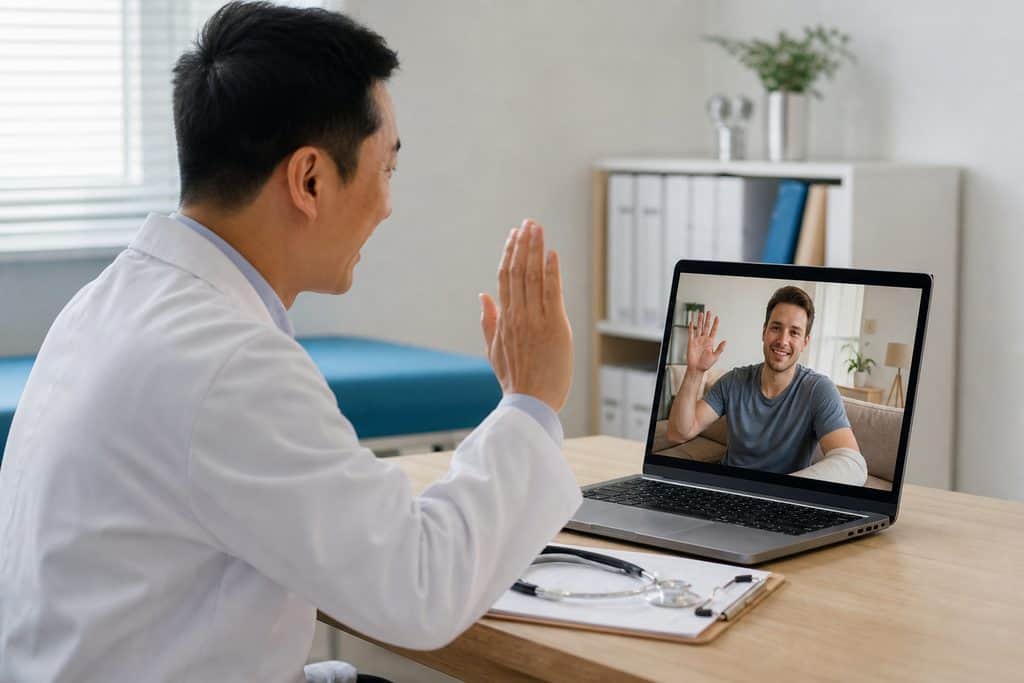
When 54-year-old Daniel from Manchester flew home three weeks after his cardiac valve repair at Fuwai Hospital in Beijing, the relief was immense. The surgery went smoothly. His incision was healing. But then a quiet panic set in one evening. He noticed a small area of redness near his chest wound. His discharge papers were in Chinese. The surgeon who knew his case best was 5,000 miles away. Could he just call the hospital? Would anyone speak English? Daniel’s experience is not unique. Every year, thousands of international patients travel to China for high-quality, cost-effective surgery. And then they go home. The question that follows them: how do I manage the recovery without my surgeon in the room?
The answer has changed dramatically in recent years. A surgeon video follow up after surgery in China is not only possible; it is a structured, expected part of the medical travel process at many top-tier hospitals. But it requires planning, the right channels, and a clear understanding of what Chinese hospitals can and cannot offer remotely.
Key Takeaways
- Post-operative video follow-up with a Chinese surgeon typically costs between $100 and $300 per session through hospital international departments.
- WeChat is the dominant communication channel for Chinese doctors, but formal medical follow-up usually requires a hospital-sanctioned telemedicine platform.
- Language barriers are the single biggest obstacle to effective remote follow-up; having a bilingual coordinator changes the dynamic entirely.
- Written records from your home-country doctor are essential before any remote consultation can be scheduled.
The Problem: You Are Home, But Your Recovery Is Not Over
Post-surgical complications do not respect borders. A 2023 study published in the Journal of Travel Medicine found that approximately 12% of medical tourists experience a complication after returning home. For those who traveled for orthopedic or cardiac procedures, the rate of “unresolved questions about recovery” is far higher. The challenge is not just medical. It is logistical, linguistic, and emotional.
Most patients who have surgery in China return to healthcare systems that have no relationship with the Chinese hospital. Their local doctor has never spoken to the surgeon who operated on them. Their medical records are in Mandarin. And the specific post-operative protocols—when to resume blood thinners, how to interpret a particular drainage pattern, whether a specific pain level is normal—are locked in the mind of a doctor who is no longer accessible by walking down a hallway.
This is not a hypothetical concern. It is the most common reason patients hesitate to book surgery abroad in the first place.
Why Remote Follow-Up With a Chinese Surgeon Works Better Than You Expect
Top Chinese hospitals operate at a scale that is hard to visualize from abroad. Fuwai Hospital performs over 14,000 cardiac surgeries annually. A single orthopedic department at West China Hospital in Chengdu may handle more joint replacements in a month than a typical US hospital does in a year. That volume forces efficiency. Post-operative follow-up is not an afterthought; it is a systematized process with defined checkpoints: 2 weeks, 6 weeks, 3 months, 6 months.
When you request a post op consultation online with doctor in Shanghai or Beijing, you are plugging into a workflow that already exists for tens of thousands of patients. The surgeon’s team is accustomed to reviewing wound photos, lab results, and symptom descriptions remotely. They know what to look for because they have seen the same recovery arc thousands of times.
WeChat Is the Backbone, But Formal Follow-Up Needs a Platform
Many patients assume they can simply message their surgeon on WeChat after returning home. That assumption is half right. Chinese doctors do use WeChat extensively for professional communication. But there is a critical distinction between informal check-ins and formal medical follow-up.
Informal WeChat messages are common. A patient sends a photo of their incision. The surgeon replies with a brief reassurance. This works for minor concerns. But it has real limitations. The surgeon is not being paid for that time, which makes patients hesitant to ask detailed questions. There is no medical record created. And if something goes wrong, there is no documentation trail.
Formal follow-up happens through hospital telemedicine platforms. These are video consultation systems operated by the hospital’s international department or telemedicine center. The session is scheduled in advance. A fee is paid. The surgeon reviews your updated records before the call. And the consultation becomes part of your official medical record at the hospital.
So can your Chinese surgeon do remote check up? Yes. But the quality of that check-up depends entirely on which channel you use.
Cost Reality: Remote Follow-Up Is Surprisingly Affordable
Let us address the financial question directly. A telemedicine follow up cost after surgery abroad in China is modest compared to the cost of the surgery itself. Here is what you can expect:
| Follow-Up Type | Typical Cost (USD) | What It Includes |
|---|---|---|
| Informal WeChat check-in | Free (discretionary) | Brief message exchange, no formal record |
| Standard video consultation (hospital international dept) | $100–$300 | Scheduled video call, record review, written summary |
| Top-specialist video consultation | $500–$800 | Senior expert review, longer session, detailed written opinion |
| Written second opinion (post-op complication review) | $300–$500 | Documented analysis of new symptoms or concerns |
Prices vary by hospital and case complexity. But even the high end of this range is a fraction of what a single specialist visit costs out-of-pocket in the United States.
How to Contact Your Chinese Surgeon After Returning Home: The Step-by-Step Reality
This is the section most patients search for and rarely find answered honestly. Here is exactly what the process looks like, including the friction points.
Step 1: Start before you leave China. The single biggest mistake is waiting until you are home to figure out follow-up logistics. Before discharge, ask your surgeon’s team two specific questions: “What is the official channel for remote follow-up?” and “Who is my contact person for scheduling?” Most international departments assign a coordinator. Get that person’s name and contact method.
Step 2: Gather your post-discharge records. You will need your discharge summary, operation report, current medication list, and any post-op imaging or lab results. If these are in Chinese, request English translations. Some hospitals provide them automatically for international patients. Others do not.
Step 3: Prepare a written update before any video call. Your surgeon needs to know what has happened since discharge. Write a concise summary: current symptoms, pain levels, wound appearance, any new medications prescribed by your local doctor, and specific questions you want answered. Send this in advance. A surgeon reviewing your case for 15 minutes before a video call is far more useful than one reading your file during the call.
Step 4: Use the hospital’s telemedicine platform, not just WeChat. This is where many patients get stuck. The hospital’s platform may require a Chinese phone number or a specific app. The interface may not have an English option. This is exactly where a bilingual coordinator earns their value. They handle the registration, the scheduling, the document upload, and they join the call to interpret if needed.
Practical tip: If your surgeon offers an informal WeChat follow-up, take it. But also request a formal video consultation for anything that involves a change in your treatment plan or a new symptom. The formal record protects you and your surgeon.
What Makes a Remote Follow-Up Actually Useful: The Records Question
A video call is only as good as the information the surgeon has before it starts. This is the part most patients underestimate.
Your Chinese surgeon cannot see the labs your local doctor ordered. They cannot feel the swelling you are describing. They are relying entirely on what you send them. So the quality of your follow-up depends on the quality of your preparation.
Before scheduling a surgeon video follow up after surgery in China, you need to collect three things:
Recent imaging or lab work. If your local doctor ordered an X-ray, ultrasound, or blood test since your return, get the actual files—not just the summary. Hospitals in China use DICOM format for imaging, which is the same standard used in the US and Europe. Your surgeon’s team can review these files directly.
Clear wound photos. If your concern involves the surgical site, take photos in good lighting from multiple angles. Include a ruler or coin in the frame for scale. Blurry photos lead to vague answers.
A written symptom timeline. When did the symptom start? Has it gotten better or worse? What makes it better or worse? What did your local doctor say about it? This timeline is worth more than a 10-minute verbal description.
One more thing: your local doctor’s contact information. In some cases, the Chinese surgeon may want to speak directly with your home-country physician. This is rare but happens when a complication requires coordinated care. Having that contact ready removes a delay.
WeChat Follow Up With Doctor After Medical Tourism China: What It Can and Cannot Do
Let us talk about WeChat honestly, because it is the tool most patients already know about and the one most misunderstood.
WeChat is the default communication app in China. Your surgeon almost certainly has it. Many international patients exchange WeChat contacts with their surgical team before discharge. And yes, a WeChat follow up with doctor after medical tourism China can work for simple, quick questions.
But here is what WeChat cannot do:
It cannot create a medical record. If you later need documentation of your follow-up for insurance or for a referral to another specialist, a WeChat message is not sufficient. It cannot handle complex clinical discussions. A surgeon typing on a phone between surgeries is not going to give you a nuanced explanation of why your blood pressure medication should change. And it cannot be scheduled. You are at the mercy of the surgeon’s availability and willingness to respond.
That last point matters more than patients realize. Chinese surgeons are extraordinarily busy. A senior cardiac surgeon at a top hospital may perform 300+ surgeries a year and oversee a team managing hundreds more. Answering WeChat messages from former patients is not part of their job description. Some do it generously. Many do not.
The solution is not to avoid WeChat. It is to use it appropriately: for quick confirmations, for scheduling formal consultations, for sending a photo when you are not sure if something warrants a full appointment. For anything that requires a considered medical opinion, use the formal channel.
Practical Considerations: Documentation, Payment, and Language
Remote follow-up from abroad involves several practical hurdles that are rarely discussed in marketing materials. Here are the real ones.
Payment methods. Chinese hospital international departments typically accept international credit cards and bank transfers. Some also accept Alipay or WeChat Pay, but these require a Chinese bank account or an international version of the app that many foreign patients do not have. Plan to pay by credit card or wire transfer unless told otherwise.
Time zone coordination. China Standard Time is UTC+8. If you are in London, that is a 7 or 8 hour difference depending on the season. If you are in New York, it is 12 or 13 hours. Scheduling a video call that works for both you and a surgeon with a full operating schedule requires flexibility. Most international departments offer a few fixed windows for international telemedicine consultations.
Language and interpretation. This is the hardest barrier. Some surgeons at top international departments speak functional English. Many do not. Even those who do may struggle with nuanced descriptions of symptoms. If you do not speak Mandarin, you need an interpreter on the call. Some hospitals provide this service. Many do not. A bilingual coordinator who understands medical terminology in both languages is not a luxury here; it is the difference between a useful consultation and a frustrating one.
Insurance reimbursement. Whether your home-country insurance covers a remote follow-up with a foreign surgeon depends entirely on your policy. Some international health insurance plans include telemedicine coverage. Most standard national health systems do not. Check your policy before scheduling. You will likely be paying out of pocket.
Frequently Asked Questions
Can my Chinese surgeon do remote check up after I return home?
Yes. Most top-tier Chinese hospitals with international departments offer structured remote follow-up through video consultation platforms. The key is to arrange the channel before you leave China. Informal follow-up via WeChat is common but does not create a medical record and is not reliable for complex clinical questions.
How much does a telemedicine follow up cost after surgery abroad in China?
Standard video consultations through hospital international departments typically range from $100 to $300. Consultations with senior specialists can run $500 to $800. These prices vary by hospital and case complexity. Compared to out-of-pocket specialist visits in the US or Europe, these are substantially lower.
What if something goes wrong after I return home and I need urgent advice?
For urgent post-operative concerns, contact your local healthcare provider first. Your Chinese surgeon cannot manage an acute emergency from abroad. Once the immediate issue is stabilized, a formal video consultation can review what happened and adjust your long-term recovery plan. Keep your discharge summary and operation report accessible at all times.
How do I contact my surgeon in China after returning home if I lost their contact information?
Contact the hospital’s international department directly. They maintain records of all international patients and can route your request to the correct surgical team. If you worked with a medical coordination service, they can also facilitate reconnection. Do not rely on general hospital phone numbers; ask specifically for the international patient center.
Your Next Step
Remote follow-up with a Chinese surgeon is not a luxury add-on. It is an essential part of planning any surgery abroad, and it works best when arranged before you leave the country. China Medical Services helps international patients navigate exactly this process—from scheduling formal video consultations with the right specialist to providing bilingual interpretation during follow-up calls. We are not a hospital and we do not provide medical advice. We are the coordination layer that makes the Chinese healthcare system accessible to patients who do not speak the language or know the system.
If you are planning surgery in China or have already returned home and need to reconnect with your surgeon, start with a conversation. It costs nothing to ask what is possible.
For more medical information and treatment options in China, visit chinamedservices.com (China Medical Services).
