Dental Implants in China: Pain and Recovery Explained
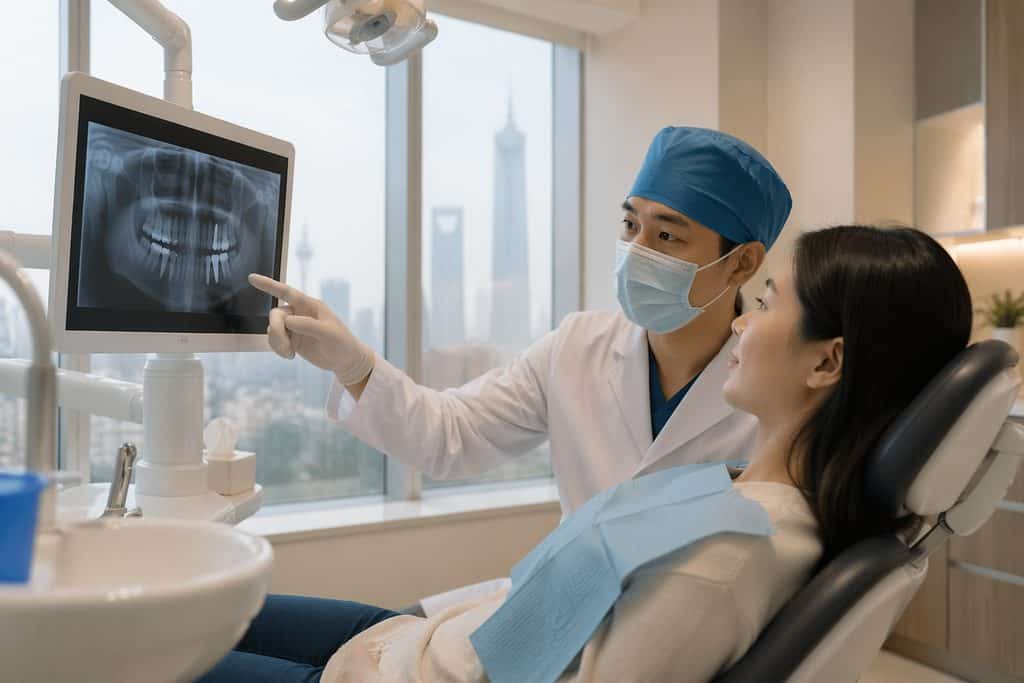
Dental Implants in China: Pain and Recovery
A 2023 survey published in the International Journal of Implant Dentistry found that nearly 70% of patients considering dental implants abroad listed “fear of pain” as their single biggest hesitation — ahead of cost, ahead of travel logistics. The dental implants cost China comparison is what gets people searching. The pain question is what makes them hesitate. Both deserve honest answers, and that is what this guide delivers: what the procedure actually feels like, how long recovery takes, what the dental implant price Shanghai clinics charge, and how the whole process works when you are flying in from abroad.
We are not dentists. Our team coordinates medical travel to China for international patients, connecting people with hospitals and clinics across 37 cities. What we can do is give you the unvarnished picture — the timeline, the discomfort, the costs, and the parts nobody puts in a brochure.
How This Actually Works, Step by Step
If you are considering dental implants in China, the process rarely starts with a plane ticket. It starts with records. Here is the real sequence.
Step one: gather your dental records. You will need a recent panoramic X-ray (OPG), any CBCT scans you have, and a summary of your dental history — existing implants, bone grafts, periodontal treatment, medications. If you do not have a CBCT, most Chinese dental hospitals will take one on arrival, usually for under $100.
Step two: send those records for remote review. A Chinese dental specialist — typically an oral implantologist at a public tertiary hospital or a private international clinic — reviews your imaging and history. You get back a written assessment: how many implants are feasible, whether you need bone grafting or a sinus lift, an estimated timeline, and a price range. This takes three to seven business days.
Step three: a video consultation. You speak with the dental team directly. You ask about anesthesia options, healing expectations, and what happens if a complication arises after you fly home. This is where most of the pain-related anxiety gets resolved — not from a website, but from a clinician looking at your actual scan.
Step four: you travel. For straightforward single implants, some clinics complete the implant placement in one trip and the crown in a second visit three to six months later. For full-arch cases, the protocol varies. Either way, you are not guessing. The plan is in writing before you book a flight.
Step five: surgery and recovery. The implant placement itself is typically 30 to 90 minutes per implant, done under local anesthesia. You rest, you heal, and you follow a soft-food diet for the early weeks. More on that below.
Is Dental Implant Surgery Painful? What Patients Actually Report
Here is the honest answer: the surgery itself is not painful. The recovery is uncomfortable. Those are two different things, and conflating them is why so many people delay treatment they genuinely need.
During implant placement, you are under local anesthesia — the same class of numbing used for a root canal. Most patients report feeling pressure and vibration, not pain. If you have ever had a filling, you already know what this feels like. Some clinics offer sedation for anxious patients, and for full-arch cases, IV sedation or general anesthesia is common.
The 24 to 72 hours after surgery are when discomfort peaks. Expect swelling, a dull ache, and sensitivity around the surgical site. This is normal inflammatory response, not a sign something went wrong. Most patients manage it with standard over-the-counter pain relievers — ibuprofen is typical — and many report needing them only for the first day or two.
What surprises people is the fatigue. Your body is healing a wound in bone. You will feel tired for a few days. Plan for rest, not sightseeing.
A Realistic Timeline
Recovery from dental implants is not a single event. It is a series of stages, and each has its own duration. The table below reflects typical ranges for a healthy adult with no complicating conditions. Your case may differ.
| Stage | Typical Duration | What to Expect |
|---|---|---|
| Surgery day | 1–2 hours in clinic | Local anesthesia, pressure not pain, mild bleeding |
| Acute recovery | 3–7 days | Swelling peaks at 48 hours, dull ache, soft-food diet |
| Return to normal activity | 3–5 days | Most patients resume desk work within a week |
| Soft tissue healing | 2–4 weeks | Gums close over the implant site, sutures dissolve or removed |
| Osseointegration | 3–6 months | Bone fuses with the implant — no sensation, just waiting |
| Crown placement | 1–2 visits | Final restoration fitted, bite adjusted |
That osseointegration phase — where the titanium implant fuses with your jawbone — is the part patients underestimate. Nothing hurts. You will forget the implant is there. But the clock is running, and no reputable clinic will rush it. Trying to load a crown too early is the fastest route to implant failure.
For patients traveling from abroad, this means two trips in most cases. Some clinics offer “immediate loading” protocols for specific cases — typically full-arch — where a temporary prosthesis is fitted within 24 to 48 hours. Whether you are a candidate depends on bone density and implant stability, which the surgeon assesses during placement.
What Can Go Wrong — and What Happens Then
We would rather you hear this from us than discover it on your own.
Infection at the implant site. This occurs in roughly 1–2% of cases according to implantology literature. Signs include increasing pain after day three, fever, or pus. Treatment is usually antibiotics; in severe cases, the implant may need to be removed and the site allowed to heal before reattempting.
Nerve injury. Rare, but possible when implants are placed in the lower jaw near the inferior alveolar nerve. Symptoms include numbness or tingling in the lip, chin, or tongue. Most cases resolve within weeks to months. Permanent injury is uncommon but documented.
Bone graft failure or insufficient integration. If the implant does not fuse with bone — a condition called failed osseointegration — it will feel loose. The implant is removed, the site heals, and the procedure is reattempted, sometimes with a different grafting approach.
The complication you cannot fly back for. This is the real risk of dental tourism. If something goes wrong three weeks after you return home, you need a local dentist willing to take over your care. Some will. Some will not, particularly if they did not place the implant. Before you commit, ask your home dentist whether they are willing to handle follow-up. Get that answer in writing if you can.
Dental Implant Cost in China vs. the U.S. and Europe
The dental implants cost China advantage is real, but it is not as dramatic as some marketing suggests. Here is the actual comparison for a single implant with crown, based on publicly available clinic pricing as of 2025.
| Location | Single Implant + Crown (USD) | Full Arch (per jaw) |
|---|---|---|
| United States | $3,000–$6,000 | $20,000–$50,000 |
| United Kingdom | £2,000–£3,500 (~$2,500–$4,400) | £12,000–£25,000 |
| Germany | €1,800–€3,200 | €12,000–€22,000 |
| China (public tertiary hospital) | $800–$2,000 | $6,000–$15,000 |
| China (private international clinic) | $1,500–$3,500 | $12,000–$25,000 |
Notice the range. A dental implant price Shanghai international clinic quotes will sit at the higher end — you are paying for English-speaking staff, imported implant systems, and a level of service closer to what you would expect in Singapore or Dubai. Public tertiary hospitals in cities like Chengdu, Wuhan, or Xi’an offer lower prices, but English support is thinner.
Implant brand matters enormously. A Straumann or Nobel Biocare implant — both Swiss/Swedish systems widely used in China — costs more than a Korean or domestic brand. Ask which system the clinic uses. If you ever need a replacement part in your home country, brand availability matters.
Many clinics offer dental implant packages abroad that bundle the implant, abutment, crown, and follow-up visits into one price. These can be genuinely good value, but read the fine print. Does the package cover bone grafting if it turns out you need it? What about the second trip’s accommodation? “Package” is a marketing word until you see the inclusions list.
Practical Considerations: Records, Visas, Payment, and Follow-Up
Records. Bring everything. Digital files, not printouts. Chinese clinics work with DICOM files for imaging and will want your CBCT if you have one. If your records are in English, most international departments handle them without translation. Public hospital general dentistry may not.
Visa. For dental treatment in China, the applicable short-stay category is the S2 visa, which covers medical treatment and private affairs. This is subject to the latest embassy or consulate requirements and requires supporting documents from the treating hospital. The M visa is for commercial and trade activities and has nothing to do with medical treatment. Accompanying family members also apply for S2. Processing typically takes four to ten business days, though this varies by consulate.
Payment. Public hospitals require prepayment; you pay upfront and seek reimbursement from your insurance afterward. Private international clinics often bill insurance directly and accept international credit cards. Confirm payment methods before you arrive — some public hospitals only accept local payment apps.
Language. This is the practical barrier nobody warns you about. A top Chinese dental hospital may see hundreds of patients a day. Signage is in Chinese. Appointment systems are in Chinese. Without a bilingual companion, you will spend more time navigating than healing. This is precisely the gap our bilingual medical companion service exists to fill.
Follow-up at home. Before you leave China, request a written treatment summary in English — implant brand, lot number, placement date, torque values, and recommended follow-up schedule. Give this to your home dentist. It makes the handoff dramatically smoother.
If you are also weighing other procedures during your trip, our guide to China’s top-ranked specialty departments covers how to match a condition to the right hospital. And for a broader overview of how medical travel to China works — including hospital selection across our network of 340+ top-ranked hospitals in 37 cities — that is the place to start.
Frequently Asked Questions
For a single implant, plan for 5 to 10 days for the placement trip, then a second trip of 3 to 5 days three to six months later for the crown. Full-arch cases may require 10 to 14 days for the initial phase. Trying to compress this timeline usually means compromising the healing process, which no reputable clinic will do.
Most surgeons advise waiting 5 to 7 days before long-haul flights. The concern is not the implant itself but clot stability and swelling management at altitude. Short flights within Asia are often fine after 48 hours, but follow your surgeon’s specific instruction — they know your case.
Rarely directly. Most Western dental insurance plans do not cover treatment abroad, and those that do require pre-authorization and extensive documentation. Some plans reimburse a portion if you submit itemized receipts and treatment records. Check with your insurer before you travel — the answer is almost always “partially, with paperwork.”
This is the scenario worth planning for. Reputable Chinese clinics typically offer a warranty period — often one to five years depending on the implant brand — covering replacement of the implant fixture itself. What is usually not covered is your travel, accommodation, or the cost of a local dentist handling the removal. Ask about the warranty terms in writing before you commit.
At accredited tertiary hospitals and JCI-certified international clinics, yes — the standards, implant systems, and sterilization protocols match Western norms. The variance is at the lower end of the market, where unlicensed clinics and grey-market implants exist. The safeguard is simple: stick to hospitals with verifiable accreditation, and never choose a provider solely on price.
Your Next Step
Dental implant surgery in China is not painless, but it is manageable — and the recovery timeline is predictable once you know what to expect. The bigger variable is not the procedure. It is the coordination: getting your records reviewed, securing an appointment with a qualified implantologist, navigating a hospital system that operates almost entirely in Chinese, and arranging follow-up that works across two countries.
Our team handles exactly that coordination — record translation, appointment scheduling through hospital international departments, bilingual accompaniment, and visa guidance. We are not dentists and we do not provide medical advice or treatment. We connect you with the clinicians who do, and we make sure you understand every step before you commit to anything.
If you would like a straightforward assessment of your case — no pressure, no obligation — you can start with a free consultation. Tell us what you are dealing with. We will tell you honestly whether China is a reasonable option for you.
This article is for informational purposes only and does not constitute medical advice. Treatment decisions should always be made in consultation with a qualified dental professional who has reviewed your individual case.
For more medical information and treatment options in China, visit chinamedservices.com (China Medical Services).
