Should I Treat My Varicose Veins? A Realistic Look at Risks, Costs, and Options
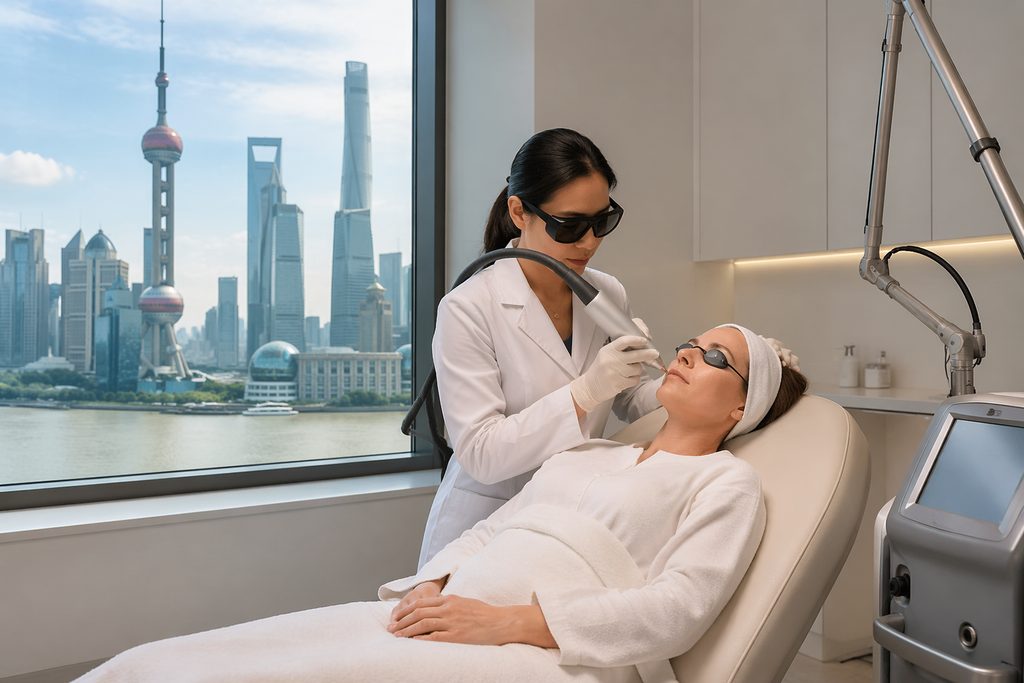
Have you ever caught yourself postponing a doctor’s visit for those twisted, bulging veins on your legs because you assume the treatment is purely cosmetic or not worth the hassle? What if that delay is quietly making a reversible condition harder to manage? The decision to treat varicose veins is rarely just about how they look. It is a medical calculation involving symptoms, progression risk, downtime, and—for many international patients—a serious look at varicose vein treatment cost China versus prices back home.
We work with patients from North America, Europe, and the Gulf who ask us the same thing: should I fix this now, or can it wait? The honest answer depends on more than aesthetics. Venous reflux does not self-correct. The underlying valve failure tends to progress, and while not every visible vein demands intervention, the threshold for treatment is lower than most people assume. Our team at China Medical Services regularly coordinates evaluations for patients who spent years believing they had to live with aching legs. They did not.
How This Actually Works, Step by Step
Understanding the pathway from “I have varicose veins” to “I have completed treatment” removes a lot of fear. The sequence is not complicated, but each step benefits from clarity.
First, you need a proper venous assessment. You send your existing records—ultrasound reports, photographs of the affected legs, any prior treatment notes. A vascular specialist reviews them. If your documentation is incomplete, we help arrange a targeted duplex ultrasound once you arrive. That scan maps the reflux points. Without it, no responsible surgeon will schedule a procedure.
Second, the specialist determines whether you have symptomatic venous insufficiency or primarily cosmetic concerns. Symptoms that justify treatment include persistent aching, heaviness, night cramps, itching over the vein, swelling, skin discoloration, or a previous episode of superficial thrombophlebitis. Purely asymptomatic veins may still be treated for cosmetic reasons, but the clinical priority differs.
Third, you receive a written treatment plan. It names the modality—endovenous laser ablation, radiofrequency ablation, ultrasound-guided foam sclerotherapy, or microphlebectomy—and the number of sessions likely required. Pricing comes at this stage, not before. Every legitimate quote depends on how many veins need treatment and which technique fits your anatomy.
Fourth, you decide. If you proceed, we coordinate scheduling, visa documentation, and on-the-ground support. You travel, undergo treatment, and usually return home within a week for straightforward cases.
Should I Treat My Varicose Veins? The Medical Thresholds That Matter
This is the core question, and the answer hinges on what your veins are actually doing to you. Untreated venous reflux affects approximately 1 in 3 adults over 45, yet fewer than half seek evaluation within the first two years of noticing symptoms.
The clinical reasons to treat are not subtle. Chronic venous hypertension damages the skin from the inside. You may notice a brownish discoloration around the ankle, a condition called lipodermatosclerosis. That is not a stain. It is tissue breakdown. Left alone, it can progress to a venous ulcer—an open wound that takes months to heal and recurs in up to 70% of cases without intervention. Treating the reflux closes off the faulty vein and drops that recurrence risk dramatically.
But what about veins that do not hurt? Here the decision gets more personal. Some patients treat them because the appearance affects their quality of life. That is a legitimate reason. Others wait. The risk of waiting is not catastrophic in the short term, but the vein wall stretches further, and the treatment area expands. A small segment treated early with one session of sclerotherapy might require two sessions and a different technique a few years later. The cost of delay is real, even if it is not measured in emergencies.
One question we hear constantly: is varicose vein surgery safe in China? The short answer is yes, in top-tier vascular centers. Endovenous thermal ablation has a technical success rate above 95% in published series, with major complication rates below 1%. The key is hospital selection. A high-volume vascular department performs thousands of these procedures annually. That repetition matters more than the country where the operating room sits.
A Realistic Timeline
People underestimate how long the process takes because they focus only on the procedure itself. The procedure is the shortest part. Here is what a realistic schedule looks like for an international patient planning treatment in China.
| Stage | What Happens | Typical Duration |
|---|---|---|
| Week 1 | Submit existing records and photos for remote review | 2–4 days for specialist feedback |
| Week 2 | Video consultation with vascular team; treatment plan drafted | 1–2 days to schedule; 30–45 min call |
| Week 2–3 | S2 visa application with hospital invitation letter | 5–10 business days, varies by consulate |
| Week 3–4 | Travel to China; in-person duplex ultrasound | 1 day |
| Week 4 | Treatment session(s) | 1–3 days depending on extent |
| Week 4–5 | Post-procedure follow-up scan; return home | 1–2 days after final session |
| Month 2–3 | Remote follow-up via photos or local ultrasound report | Ongoing as needed |
The waiting step people forget is document translation. If your records are not in English or Chinese, they need certified translation before the specialist review. That adds 2–3 days. Also, the S2 visa requires a formal invitation or supporting letter from the hospital. We handle that document, but consulate processing times are outside anyone’s control. Budget for it.
What Can Go Wrong — and What Happens Then
We would rather tell you the failure modes upfront than have you discover them in a foreign hospital corridor. The honest list starts with the most common issue: the ultrasound reveals more extensive reflux than your photos suggested. That changes the treatment plan and the price. It happens in roughly 20–30% of international cases we coordinate, because patients often underestimate how much of the leg is involved.
Recourse: the specialist re-scopes the plan. You are never locked into a quote based on incomplete information. If the new plan exceeds your budget, you can treat the most symptomatic segment and defer the rest. That is a legitimate clinical choice, not a compromise.
Second failure mode: you arrive and your blood pressure or a minor infection makes treatment unsafe that week. Recourse: the procedure is postponed, not cancelled. We rebook for the next available slot, usually within days. This is why we recommend building a 7–10 day buffer into your trip.
Third: post-procedure bruising or a tender cord along the treated vein. This is not a failure—it is the expected inflammatory response. But it alarms patients who were not warned. Recourse: compression stockings and walking. The cord fades over 4–6 weeks. Serious complications like deep vein thrombosis or nerve injury occur in under 1% of cases in high-volume centers, and the hospitals we work with have vascular ultrasound on site to rule them out immediately.
How Much Does Varicose Vein Laser Cost Abroad? The Real Numbers
You have probably seen American bills for endovenous laser ablation that run $3,000 to $7,000 per leg, and that is with insurance negotiated rates. Uninsured patients pay more. In the UK, NHS wait times for non-urgent venous procedures stretch past 12 months in many trusts, pushing patients toward private care at £2,500 to £4,500. The question of how much does varicose vein laser cost abroad is really a question about whether the savings justify the travel.
In China, the same endovenous laser ablation on one leg typically ranges from $1,200 to $2,800 at top-tier public hospital international departments. Bilateral treatment runs $2,200 to $5,000. Ultrasound-guided foam sclerotherapy for smaller veins costs $300 to $800 per session. These are out-of-pocket prices for international patients, and they vary by hospital and case complexity.
That means a patient paying $5,000 in the US could pay $1,800 in Shanghai for comparable technology and expertise. Even after flights and accommodation, the math works for many. But price is not the only factor. The best hospital for varicose veins Shanghai has is not necessarily the cheapest one. You want a vascular surgery department that performs thermal ablation weekly, not occasionally. Volume drives safety.
Practical Considerations: Records, Visa, Payment, and Follow-Up
Before you book anything, get your paperwork in order. You need a recent venous duplex ultrasound report if you have one. If not, plan to have it done on arrival. Bring a list of medications, especially anticoagulants. Aspirin and warfarin affect the procedure timing. Bring compression stockings if you already own them; you will need them after treatment regardless.
Visa category matters. Medical treatment in China falls under the S2 visa for short stays. Your accompanying family member applies for the same category. The hospital provides an invitation letter and treatment confirmation, which you submit with your application. We guide you through this, but approval is always at the consulate’s discretion.
Payment is upfront at public hospitals. International departments accept credit cards and bank transfers. Private international hospitals like those in our private hospital network often bill insurance directly. If you plan to claim reimbursement from your home insurer, request itemized receipts and translated discharge summaries before you leave. Many insurers require pre-authorization for overseas treatment, so check before you travel.
Follow-up at home is straightforward. You send photos or a local ultrasound report to the treating team. Most patients need one follow-up at 3 months and another at 12 months. Compression stockings for 2–6 weeks after treatment. Walking daily. No long-haul flights within 48 hours of the procedure to minimize clot risk.
Frequently Asked Questions
In accredited vascular centers, yes. Endovenous ablation carries a major complication rate below 1% in high-volume departments. The key is choosing a hospital with a dedicated vascular surgery team, not a general surgery ward. Ask about annual procedure volume before committing.
Endovenous laser ablation in China typically costs $1,200 to $2,800 per leg for international patients, versus $3,000 to $7,000 in the US after insurance. Sclerotherapy sessions run $300 to $800. Final pricing depends on how many veins require treatment and which technique fits your anatomy.
You cannot lock in a surgery date before an in-person ultrasound. What you can do is complete a remote evaluation, receive a provisional treatment plan, and schedule your consultation and likely procedure window. That reduces your trip to a single visit instead of two.
Packages typically bundle hospital coordination, document translation, visa support letters, airport transfer, bilingual accompaniment during hospital visits, and follow-up coordination. Prices for coordination services start around $300 for basic appointment support and scale up depending on how much on-the-ground assistance you want.
Some international insurers reimburse treatment at JCI-accredited or internationally recognized hospitals. You pay upfront at public facilities and submit claims afterward. Private international hospitals often bill directly. Verify pre-authorization requirements with your insurer before travel.
Your Next Step
The decision to treat varicose veins is personal, but it should be informed by data, not dread. Reflux progresses. Symptoms rarely improve on their own. And the cost of treatment in China—both in money and in time—is often far lower than Western patients expect. Our team at China Medical Services coordinates evaluations, treatment planning, and on-the-ground support for international patients. We do not perform procedures and we do not promise outcomes. We handle the logistics so you can make a clear medical decision.
If you are weighing whether to treat now or wait, start with a remote review of your records. Send what you have. A specialist will tell you whether intervention is clinically indicated and what it would cost. No pressure. Just clarity. Request a free consultation and we will walk you through it.
For more medical information and treatment options in China, visit chinamedservices.com (China Medical Services).
