Desmoid Tumor in China: Shanghai Sixth Hospital’s Modern Care
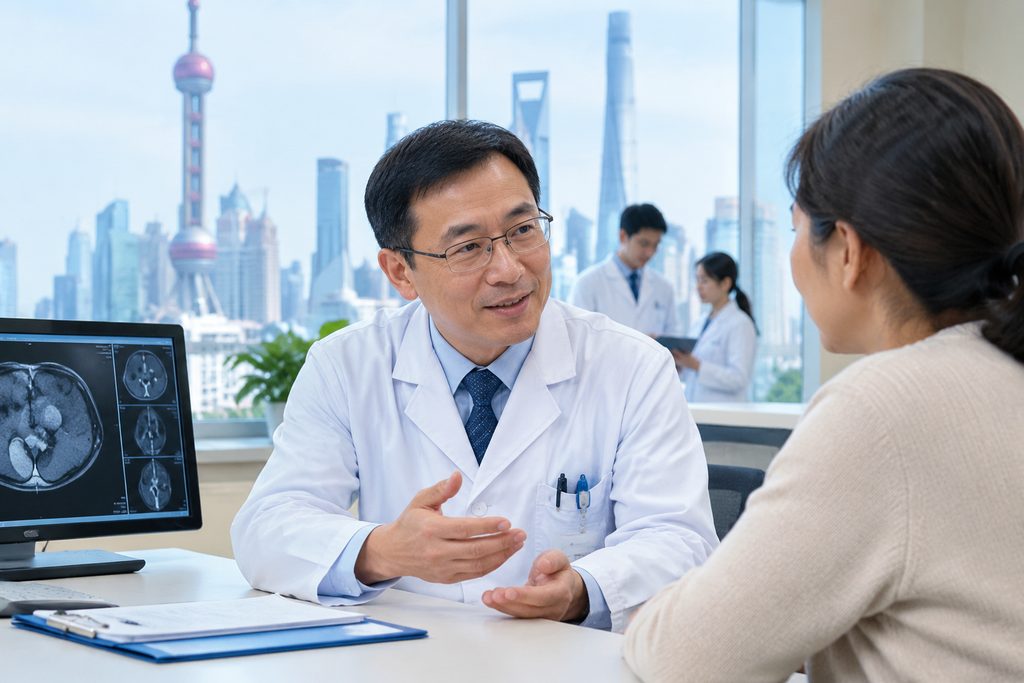
Desmoid Tumor in China: Shanghai Sixth Hospital’s Modern Care
Desmoid tumors account for fewer than 3% of all soft-tissue tumors, yet they cause an outsized share of anxiety — because they are locally aggressive, unpredictable, and notoriously prone to coming back after surgery. For patients who have already had one resection and heard the words “it’s grown again,” the search for a Desmoid Tumor in China often starts with a single question: is there a center that treats this disease often enough to know the difference between a tumor that needs a scalpel and one that needs patience?
Shanghai Sixth People’s Hospital, affiliated with Shanghai Jiao Tong University, is one of the Chinese centers where that question gets a serious answer. Its orthopedic oncology and sarcoma team sees desmoid cases regularly, works inside a multidisciplinary structure, and operates in a hospital system that handles volumes most Western centers never approach. What follows is an honest look at what that care involves, what it costs, and where the friction points are.
Desmoid Tumor in China: The Short Answer
Yes — international patients can be evaluated and treated for desmoid tumors (aggressive fibromatosis) at Shanghai Sixth People’s Hospital and comparable Chinese sarcoma centers. The realistic pathway is not “book surgery and fly.” It is: send your imaging and pathology slides, get a written second opinion or video consultation first, then travel only if the plan makes sense.
The caveat matters. Chinese public hospitals do not allow you to reserve a surgeon or a surgery date from overseas. Outpatient registration happens on the day, and surgery is scheduled only after an in-person consultation. The workaround is the hospital’s international or VIP channel, which offers senior specialists and English-language support at roughly 1.5 to 2 times the standard fee. That is the honest trade-off.
Who This Is Right For — and Who It Isn’t
Desmoid tumors behave differently in every patient. Some stay quiet for years. Some grow fast. Some shrink on their own. That variability is exactly why the decision to travel should follow a specialist review, not precede it.
Patients who are typically good candidates for evaluation in China:
- Those with a confirmed desmoid diagnosis and imaging showing progression, recurrence after prior surgery, or involvement of a limb, abdominal wall, or mesentery where function-sparing resection is difficult
- Patients told in their home country that surgery would require amputation, major reconstruction, or removal of a critical structure — and who want a second surgical opinion
- People facing long waits for sarcoma multidisciplinary review, or whose insurance denies coverage for active surveillance or cryoablation
- Patients seeking a cost comparison before committing to a $60,000-plus procedure at home
Who should probably not pursue this:
- Anyone whose tumor is stable and asymptomatic. International guidelines increasingly favor active surveillance for stable desmoids, and traveling for surgery you do not need carries real risk.
- Patients who cannot obtain pathology slides or a recent MRI. Without these, no Chinese specialist can give a meaningful opinion.
- Anyone in acute crisis — bowel obstruction, rapid functional loss, uncontrolled pain. That is a local emergency, not a travel plan.
- Patients expecting a guaranteed surgical date before arrival. That promise cannot be made honestly.
The Options, Compared
Desmoid management is not one decision. It is a sequence, and the right entry point depends on tumor location, growth rate, prior treatment, and symptoms. Here is how the main pathways compare across the settings international patients most often consider.
| Approach | Typical Setting | Indicative Cost (USD) | Time to Start | Key Limitation |
|---|---|---|---|---|
| Active surveillance (watch-and-wait) | Any center; guideline-endorsed first step for stable disease | $0–$500 (imaging only) | Immediate | Requires reliable serial MRI; not suitable for fast-growing or symptomatic tumors |
| Systemic therapy (e.g., sorafenib, methotrexate/vinblastine) | Sarcoma medical oncology | $800–$3,000 per month | 1–3 weeks | Response takes months; side effects; not curative |
| Surgery — standard resection | Orthopedic oncology / sarcoma surgery | $12,000–$25,000 in China; $40,000–$120,000+ in the US | 2–6 weeks after first consult | Recurrence rates remain significant; function loss depends on site |
| Surgery — complex reconstruction | High-volume sarcoma center | $25,000–$45,000 in China | 4–8 weeks | Requires multidisciplinary planning; longer recovery |
| Cryoablation / ablation | Interventional radiology | $8,000–$18,000 | 2–4 weeks | Only for selected locations and sizes |
| Radiotherapy | Radiation oncology | $6,000–$15,000 | 2–4 weeks | Reserved for specific indications; long-term toxicity risk |
Which column fits you? If your tumor is stable and you have access to good imaging at home, surveillance is the rational first column — and traveling adds little. If you have been told surgery would cost you a limb or a critical function, the complex-reconstruction row is where a high-volume Chinese sarcoma center earns its keep. Systemic therapy is often the right answer when the tumor sits somewhere surgery cannot safely reach.
Why Shanghai Sixth People’s Hospital Comes Up So Often
Shanghai Sixth People’s Hospital is not a general hospital that happens to do tumor work. It is a nationally recognized center for orthopedics and trauma, and its orthopedic oncology practice sits inside one of the busiest musculoskeletal referral pipelines in China. Desmoid tumors — particularly those involving the abdominal wall, thigh, shoulder girdle, or pelvis — land in exactly this kind of department.
Three structural features matter for an international patient.
Volume. Chinese tertiary hospitals operate at a scale Western patients find hard to picture. A single major center may run more sarcoma and soft-tissue tumor cases in a year than many European national referral units see in several. Volume does not guarantee outcomes, but it does shape how quickly a team recognizes an unusual presentation.
Multidisciplinary structure. Desmoid decisions are rarely made by one surgeon alone. The relevant specialties — orthopedic oncology, medical oncology, radiology, pathology, radiation oncology, and often plastic surgery for reconstruction — need to review imaging and slides together. Shanghai Sixth’s sarcoma workflow is built around that kind of joint review, which is what you want when the question is “operate or wait.”
Reconstruction capability. Many desmoid surgeries are really two operations: tumor removal and functional reconstruction. Hospitals with strong plastic and microsurgical teams can offer limb-sparing options that smaller centers cannot. That capability, more than anything else, is why patients with difficult abdominal wall or extremity desmoids end up in Shanghai.
If you want to see how this hospital sits within the broader landscape, our directory of China’s top-ranked hospitals by city groups the Fudan-ranked institutions, and the specialty rankings for oncology and orthopedics show which centers lead in each field.
What It Costs, and What Drives the Variance
Cost is the reason most international patients start looking at China in the first place. The gap is real but it is not uniform, and desmoid treatment is a poor candidate for a single headline number.
For a straightforward resection at a top-tier public hospital in Shanghai, international patients should budget roughly $12,000 to $25,000 for the surgical episode, including pre-operative imaging, hospital stay, and standard follow-up. Complex reconstruction pushes that to $25,000 to $45,000. The same operation at a major US academic center frequently runs $40,000 to $120,000 before insurance negotiation.
What moves the number:
- Anatomical site. An abdominal wall desmoid is a different operation from one wrapped around the femoral vessels.
- Reconstruction requirements. Mesh, flaps, and microsurgery add both cost and operating time.
- Prior treatment. Re-operation in a previously irradiated or multiply-operated field is slower and riskier.
- Channel. Standard public pathway versus international/VIP department. The VIP route costs roughly 1.5–2x but includes English-speaking staff and more predictable scheduling.
- Length of stay. Complicated cases can run two to three weeks inpatient.
Practical Considerations: Records, Visas, and Follow-Up
The logistics of medical travel to China are manageable, but they are not trivial, and the sequence matters.
Records first. Before anything else, you need your pathology slides (or a block), your most recent MRI or CT on disc, and a written summary of prior treatments. Chinese specialists will want the actual imaging, not a radiology report alone. If your hospital will not release slides directly to you, a formal records request usually works.
Visa category. Foreign patients traveling to China for medical treatment typically apply under the S2 visa, which covers short-stay private affairs including medical treatment, and requires supporting documentation from the receiving hospital. Stays exceeding 180 days fall under S1. Accompanying family members apply under the same category. Note that the M visa is a commercial and trade visa and has nothing to do with medical treatment — if a service tells you otherwise, that is a red flag. Requirements change, so verify current rules with the Chinese embassy or consulate in your country.
Language. This is the part patients underestimate most. A hospital like Shanghai Sixth may see ten thousand or more outpatients on a single day. Signage, registration systems, and queue management are built for Chinese speakers. Even with a good interpreter app, navigating registration, payment windows, and imaging appointments alone is genuinely hard. Bilingual accompaniment exists precisely for this.
Follow-up after you go home. Desmoid tumors require surveillance imaging for years. Arrange in advance who will read your post-operative MRI in your home country, and make sure you leave China with your operative notes and imaging in hand — in English where possible.
Frequently Asked Questions
Yes, and you should. A written second opinion based on your existing imaging and pathology reports, or a video consultation with the specialty team, lets a Chinese sarcoma specialist review your case before you commit to flights. This is the single most useful step, and it costs a fraction of a trip.
No. Chinese public hospitals do not permit overseas patients to reserve a surgeon or a surgical date remotely. You register as an outpatient, are seen in person, and surgery is scheduled afterward according to the department’s assessment and operating room availability. The international/VIP channel can smooth this process, but it still cannot guarantee a specific date or surgeon.
This happens, and it is worth planning for. A surgeon may recommend surveillance instead of surgery once they see your imaging in person — that is a good outcome, not a wasted trip, though it is a real cost. Build flexibility into your flights and accommodation. Also confirm what your travel insurance covers, since standard policies rarely include complications from elective surgery abroad.
Your Next Step
The core message is simple: desmoid tumors are rare enough that the quality of the multidisciplinary review matters more than the country you are treated in — and China’s high-volume sarcoma centers are a legitimate option worth evaluating, particularly when cost or surgical complexity is the deciding factor. But the evaluation has to come before the booking.
We are China Medical Services, a coordination team that connects international patients with Chinese hospitals. We are not a hospital and we do not diagnose or treat anyone. What we do is translate your records, route them to the right specialty department, arrange written second opinions or video consultations, and — if you decide to travel — handle registration, bilingual accompaniment, and the logistics around your stay. A reasonable first step is a conversation about your case. You can start with a free consultation here, and decide nothing until you have a clearer picture.
This article is for general information only and is not medical advice. Desmoid tumor treatment decisions should be made with a qualified specialist who has reviewed your individual imaging, pathology, and history.
For more medical information and treatment options in China, visit chinamedservices.com (China Medical Services).
