Double Eyelid Surgery Cost in China: Real Prices, Top Hospitals, Honest Guide
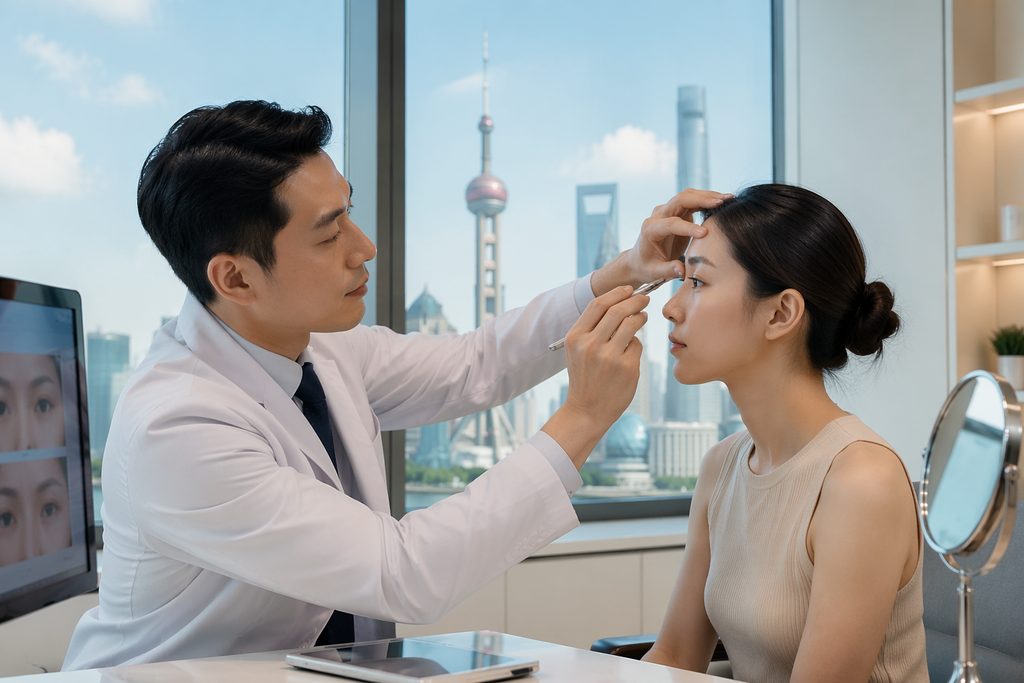
Double Eyelid Surgery Cost in China: What You Actually Pay in 2026
Blepharoplasty — the medical term for what most people call double eyelid surgery — is a procedure that creates or reshapes the crease above the upper eyelid. In plain terms: a surgeon removes a thin strip of skin and fat, then stitches the eyelid so a visible fold forms. For patients with a monolid, the goal is a defined crease. For older patients, the same operation often doubles as an anti-aging lift that corrects drooping skin. The double eyelid surgery cost China hospitals charge typically lands between $1,500 and $4,500 at reputable facilities, compared with $4,000 to $8,000 in the United States and higher in parts of Western Europe. That gap is real. It is also more complicated than a single number, because the price depends on the surgeon, the technique, and whether you choose a public hospital’s international department or a private clinic.
Double Eyelid Surgery Cost China: The Short Answer
At a top-tier Chinese public hospital’s international or VIP department, expect to pay $2,500 to $4,500 all-in for a standard incisional blepharoplasty performed by a senior surgeon. At a private international hospital or a well-regarded aesthetic clinic, the range is often $1,500 to $3,500, with premium surgeons charging more. The national average across licensed facilities sits closer to $1,200, but that figure includes small regional clinics that international patients rarely use.
Here is the caveat that matters. Chinese aesthetic surgery pricing is not standardized the way Western hospital billing is. Two surgeons in the same city can quote figures that differ by 300%, and the higher price does not automatically mean a better result. What you are paying for is the surgeon’s volume, their specialty training in oculoplastic work, and the facility’s anesthesia and aftercare standards.
Who This Is Right For — and Who It Isn’t
Double eyelid surgery is one of the most common cosmetic procedures worldwide, and China performs a very large share of them. That volume is a genuine advantage — but it does not make every patient a good candidate, and it does not make every clinic a safe one.
You are typically a reasonable candidate if:
- You are in good general health with no uncontrolled bleeding disorders or active eye infections
- Your eyelids have finished developing — surgeons generally prefer patients over 18, and some wait until the mid-20s for the most stable result
- You have realistic expectations about what a crease looks like on your specific anatomy
- You can stay in China for the full recovery window, including suture removal around day 5 to 7
You should think twice — or not proceed — if:
- You have Graves’ disease, severe dry eye syndrome, or a history of keloid scarring around the eyes
- You are pregnant or breastfeeding
- You are taking blood thinners that cannot be paused safely
- You are looking for the cheapest possible price. This is the single strongest predictor of a bad outcome in aesthetic surgery, in any country
The Options, Compared
Three surgical techniques dominate the market, and the price differences between them are not arbitrary. They reflect operating time, complexity, and how permanent the result is.
| Technique | Typical China Price (USD) | Typical US Price (USD) | Recovery Time | Permanence |
|---|---|---|---|---|
| Non-incisional (suture / “thread”) | $800 – $2,000 | $2,500 – $4,500 | 5 – 10 days | May fade in 2 – 5 years |
| Incisional (full cut) | $2,000 – $4,500 | $4,000 – $8,000 | 2 – 4 weeks | Generally permanent |
| Incisional + epicanthoplasty (inner corner) | $3,000 – $6,000 | $6,000 – $11,000 | 3 – 6 weeks | Permanent |
| Revision of a prior surgery | $4,000 – $9,000 | $8,000 – $15,000+ | 4 – 8 weeks | Varies |
The non-incisional method suits younger patients with thin eyelid skin and little excess fat — it leaves no external scar, which is why it is popular. The incisional method is the workhorse for anyone with thicker skin, excess fat, or drooping. Epicanthoplasty, which opens the inner corner of the eye, is a separate operation that some patients request alongside the crease; it carries its own scar risk and should be discussed explicitly rather than bundled silently into a quote.
Finding the Best Blepharoplasty Surgeon Shanghai Price vs. Beijing
Shanghai and Beijing hold the deepest concentration of high-volume aesthetic surgery expertise in China, and both cities appear prominently in the Fudan Hospital Rankings — the closest thing China has to a national quality benchmark. The Fudan list covers 45 specialties, and plastic and reconstructive surgery is one of them, with a published top-10 ranking rather than a vague tier.
What does that mean for your search? It means you can verify claims. If a clinic tells you it is “the best in China,” you can check whether its parent hospital appears on the relevant specialty ranking. You cannot check a surgeon’s individual complication rate, because China does not publish that data — and neither does the United States, for that matter.
On price, the two cities run fairly close. A senior surgeon at a major public hospital in either city typically quotes $2,500 to $4,500 for an incisional procedure. Private clinics in Shanghai’s Jing’an district or Beijing’s Chaoyang district often sit slightly lower for equivalent seniority, sometimes $1,800 to $3,500, because they compete for the same patients. Guangzhou and Chengdu run 15% to 30% cheaper than both, with no meaningful drop in quality at the top facilities.
Is Double Eyelid Surgery Safe in China?
Safety is about the facility and the surgeon, not the passport on the operating room door. China’s top public hospitals operate to standards comparable with major Western academic centers, and many private international hospitals hold JCI accreditation — the same credential that American and European hospitals seek. Anesthesia monitoring, sterile technique, and emergency response at these facilities are not meaningfully different from what you would find in Seoul or Los Angeles.
The risk sits at the bottom of the market. Unlicensed “studio” operators, hotel-room procedures, and heavily discounted package deals are a documented problem in China’s aesthetic industry, exactly as they are in every country with a large cosmetic surgery market. A $400 eyelid surgery advertised on social media is not a bargain. It is a warning sign.
Two other safety points deserve a straight answer. First, dry eye and lagophthalmos (inability to fully close the eye) are the most common serious complications of over-aggressive eyelid surgery, and they are more likely when too much skin is removed. Second, revision surgery is harder than primary surgery, so a rushed first operation has a compounding cost.
What the Price Actually Includes
Quotes vary wildly in what they cover. Before you compare two numbers, confirm both include the same items.
A complete quote should list: surgeon’s fee, anesthesia fee, facility and operating room charges, pre-operative blood work and eye examination, post-operative medication, and at least one follow-up visit. Suture removal is usually included. What is frequently not included: compression garments, scar gel, additional follow-up visits beyond the first, and any revision procedure. Ask specifically whether a revision within 12 months is discounted or covered — policies differ sharply between hospitals.
For international patients, there is one more line item. Public hospitals in China generally require payment upfront and expect you to seek reimbursement from your own insurer afterward. Most cosmetic procedures are excluded from insurance coverage in any case, so this rarely changes the math — but it does mean you should not assume your travel policy covers a complication.
Practical Considerations: Visas, Records, and Recovery
Foreign patients coming to China for medical treatment apply for the S2 visa, which covers short-stay medical treatment and private affairs, with supporting documents from the receiving hospital. A companion or family member traveling with you applies under the same category. Note that the M visa is for commercial and trade activity and has nothing to do with medical care — some online guides get this wrong. Requirements change, so confirm current documentation with the nearest Chinese embassy or consulate before you book flights.
Bring your medical history in English, including any prior eyelid surgery, thyroid conditions, and a list of current medications. Chinese surgeons are highly experienced but rely on accurate self-reporting for conditions they cannot see.
Plan your stay around the recovery timeline, not your flight price. Non-incisional procedures need about a week before most patients feel presentable in public. Incisional procedures need two to four weeks for the swelling to settle, and the final result continues to refine for three to six months. Flying home too early is not dangerous, but it makes follow-up difficult if something looks wrong.
Finally, arrange a way to communicate. China’s top hospitals are enormous — some see over 10,000 outpatient visits a day — and English-speaking staff are concentrated in international departments. For a procedure this personal, having someone who can translate your concerns accurately to the surgical team matters.
Frequently Asked Questions
Beijing’s top public hospitals generally quote $2,500 to $4,500 for incisional blepharoplasty at the international department level, similar to Shanghai. Guangzhou, Chengdu, and Hangzhou typically run 15% to 30% lower. The difference reflects local cost structures, not a quality gap at the leading facilities.
Not in the way most Western patients expect. Chinese public hospitals generally require an in-person consultation before scheduling surgery — you cannot lock in an operating date from overseas through the standard channel. What you can do is arrange a video consultation with the surgical team, send photographs and records in advance, and have a coordinator prepare the logistics so your in-person visit moves quickly. This is the honest version of a “package,” and it is how experienced medical travelers approach it.
Speak to the operating surgeon first, and do it in person if you can. Most reputable Chinese hospitals offer some form of revision policy, but the terms vary enormously and are rarely written into a standard contract. Get any revision agreement in writing before the first surgery. If you have already returned home, a local oculoplastic surgeon can assess you, though most will advise waiting at least six months for the tissues to settle before considering any correction.
At an accredited hospital with a qualified surgeon, the procedure itself carries low risk. The bigger variables are communication and aftercare. Traveling alone is workable if you have a bilingual point of contact for the surgical team, a plan for getting home after the procedure, and a place to stay within reach of the hospital for at least the first week.
Your Next Step
The core message is simple: double eyelid surgery in China costs roughly one-third to one-half of Western prices at genuinely high-standard hospitals, and the savings are real rather than a quality trade-off — provided you choose the facility and surgeon carefully rather than the lowest quote. Our team at China Medical Services is not a hospital and does not provide diagnoses or medical advice. We help international patients understand their options, connect with appropriate departments, and manage the practical side of traveling to China for care. If you would like a written second opinion from a Chinese surgical team, or help understanding which hospitals fit your situation, you can start with a free consultation at our patient services page. No pressure, no obligation — just a clearer picture before you decide.
For more medical information and treatment options in China, visit chinamedservices.com (China Medical Services).
