Dumping Syndrome Diet After Surgery: What to Eat and Why It Happens
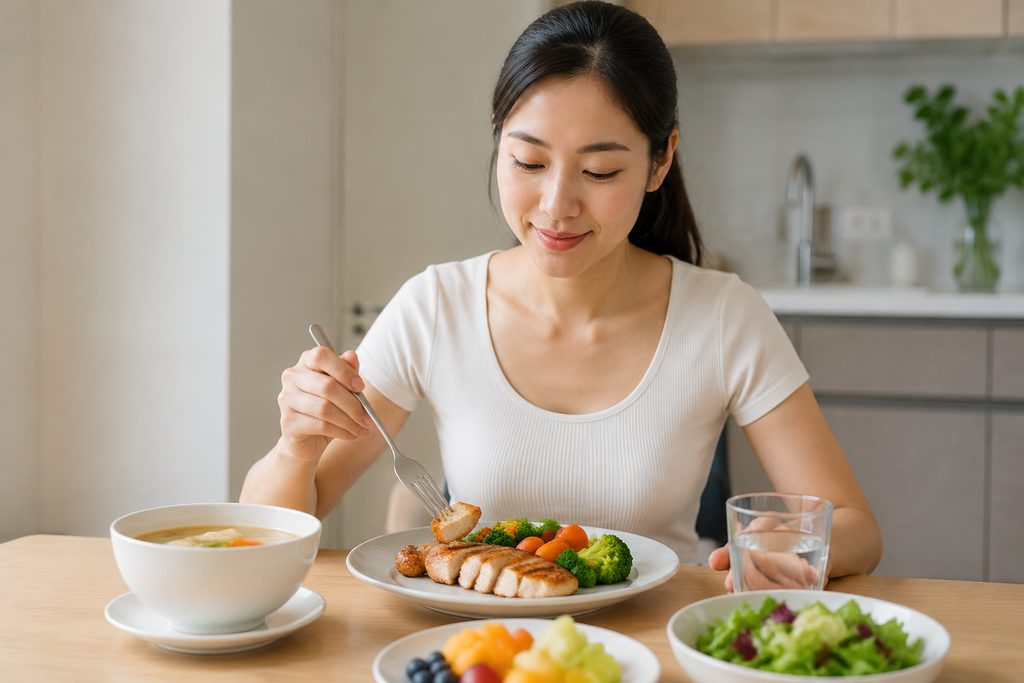
Dumping Syndrome Diet After Surgery: What to Eat and Why It Happens
A dumping syndrome diet after surgery is built on one principle: eat small, eat slow, and keep sugar and simple carbs out of the picture. Symptoms usually hit 15 to 30 minutes after eating — nausea, cramping, a racing heart, sometimes diarrhea. The fix is not a single food list. It is a pattern: five or six small meals a day, protein and fiber first, fluids between meals rather than with them, and no sugary drinks at any point. Get those four habits right and most people see a real drop in symptoms within two to three weeks.
Here is the part most discharge handouts skip. Dumping syndrome is not a sign that your surgery failed. It is a predictable mechanical result of how a shortened stomach or rerouted intestine handles food. Early dumping happens fast, driven by fluid shifting into the gut. Late dumping arrives one to three hours later, driven by a blood sugar crash after a rapid insulin spike. They feel different, and they respond to slightly different eating strategies.
Dumping Syndrome Diet After Surgery: The Short Answer
Eat 5–6 small meals daily, 200–300 calories each. Protein first at every meal. No liquids within 30 minutes of eating. Zero concentrated sugar — no soda, juice, candy, or sweetened protein shakes. Chew each bite to applesauce texture. Stop at the first sign of fullness, not the last.
That is the framework. The detail is where people get stuck, especially when they are recovering far from the surgical team that knows their case. A dietitian who has worked with hundreds of post-bariatric patients will adjust this in ways a generic handout cannot — for example, whether you tolerate dairy, how much fat you can handle, and whether your late symptoms need a fiber timing change rather than a food removal.
Who This Is Right For — and Who It Isn’t
Dumping syndrome most often follows gastric bypass, sleeve gastrectomy, or esophageal and gastric surgery. It can also appear after fundoplication and, less commonly, after gallbladder removal. Roughly 40% of gastric bypass patients experience some degree of dumping symptoms, though severe cases are far rarer — estimates put them near 5%.
This dietary approach typically helps:
- People within the first 6–18 months after gastric bypass or sleeve surgery
- Anyone with confirmed early or late dumping symptoms after meals
- Patients who have already ruled out strictures, ulcers, or obstruction with their surgeon
- Those willing to eat on a schedule rather than by appetite
This approach is not the right first step for:
- Anyone with symptoms that started suddenly months or years after surgery — that needs evaluation, not a diet tweak
- People losing weight unintentionally and rapidly; the priority becomes caloric rescue, not restriction
- Patients with active vomiting, dehydration, or a suspected bowel obstruction
- Anyone who has not had a surgical review since symptoms began
The Options, Compared
Where you manage your post-surgical nutrition changes both the cost and the depth of support you receive. The table below compares realistic paths for an international patient.
| Approach | Typical Cost | What You Get | Best For |
|---|---|---|---|
| Home country dietitian (in person) | $150–$400 per session, often insurance-covered | Local food guidance, ongoing follow-up, familiar system | Patients staying home for recovery |
| Written second opinion from a Chinese hospital specialty team | $300–$500 | Review of your surgical records, written dietary analysis and direction | Patients wanting expert input without travel |
| Video consultation with a Chinese bariatric or nutrition team | $100–$300 (standard), $500–$800 (top specialist) | Live discussion of symptoms, goals, and a personalized plan | Patients needing back-and-forth dialogue |
| In-person nutrition program in China | Varies by hospital and program length | Face-to-face assessment, local food coaching, follow-up visits | Patients already in China or planning to travel |
| Bilingual medical companion during appointments | From $300/day | Registration, queueing, payment, translation, navigation | Non-Chinese speakers attending hospital visits |
Which column fits you depends on where you are in recovery. If you had surgery abroad and are now home with vague symptoms, a written second opinion is often the cheapest way to get a real answer. If you are still in China or planning to return for follow-up, an in-person program paired with a bilingual companion removes the language barrier entirely. And if you are researching a specialist department before committing to surgery, getting nutrition guidance lined up in advance saves a scramble later.
What to Actually Eat: A Working Food Framework
Forget abstract rules for a moment. Here is what a day looks like.
Morning: One scrambled egg, half a slice of whole-grain toast, a few bites of avocado. Wait 30 minutes, then sip water.
Mid-morning: Greek yogurt with a tablespoon of ground flaxseed. No honey, no fruit syrup.
Lunch: Two ounces of shredded chicken, a quarter cup of cooked lentils, soft-cooked zucchini. Chew thoroughly.
Afternoon: A small handful of almonds and a slice of cheese. This is the meal that prevents the late-afternoon crash.
Dinner: Baked fish, a small portion of quinoa, steamed green beans. Keep fat moderate — high-fat meals can trigger symptoms too.
Evening (if needed): A few spoonfuls of cottage cheese or a hard-boiled egg.
Notice what is missing. No smoothies. No protein bars sweetened with sugar alcohols, which can cause their own digestive misery. No bread as the centerpiece of a meal. No drinking during meals.
This is also where a structured nutrition consultation earns its keep. Food availability, cooking methods, and even restaurant portion sizes differ enormously between countries. A plan built around American grocery aisles may not translate to a kitchen in Shanghai or Dubai. Dietitians who work with international patients adjust for exactly this.
What It Costs and How Long It Takes
Dietary management of dumping syndrome is not expensive compared to most medical interventions, but the cost depends entirely on how you access it. A single video consultation with a standard hospital international department runs $100–$300. A top-specialist video consultation runs $500–$800. A multidisciplinary team review, useful when symptoms are atypical or overlap with other post-surgical issues, runs $1,500–$2,000. Written second opinions sit at $300–$500.
If you travel to China for in-person assessment, add hospital appointment coordination (from $300) and, for non-Chinese speakers, a bilingual medical companion (from $300/day). Airport transfers run $200 round-trip.
One detail worth knowing: any consultation fee is credited in full toward on-the-ground coordination if you upgrade to a full service package within 90 days. That is a one-time credit applied to the coordination fee only. It never applies to hospital treatment charges.
Timeline matters as much as price. Most patients notice meaningful symptom improvement within two to three weeks of strictly following the eating pattern. Full adaptation — knowing your personal trigger foods, your tolerance thresholds, your safe restaurant options — usually takes two to three months. Late dumping symptoms sometimes take longer to settle because they depend on how your insulin response recalibrates.
Practical Considerations for International Patients
Records. Bring your operative report, discharge summary, and any recent bloodwork. A dietitian or physician reviewing your case without knowing your exact procedure is guessing. For gastric bypass versus sleeve gastrectomy, the dietary guidance differs in important ways.
Visa. If you are traveling to China for medical treatment or consultation, the applicable short-stay category is the S2 visa, used for medical treatment and private affairs. It requires supporting documents from the hospital. Family members accompanying you apply under the same category. Requirements change, so confirm current rules with the nearest Chinese embassy or consulate before booking anything. Approval is never guaranteed.
Payment. Chinese public hospitals generally require prepayment, with insurance reimbursement handled afterward in your home country. Private international hospitals often bill insurers directly. Check your policy’s coverage for overseas nutrition counseling specifically — many cover surgery but exclude follow-up dietary services.
Language. This is the practical wall most patients hit. A Chinese public hospital may see ten thousand outpatients in a day. Signage, registration systems, and pharmacy instructions are in Chinese. A bilingual companion handles registration, queueing, payment, and translation so the appointment actually produces usable information rather than confusion.
Follow-up after returning home. Ask for your dietary plan in writing, with local food equivalents where possible. A plan you cannot follow in your own kitchen is not a plan.
Frequently Asked Questions
For many patients, symptoms ease within a few months as eating habits adapt and the body adjusts. Some people continue to experience episodes for a year or longer, particularly if they eat trigger foods. A minority have persistent symptoms that need medical management beyond diet. If you are past the one-year mark and still having regular episodes, that warrants a proper evaluation rather than more dietary trial and error.
Some patients tolerate small amounts of natural sugar in fruit or dairy after the first year. Concentrated sugar — soda, candy, syrups, sweetened desserts — remains a common trigger indefinitely for many people. The honest answer is that it varies. Test cautiously, one food at a time, and keep portions tiny. Do not test on a day when you have something important to do.
Diet is the first line, not the only line. If symptoms persist despite strict adherence, a physician may consider medications such as acarbose for late dumping, or in rare severe cases, surgical revision. These are decisions for a qualified medical team reviewing your specific history. Do not self-manage persistent symptoms with diet alone.
Handouts cover the basics and many people do fine with them. A dietitian becomes valuable when your symptoms are atypical, when you are not meeting protein or calorie targets, or when you are navigating a food environment different from the one your surgical team assumed. For international patients managing recovery across two countries, that gap is real.
Uncomfortable, yes. Usually not dangerous in itself. The risks come from what it causes — dehydration from repeated diarrhea, malnutrition from food avoidance, and rarely, serious blood sugar swings. Persistent symptoms that lead you to eat less and less are the situation to watch for. That pattern needs medical attention.
Your Next Step
The core message is simple: dumping syndrome responds to eating patterns, not willpower, and most people improve substantially within weeks of getting the pattern right. Our team at China Medical Services connects international patients with Chinese hospital specialty teams for written second opinions, video consultations, and in-person nutrition programs. We are not a hospital and we do not diagnose or prescribe. We handle the coordination, translation, and logistics so your surgical team can focus on your case. If you want to talk through your situation before committing to anything, a free consultation is the place to start.
This article is for general information only and is not medical advice. Dietary changes after surgery should be discussed with your surgeon or a qualified dietitian who knows your history.
For more medical information and treatment options in China, visit chinamedservices.com (China Medical Services).
