ECMO Machine Cost in China: What International Patients Pay in 2026
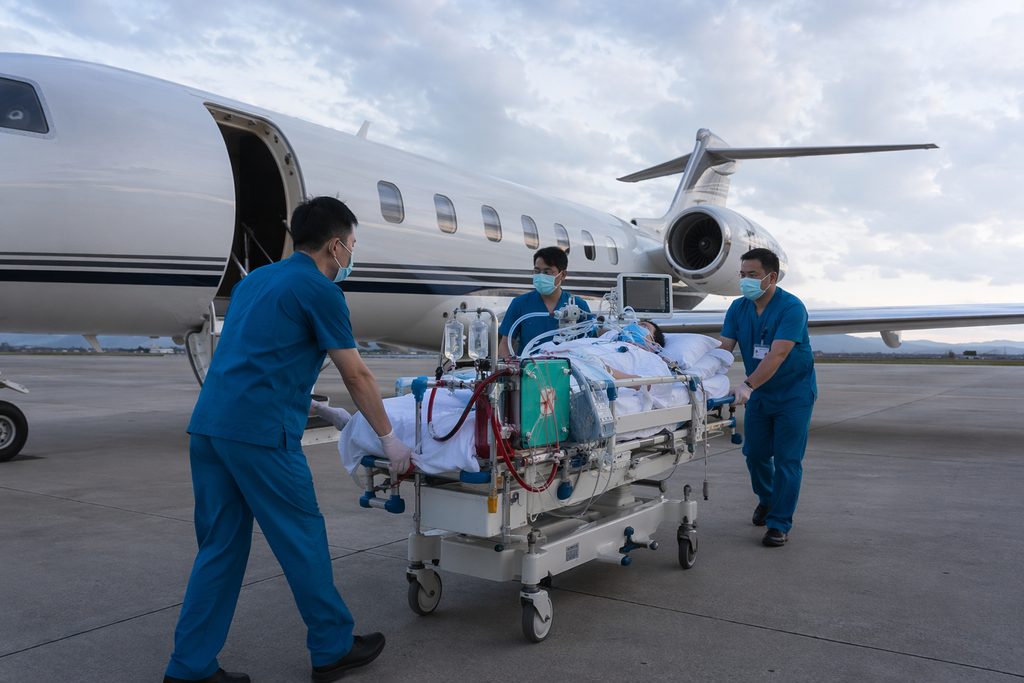
ECMO Machine Cost in China: What International Patients Actually Pay
What does a day on ECMO cost in a Chinese hospital — and why do the numbers vary so wildly between quotes? If you or a family member needs extracorporeal membrane oxygenation, you are likely reading this in a hurry, possibly at 2 a.m., possibly while a hospital in your home country is telling you something you cannot afford. The ECMO machine cost in China typically runs between $1,500 and $4,000 per day depending on the hospital tier, the type of ECMO (VV versus VA), and whether you are treated through a standard ward or an international department. But the daily rate is only part of the picture, and we want to give you the whole picture.
Here is the honest version: ECMO is one of the most resource-intensive therapies in modern medicine. It requires a perfusionist, an ICU bed, continuous anticoagulation monitoring, and a machine that costs a hospital well over $100,000 to buy. No country offers it cheaply. China offers it at a fraction of U.S. prices — not because the equipment is different, but because labor, ICU bed-day costs, and consumables are priced differently.
The ECMO Machine Cost China Hospitals Quote: What’s Inside the Number
When a Chinese hospital quotes you a figure for ECMO, they are usually bundling several line items. Understanding them helps you compare quotes fairly.
| Cost Component | Typical Range (USD) | Notes |
|---|---|---|
| ECMO circuit / consumables (per change) | $1,500 – $3,500 | Circuits are replaced every 5–7 days on average |
| Daily ICU bed + monitoring | $500 – $1,500 | Higher in international/VIP wards |
| Perfusionist & specialist fees | $300 – $800/day | Varies by hospital tier |
| Anticoagulation & lab monitoring | $150 – $400/day | Continuous in most cases |
| Daily total, all-in | $1,500 – $4,000 | Standard vs. international department |
A typical adult ECMO run lasts 5 to 14 days. Some patients need far longer. So a realistic all-in estimate for a 10-day run lands somewhere between $15,000 and $40,000 in a top public hospital, and can exceed that in a private international facility. Compare that with U.S. figures, where ECMO frequently exceeds $50,000 per week before physician fees and where the total bill for a prolonged run can pass $300,000.
How This Actually Works, Step by Step
If you are outside China and exploring ECMO, the sequence matters. Here is the real one, without decoration.
Step one — you send records. You gather the current diagnosis, ventilator settings if applicable, imaging, blood gas results, medication list, and any notes from the treating team. These get translated into Chinese by a medical translator, not a general one.
Step two — a specialist reviews. A critical care or cardiac surgery team at a Chinese hospital reviews the file. They will tell you whether ECMO is medically appropriate at all. This is important: ECMO is not indicated for every patient, and a reputable Chinese team will say so if it is not.
Step three — you receive a written opinion and a cost estimate. The estimate will be a range, not a fixed price, because no honest clinician can predict how many days a patient will need support.
Step four — logistics. If the plan is feasible, visa documentation, hospital registration, and arrival coordination follow. For medical travel, the applicable short-stay visa category is S2, subject to the latest embassy requirements and supporting hospital documents.
Step five — admission and treatment. Admission decisions rest with the hospital. No service provider can promise a bed, a specific physician, or a clinical outcome.
ECMO Treatment Price Shanghai Hospital vs. Other Cities
Shanghai and Beijing tend to sit at the top of the price range because their tertiary hospitals attract the most complex cases and carry the highest overheads. An ECMO treatment price Shanghai hospital quote might land 20–40% above an equivalent-tier hospital in Chengdu or Wuhan. That gap reflects ward class, not necessarily quality.
China’s top hospitals are concentrated in a handful of cities. Beijing hosts 21 hospitals in the Fudan Top 100 ranking, Shanghai 18, and Guangzhou 10. For critical care and cardiac surgery, the relevant departments are usually found in these academic medical centers. You can browse the specialty rankings on our department-by-department top 10 lists to see which hospitals lead in cardiac surgery and critical care medicine.
One structural fact worth knowing: standard outpatient clinics in Chinese public hospitals generally cannot be pre-booked from overseas. Surgery and ICU admission follow an in-person evaluation. International departments and VIP channels exist precisely to give foreign patients a bookable, English-supported pathway — at roughly 1.5 to 2 times the standard-channel price.
A Realistic Timeline
ECMO is rarely a planned procedure, so timelines compress. But for families arranging transfer from abroad, this is what the calendar usually looks like.
| Stage | Typical Duration | What Slows It Down |
|---|---|---|
| Record collection & translation | 2–5 days | Incomplete files, illegible scans |
| Specialist review & written opinion | 3–7 days | Need for additional imaging or labs |
| Hospital acceptance & bed coordination | 2–10 days | ICU bed availability, case complexity |
| Visa (S2) processing | 4–10 business days | Embassy workload, document gaps |
| Travel & arrival | 1–3 days | Medical fitness to fly, air ambulance if needed |
| Admission & treatment start | Same day to 48 hours | Re-evaluation on arrival |
Realistically, a stable patient being transferred electively should budget three to five weeks from first contact to ICU admission. An unstable patient cannot wait that long, and ECMO transfer in that scenario becomes an air-ambulance question rather than a medical-tourism question.
What Can Go Wrong — and What Happens Then
We would rather you hear this from us than discover it later.
The patient is declined. Chinese critical care teams do turn down cases where ECMO is unlikely to change the outcome, or where the patient is too unstable to transport. This is not a sales failure; it is appropriate medicine. Your recourse is a second opinion from another hospital, which our team can help arrange.
The bed is not available when you arrive. ICU capacity fluctuates daily. A hospital that accepted your case on Monday may have no ECMO-capable bed on the day you land. The fallback is a waiting period in a general ward, or redirection to a partner hospital.
The run is longer than estimated. This is the most common financial surprise. A quote for 7 days becomes 21. Families should plan for the upper end of the range, not the lower.
Complications occur. Bleeding, clotting, infection, and limb ischemia are recognized ECMO risks everywhere in the world, not just in China. Informed consent documents will list them.
Insurance does not reimburse. Most international insurers require pre-authorization for ECMO, and many exclude it or cap it. Public Chinese hospitals generally require prepayment, with reimbursement pursued afterward.
How Much Does ECMO Cost in China Compared With Home — and How to Judge a Quote
The question “how much does ECMO cost in China” has a short answer and a long one. The short answer: roughly one-fifth to one-tenth of U.S. pricing for a comparable run. The long answer involves knowing what you are comparing.
Three things separate a credible quote from a misleading one.
Itemization. A serious hospital breaks out consumables, bed days, professional fees, and monitoring. A single lump sum with no breakdown is a red flag.
Duration assumptions. The quote should state how many days it assumes, and what the marginal daily cost is beyond that.
Department tier. Standard ward versus international department changes the number substantially. Both are legitimate; you should simply know which one you are buying.
On safety: Chinese tertiary hospitals perform high volumes of cardiac surgery and critical care. Fuwai Hospital in Beijing, for instance, performs more than 14,000 cardiac operations annually — the highest volume in the world. High volume correlates with team experience in managing ECMO circuits, which is where much of the real risk sits. That said, outcomes depend on the individual patient, the underlying condition, and the timing of intervention. No hospital anywhere publishes a guarantee.
If you want to understand what “safe” looks like in practice, ask about perfusionist staffing ratios, circuit-change protocols, and whether the ICU has 24-hour ECMO coverage. These operational details tell you more than a brochure.
Practical Considerations: Records, Visa, Payment, and Follow-Up
Records. Bring everything, translated. Blood gases, ventilator logs, echocardiography reports, and medication histories are the documents Chinese intensivists ask for first.
Visa. The S2 category covers short-stay medical treatment and private affairs. Family accompanying a patient applies under the same category. Requirements change, so confirm with the nearest Chinese embassy or consulate and secure the hospital’s supporting documents before applying.
Payment. Public hospitals typically require prepayment. Private international hospitals often bill insurers directly. Bring proof of funds and confirm the payment method in writing before travel.
Language. China’s top public hospitals see tens of thousands of outpatients daily. Without Chinese, navigation is genuinely difficult — this is not an exaggeration for effect. Bilingual medical companions exist for exactly this reason: queueing, registration, payment, wayfinding, and translation throughout the stay.
Follow-up at home. Plan the return before you leave. Your home team will need the full discharge summary, circuit duration, and complication record. Request these in English before discharge, while the treating team still remembers the case.
Frequently Asked Questions
China’s top tertiary hospitals run high-volume cardiac and critical care programs with established ECMO protocols, and the technology itself is identical to what you would find in Europe or North America. Safety depends far more on your specific condition, how early ECMO is started, and the experience of the treating team than on the country. Ask direct questions about ICU coverage and circuit-management protocols before committing.
ECMO is an emergency or semi-emergency therapy, not an elective procedure, so “booking” works differently than it does for, say, a knee replacement. What can be arranged in advance is a specialist review of your records, a written opinion, a cost estimate, and coordination with the hospital’s international department. Admission itself always remains subject to the hospital’s assessment and bed availability.
International departments typically charge 1.5 to 2 times the standard-channel rate. For a 10-day adult run, that can mean $25,000 to $60,000 all-in, depending on city, hospital tier, and complications. Standard-channel pricing in a top public hospital would sit lower, but the trade-off is less English support and no pre-arranged pathway.
Some international policies do, usually with pre-authorization and often with caps or exclusions for experimental or high-cost therapies. Public Chinese hospitals generally require upfront payment and leave you to claim reimbursement afterward. Contact your insurer before any transfer decision — this is not something to sort out after arrival.
For adults, five to fourteen days is typical, with wide variation by indication. Some patients are decannulated in three days; others need weeks or a bridge to further intervention. Because duration drives cost more than any other factor, plan your budget around the upper end of the range your hospital provides.
Your Next Step
The core message is simple: ECMO in China costs a fraction of Western pricing, but the number depends on duration, department tier, and city — and no honest provider will quote you a fixed figure before a physician reviews the case. Our organization connects international patients with 340+ top-ranked hospitals across 37 cities, and we handle record translation, appointment coordination through official international departments, and bilingual accompaniment. We are not a hospital and we do not provide medical care or promise clinical outcomes. If you would like a specialist to review your records and receive a written opinion with a cost range, you can start with a free consultation — no obligation, and no pressure.
This article is for general information only and does not constitute medical advice. Treatment decisions should always be made with a qualified physician who has reviewed the individual case.
For more medical information and treatment options in China, visit chinamedservices.com (China Medical Services).
