Skin Cancer Treatment in China: Costs, Top Hospitals, and Safety
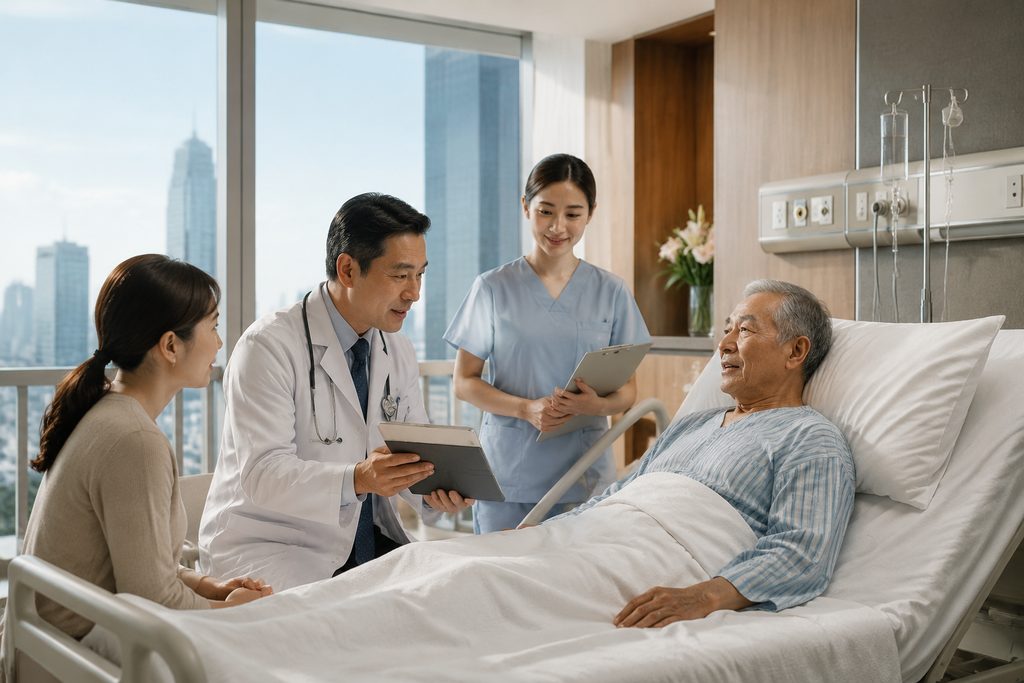
When 46-year-old David from Melbourne noticed a dark, irregular mole on his shoulder blade, his first dermatologist appointment in Australia came with a three-month wait. The biopsy confirmed stage II melanoma. His surgeon quoted roughly AUD 28,000 for wide local excision plus sentinel lymph node biopsy, with immunotherapy potentially adding six figures to the bill. David started searching overseas options that same night. What he found was a system that treats more melanoma cases annually than most Western countries combined — at a fraction of the price.
Skin Cancer Treatment Cost China: The Short Answer
Surgery for early-stage melanoma at a top-tier Chinese public hospital typically runs $4,000 to $12,000 all-in, including imaging, pathology, and a short hospital stay. Immunotherapy regimens that cost $150,000+ per year in the United States often land between $30,000 and $60,000 annually in China, depending on the drug. That is the headline number most people search for.
The caveat matters just as much. These figures describe the top 5% of China’s 35,000+ hospitals — the institutions ranked by Fudan University and accredited by JCI. Provincial hospitals cost less but vary widely in quality. And no foreign patient can simply book a melanoma surgeon online the way you’d book a hotel.
Who This Is Right For — and Who It Isn’t
China’s medical system rewards patients who plan ahead. It frustrates those who don’t.
Typically a good fit:
- Patients with confirmed or suspected melanoma, basal cell carcinoma, or squamous cell carcinoma seeking faster surgical scheduling
- Self-paying patients or those with international insurance that reimburses overseas treatment
- People who need advanced immunotherapy (PD-1 inhibitors such as pembrolizumab or toripalimab) at a lower cost
- Patients willing to travel with a companion or hire bilingual support
- Those needing Mohs micrographic surgery or complex reconstructive work after tumor removal
Probably not the right path:
- Anyone with an unstable cardiac or pulmonary condition that makes long-haul flights risky
- Patients whose cancer is already well-controlled at home with a clear follow-up plan
- People expecting a Western-style private room, English-speaking nurses at every station, and no queues — that exists at international hospitals, but at 3-5x the public-hospital price
- Patients who cannot obtain a biopsy report or pathology slides for remote review
The Options, Compared
| Option | Typical Cost (USD) | Wait Time | English Support | Insurance Billing |
|---|---|---|---|---|
| US academic center (melanoma surgery) | $30,000–$80,000 | 3–8 weeks | Full | Direct |
| Australia / UK private | $18,000–$45,000 | 2–6 weeks | Full | Direct or reimbursement |
| China top public hospital (international department) | $4,000–$12,000 | 1–3 weeks after records review | Via interpreter or companion | Prepay, then reimburse |
| China private international hospital | $12,000–$30,000 | 1–2 weeks | Full | Often direct |
| China provincial public hospital | $2,000–$6,000 | Varies | Limited | Prepay only |
Which column fits you depends on three things: how complex your case is, how much you value an English-speaking environment, and whether your insurance reimburses foreign care. A stage I melanoma removed at a Chinese public hospital’s international department is a very different proposition from stage IV disease requiring a multidisciplinary team.
Is Skin Cancer Treatment in China Safe? What the Data Shows
This is the question every patient asks, and it deserves a direct answer rather than reassurance.
China’s leading cancer centers perform surgical volumes that rival or exceed Western counterparts. Fudan University Shanghai Cancer Center, for instance, ranks among China’s top 10 for oncology on the Fudan specialty reputation list. These hospitals run standardized pathology protocols, use the same AJCC staging system your home oncologist uses, and publish in the same international journals.
What differs is the system around the medicine. Public hospitals see enormous daily patient volumes — some exceed 10,000 outpatient visits per day. Corridors are crowded. Nurses may not speak English. Consent forms arrive in Chinese. For a foreign patient alone, that environment is disorienting even when the surgery itself is excellent.
Private international hospitals solve the language and comfort problem. United Family, Jiahui, and similar JCI-accredited facilities offer English-speaking staff and Western-style care — at prices closer to what you’d pay in Singapore or Europe. That trade-off is real, and it’s yours to make.
Best Skin Cancer Hospitals in China: How to Narrow the List
There is no single “best” hospital for melanoma or non-melanoma skin cancer. There are hospitals with strong oncology departments, high surgical volumes, and experienced multidisciplinary teams. Your case determines which one fits.
Start with the Fudan specialty reputation rankings for oncology. These list the top 10 hospitals in each of 45 specialties, and they carry more weight among Chinese physicians than any commercial ranking. Several names appear consistently: Fudan University Shanghai Cancer Center, Peking Union Medical College Hospital in Beijing, Sun Yat-sen University Cancer Center in Guangzhou, and West China Hospital in Chengdu.
Geography matters too. Beijing hosts 21 of the Fudan Top 100 hospitals; Shanghai has 18; Guangzhou 10. If you’re traveling from Southeast Asia, Guangzhou may be your shortest flight. From Europe or the Middle East, Beijing or Shanghai usually makes more sense.
For a deeper look at how departments are ranked and which hospitals lead in oncology, see our specialty rankings by department. If you prefer a private, English-first environment, our guide to JCI-accredited private hospitals covers insurance billing and what to expect.
How Much Does Melanoma Treatment Cost in China?
Melanoma pricing breaks into four buckets, and the spread within each is wide.
Diagnosis and staging: $500–$1,500. This covers dermatopathology review, CT or PET-CT imaging, and bloodwork. PET-CT alone runs $800–$1,200 at a top hospital.
Surgery: $3,000–$10,000 for wide local excision with sentinel lymph node biopsy. Reconstruction after facial tumor removal can push this higher. Hospital stay of 3–7 days is usually included.
Immunotherapy: This is where the savings become dramatic. A year of pembrolizumab in the US lists above $150,000. In China, domestically produced PD-1 inhibitors such as toripalimab or sintilimab cost $30,000–$50,000 annually. Imported drugs sit higher, around $60,000–$90,000. Prices vary by hospital and whether the drug is on the national reimbursement list — which foreign patients typically cannot access.
Targeted therapy: BRAF/MEK inhibitor combinations for BRAF-mutant melanoma run $40,000–$70,000 per year in China versus $200,000+ in the US.
What’s not included in any of these figures: flights, accommodation, interpreter costs, and follow-up after you return home. Budget 15–25% above the quoted treatment price for logistics.
Practical Considerations: Records, Visas, and Payment
China’s public hospitals do not allow foreign patients to book a specialist appointment directly from overseas. That is the single most important logistical fact. You cannot email a surgeon and reserve a date. The standard path runs through a hospital’s international department or a coordination service that handles registration on your behalf.
Before anything else, you need your pathology report, biopsy slides, and imaging on hand. Chinese oncologists will review these remotely and give a written opinion on whether surgery in China is reasonable for your case. That review typically costs $300–$500 for a written second opinion from a top-hospital specialist, or $500–$800 for a video consultation with a senior expert. Multidisciplinary team reviews, where surgeons, oncologists, and pathologists confer together, run $1,500–$2,000.
On visas: medical travel to China uses the S2 visa, which covers short-stay visits for medical treatment and private affairs. Stays beyond 180 days require an S1. Accompanying family members apply for S2 as well. The M visa is for commercial and trade activity only — it has nothing to do with medical treatment, despite what some outdated guides suggest. Always confirm current requirements with the nearest Chinese embassy or consulate, and expect to submit a hospital invitation letter as supporting documentation.
Payment works differently by hospital type. Public hospitals require prepayment; you settle the bill in cash or by international card, then file for reimbursement with your insurer at home. Private international hospitals frequently bill insurance directly. Bring a card that doesn’t charge foreign transaction fees, and confirm your daily transaction limit before you travel — some Chinese hospital payment terminals cap single transactions.
Language remains the practical barrier. Even at hospitals with international departments, the registration desk, the cashier, the imaging center, and the pharmacy are separate stops — each with its own queue and its own paperwork. A bilingual medical companion who handles registration, queuing, payment, wayfinding, and translation turns a two-day administrative ordeal into a manageable morning.
Frequently Asked Questions
Not directly with a public hospital specialist. Public hospital outpatient registration happens on the day, and surgery is only scheduled after an in-person consultation. What you can do in advance is have your records reviewed remotely, receive a written opinion, and coordinate an appointment through a hospital’s international department or a service that handles registration for you. Admission and surgical scheduling always remain subject to the hospital’s own rules.
The surgical and oncological standards at top-ranked Chinese hospitals are comparable to Western academic centers — same staging systems, same pathology protocols, published in the same journals. The variable is the surrounding system: language, crowding, and follow-up coordination after you return home. Patients who arrange interpretation and a clear follow-up plan in advance generally report good experiences. Those who arrive unprepared often don’t.
Surgery typically runs $4,000–$12,000 versus $30,000–$80,000 in the US. A year of PD-1 immunotherapy costs $30,000–$60,000 versus $150,000+. Total savings of 70–85% are realistic for self-paying patients. Final pricing depends on hospital tier, drug choice, and case complexity, so any quote you receive before a records review is an estimate, not a final figure.
The S2 visa, issued for short-stay medical treatment and private affairs. Family members accompanying you apply for S2 as well. If your treatment plan requires a stay beyond 180 days, S1 applies instead. Requirements change, so verify with your nearest Chinese embassy or consulate and prepare a hospital invitation letter as part of your application.
Complications happen in every healthcare system, and China is no exception. Top hospitals have the infrastructure to manage them — intensive care units, on-site specialists, 24-hour emergency services. What you should arrange beforehand is a clear understanding of who manages your care if something goes wrong after you fly home, and whether your travel insurance covers medical evacuation. Readmission and extended stays are subject to hospital rules and additional cost.
Your Next Step
Skin cancer is treatable when it’s caught and acted on early, and China’s top hospitals offer genuine surgical and oncological expertise at 15–30% of Western prices. The complexity isn’t the medicine — it’s the navigation: records review, hospital selection, visa documentation, and on-the-ground logistics in a system that doesn’t run on English.
We are China Medical Services, a coordination service connecting international patients with 340+ top-ranked hospitals across 37 cities. We are not a hospital and we do not diagnose or treat anyone. What we do is review your records with the right specialty, arrange consultations, coordinate appointments through official hospital channels, and provide bilingual companions who handle the queues and paperwork so you can focus on recovery. If you’d like to understand your options before committing to anything, start with a free consultation — no pressure, no obligation, just a clear picture of what’s possible.
This article is for general information only and does not constitute medical advice. Treatment decisions should always be made with a qualified physician who has reviewed your individual case.
For more medical information and treatment options in China, visit chinamedservices.com (China Medical Services).
