Can Erectile Dysfunction Be Fixed With Surgery? Costs & Options in China
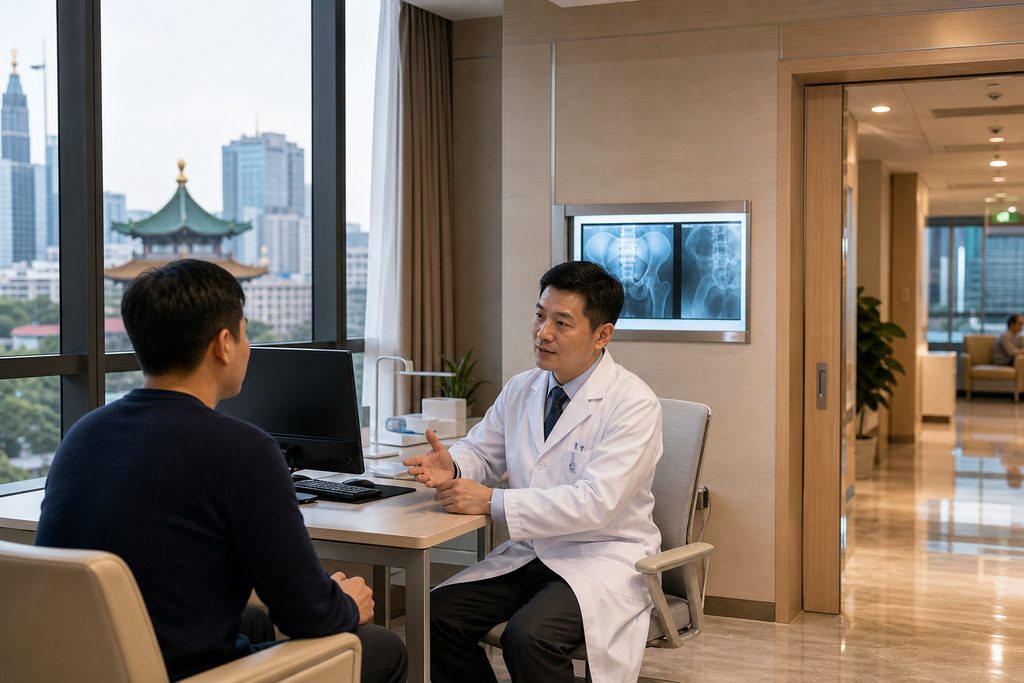
Have you ever sat in a urologist’s office, prescription for pills in hand, wondering if there’s a more permanent answer? For a significant number of men, oral medications like sildenafil stop working or produce side effects that make them unbearable. When that happens, the conversation turns to surgery. And the first question isn’t usually “will it work?” — it’s “what will it cost?” The erectile dysfunction surgery cost China has become a serious point of comparison for Western patients facing quotes of $20,000 to $30,000 at home.
But cost is only one part of the equation. The bigger questions are about safety, permanence, and whether you’re a candidate at all. Our team at China Medical Services has helped international patients evaluate these options. We don’t perform surgery. We connect you with the right specialists and make sure you understand what you’re signing up for before you book a flight.
How This Actually Works, Step by Step
The path from “considering surgery” to “recovered and home” follows a predictable sequence. Here’s what it looks like when you work through a medical coordination service, based on the real steps we see with patients.
First, you send us your existing medical records. That means your urologist’s notes, any blood work, a list of medications you’ve tried, and ideally a penile Doppler ultrasound report if you’ve had one. We translate these documents into Chinese and forward them to the international department of a suitable hospital. No guesswork here — the urology team reviews your file before anyone talks about booking anything.
Second, you get a written assessment or a video consultation. This is where a Chinese urologist tells you honestly whether you’re a surgical candidate. Not everyone is. Men with untreated diabetes, severe vascular disease, or active psychological factors may be advised to try other approaches first. The written second opinion typically costs between $300 and $500, and a top-specialist video consultation runs $500 to $800. If you later decide to come to China for treatment, that consultation fee is credited in full toward your on-the-ground coordination service.
Third, if surgery is indicated, we coordinate the hospital appointment. Public hospitals in China generally cannot be pre-booked from overseas for outpatient visits. You arrive, register, see the specialist in person, and then the surgical date is set. This is a critical distinction. Anyone promising you a locked-in surgery date before you’ve landed and had your in-person consultation is not being straight with you.
Fourth, you undergo the procedure, recover under observation, and return home with a clear follow-up plan. For penile implant surgery, most patients stay in China for two to three weeks total. The implant itself is a mechanical device, not a medication, so once healed, it works on demand.
What “Surgery for ED” Actually Means
Let’s be precise. When people search for whether surgery can fix erectile dysfunction permanently, they’re usually thinking about one thing: the penile prosthesis, or implant. There are two main types.
The inflatable implant is the gold standard. A surgeon places two cylinders inside the penis, a small fluid reservoir behind the abdominal wall, and a pump in the scrotum. Squeeze the pump, fluid moves into the cylinders, and you have an erection. Press a release valve, and it deflates. The three-piece inflatable device has a patient satisfaction rate consistently above 90% in long-term studies, which is higher than any oral medication for ED.
The malleable, or semi-rigid, implant is the simpler and cheaper option. It keeps the penis firm at all times, positioned upward for intercourse and downward for daily activities. It costs less and has fewer mechanical parts to fail, but some men find the constant firmness uncomfortable or socially awkward.
There are also vascular surgeries — arterial bypass or venous ligation — but these have fallen out of favor in most major centers. Success rates are unpredictable, and long-term outcomes are poor for most men. Reputable urologists in China, like their counterparts in the US and Europe, rarely recommend them except in very specific cases of traumatic arterial injury in young men.
So when we talk about “can surgery fix erectile dysfunction permanently,” the honest answer is: for the implant, yes, with a very high degree of reliability. The device doesn’t depend on blood flow, nerve signals, or hormones. It’s mechanical. But it’s also irreversible. Once you get an implant, the natural erectile tissue is permanently altered. There is no going back to pills or injections.
Erectile Dysfunction Surgery Cost China: The Numbers
Here’s where the economics get interesting. The erectile dysfunction surgery cost China varies significantly by hospital tier and implant type. Let’s look at realistic ranges.
| Procedure | China (Top Public Hospital) | China (Private International) | United States (Average) |
|---|---|---|---|
| Malleable penile implant | $6,000 – $9,000 | $10,000 – $14,000 | $15,000 – $20,000 |
| Three-piece inflatable implant | $12,000 – $18,000 | $18,000 – $25,000 | $25,000 – $35,000 |
| Pre-op evaluation & imaging | $300 – $600 | $500 – $1,000 | $1,500 – $3,000 |
| Hospital stay (3–5 days) | Included in surgical fee | Included or itemized | $2,000 – $5,000 per day |
These figures are ranges based on published hospital price lists and our coordination experience. They vary by hospital and case complexity. The penile implant price Shanghai tends to run slightly higher than in Beijing or Guangzhou, reflecting the concentration of private international facilities in that city. A three-piece inflatable device at a top Shanghai public hospital might cost $14,000 to $16,000, while the same procedure at a JCI-accredited private hospital in the same city could reach $22,000 or more.
The device itself accounts for much of the cost. American-made implants from Boston Scientific (AMS 700) or Coloplast (Titan) are widely used in China’s top centers. These are the same devices implanted in the US and Europe. The savings come from lower hospital fees, lower surgeon fees, and lower anesthesia costs — not from using inferior hardware.
A Realistic Timeline
People consistently underestimate the total time commitment. Here’s what a typical journey looks like for an international patient pursuing penile implant surgery in China.
| Stage | Duration | What Happens |
|---|---|---|
| Document gathering & translation | 1–2 weeks | You collect records; we translate and submit them to the hospital’s international department. |
| Specialist review & video consult | 1–3 weeks | The urology team reviews your file; you speak with them online if desired. |
| Visa processing (S2) | 2–4 weeks | You apply for an S2 visa at your local Chinese embassy or consulate with the hospital’s invitation letter. |
| Travel & in-person consultation | Days 1–3 in China | You arrive, register at the hospital, and meet the surgeon face-to-face. |
| Pre-operative testing | Days 3–7 | Blood work, ECG, chest X-ray, and sometimes a penile Doppler ultrasound. |
| Surgery & hospital stay | Days 7–12 | The implant procedure takes 1–2 hours; hospital observation lasts 3–5 days. |
| Recovery in China | Weeks 2–3 | You stay in a hotel or serviced apartment near the hospital for wound checks and early follow-up. |
| Full activation of implant | Weeks 4–6 | You’re taught to use the pump; most surgeons advise waiting 4–6 weeks before intercourse. |
That’s a realistic picture. Six to ten weeks from first inquiry to functional recovery, with two to three weeks of that spent in China. Anyone who tells you it’s a one-week trip is ignoring post-operative care.
What Can Go Wrong — and What Happens Then
Penile implant surgery has a high satisfaction rate, but it’s not risk-free. You deserve to know the failure modes before you commit.
Infection is the most serious concern. The rate is roughly 2–3% in first-time implant surgeries at experienced centers, though it’s higher in diabetic patients and smokers. If infection occurs, the implant usually must be removed, and reimplantation is delayed for several months. Top Chinese hospitals follow the same infection-control protocols you’d find at a major American center: pre-operative antibiotics, strict sterile technique, and sometimes antibiotic-coated implants.
Mechanical failure is less common with modern devices but still possible. The five-year mechanical survival rate for three-piece inflatable implants is approximately 90–95%. If the pump fails or a cylinder leaks, revision surgery is required. This is a second operation with its own risks and costs.
Then there’s the issue of penile length. Some men lose a small amount of length after implant surgery, particularly if they had significant scarring or prolonged ED before the procedure. A skilled surgeon will discuss this honestly during consultation. It’s not a complication so much as a known trade-off.
And what about dissatisfaction? Despite the high satisfaction rates, about 5–10% of men say they wouldn’t choose the implant again. The most common reasons are unrealistic expectations, partner dissatisfaction, or discomfort from the pump. This is why the pre-operative consultation matters so much. A good surgeon will talk you out of surgery if your expectations don’t match reality.
How Safe Is Penile Implant Surgery in China? Evaluating a Hospital
The question “how safe is penile implant surgery in China” doesn’t have a single answer. It depends entirely on where you go. China has over 35,000 hospitals, and the difference between the top 5% and the rest is enormous.
When we evaluate a hospital for this procedure, we look at several things. First, is the urology department ranked on the Fudan University specialty reputation list? Fudan’s ranking is the most respected hospital evaluation system in China, and it ranks departments by peer reputation, not marketing budget. A hospital whose urology department appears in the Fudan top 10 for urology is performing a high volume of complex procedures every week. You can see these rankings on our department pages.
Second, what’s the surgeon’s annual implant volume? A urologist who performs 50 or more penile implant surgeries per year has a complication rate roughly half that of a surgeon who does 10 per year. This is a well-documented volume-outcome relationship in urological surgery. Ask directly. Good surgeons are happy to share their numbers.
Third, is the facility JCI-accredited or does it operate a dedicated international medical center? For foreign patients, this matters for language support, billing transparency, and post-operative communication. Public hospitals in China are extremely efficient but often chaotic for non-Chinese speakers. A bilingual medical companion — someone who handles registration, translation, and navigation — turns a stressful experience into a manageable one.
For men specifically searching for the best hospital for ED surgery Beijing, the answer usually points to the urology departments at Peking Union Medical College Hospital or Peking University First Hospital. Both have international patient centers and senior urologists with extensive implant experience. In Shanghai, Zhongshan Hospital and Renji Hospital are the names that come up most often. Renji, in particular, has one of the highest-volume urology departments in the country.
But “best” is not a one-size-fits-all label. A man with diabetes and a prior pelvic surgery needs a different surgeon than a healthy 55-year-old with straightforward vasculogenic ED. That’s why the remote consultation matters. It’s not a formality. It’s how you find out whether a specific hospital is actually right for your specific case.
Practical Considerations: Records, Visa, Payment, Language
If you’re serious about booking penile implant surgery China medical tourism, there are practical realities to sort out before you pack a bag.
Your medical records need to be complete and in English. The Chinese hospital will translate them, but they need to be legible and current. Include your medication history, any prior ED treatments, and relevant lab results. If you have diabetes or heart disease, include your cardiologist’s or endocrinologist’s notes. These comorbidities affect both candidacy and surgical risk.
For the visa, you’ll apply for an S2 visa at your local Chinese embassy or consulate. This is the short-stay visa used for private affairs, including medical treatment. The hospital’s international department will provide an invitation letter confirming your appointment. Processing typically takes two to four weeks, so start early. Family members accompanying you also apply for S2 visas. We provide guidance on this, but visa approval is always at the discretion of the consulate.
Payment is another consideration. Public hospitals in China require prepayment for surgical procedures, and they generally do not bill international insurance directly. You pay upfront, then submit claims to your insurer for reimbursement. Private international hospitals in Shanghai and Beijing often have direct billing arrangements with major insurers, but their surgical fees are correspondingly higher.
Language is the complication most first-time visitors underestimate. Even at top hospitals with international departments, the moment you step outside that department — to the pharmacy, the imaging center, the billing office — English disappears. This is where a bilingual medical companion earns their fee. They queue, translate, and make sure you’re not standing lost in a corridor while your name is called in Mandarin.
And follow-up at home? Your Chinese surgeon will provide a discharge summary in English, including wound care instructions and a timeline for device activation. You’ll need a local urologist willing to see you for routine checks. Most are happy to do this, but arrange it before you travel. Don’t assume your hometown urologist will be enthusiastic about managing a surgery performed abroad.
Frequently Asked Questions
For men who get a penile implant, yes — the device works mechanically and does not depend on blood flow, nerves, or medication. The three-piece inflatable implant has satisfaction rates above 90%. But the surgery is irreversible, and not every man with ED is a candidate. A proper evaluation comes first.
A three-piece inflatable implant in China typically costs $12,000 to $18,000 at a top public hospital, versus $25,000 to $35,000 in the United States. The penile implant price Shanghai or Beijing varies by hospital tier and device brand. Costs include the device, surgeon fees, anesthesia, and hospital stay.
Most patients stay two to three weeks. That includes the in-person consultation, pre-operative testing, the surgery itself, a three-to-five-day hospital stay, and early follow-up before flying home. Full device activation usually happens four to six weeks after surgery, which can be done at home.
At a top-ranked hospital with an experienced surgeon, the safety profile is comparable to major centers in the US or Europe. Infection rates run 2–3%, and five-year device survival is 90–95%. The key is choosing a hospital with a high-volume urology department and an international patient program, not just the cheapest option.
That depends on your policy. Some international health insurance plans cover treatment abroad, but many do not cover elective procedures like penile implants. Public Chinese hospitals require upfront payment, and you then seek reimbursement. Private international hospitals may bill your insurer directly if they have an agreement in place.
Your Next Step
Surgery for erectile dysfunction is a serious decision with real trade-offs. The implant works, but it’s permanent, and the quality of the outcome depends heavily on the surgeon’s experience and the hospital’s protocols. For men facing high costs at home, the erectile dysfunction surgery cost China represents a genuine alternative — but only if you choose your provider carefully.
We are China Medical Services, a coordination team that connects international patients with top-ranked Chinese hospitals. We handle document translation, specialist matching, appointment coordination, and bilingual accompaniment on the ground. We do not perform surgery, and we do not promise outcomes. What we do is make the process transparent and manageable. If you’re ready to explore whether you’re a candidate, start with a For more medical information and treatment options in China, visit chinamedservices.com (China Medical Services).
