Top Epilepsy Hospital in Shanghai: Why Huashan Hospital Leads
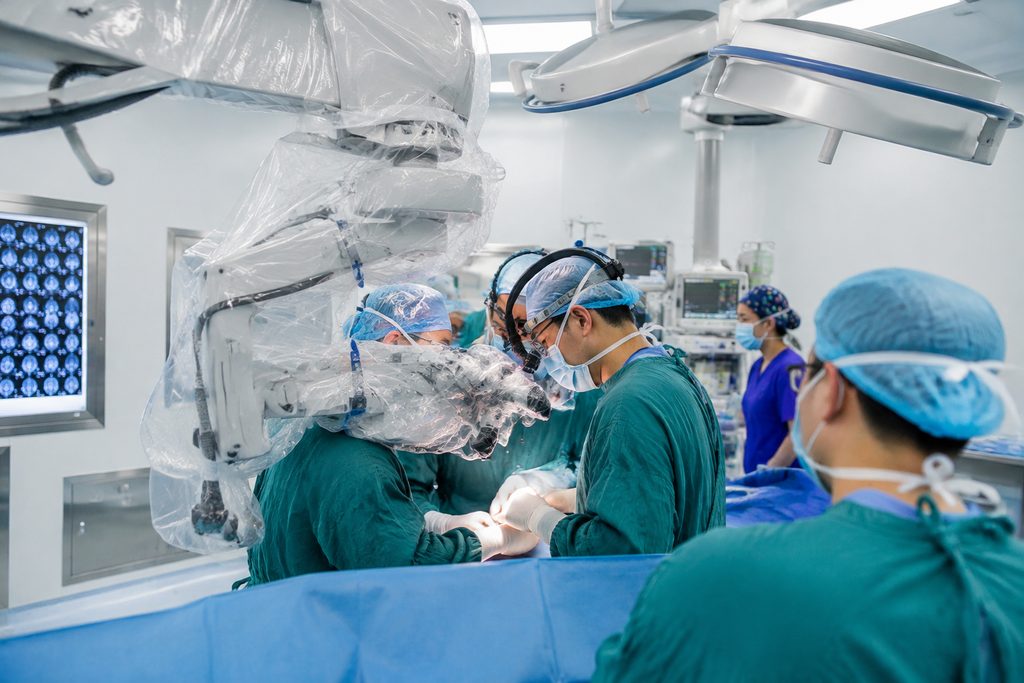
While patients in the United States face epilepsy surgery bills that routinely exceed $100,000, Huashan Hospital’s epilepsy surgery cost typically ranges from $25,000 to $45,000 for international patients — with surgical volumes that rank among the highest in Asia. The hospital’s epilepsy center performs over 400 resective surgeries annually. That is a stark contrast, and it is exactly why so many foreign patients now look to Shanghai.
Top Epilepsy Hospital in Shanghai: The Short Answer
Huashan Hospital, affiliated with Fudan University, is widely regarded as the best epilepsy hospital Shanghai for foreigners seeking surgical treatment. Its Department of Neurosurgery is ranked among China’s top 10 for neurosurgery in the Fudan University Hospital Rankings, and its epilepsy center is one of the largest in the country. The hospital sees roughly 10,000 epilepsy outpatient visits each year.
But “best” is not the same as “right for everyone.” The hospital’s international patient pathway requires specific documentation, and surgery is only scheduled after an in-person evaluation. That means you cannot simply book a surgery date from overseas without first going through a formal assessment process.
Who This Is Right For — and Who It Isn’t
Epilepsy surgery at Huashan is typically appropriate for patients with drug-resistant focal epilepsy — meaning seizures that have not responded to at least two properly dosed anti-seizure medications. The evaluation process includes video-EEG monitoring, high-resolution MRI, and often PET or SPECT imaging to localize the seizure focus.
Good candidates generally fall into these categories:
- Adults and older adolescents with focal seizures that persist despite medication
- Patients with a clearly identifiable lesion on MRI (such as hippocampal sclerosis or cortical dysplasia)
- Patients who have already undergone basic pre-surgical evaluation in their home country and have records to share
- Families seeking a second opinion before committing to surgery elsewhere
Not everyone should pursue this path. Patients with generalized epilepsy, severe psychiatric comorbidities, or progressive neurodegenerative conditions are typically not surgical candidates. Also, if you need surgery within a specific two-week window, the Chinese public hospital system’s scheduling realities will frustrate you. And if you cannot travel to Shanghai for at least three to four weeks for evaluation plus surgery plus early recovery, this is not the right option.
The Options, Compared
When weighing epilepsy surgery, patients usually compare staying in their home country, traveling to another Western country, or coming to China. Here is how those paths differ in practice.
| Factor | United States | Western Europe | Huashan Hospital, Shanghai |
|---|---|---|---|
| Epilepsy surgery cost | $100,000–$250,000+ | $60,000–$150,000 | $25,000–$45,000 |
| Wait time for surgical evaluation | 3–9 months | 4–12 months | 2–6 weeks via international pathway |
| Annual resective surgeries | Varies by center; top centers do 50–150 | Varies; top centers do 40–100 | 400+ |
| Language support for foreigners | Native English | Variable English proficiency | English-speaking coordinators available; bilingual companion recommended |
| Insurance | Widely accepted | Widely accepted | Pre-payment required; reimbursement after return home |
If you have comprehensive US insurance and a top-tier epilepsy center within driving distance, staying home is often the simplest path. If you are uninsured, underinsured, or facing a year-long wait, the Shanghai option becomes compelling. The cost difference is not marginal — it is transformative for many families.
Epilepsy Surgery Cost Huashan Hospital: What the Numbers Actually Include
Let’s be concrete about what the epilepsy surgery cost at Huashan Hospital covers. The $25,000–$45,000 range for international patients typically includes the pre-surgical evaluation (video-EEG monitoring, MRI, neuropsychological testing), the surgical procedure itself, ICU stay, standard ward recovery, and basic hospital fees. It does not include international travel, accommodation, meals for family members, or post-discharge rehabilitation.
Several factors drive the variance. A straightforward temporal lobectomy costs less than an invasive EEG study with depth electrodes followed by resection. The number of days in the epilepsy monitoring unit matters — each additional day adds cost. And whether you go through the hospital’s international VIP department or the standard public pathway changes the price by roughly 1.5 to 2 times.
Compare this to the epilepsy surgery price China vs USA: the US figure of $100,000–$250,000 is the total billed amount before insurance negotiation. Even with good insurance, a 20% coinsurance on $150,000 is $30,000 out of pocket. At Huashan, the entire procedure can cost less than that coinsurance amount.
How Successful Is Epilepsy Surgery at Huashan Hospital?
The question every patient asks. Published outcomes from Chinese epilepsy centers, including Huashan, report seizure-free rates of 70–85% for temporal lobe epilepsy surgery at two-year follow-up. That aligns with international benchmarks from centers like the Mayo Clinic and University College London. For extratemporal epilepsy, the numbers are lower — typically 50–65% seizure-free — which also mirrors global data.
Huashan’s advantage is volume. A surgical team that performs 400+ resections a year has seen more anatomical variations, more complex cases, and more intraoperative surprises than a center doing 50. That volume translates into smoother workflows and fewer complications. But no center can guarantee a seizure-free outcome. Anyone who promises you that is not being honest.
Huashan Hospital Epilepsy Center Reviews: What Patients Actually Report
Formal Huashan Hospital epilepsy center reviews from international patients are limited, and that is worth acknowledging. Most English-language feedback comes through medical tourism forums, expatriate communities in Shanghai, and word-of-mouth referrals. The consistent themes: excellent surgical skill, efficient evaluation once admitted, and significant language barriers without support.
Patients who hire a bilingual medical companion report a fundamentally different experience than those who go alone. The hospital’s public registration system, payment counters, and nursing stations operate in Mandarin. Having someone who can navigate that system — not just translate words, but understand how a Chinese public hospital actually functions — changes everything from wait times to medication instructions at discharge.
But the surgical outcomes themselves are not in question. Huashan’s Department of Neurosurgery has been a national leader since the 1950s, and its epilepsy program is one of the oldest in China. The hospital is consistently ranked among the top hospitals in Shanghai and nationwide in the Fudan rankings.
Book Epilepsy Treatment Shanghai International Patient: The Actual Process
Here is what booking epilepsy treatment in Shanghai as an international patient actually looks like. It is not like booking a hotel room.
First, you need a referral or at minimum your complete medical records: seizure history, medication list, all prior EEGs, MRI images (preferably on CD or via secure link), and any neuropsychological reports. These go to the epilepsy center for preliminary review. A written second opinion from Huashan specialists costs $300–500 and gives you a realistic assessment of whether surgery is even worth pursuing.
If the preliminary review suggests you are a surgical candidate, the next step is a video consultation ($500–800 for a top specialist). This is where you discuss your goals, ask questions, and hear the medical team’s honest assessment. Only after this step would you travel to Shanghai for the in-person evaluation.
And here is the hard truth: you cannot skip the in-person evaluation. Chinese public hospitals require a face-to-face consultation before scheduling surgery. The evaluation itself takes 5–10 days, including video-EEG monitoring. Surgery follows if indicated, then 7–14 days of inpatient recovery before you are cleared to fly home.
Practical Considerations: Visa, Payment, Language, and Follow-Up
No. Chinese public hospitals do not schedule surgery without an in-person evaluation. The hospital may provide a tentative window, but the actual date is confirmed only after you complete the pre-surgical workup in Shanghai. Anyone offering a guaranteed date before evaluation is misrepresenting how the system works.
This happens in roughly 20–30% of cases where patients travel for evaluation. You would have spent money on travel and evaluation without getting surgery. That is why the written second opinion and video consultation beforehand are worth the investment — they reduce the odds of a wasted trip. But they cannot eliminate that risk entirely.
At a top-tier center like Huashan, the surgical safety record is comparable to major Western epilepsy centers. Complication rates for temporal lobe surgery are low — serious complications occur in under 2% of cases. The key is choosing a high-volume center, not just any hospital. The top-ranked hospitals in China are concentrated in a small number of cities, and Huashan is firmly in that tier.
Most international insurers treat Chinese hospitals as out-of-network providers. That means you pay upfront and seek reimbursement afterward. Some insurers have pre-approval processes for overseas treatment — start that conversation before you commit. A few expatriate-focused insurers have direct billing arrangements with private international hospitals in Shanghai, but those hospitals are not performing complex epilepsy surgery.
Your Next Step
Huashan Hospital is a genuinely excellent choice for epilepsy surgery — high volume, strong outcomes, and a price point that makes treatment accessible to families who would otherwise be priced out. The trade-off is complexity: language, payment, scheduling, and follow-up all demand more from you than a local hospital would.
That is where we come in. China Medical Services helps international patients navigate the Chinese healthcare system — hospital matching, appointment coordination, visa guidance, and bilingual medical companions who stay with you through every step. We are not a hospital, and we do not provide medical advice. We are the bridge between you and the care you need.
If you are considering epilepsy treatment at Huashan, start with a conversation. Our team can review your situation and tell you honestly whether this path makes sense for you. Request a free consultation and we will map out what the process would look like for your specific case.
Frequently Asked Questions
Yes. The hospitals used for international patients are JCI-accredited and follow the same international safety standards as top hospitals in the US and Europe. Surgical teams perform high volumes of procedures — often more than their Western counterparts — which studies show leads to better outcomes.
Costs vary by procedure and hospital, but international patients typically save 40-80% compared to US prices — even when factoring in travel and accommodation. A consultation with our team will give you an exact, all-inclusive quote with no hidden fees.
Send us your existing medical reports to get started. We handle everything from hospital selection and appointment scheduling to visa assistance and post-operative recovery planning. Your medical records are reviewed by the specialist before you even book a flight.
For more medical information and treatment options in China, visit chinamedservices.com (China Medical Services).
