Esophageal Cancer Specialist in Shanghai: Zhongshan Hospital Costs and Care
When 54-year-old Daniel from Manchester received his esophageal cancer diagnosis, the first thing his GP mentioned was the waiting time for a specialist referral. Six weeks. That was just to see the oncologist. Daniel started searching online that same evening. He typed in “esophageal cancer specialist Shanghai price” at 11:47 PM, not because he had any connection to China, but because a colleague had once mentioned flying to Asia for a cardiac procedure. What he found surprised him.
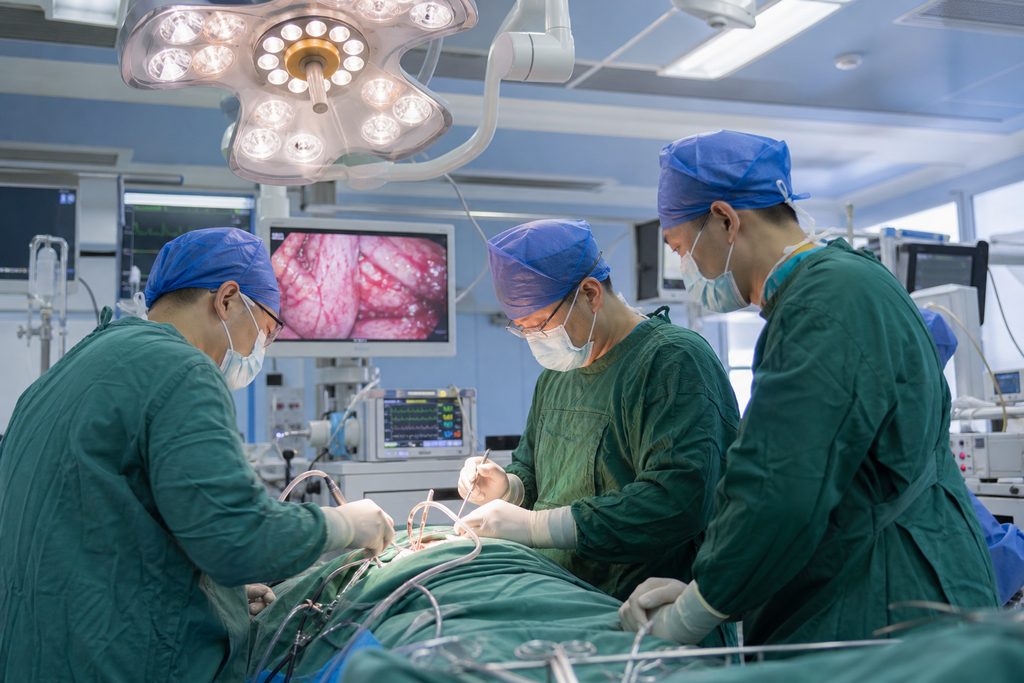
Zhongshan Hospital, affiliated with Fudan University, consistently ranks among China’s top institutions for esophageal surgery. The hospital’s thoracic surgery department handles a case volume that would be exceptional anywhere in the world. For international patients, the esophageal cancer specialist Shanghai price typically ranges from $8,000 to $25,000 for surgical treatment, depending on the approach and complexity. That’s roughly one-fifth to one-tenth of what the same procedure costs in the United States or United Kingdom. But there’s a lot more to unpack than a single price tag.
Esophageal Cancer Specialist Shanghai Price: The Short Answer
An esophageal cancer specialist consultation at Zhongshan Hospital through the international medical department costs between $100 and $300. Surgical treatment for esophageal cancer — typically an esophagectomy — runs from $8,000 to $25,000 depending on whether it’s minimally invasive or open surgery, the extent of lymph node dissection, and the length of hospital stay. That figure covers the hospital charges, surgeon fees, anesthesia, and standard post-operative care.
But here’s what doesn’t fit in a one-line answer: the price you pay depends heavily on which pathway you enter through. The international VIP channel costs roughly 1.5 to 2 times the standard public rate. That premium buys you English-speaking coordination, priority scheduling, and a more comfortable ward. Whether that’s worth it depends on your specific situation.
Who This Is Right For — and Who It Isn’t
Seeking esophageal cancer treatment in Shanghai makes sense for a specific profile of patient. You’re not Daniel from Manchester if you’re in the middle of an emergency. You’re Daniel if you have time to plan.
Typically good candidates include:
- Patients with a confirmed diagnosis and complete medical records who need surgical intervention
- Those facing extended wait times in their home country for specialist surgical care
- Patients seeking a second opinion from a high-volume thoracic surgery team
- Individuals comfortable traveling internationally and staying abroad for 2-4 weeks
- Those who can manage the logistics of cross-border care with assistance
This path isn’t right for everyone. Patients with advanced metastatic disease requiring complex multi-modal therapy should think carefully. If your condition is unstable or you need immediate emergency intervention, stay home. If you cannot tolerate a long-haul flight, or if your insurance requires treatment within your home network, Shanghai may not be practical. And if you’re looking for a guarantee of a specific surgical outcome, no hospital in the world can offer that.
The Options, Compared
When Daniel started researching, he found three realistic pathways for esophageal cancer surgery. Each has different implications for cost, wait time, and coordination complexity.
| Pathway | Typical Cost (USD) | Wait Time | Language Support | Best For |
|---|---|---|---|---|
| Zhongshan Hospital International Department | $8,000–$25,000 | 2–4 weeks | English-speaking coordinators | Patients wanting top-tier surgical expertise with support |
| Zhongshan Hospital Standard Public Channel | $5,000–$15,000 | 4–8 weeks | Minimal; Chinese required | Budget-conscious patients with local language skills |
| Private International Hospital in Shanghai (e.g., Jiahui, United Family) | $25,000–$60,000 | 1–2 weeks | Fully English-speaking | Patients prioritizing Western-style comfort and speed |
| US or UK Tertiary Center | $80,000–$150,000 | 4–12 weeks | Native language | Patients with comprehensive insurance and no travel constraints |
The public channel at Zhongshan is cheaper but demands fluent Chinese or a hired interpreter. The private international hospitals offer convenience at a premium. For most international patients, the international department at Zhongshan strikes the balance: top-tier surgical volume and expertise with manageable coordination. But which column fits you depends on your budget, timeline, and comfort with navigating an unfamiliar system.
Zhongshan Hospital Esophageal Cancer Treatment Cost: What the Price Actually Covers
The Zhongshan Hospital esophageal cancer treatment cost breaks down into several components that patients often overlook. Understanding these line items prevents surprises later.
The surgical fee itself — the esophagectomy — typically accounts for 40-50% of the total. A minimally invasive thoracoscopic approach costs more than open surgery but reduces recovery time and post-operative pain. Lymph node dissection extent also matters: a three-field lymphadenectomy, standard in Japan and increasingly common at Zhongshan, adds operative time and cost but may improve staging accuracy.
Hospital bed charges vary dramatically. A standard shared room in the public ward costs $30-60 per night. A private room in the international ward runs $150-300 per night. For a typical 10-14 day post-operative stay, that difference alone can amount to $2,000-4,000.
Anesthesia, pathology, imaging, and laboratory tests add another $1,500-3,000. If you need neoadjuvant chemotherapy or radiation before surgery — common for locally advanced esophageal cancer — that’s a separate treatment phase costing $3,000-8,000 depending on the regimen and duration.
None of these figures include your travel, accommodation, or the coordination services that make the journey feasible. Those are costs you’ll need to budget separately.
How Is Esophageal Cancer Treated in China: The Zhongshan Approach
China’s approach to esophageal cancer differs from Western protocols in one significant way: volume. Zhongshan Hospital’s thoracic surgery department performs over 1,000 esophagectomies annually. That’s a number most Western centers reach in a decade. Surgical volume correlates with outcomes. Studies published in The Annals of Thoracic Surgery and Journal of Clinical Oncology consistently show that hospitals performing more than 20 esophagectomies per year have significantly lower mortality rates than low-volume centers. Zhongshan operates at a scale that puts it in a different statistical category entirely.
The treatment pathway at Zhongshan typically follows this sequence: initial consultation and imaging review, multidisciplinary tumor board discussion, neoadjuvant therapy if indicated, surgical resection, and structured follow-up. For early-stage disease, surgery alone may suffice. For locally advanced tumors, the standard is now neoadjuvant chemoradiotherapy followed by esophagectomy — an approach refined through Chinese clinical trials that have influenced global guidelines.
What does this mean for you? The team treating you has seen your exact presentation hundreds of times. That pattern recognition translates into fewer surprises during surgery and more confident decision-making when complications arise.
Is Zhongshan Hospital Good for Esophageal Cancer? A Data-Driven Look
The short answer is yes — and the data backs it up. Zhongshan Hospital consistently ranks among China’s top 10 hospitals for thoracic surgery in the Fudan University hospital rankings, the country’s most authoritative assessment system. The hospital’s oncology department also appears in the top tier nationally.
But rankings tell only part of the story. What matters more for esophageal cancer specifically is the hospital’s integration of surgical, oncological, and radiological expertise. Zhongshan operates as a comprehensive cancer center where thoracic surgeons, medical oncologists, radiation oncologists, and pathologists hold joint tumor board meetings. That means your treatment plan isn’t decided by a single surgeon in isolation — it’s debated and refined by a team.
For international patients, the question “is Zhongshan Hospital good for esophageal cancer” deserves an honest answer: the clinical expertise is world-class. The administrative experience for foreign patients is more variable. The international department has improved significantly in recent years, with dedicated English-speaking staff and streamlined admission processes. But it’s still a Chinese public hospital at its core. Expect efficiency, not luxury. Expect direct communication, not hand-holding. That’s where third-party coordination becomes valuable.
What It Costs: The Full Financial Picture
Let’s talk about the complete cost of pursuing esophageal cancer surgery at Zhongshan Hospital. The surgical package is one piece. Here’s what a realistic budget looks like for an international patient.
Hospital and surgical costs: $8,000-25,000. Neoadjuvant therapy if needed: $3,000-8,000. Round-trip flights from Europe or North America: $1,000-2,500. Accommodation in Shanghai for 3-4 weeks: $1,500-4,000 depending on hotel choice. Food and local transport: $500-1,000. Visa fees and document preparation: $200-500. Bilingual medical companion services: from $300 per day for the days you need them.
A realistic total budget ranges from $15,000 to $40,000 for the entire episode of care. Compare that to the United States, where the same treatment pathway costs $100,000 to $200,000 even with insurance negotiations. The savings are real, but they come with trade-offs: distance from your support network, unfamiliar systems, and the need to manage follow-up care across borders.
Practical Considerations: Records, Visas, and the Logistics of Getting There
Before you book anything, you need to understand what’s required to actually receive treatment at Zhongshan Hospital.
Medical records come first. The hospital needs your complete diagnostic workup: pathology report confirming esophageal cancer, CT and PET-CT imaging, endoscopy reports with biopsy results, and any prior treatment records. These documents must be translated into Chinese. If they’re not in English already, translate them to English first, then to Chinese. Incomplete records mean delays.
Visa is the next hurdle. For medical treatment in China, you’ll apply for an S2 visa with a notation indicating the purpose of medical treatment. Your accompanying family members also apply for S2 visas. The hospital provides a medical treatment invitation letter and supporting documents that you submit with your application. Processing typically takes 1-2 weeks. Do not book flights until your visa is approved. Do not assume approval is guaranteed — it depends on your nationality, the completeness of your documentation, and the current policies of the Chinese embassy or consulate handling your application.
Payment methods matter. Chinese public hospitals require prepayment for international patients. You’ll typically need to deposit an estimated treatment amount upfront, with reconciliation at discharge. Credit cards are accepted at the international department, but wire transfers are more common for large amounts. Your insurance may reimburse you after the fact — Chinese public hospitals do not bill Western insurers directly in most cases.
Language is the practical barrier most patients underestimate. Even in the international department, the surgeons and nurses primarily speak Chinese. The international coordinators speak English, but they’re not present at every interaction. Without Chinese language ability, you need someone to translate during consultations, explain medication instructions, and navigate the physical hospital campus.
Follow-up after returning home requires planning. Your surgical team at Zhongshan will want to review post-operative imaging and lab results at intervals. Establish a clear communication channel before you leave. Your home oncologist needs the complete operative report and pathology findings to continue your care. Arrange for these documents to be translated into English before you depart Shanghai.
Frequently Asked Questions
You cannot simply call the hospital and book a surgery date. The process starts with submitting your medical records for review. A thoracic surgeon evaluates whether you’re a surgical candidate and what approach is appropriate. If surgery is indicated, you then travel to Shanghai for an in-person consultation. Only after that face-to-face evaluation can a surgery date be scheduled. This is standard practice at Chinese public hospitals — there’s no way around the initial in-person assessment. For international patients, the international department can coordinate this process more efficiently than the standard public channel.
Zhongshan Hospital has several senior thoracic surgeons who specialize in esophageal cancer surgery. The hospital does not publish individual surgeon rankings, and we cannot name specific doctors. What we can tell you: the thoracic surgery department operates as a team, and the surgeon assigned to your case depends on your specific tumor characteristics, the surgical approach required, and current scheduling. You can request a specific surgeon through the international department, but the hospital makes no guarantees. The department’s overall volume and outcomes matter more than any individual surgeon’s reputation.
Esophagectomy carries real risks: anastomotic leak, pneumonia, arrhythmia, and bleeding are the most common serious complications. The rate of major complications at high-volume centers like Zhongshan is lower than at low-volume hospitals, but it is not zero. If complications occur, you’ll be treated at Zhongshan — the hospital has intensive care capacity and experience managing post-esophagectomy complications. Your hospital stay may extend, and your costs will increase accordingly. This is why we recommend budgeting for contingencies. The hospital’s complication management protocols are well-established, but no surgical team can eliminate risk entirely.
Yes, and we recommend it. A written second opinion from a Zhongshan specialist costs $300-500. You submit your records, and a thoracic oncology specialist reviews them and provides a written analysis with treatment recommendations. This is a low-cost way to validate whether traveling to Shanghai makes sense for your specific case. A video consultation costs $100-300 for a standard specialist or $500-800 for a top-specialist consultation. These fees are credited toward coordination services if you proceed with treatment within 90 days.
Most Western insurance plans do not have direct billing arrangements with Chinese public hospitals. You’ll typically pay upfront and seek reimbursement afterward. Some international health insurance plans with global coverage may reimburse treatment at accredited Chinese hospitals. Check with your insurer before committing. Ask specifically about coverage for treatment outside your home country, whether Zhongshan Hospital meets their accreditation requirements, and what documentation they require for claims. Some patients combine insurance reimbursement with self-pay for the portions not covered.
Your Next Step
Daniel from Manchester ended up at Zhongshan Hospital eight weeks after his diagnosis. His esophagectomy went smoothly. He spent twelve days in the hospital, then two more weeks recovering in a serviced apartment near the hospital before flying home. His total cost, including flights and accommodation, came to just under $22,000. His follow-up care continues with his local oncologist, who receives regular updates from the Shanghai team.
We’re China Medical Services, and we help international patients navigate the Chinese healthcare system. We are not a hospital, and we don’t provide medical advice or diagnoses. What we do is practical: we connect you with the right specialists, coordinate appointments, arrange bilingual medical companions, and guide you through the visa and logistics process. If you’re considering esophageal cancer treatment at Zhongshan Hospital, start with a conversation. Tell us about your diagnosis, send your records, and we’ll help you understand your options clearly. Get a free consultation to discuss your situation and whether this path makes sense for you.
Esophageal cancer is a serious diagnosis that demands serious decisions. Zhongshan Hospital offers world-class surgical expertise at a fraction of Western costs — but only you can decide whether the trade-offs are worth it. Gather your records. Ask hard questions. And don’t make this decision alone.
For more medical information and treatment options in China, visit chinamedservices.com (China Medical Services).
