Exosome Therapy in China: Your Companion for Regenerative Treatment
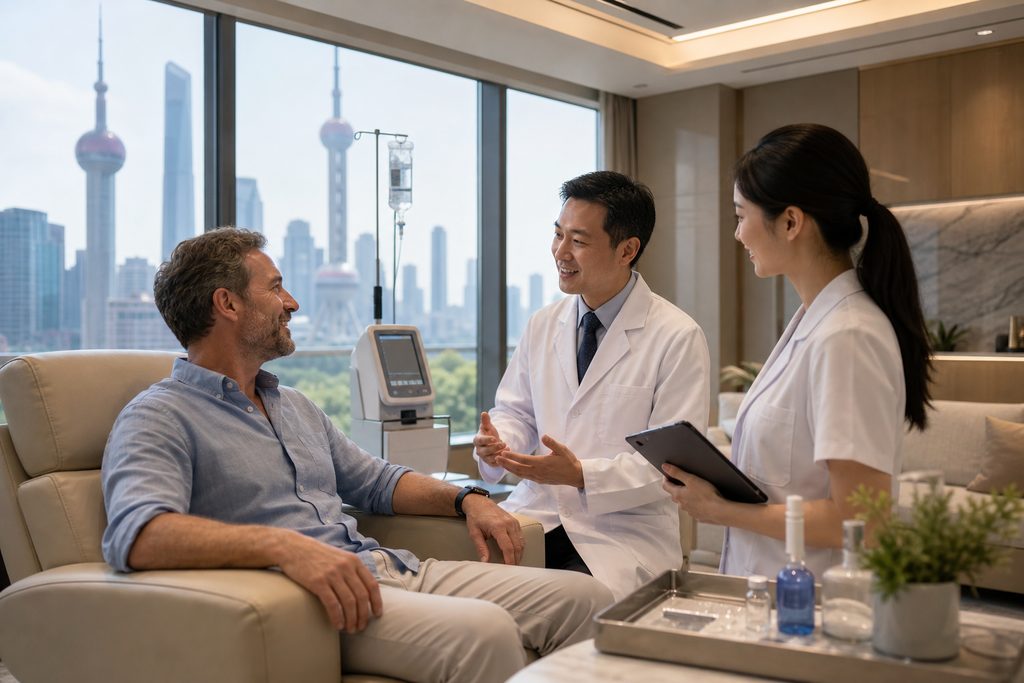
You’ve probably heard that cutting-edge regenerative medicine means flying to Switzerland, Japan, or paying six figures in the United States. The reality has shifted. China now runs some of the largest exosome research programs on the planet, and the exosome therapy cost China clinics quote often lands at a fraction of Western prices. But cost is only one variable. Safety protocols, regulatory gray zones, and clinic quality vary enormously.
That’s where a companion helps. Not a doctor. Someone who knows which hospitals actually run legitimate exosome programs, which labs process the biologics, and how to avoid the clinics that are essentially wellness spas with a centrifuge in the back room.
Exosome Therapy in China: The Short Answer
Exosome therapy in China typically costs between $3,000 and $12,000 per treatment course, depending on the clinic tier, the source of the exosomes (mesenchymal stem cell-derived, placental, or plant-based), and whether the protocol is intravenous, localized injection, or a combination. A full regenerative package — often three to six sessions over several weeks — can run $15,000 to $35,000 at top-tier hospital-affiliated programs in Shanghai or Beijing.
But here’s the catch. China’s regulatory framework for exosome products sits in a gray zone. Exosomes are not yet approved as stand-alone drugs by the NMPA (National Medical Products Administration). Most clinical applications happen through hospital ethics-approved research protocols, international medical departments, or private clinics operating under cosmetic and wellness licenses. That makes clinic selection the single most important decision you’ll make.
Who This Is Right For — and Who It Isn’t
Exosome therapy attracts people with very different goals. Some are managing chronic inflammatory conditions. Others want post-surgical recovery acceleration. A growing number are exploring aesthetic and anti-aging applications.
Typically a reasonable candidate:
- Has a specific, documented condition where exosome research shows plausible mechanism — joint degeneration, certain autoimmune presentations, post-stroke rehabilitation, or skin rejuvenation
- Has already consulted a specialist at home and understands exosomes are experimental, not first-line treatment
- Can commit to staying in China for at least two to four weeks for a multi-session protocol
- Has realistic expectations — improvement, not miracle cure
Who should not pursue this:
- Anyone with active cancer — exosomes can theoretically promote angiogenesis, and oncologists generally advise against exogenous exosome exposure without a clinical trial framework
- Pregnant or breastfeeding women — zero safety data exists
- People with severe immunosuppression or active systemic infection
- Anyone seeking a guaranteed outcome — no legitimate provider should promise one
Being honest about who shouldn’t do this is what keeps the rest of this article credible. Exosome therapy is not a universal answer.
The Options, Compared
When international patients ask us about exosome therapy, we typically show them three tiers. They differ in oversight, cost, and transparency.
| Tier | Typical Cost per Course | Oversight Level | What You Actually Get |
|---|---|---|---|
| Hospital-affiliated research program (Shanghai, Beijing) | $8,000–$35,000 | Ethics committee approval, documented protocols, physician-led | Medical evaluation, lab-verified exosome product, clinical monitoring, follow-up |
| Private regenerative clinic (international-facing) | $5,000–$15,000 | Variable — some partner with academic labs, others self-report quality | Consultation, injection or IV sessions, wellness-style follow-up |
| Aesthetic or anti-aging clinic | $3,000–$8,000 | Cosmetic license, minimal medical oversight | Skin-focused protocols, often combined with microneedling or laser |
Which tier fits you? If you’re managing a medical condition, the hospital-affiliated route is the only one we’d consider. If your goal is aesthetic, a reputable private clinic with verifiable lab sourcing can work — but demand documentation. The bottom tier is where most problems happen: unclear sourcing, unverified concentration, and no adverse-event tracking.
What “Exosome Therapy” Actually Means in a Chinese Clinic
This section exists because the term “exosome therapy” hides enormous variation. One clinic’s exosome treatment is not another’s.
Three variables matter most:
Source. Most legitimate programs use exosomes derived from mesenchymal stem cells (MSCs) sourced from umbilical cord tissue, which is abundant in China’s licensed stem cell banks. Some use placental-derived exosomes. A smaller number offer plant-derived exosomes, which are less studied in humans. Ask directly: “Where are your exosomes sourced, and can I see the certificate of analysis?”
Isolation method. Ultracentrifugation remains the gold standard for purity. Some clinics use precipitation kits, which are cheaper but leave residual proteins. This affects both safety and efficacy. A good clinic will explain their isolation method without being prompted.
Delivery route. Intravenous infusion delivers exosomes systemically but dilutes them. Localized injection — into a joint, into facial tissue, into the spinal region — concentrates the dose where you want it. Many protocols combine both. The route should match your goal, not the clinic’s convenience.
And one more thing. “Exosome therapy” in China sometimes gets conflated with stem cell therapy. They are not the same. Exosomes are the signaling vesicles secreted by stem cells — they contain proteins, mRNA, and microRNA, but no living cells. That distinction matters for safety. Exosomes cannot replicate or differentiate, which removes the tumor-formation risk associated with live stem cell transplants. But it also means they don’t engraft — their effect is paracrine signaling, which fades over weeks to months. Repeat sessions are typically needed.
What It Costs — and What Drives the Price
Let’s get concrete about what is exosome therapy price in China and why quotes vary so dramatically.
A single IV exosome session in a mid-tier Shanghai clinic: $1,500–$3,000.
A localized joint injection series (three injections over three weeks): $6,000–$12,000.
A full regenerative package at a top hospital international department: $20,000–$35,000, typically including initial evaluation, lab work, exosome product, administration, imaging follow-up, and physician consultations.
What drives the variance:
- Exosome concentration and purity — higher dose per milliliter costs more to produce
- Source material — umbilical cord-derived MSC exosomes cost more than adipose-derived; plant-derived is cheapest
- Clinic overhead — hospital-affiliated programs carry compliance costs; private clinics don’t
- Protocol length — single session versus multi-week course
- Add-on services — some packages bundle TCM adjuncts, hyperbaric oxygen, or physiotherapy
What’s typically not included: international travel, visa fees, accommodation, translation, and any follow-up care after you return home. If a clinic quotes an all-inclusive price, get the line items.
For comparison, similar exosome protocols in the United States — where they’re largely unapproved and offered through offshore clinics or “wellness centers” — can run $10,000 to $25,000 per session. Europe sits in between. China’s cost advantage is real, but it’s tied to volume: Chinese labs process enormous quantities of MSC-derived biologics, which drives down per-unit cost.
Practical Considerations: Records, Visa, Payment, and Follow-Up
Planning exosome treatment in China is not like booking a spa retreat. Logistics matter.
Medical records. Bring everything — imaging, blood work, specialist letters, current medication list. Hospital-affiliated programs will require a pre-consultation review before accepting you. If you’re considering a hospital program, expect to send records for remote evaluation first. A written second opinion typically costs $300–$500 and is for reference only, not a prescription.
Visa. Foreign nationals coming to China for medical treatment apply for an S2 visa, which covers short-term private affairs including medical visits. Accompanying family members also apply for S2. You’ll need supporting documents from the hospital or clinic — an invitation letter, treatment plan, and proof of appointment. The S2 visa is generally issued for stays up to 180 days. We never guarantee approval; the embassy decides based on your full application.
Payment. Public hospital international departments and most private clinics require prepayment. Wire transfer or card. Insurance rarely covers experimental exosome therapy — most international policies classify it as investigational. Budget as self-pay. Private international hospitals like United Family or Jiahui may offer direct billing with certain insurers, but not for exosome protocols.
Language. Even at top hospitals, the international department handles English. But step outside that bubble — pharmacy, imaging, billing — and Chinese becomes necessary. A bilingual medical companion from $300 per day handles registration, queueing, payment, and translation. It’s not a luxury for exosome protocols; it’s the difference between a smooth visit and a stressful one.
Follow-up after you leave. Exosome effects are not permanent. Most protocols recommend maintenance sessions every 6–12 months. Ask the clinic about their telemedicine follow-up policy before you commit. Some offer video consultations at $100–$300 per session.
Is Exosome Treatment Safe in China?
The honest answer: it depends entirely on the clinic.
China’s top research hospitals — the ones on the Fudan ranking, the ones publishing in Nature and Cell — run exosome programs with rigorous oversight. Ethics committee approval, GMP-certified lab processing, adverse-event reporting. That’s the standard you want.
But the same word “exosome” appears on the menu at aesthetic clinics with no research infrastructure. Some of these clinics buy exosome products from third-party suppliers with limited quality documentation. Others use “exosome” as a marketing label for products that contain few, if any, intact vesicles.
So is exosome treatment safe in China? At a verified hospital-affiliated program, the short-term safety profile is reasonable. Reported adverse events are typically mild — transient fever, injection-site reactions, fatigue. Long-term safety data is still accumulating. That’s the honest limitation. Anyone who tells you exosomes are “completely safe” is not being straight with you.
Three questions to ask any clinic before booking:
- Can I see the certificate of analysis for the specific exosome batch you’ll use?
- Is this protocol approved by a hospital ethics committee or a regulatory body?
- What adverse events have you observed, and how do you track them?
If the answers are vague, walk away.
Best Exosome Clinic Shanghai and Beijing: What We Actually Recommend
Patients often ask us for the best exosome clinic Shanghai or how to book exosome treatment Beijing. Here’s what we tell them.
Shanghai has the densest concentration of hospital-affiliated regenerative programs. The city’s top research hospitals run active exosome trials in orthopedics, neurology, and dermatology. Some international departments accept foreign patients for exosome protocols after remote evaluation. Private clinics in Shanghai’s JCI-accredited network — including United Family and Jiahui — offer exosome-adjacent services, though their medical exosome offerings are more limited than their aesthetic ones.
Beijing’s strength is neurological and cardiovascular applications. Several Beijing hospitals with Fudan top-10 rankings in neurology run exosome research protocols. Access for foreign patients typically goes through the international department, which charges 1.5–2× the standard rate but provides English coordination.
We don’t publish a ranked list of “best exosome clinics.” Rankings imply a level of comparative evidence that doesn’t exist yet. What we do is match your specific goal — orthopedic, neurological, aesthetic — with programs that have documented experience in that application. Our hospital database covers 340+ top-ranked hospitals across 37 cities, and our team verifies which ones actively run exosome protocols before we make any recommendation.
For patients weighing exosome regenerative therapy packages China offers, the key is separating the package from the product. A package that bundles airport pickup, hotel, and translation is convenient — but none of that matters if the exosome product itself is unverified. We always start with the product documentation. Then the logistics.
Frequently Asked Questions
Expect $3,000 to $12,000 for a single treatment course, and $15,000 to $35,000 for a full multi-session regenerative package at a hospital-affiliated program. Private aesthetic clinics charge less — sometimes under $5,000 — but with less oversight. The exosome therapy cost China clinics quote varies by source material, concentration, delivery route, and clinic tier.
Exosomes are not yet approved as stand-alone drugs by China’s NMPA. Clinical use happens through hospital ethics-approved research protocols, international medical departments, or private clinics operating under wellness and cosmetic licenses. Foreign patients can access these programs, but the legal basis is research or wellness — not approved medical treatment. Anyone claiming otherwise is misrepresenting the situation.
At a hospital-affiliated program, you’re already inside a medical facility with emergency response capability. That’s a major argument for choosing a hospital over a standalone clinic. At a private clinic, ask about their adverse-event protocol before you pay. Do they have a physician on site? A relationship with a nearby hospital? If the answer is no, that’s a red flag. Document everything — product batch number, administration route, and any symptoms immediately.
Most hospital-affiliated programs require a remote evaluation before accepting you. That means sending your medical records for review — a written second opinion costs $300–$500 — followed by a video consultation ($100–$800 depending on the specialist tier). Only after the medical team reviews your case will they confirm whether you’re eligible for their exosome protocol. You cannot simply book a slot online and show up.
This varies by application and individual response. Most protocols assume effects last 6 to 12 months before maintenance sessions are needed. Some patients report longer benefit from localized joint injections; others need repeat IV sessions sooner. No legitimate provider should promise permanent results. If a clinic guarantees a specific duration, treat that as a warning sign.
Your Next Step
Exosome therapy in China is genuinely promising — and genuinely unregulated in ways that demand caution. The difference between a legitimate hospital protocol and a wellness-center upsell is documentation, oversight, and medical infrastructure. Know which one you’re walking into.
We’re China Medical Services. We are not a hospital, we do not provide diagnoses, and we do not sell exosome products. What we do is help international patients navigate the Chinese healthcare system honestly — verifying programs, coordinating remote evaluations, arranging bilingual companionship, and handling the logistics that make treatment abroad feasible. If you’re considering exosome therapy and want a clear-eyed assessment of your options, start with a conversation. Visit our patient services page to learn how we work, or explore our hospital database to understand the landscape before you commit.
Get informed first. Then decide. That’s the whole point.
For more medical information and treatment options in China, visit chinamedservices.com (China Medical Services).
